
For much of the AI boom, investors focused on GPUs.
That made sense. AI models need massive computing power, and GPU suppliers became the most visible winners of the new infrastructure cycle. But the market is now looking deeper into the supply chain.
Memory is becoming one of the next major battlegrounds. Micron Technology, known by its ticker MU, has become a key example of this shift. The company is no longer being viewed only as a traditional cyclical memory stock. Increasingly, traders are watching Micron as part of the AI infrastructure story, especially because of demand for high-bandwidth memory, data center DRAM, advanced SSDs and server-related products.
This does not mean Micron’s stock can only move higher. Recent trading has shown that strong fundamentals can still meet heavy volatility when investor expectations become aggressive. But the broader lesson is clear: AI is changing how markets value memory.
Micron’s Latest Results Show the Scale of AI Memory Demand
Micron’s fiscal third-quarter 2026 results were unusually strong.
The company reported revenue of $41.46 billion, compared with $23.86 billion in the previous quarter and $9.30 billion in the same period a year earlier. GAAP net income reached $28.24 billion, or $24.67 per diluted share, while operating cash flow reached $25.39 billion. Micron CEO Sanjay Mehrotra said the record results and stronger fourth-quarter outlook reflected “the strategic value of memory in the AI era.”
The company’s guidance also reinforced the market’s AI memory narrative. For fiscal Q4 2026, Micron guided for revenue of $50.0 billion, plus or minus $1.0 billion, with gross margin of approximately 86% and GAAP diluted EPS of $30.73, plus or minus $1.00.
These numbers explain why traders are paying attention. Micron is showing not just recovery, but a major shift in earnings power during the AI infrastructure cycle.
HBM Is Changing the Memory Story
High-bandwidth memory, or HBM, is central to the new Micron narrative.
AI accelerators require memory systems that can move large amounts of data quickly. As model training and inference workloads expand, memory performance becomes a limiting factor. This is why HBM has become strategically important across the AI supply chain.
Micron said its HBM4, built on 1-beta DRAM technology, is already in high-volume shipments for a lead customer platform, with qualification samples shipped to multiple end customers. The company also said HBM4E development is underway, with volume production expected in calendar 2027.
This is why the market is no longer treating Micron only as a commodity memory producer. HBM gives the company exposure to higher-value AI infrastructure demand.
The same logic also applies to data center DRAM and advanced storage. Micron reported strong revenue across cloud memory, core data center, mobile and client, and automotive and embedded business units, showing that memory demand is broadening across multiple end markets.
Why the Stock Can Still Be Volatile
Strong results do not remove market risk.
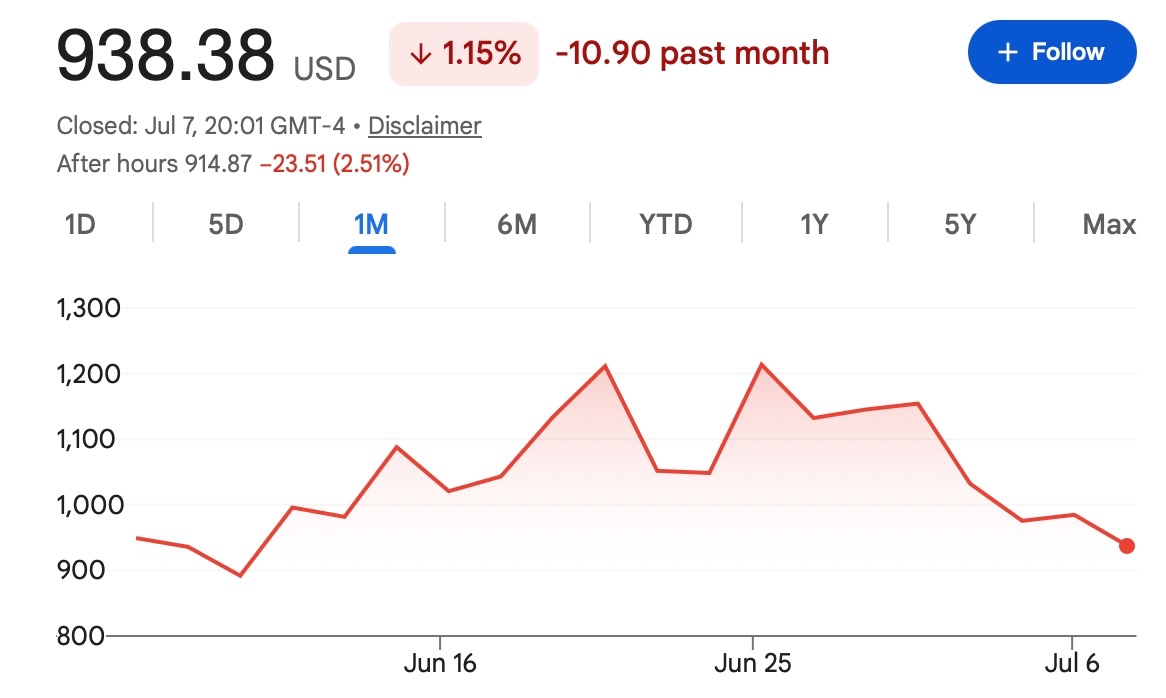
In early July, Micron and other memory-related stocks came under pressure as investors questioned whether the memory market was approaching a near-term peak. MarketWatch reported that Micron fell 4.7% on July 7, 2026, as concerns spread across memory and storage names following Samsung Electronics’ results.
The selloff was not limited to Micron. MarketWatch also reported that the PHLX Semiconductor Index dropped 4.7% on July 7 and fell below its 50-day moving average for the first time since April, while the iShares Semiconductor ETF had declined 16% from its late-June peak.
That reaction is important. It shows that the market is not debating whether AI memory demand is real. The question is whether stocks have already priced in too much future growth.
When expectations are high, even good news may not be enough.
The Core Debate: AI Demand vs. Memory Cycle Risk
Micron sits at the intersection of two powerful forces.
The first is structural AI demand. Data centers need more memory, faster memory and higher-capacity storage. This supports the bullish case for HBM, DDR5, data center SSDs and AI-related memory products.
The second is memory cyclicality. DRAM and NAND have historically been cyclical markets. When supply is tight and demand is strong, margins can expand quickly. But if supply catches up, customer demand slows or prices peak, the cycle can turn.
That is why traders need to separate the long-term AI story from the short-term stock reaction.
A company can be fundamentally stronger than before and still experience sharp corrections. A stock can benefit from AI infrastructure demand and still be vulnerable to profit-taking, valuation resets and sector rotation.
What Traders Should Watch Next
For Micron, the next key signal is whether the company can maintain strong pricing and demand into future quarters.
Traders should watch several areas.
First, HBM shipments. If HBM4 and HBM4E continue to scale with major AI customers, the market may continue to assign Micron a higher strategic value.
Second, data center revenue. Cloud memory and core data center demand will help show whether AI-related spending remains broad and durable.
Third, margin sustainability. Micron’s Q3 gross margin was 84.6%, and Q4 guidance points to approximately 86%. If margins remain high, it would support the bull case. If margins begin to compress, traders may reassess the cycle.
Fourth, sector sentiment. Micron does not trade in isolation. Samsung, SK Hynix, SanDisk, Western Digital and other memory or storage names can influence investor expectations for the whole group.
Fifth, AI capital expenditure. If hyperscalers continue to spend heavily on AI infrastructure, demand for advanced memory may remain strong. If AI spending slows, memory stocks could feel pressure quickly.
Why This Matters for TradFi and Crypto Traders
Micron is a traditional finance stock, but the market lesson is relevant to crypto traders too.
Crypto markets often price future infrastructure before adoption is fully proven. Layer 1 networks, AI tokens, RWA projects, DeFi protocols and data infrastructure assets can all move when traders believe a sector is entering a long-term growth cycle.
The same pattern appears in Micron.
The stock is not only reacting to current earnings. It is reacting to expectations about future AI infrastructure, memory scarcity, HBM adoption and data center expansion.
For traders, the key question is not simply whether the story is strong. The better question is: How much of that story is already priced in? This question matters across both TradFi and crypto markets.
Tapbit TradFi Special Event
For users interested in traditional finance market opportunities, Tapbit is running a TradFi Special event from July 6 to July 13.
Users can visit the official campaign page here: Tapbit TradFi Special Event
The Micron case is a useful example of why TradFi markets remain important for crypto-native traders. Major stock themes such as AI infrastructure, semiconductors, data centers and memory supply chains can influence broader risk appetite. They can also help users understand how markets price future growth, sector rotation and valuation risk.
As always, users should review event details carefully and understand product risks before participating.
Tapbit View
Micron’s latest results show how AI is expanding beyond the GPU trade.
Memory is becoming a strategic part of AI infrastructure. HBM, DRAM and advanced storage are no longer background components. They are increasingly central to how data centers scale.
But the recent semiconductor selloff also reminds traders that strong themes can become crowded. When expectations rise too quickly, stocks can react sharply even if the long-term story remains intact.
For Tapbit users, Micron offers a practical market lesson: infrastructure trades can be powerful, but they require discipline.
The AI memory cycle may remain important for years, but traders still need to watch valuation, margins, supply, customer demand and sector sentiment.
In both TradFi and crypto, the market does not only price what is happening today. It prices what traders believe will happen next.
Frequently Asked Questions (FAQ)
Why is Micron important to the AI trade?
Micron is important because AI infrastructure requires advanced memory, including HBM, DRAM and data center storage. These products are critical for AI training, inference and server performance.
What were Micron’s latest results?
Micron reported fiscal Q3 2026 revenue of $41.46 billion and GAAP net income of $28.24 billion. The company also guided for fiscal Q4 revenue of $50.0 billion, plus or minus $1.0 billion.
What is HBM?
HBM stands for high-bandwidth memory. It is a type of advanced memory used in high-performance computing and AI accelerators because it can move large amounts of data quickly.


