
Stellar tokenization is becoming a more important part of the network’s institutional story. Stellar has long been associated with payments and cross-border value transfer, but its recent push into regulated real-world assets shows a broader ambition: becoming infrastructure for funds, securities and other tokenized financial products.
The relationship between the Stellar Development Foundation and Archax is a useful example. Archax operates regulated digital-asset infrastructure in the United Kingdom, creating a bridge between traditional fund managers and blockchain networks. For Stellar, that connection strengthens the argument that RWA adoption can move beyond pilot projects into regulated financial distribution.
What Is the Stellar–Archax Tokenization Story?
Stellar and Archax have worked together to bring tokenized investment products to the Stellar network. Archax provides regulated exchange, brokerage and custody capabilities, while Stellar provides blockchain settlement infrastructure.
The strategic relationship matters because many RWA projects face the same problem: creating a token is technically easy compared with building the legal, custody and distribution structure around a regulated asset. Archax helps address that institutional layer.
That makes Stellar tokenization more than a simple “asset issued on blockchain” story. It is about connecting regulated entities, fund managers and onchain rails.
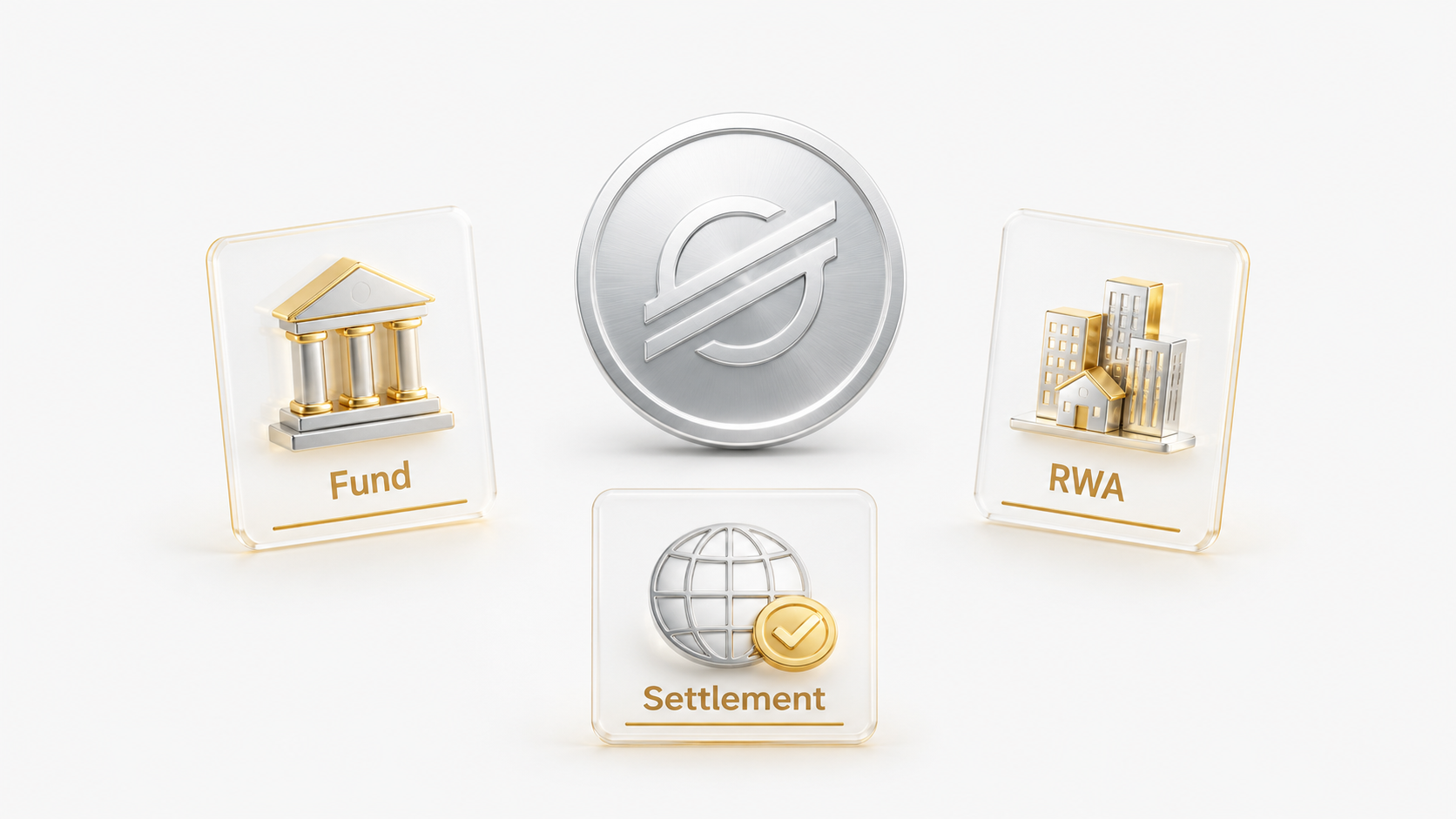
What Assets Have Been Tokenized on Stellar?
One of the most notable examples is a tokenized money-market fund associated with Aberdeen. Tokenized money-market products are important because they represent real-world financial assets that already have large institutional markets rather than purely crypto-native tokens.
When a fund is tokenized, blockchain can be used to represent ownership records, support transfers and potentially improve settlement. The underlying legal and economic rights still depend on the fund structure and issuer, so the token itself is not a replacement for regulation or custody.
Why Stellar Is Targeting Real-World Assets
Stellar was designed around efficient movement of value, which naturally overlaps with tokenized assets. RWA products need settlement, transfers and integration with digital cash. Stablecoins and tokenized funds can therefore reinforce one another inside the same network.
For institutions, the attraction is not simply lower transaction fees. Tokenization can potentially support faster settlement, fractional distribution and programmable compliance. Stellar’s strategy is to provide infrastructure where those features can coexist with regulated issuers.
This is why Stellar tokenization is strategically different from a short-term XLM price narrative. The long-term question is whether financial institutions actually choose Stellar as a settlement network.
Does Tokenization Increase Demand for XLM?
Potentially, but the relationship is not automatic. XLM is the native asset of Stellar and is used within the network, yet higher tokenized-asset value does not translate one-for-one into token-price appreciation.
Investors should distinguish network usage from speculative demand. If tokenized funds grow on Stellar, that may increase transactions, liquidity requirements and ecosystem activity. But XLM price still depends on broader crypto-market conditions, supply and demand, investor positioning and how much native-token utility the activity creates.
Stellar vs Ethereum and Solana for Tokenized Assets
Ethereum has the deepest smart-contract and DeFi ecosystem, while Solana offers high throughput and a rapidly growing tokenized-asset market. Stellar’s positioning is somewhat different: it emphasizes payments, asset issuance and institutional connectivity.
That can be an advantage for certain regulated use cases, but ecosystem size also matters. Issuers care about liquidity, developer tools, custody integrations and secondary-market access. Stellar must continue attracting institutional partners if it wants to compete for a larger share of tokenized finance.
What Should Traders Watch Next?
The first metric is tokenized assets under management. Announcements are useful, but sustained AUM shows whether investors are actually using the products. The second is the number of issuers and asset classes coming to Stellar.
Third, secondary liquidity matters. Tokenization creates more value when holders can move, trade or use assets efficiently rather than simply viewing an onchain record. Finally, transaction volume and stablecoin settlement can indicate whether Stellar tokenization is generating real network activity.
What Are the Main Risks?
RWA tokenization remains heavily dependent on regulation, custody and legal enforceability. A blockchain transaction may be final, but ownership rights still have to be recognized under applicable law.
Competition is another risk. Ethereum, Solana and newer institutional chains are all pursuing tokenized securities and funds. Stellar therefore needs differentiated distribution rather than relying only on technical efficiency.
There is also price-narrative risk. Traders may buy XLM on RWA headlines even when the economic connection to token demand is weak. That can produce short-lived rallies that fade if adoption metrics do not follow.
How to Trade XLM-USDT on Tapbit
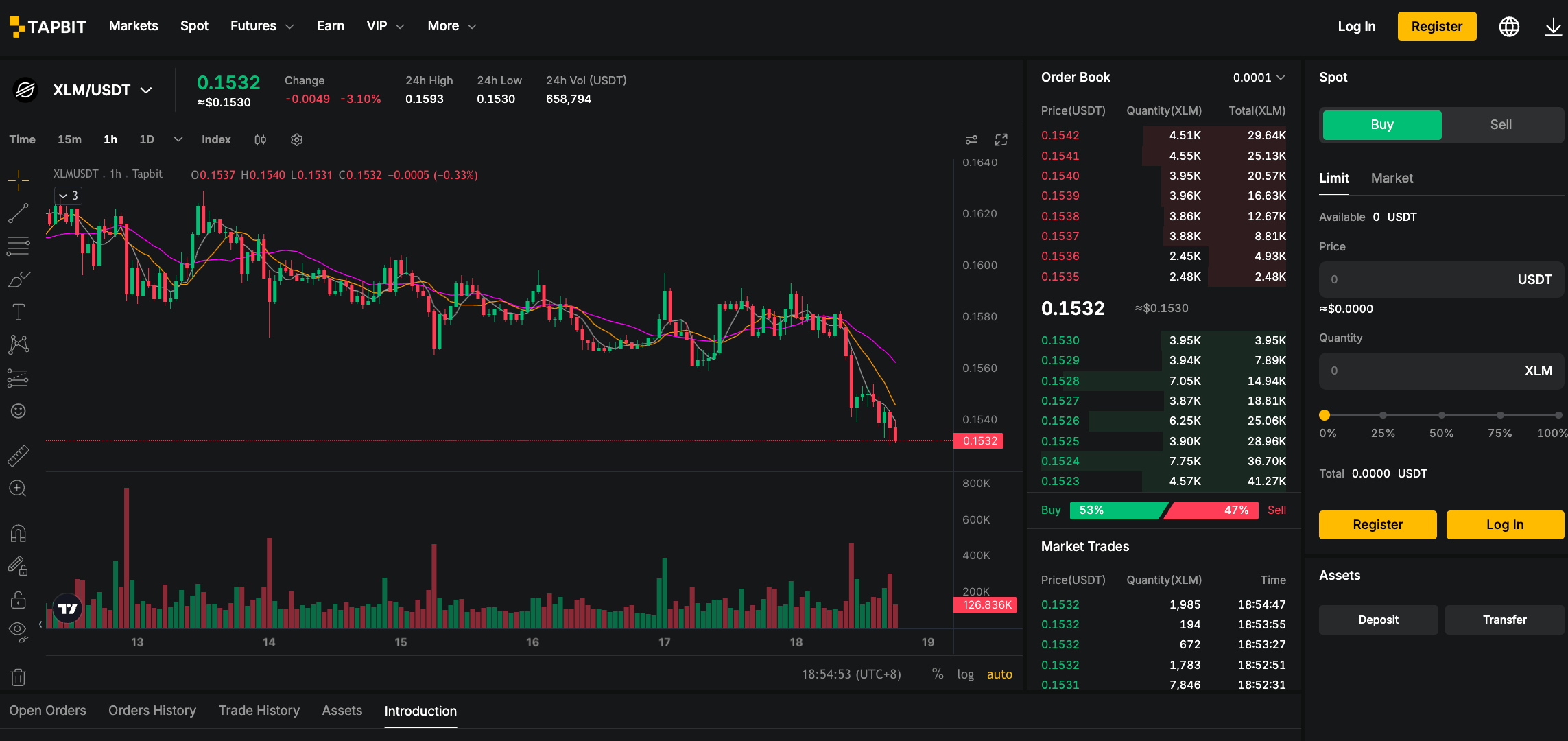
Tapbit supports XLM-USDT spot trading. Spot trading means buying or selling XLM itself rather than a leveraged derivative.
-
Create an account or log in to Tapbit.
-
Open the XLM-USDT spot market and review the current price, order book and available liquidity.
-
Select a Market or Limit order and enter the amount of XLM or USDT you want to trade.
-
Review the order details before confirming, then monitor the position and overall crypto-market risk.
Another useful way to judge Stellar tokenization is to separate asset issuance from asset usage. A fund can technically exist onchain without generating meaningful secondary liquidity or payment activity. Stronger evidence would include recurring subscriptions, redemptions, transfers and settlement flows. That is why Stellar tokenization should be measured through real activity rather than the number of announcements alone.
For XLM holders, Stellar tokenization becomes more important when institutional products create persistent demand for network settlement and liquidity. If regulated issuers continue to choose Stellar, Stellar tokenization could become a durable ecosystem driver instead of a temporary RWA narrative.
Bottom Line
Stellar tokenization is evolving from a narrative into a more institutional strategy as regulated partners such as Archax help bring tokenized financial products onto the network. That development strengthens Stellar’s RWA positioning, but investors should focus on measurable adoption: AUM, issuers, liquidity and transaction volume. RWA growth can support the Stellar ecosystem without guaranteeing XLM price appreciation. For users who want direct XLM market exposure, Tapbit supports XLM-USDT spot trading.
FAQ
What is Stellar tokenization?
It refers to using the Stellar network to issue, transfer or settle digital representations of real-world financial assets such as funds and securities.
Why is Archax important to Stellar?
Archax provides regulated digital-asset infrastructure that can connect traditional fund managers and investors with blockchain-based products.
Does RWA adoption automatically increase XLM price?
No. Greater network activity can support the ecosystem, but XLM price still depends on broader market demand and the economic role of the token.
Can I buy XLM on Tapbit?
Yes. Tapbit supports XLM-USDT spot trading.


