

June 30 settled one question about Kaspa: Toccata was not another upgrade that would remain on a roadmap indefinitely.
The hard fork activated on mainnet at DAA score 474,165,565, adding covenants, transaction introspection, zero‑knowledge proof verification, and sequencing support for a new class of applications.
What followed is less dramatic but more significant.
Kaspa now has the protocol capabilities for programmable assets and applications, yet much of the surrounding infrastructure is still incomplete. Token standards remain drafts, developer tooling is evolving, and early DeFi experiments are still in testing.
Toccata gave builders a new foundation. It didn't deliver a finished application economy on launch day.
What Toccata Changed on Kaspa
Kaspa began as a fast proof-of-work network built around a blockDAG rather than a traditional linear blockchain. Its original strength was transaction ordering and confirmation speed, not general-purpose programmability.
Toccata expanded that model without turning Kaspa into an Ethereum clone.
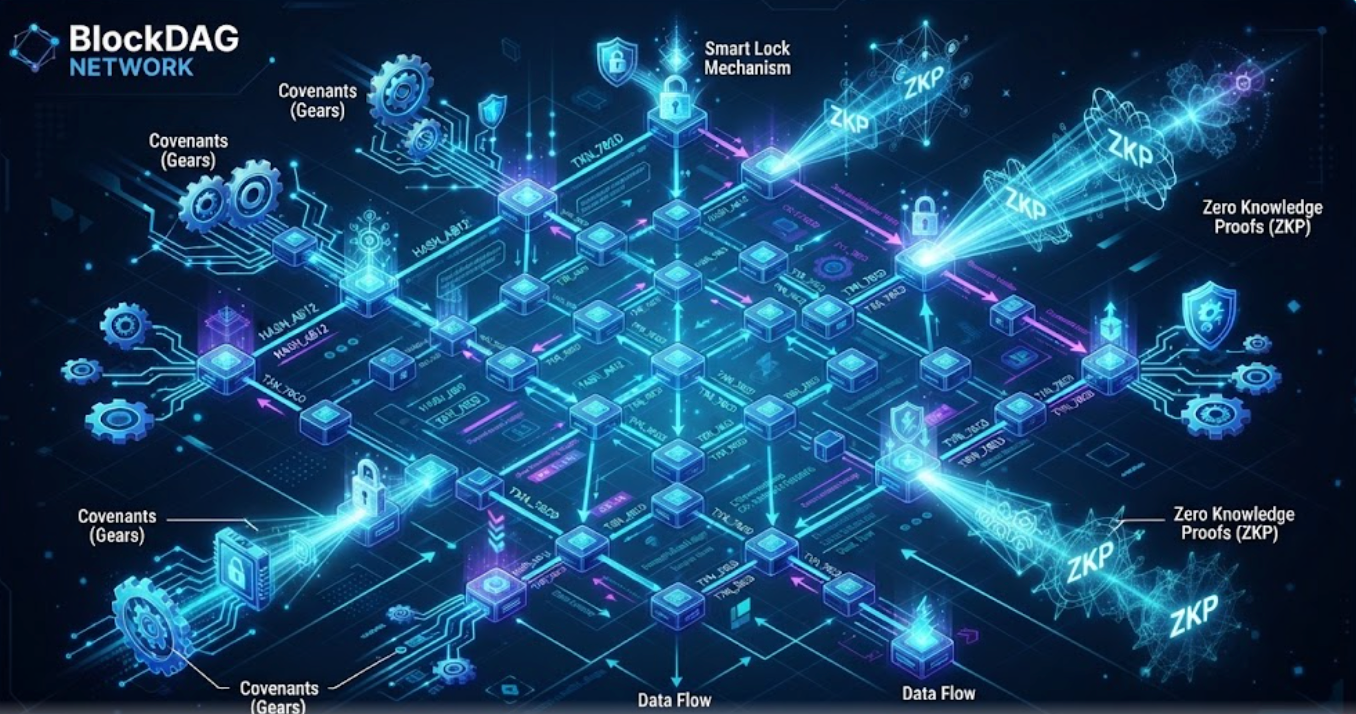
The upgrade introduced programmable UTXOs through covenants. A covenant can define not only who may spend an output, but also the conditions governing how it is spent and what its successor must look like. That opens the door to vaults, controlled asset transfers, payment channels and more complex financial logic.
Toccata also added transaction introspection, a new transaction format, script-pricing rules and an on-chain path for verifying zero-knowledge proofs. Based applications can submit operations to Kaspa for ordering, execute them outside the base layer and later settle verified results through L1 covenants.
Kaspa Did Not Add Solidity
Some descriptions of Toccata call it Kaspa’s smart-contract upgrade. That shorthand can create the wrong expectation.
Kaspa remains UTXO-native. It did not introduce an account-based execution environment where developers can deploy Solidity contracts and mutate shared state in the same way they would on Ethereum.
Application state can instead live in programmable outputs whose spending rules preserve continuity from one transaction to the next. More complex based applications may use Kaspa to order operations and verify proofs while executing computation elsewhere.
This design may preserve Kaspa’s proof-of-work and UTXO principles, but it also asks developers to learn a different model. Existing Ethereum applications cannot simply be copied onto Kaspa.
The technical distinction matters because adoption depends on tooling. A powerful execution model will struggle to attract developers if wallets, indexers, debuggers and libraries are difficult to use.
The Tooling Is Still Catching Up
Kaspa’s own documentation separates features that are live from development surfaces that remain experimental.
SilverScript is the main higher-level language for writing Kaspa covenants, but the toolchain is still early. Developers continued correcting type handling, execution behavior and timelock logic during August.
The Python SDK remains in beta. Argent, a library intended to help developers compose covenant-based applications, is still evolving. Full vProgs, which are expected to support richer based-application composition, remain a future direction rather than a stable production interface.
This does not mean Toccata failed. It means the network is in the stage where infrastructure must be made usable, not merely possible.
Kaspa’s Token Standard Is Still a Draft
Native asset capability alone does not create a healthy token market. Wallets need to recognize balances. Explorers need to index activity. Exchanges and applications need a shared method for handling metadata, supply and transfers. Without common conventions, two projects can implement similar assets in incompatible ways.
Kaspa developers opened the Kaspa Calls for Conventions process to address that problem. KCC-0020, the proposed fungible-token covenant specification, is currently listed as a draft. Work is also continuing on a token metadata standard under KCC-0021.
The draft status is an important reality check. Toccata supports the underlying rules required for native assets, but the ecosystem is still deciding how those assets should behave across independent applications.
A testnet AMM built around a draft standard is useful engineering work. It is not yet evidence of deep mainnet liquidity.
What Is Actually Being Built?
Post-Toccata development has moved beyond theoretical discussions.
Developers have tested automated market makers, covenant composition, post-quantum vault designs and new wallet interfaces. SilverScript has received further fixes, while Rusty Kaspa added support related to dynamic Groth16 verification.
KaChat has opened a desktop build for public testing and continued developing wallet and private-payment features. Igra has added WalletConnect support for Tangem, giving users another route into its Kaspa-related application environment.
These projects show that Toccata is being explored. They do not yet establish a mature DeFi sector.
The evidence needed for that claim would look different: stablecoin supply, sustained AMM volume, locked liquidity, repeat users, mainnet fees generated by applications and products operating beyond public tests.
The Upgrade Has Not Repriced KAS
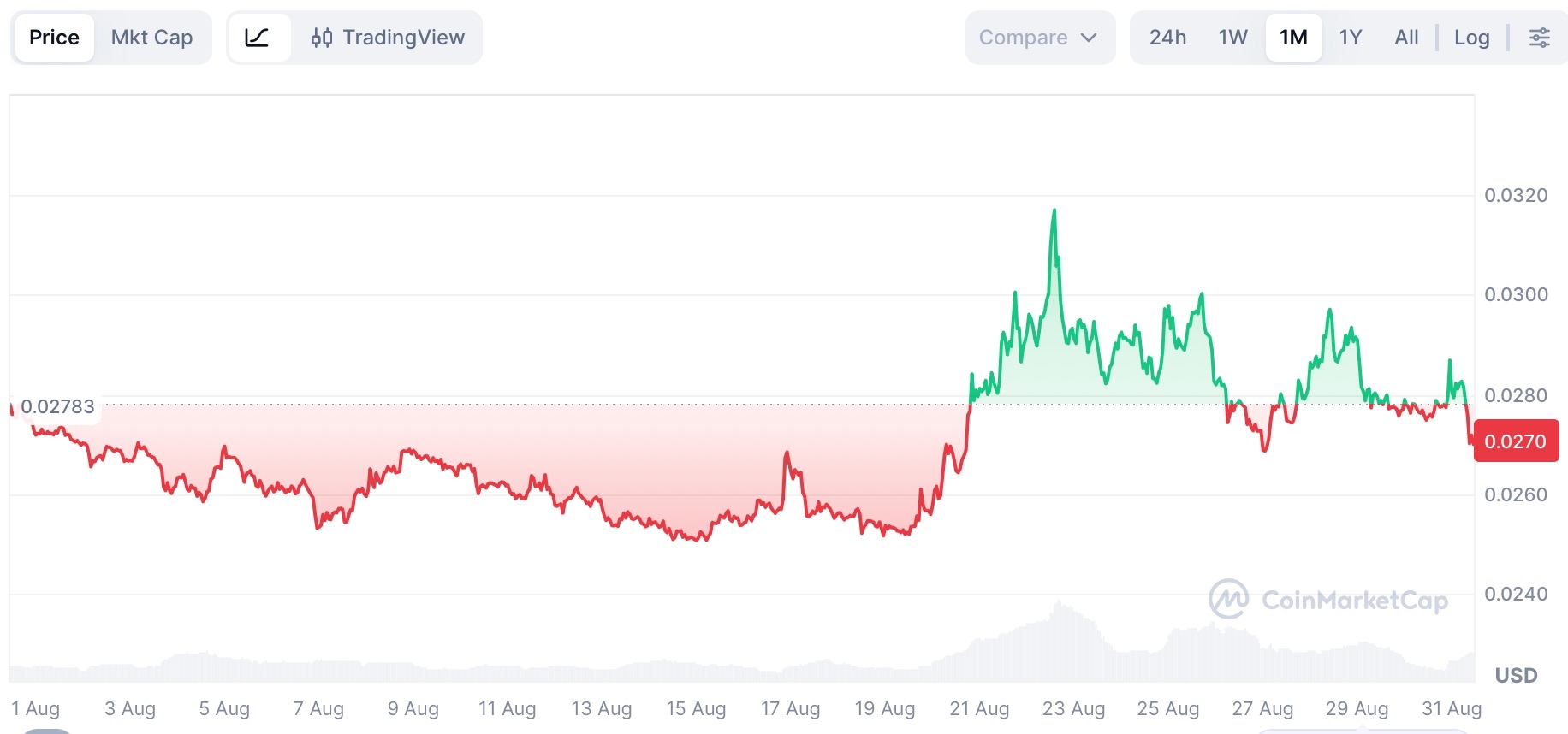
KAS traded near $0.027 at the end of August, with a market capitalization of approximately $750 million.
The token remained roughly 87% below its July 2024 all-time high of $0.2074. Its seven-day performance was positive, but the monthly move was limited.
That price action does not prove the market has rejected Toccata. Application platforms often require months or years to build standards, tools and liquidity after a major protocol upgrade.
It does show that a successful hard fork is not enough to support a major valuation change. The market is waiting for proof that programmability will produce activity.
The Metrics That Matter After Toccata
The next phase of Kaspa cannot be judged by the hard-fork date. Toccata is already live.
Progress should now appear in the parts of the network that users and developers can measure. Finalized token conventions would make wallet and exchange support easier. Production-ready SilverScript and SDK releases would lower development friction. Mainnet stablecoins, AMMs and based applications would show that builders can move beyond experiments.
Usage will matter most. Transactions carrying application activity, liquidity in native assets, active addresses interacting with new products and fees generated by those products would provide a clearer case for KAS demand.
Until those signals appear, Toccata should be viewed as infrastructure rather than adoption.
Kaspa Has Reached the Harder Part
Shipping a consensus upgrade is difficult. Building an economy on top of it is harder.
Kaspa now offers covenant-based programmability while retaining its proof-of-work blockDAG design. That combination distinguishes it from both Bitcoin and account-based smart-contract networks.
Distinct architecture does not guarantee developer interest. Developers will choose Kaspa if its tools are reliable, its applications can reach users and its liquidity is sufficient to support real activity.
Toccata has made those outcomes possible. The next chapter depends on whether the ecosystem can make them practical.
Follow Layer 1 development, digital asset markets and crypto infrastructure research through Tapbit. Existing users can log in, while new users can register for an account.
Frequently Asked Questions
What is the Kaspa Toccata upgrade?
Toccata is a Kaspa mainnet hard fork that introduced programmable UTXOs, covenants, transaction introspection, zero-knowledge proof verification and sequencing support for based applications.
When did Toccata activate?
Toccata activated on Kaspa mainnet on June 30, 2026, at DAA score 474,165,565.
Did Toccata add Ethereum-style smart contracts?
No. Kaspa remains a UTXO-based network and did not add the Ethereum Virtual Machine or Solidity. Applications use covenants and other Kaspa-native programming models.
June 30 settled one question about Kaspa: Toccata was not another upgrade that would remain on a roadmap indefinitely.
The hard fork activated on mainnet at DAA score 474,165,565, adding covenants, transaction introspection, zero‑knowledge proof verification, and sequencing support for a new class of applications.
What followed is less dramatic but more significant.
Kaspa now has the protocol capabilities for programmable assets and applications, yet much of the surrounding infrastructure is still incomplete. Token standards remain drafts, developer tooling is evolving, and early DeFi experiments are still in testing.
Toccata gave builders a new foundation. It didn't deliver a finished application economy on launch day.
What Toccata Changed on Kaspa
Kaspa began as a fast proof-of-work network built around a blockDAG rather than a traditional linear blockchain. Its original strength was transaction ordering and confirmation speed, not general-purpose programmability.
Toccata expanded that model without turning Kaspa into an Ethereum clone.
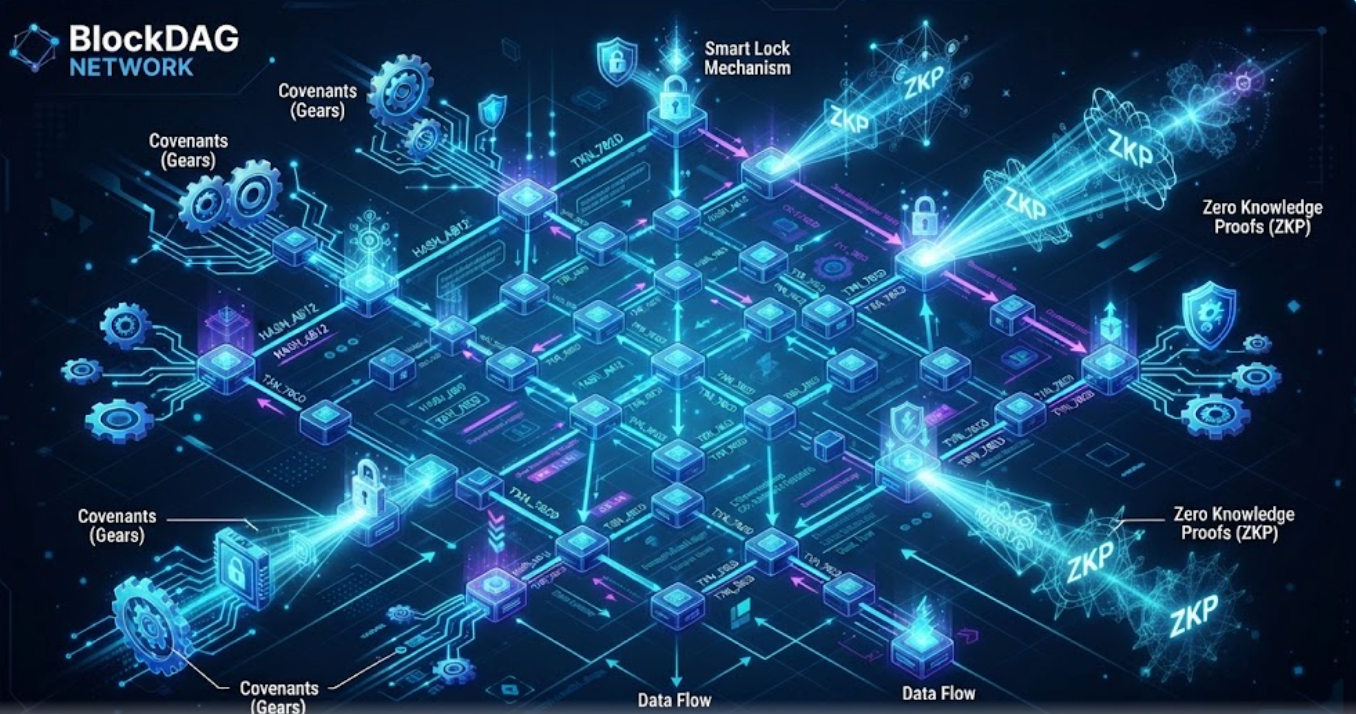
The upgrade introduced programmable UTXOs through covenants. A covenant can define not only who may spend an output, but also the conditions governing how it is spent and what its successor must look like. That opens the door to vaults, controlled asset transfers, payment channels and more complex financial logic.
Toccata also added transaction introspection, a new transaction format, script-pricing rules and an on-chain path for verifying zero-knowledge proofs. Based applications can submit operations to Kaspa for ordering, execute them outside the base layer and later settle verified results through L1 covenants.
Kaspa Did Not Add Solidity
Some descriptions of Toccata call it Kaspa’s smart-contract upgrade. That shorthand can create the wrong expectation.
Kaspa remains UTXO-native. It did not introduce an account-based execution environment where developers can deploy Solidity contracts and mutate shared state in the same way they would on Ethereum.
Application state can instead live in programmable outputs whose spending rules preserve continuity from one transaction to the next. More complex based applications may use Kaspa to order operations and verify proofs while executing computation elsewhere.
This design may preserve Kaspa’s proof-of-work and UTXO principles, but it also asks developers to learn a different model. Existing Ethereum applications cannot simply be copied onto Kaspa.
The technical distinction matters because adoption depends on tooling. A powerful execution model will struggle to attract developers if wallets, indexers, debuggers and libraries are difficult to use.
The Tooling Is Still Catching Up
Kaspa’s own documentation separates features that are live from development surfaces that remain experimental.
SilverScript is the main higher-level language for writing Kaspa covenants, but the toolchain is still early. Developers continued correcting type handling, execution behavior and timelock logic during August.
The Python SDK remains in beta. Argent, a library intended to help developers compose covenant-based applications, is still evolving. Full vProgs, which are expected to support richer based-application composition, remain a future direction rather than a stable production interface.
This does not mean Toccata failed. It means the network is in the stage where infrastructure must be made usable, not merely possible.
Kaspa’s Token Standard Is Still a Draft
Native asset capability alone does not create a healthy token market. Wallets need to recognize balances. Explorers need to index activity. Exchanges and applications need a shared method for handling metadata, supply and transfers. Without common conventions, two projects can implement similar assets in incompatible ways.
Kaspa developers opened the Kaspa Calls for Conventions process to address that problem. KCC-0020, the proposed fungible-token covenant specification, is currently listed as a draft. Work is also continuing on a token metadata standard under KCC-0021.
The draft status is an important reality check. Toccata supports the underlying rules required for native assets, but the ecosystem is still deciding how those assets should behave across independent applications.
A testnet AMM built around a draft standard is useful engineering work. It is not yet evidence of deep mainnet liquidity.
What Is Actually Being Built?
Post-Toccata development has moved beyond theoretical discussions.
Developers have tested automated market makers, covenant composition, post-quantum vault designs and new wallet interfaces. SilverScript has received further fixes, while Rusty Kaspa added support related to dynamic Groth16 verification.
KaChat has opened a desktop build for public testing and continued developing wallet and private-payment features. Igra has added WalletConnect support for Tangem, giving users another route into its Kaspa-related application environment.
These projects show that Toccata is being explored. They do not yet establish a mature DeFi sector.
The evidence needed for that claim would look different: stablecoin supply, sustained AMM volume, locked liquidity, repeat users, mainnet fees generated by applications and products operating beyond public tests.
The Upgrade Has Not Repriced KAS
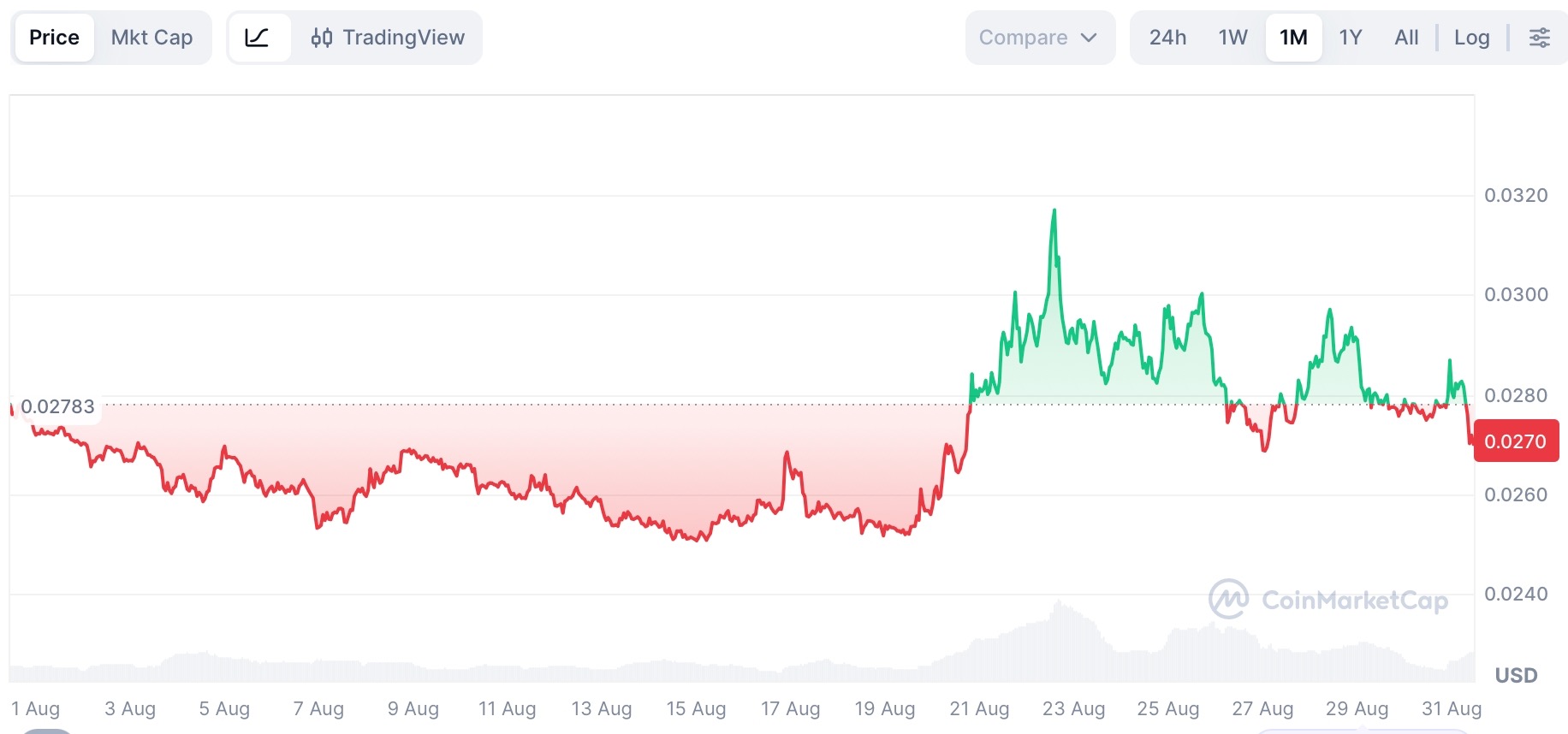
KAS traded near $0.027 at the end of August, with a market capitalization of approximately $750 million.
The token remained roughly 87% below its July 2024 all-time high of $0.2074. Its seven-day performance was positive, but the monthly move was limited.
That price action does not prove the market has rejected Toccata. Application platforms often require months or years to build standards, tools and liquidity after a major protocol upgrade.
It does show that a successful hard fork is not enough to support a major valuation change. The market is waiting for proof that programmability will produce activity.
The Metrics That Matter After Toccata
The next phase of Kaspa cannot be judged by the hard-fork date. Toccata is already live.
Progress should now appear in the parts of the network that users and developers can measure. Finalized token conventions would make wallet and exchange support easier. Production-ready SilverScript and SDK releases would lower development friction. Mainnet stablecoins, AMMs and based applications would show that builders can move beyond experiments.
Usage will matter most. Transactions carrying application activity, liquidity in native assets, active addresses interacting with new products and fees generated by those products would provide a clearer case for KAS demand.
Until those signals appear, Toccata should be viewed as infrastructure rather than adoption.
Kaspa Has Reached the Harder Part
Shipping a consensus upgrade is difficult. Building an economy on top of it is harder.
Kaspa now offers covenant-based programmability while retaining its proof-of-work blockDAG design. That combination distinguishes it from both Bitcoin and account-based smart-contract networks.
Distinct architecture does not guarantee developer interest. Developers will choose Kaspa if its tools are reliable, its applications can reach users and its liquidity is sufficient to support real activity.
Toccata has made those outcomes possible. The next chapter depends on whether the ecosystem can make them practical.
Follow Layer 1 development, digital asset markets and crypto infrastructure research through Tapbit. Existing users can log in, while new users can register for an account.
Frequently Asked Questions
What is the Kaspa Toccata upgrade?
Toccata is a Kaspa mainnet hard fork that introduced programmable UTXOs, covenants, transaction introspection, zero-knowledge proof verification and sequencing support for based applications.
When did Toccata activate?
Toccata activated on Kaspa mainnet on June 30, 2026, at DAA score 474,165,565.
Did Toccata add Ethereum-style smart contracts?
No. Kaspa remains a UTXO-based network and did not add the Ethereum Virtual Machine or Solidity. Applications use covenants and other Kaspa-native programming models.


