
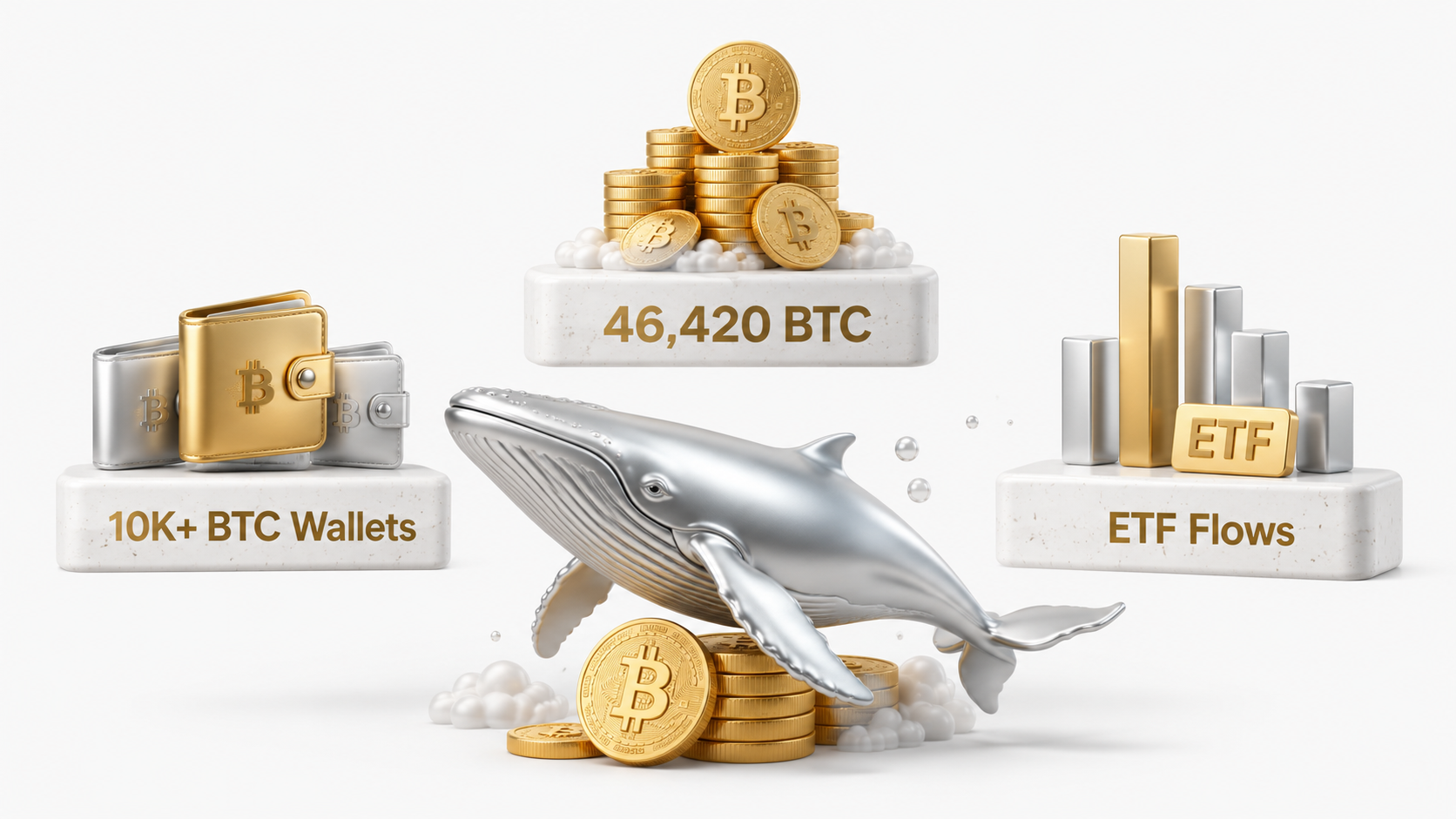
Bitcoin whale accumulation is getting harder to ignore. CryptoQuant data reported in August showed addresses holding more than 10,000 BTC adding about 46,420 BTC over a 60-day period through August 9. At the same time, smaller holders were reducing exposure.
A social-media post supplied for this article claimed that whales bought roughly $2.64 billion of Bitcoin over the previous two months. That exact dollar figure should be treated as a social claim. The bigger story, however, has independent support: large wallets really have been adding BTC while the market remains under pressure.
Are Bitcoin Whales Buying the Dip?
Yes, several datasets point in that direction. CryptoQuant's cohort data showed the biggest wallets — those with more than 10,000 BTC — posting their strongest 60-day accumulation reading since mid-March.
Santiment data also showed the number of wallets holding at least 10,000 BTC rising to around 90, a six-month high in the reported period. The two datasets measure different things, but both point toward larger holders becoming more active buyers.
That does not mean every whale is buying. Wallet groups can include exchanges, institutions and other entities. “Whale” is a useful market label, not a perfect identity card.
How Much Bitcoin Are Whales Accumulating?
The CryptoQuant figure of 46,420 BTC is useful because it looks at net behavior over a defined 60-day window. Another late-July dataset based on Santiment showed wallets in the 1,000-to-10,000 BTC range adding roughly 40,100 BTC over a shorter period.
Different numbers are not necessarily a contradiction. One provider may track wallets above 10,000 BTC; another may focus on 1,000 to 10,000 BTC. The time windows can also differ.
The lesson is simple: do not compare whale statistics until you check the size of the whale.
Why Would Whales Buy While Bitcoin Is Weak?
Large holders often work with a longer time horizon than short-term traders. A 10% drawdown that feels dramatic on a phone screen may look like a routine entry window to an institution building a position over months.
Whales may also prefer buying when liquidity is available and sentiment is weak. That does not mean they know the exact bottom. It means their risk-reward calculation can be different from someone trying to time tomorrow's candle.
When whales buy, they are casting a vote — not seeing the future.
Why Whale Buying Can Be Bullish
If large holders move BTC away from active selling, less supply may be available to meet new demand. That can make a later rebound stronger if ETF flows, retail demand or macro conditions improve at the same time.
Large-wallet accumulation can also show conviction. Investors willing to hold thousands of BTC through a weak market are making a very different decision from a trader buying for a two-hour bounce.
But supply alone is only half the market. Someone still has to create demand.
Whale Accumulation vs Bitcoin ETF Flows
Whales and ETFs represent two different pools of capital. Onchain whale data track large wallet balances, while ETF flows track money entering or leaving regulated investment products.
The strongest bullish setup is when both improve together. Large wallets absorb coins, while ETF inflows bring fresh external demand. If whales buy but ETF flows remain weak, the market can still stay range-bound.
Late-July data offered an example of whales moving before a stronger ETF inflow day. That sequence is interesting, but one example is not a rule.
Does Bitcoin Whale Accumulation Mean BTC Will Rise?
No. It is a positive input, not a guaranteed forecast.
Whales can be early. They can accumulate through several months of falling prices. Some large wallets may also be reorganizing custody rather than expressing a directional view.
That is why Bitcoin whale accumulation works best when combined with price structure, spot volume, exchange balances and institutional flows.
What Would Confirm a Bitcoin Rebound?
- Price confirmation: BTC reclaims important resistance instead of only bouncing intraday.
- Spot volume: buying expands in real spot markets rather than relying mainly on leverage.
- ETF demand: sustained net inflows add a second source of institutional demand.
- Exchange balances: lower balances can suggest less immediate sell-side supply.
- Broader risk appetite: macro conditions stop working against crypto.
What Would Weaken the Whale Signal?
A clear shift from accumulation back to distribution would matter. Rising exchange inflows from large wallets would also be a warning because they can indicate preparation to sell.
Another warning would be price repeatedly making new lows while whale accumulation loses momentum. If large buyers stop absorbing supply, the market loses one of its support mechanisms.
How to Trade Bitcoin on Tapbit
Tapbit supports BTC-USDT spot trading for users who want to buy or sell Bitcoin directly. It also offers BTC-USDT perpetual futures for leveraged long or short exposure.
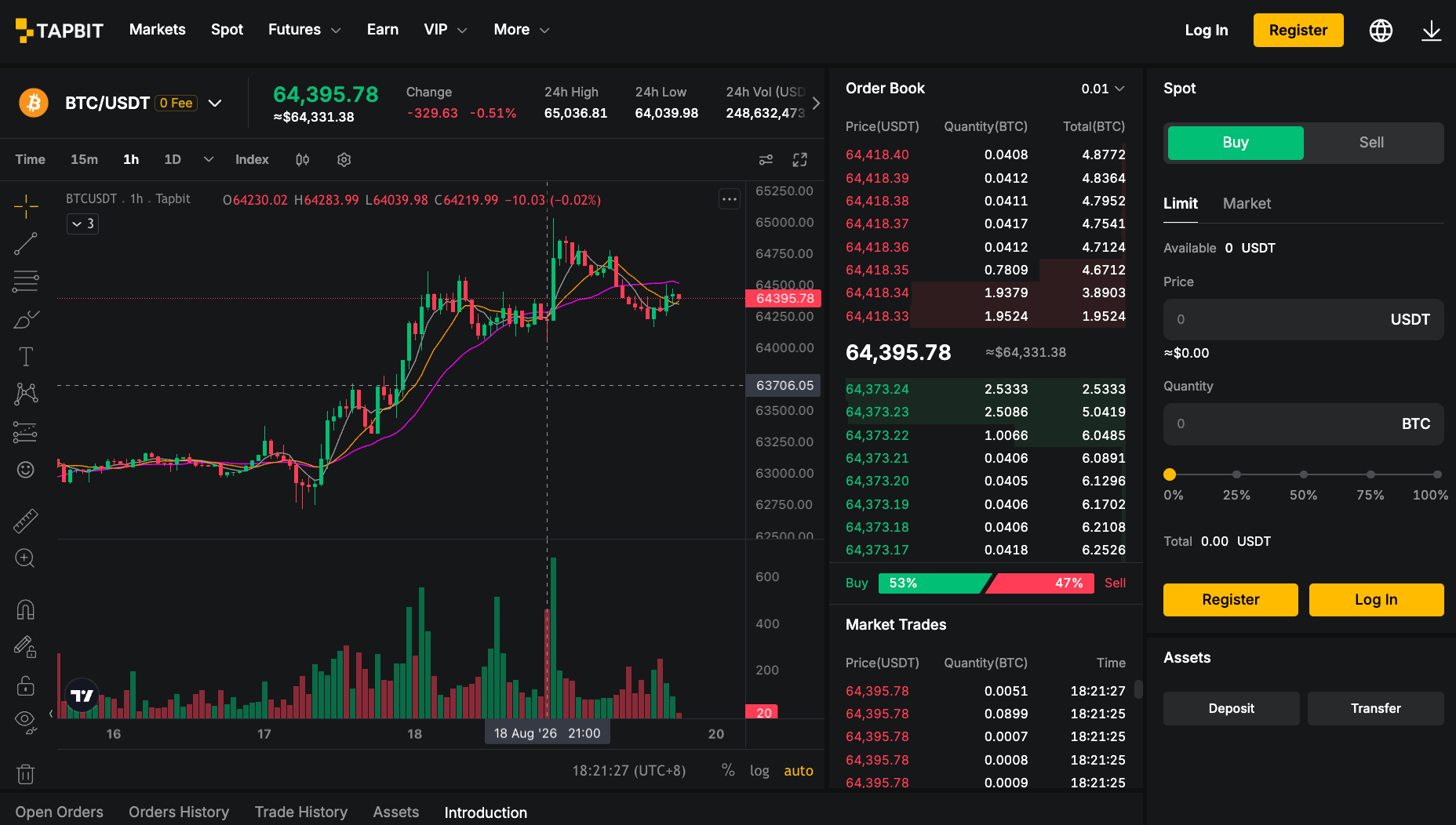
Spot is simpler: you buy BTC directly on the spot market. Perpetual futures are derivatives and can be liquidated if leverage and margin are poorly managed.
-
Create an account or log in.
-
Choose BTC-USDT spot, or open the BTC-USDT perpetual contract and check mark price, index price and funding.
-
For futures, set order type, quantity, leverage and margin mode before opening long or short.
-
Use TP/SL and monitor margin and liquidation risk.
Bottom Line
Bitcoin whale accumulation is one of the stronger bullish signals in an otherwise mixed market. The 46,420 BTC 60-day accumulation figure shows that the largest wallet cohort has been buying while smaller holders have been less confident. That can help build a floor, but it is not a magic “price goes up now” button. A stronger BTC rebound still needs price confirmation, healthy spot demand and broader capital inflows. Whales are buying the dip. The rest of the market still has to decide whether to follow them.
FAQ
Are Bitcoin whales buying now?
Recent CryptoQuant and Santiment data indicate that very large Bitcoin holders have been accumulating during the latest weak period.
What is a Bitcoin whale?
There is no single universal definition, but the term usually refers to a wallet or entity holding a very large amount of BTC, often 1,000 BTC or more.
Is whale accumulation bullish for Bitcoin?
Usually it is a constructive supply signal, but it does not guarantee an immediate price increase.
How can traders track Bitcoin whales?
Onchain analytics platforms such as CryptoQuant and Santiment publish wallet-cohort, exchange-flow and large-holder data that can help track broad behavior.


