
At first glance, a Bitcoin ATM blends in. Same screen, same cash acceptor, same spot near the store's counter. But that's where the similarity ends.
A bank ATM routes transactions through regulated accounts. A crypto ATM routes cash straight to a blockchain address — with no intermediary to reverse the transfer once it's confirmed.
The gap is becoming visible in the data. Fraud reports tied to these kiosks are climbing. States are tightening rules. And Bitcoin Depot, once a market leader, recently filed for bankruptcy.
Crypto ATMs aren't going away. They still offer real value for cash-reliant or underbanked users. But their convenience now comes with a caveat: the machine won't warn you. You have to warn yourself.
What Is a Crypto ATM?
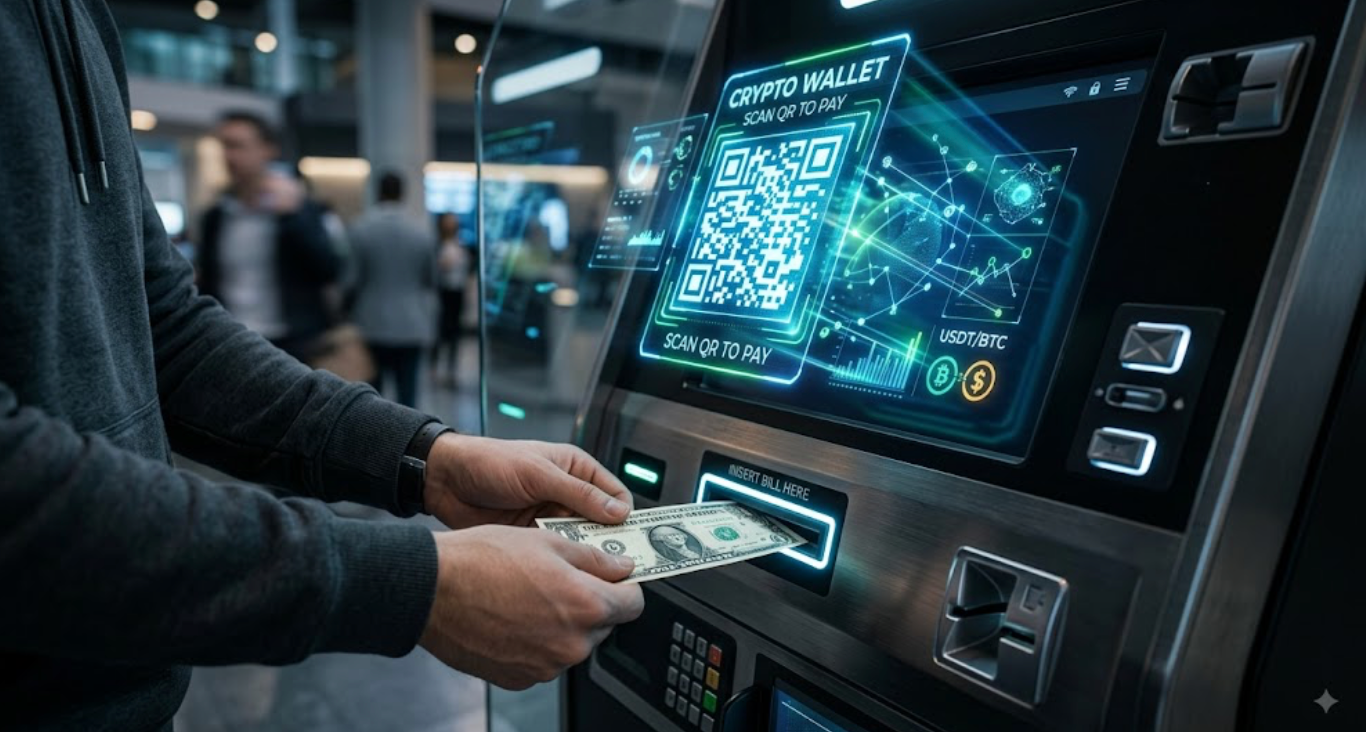
A crypto ATM is a physical kiosk that allows users to buy cryptocurrency with cash. Some machines also support sales, allowing users to send cryptocurrency and receive cash after the transaction is confirmed.
The process usually begins with identity verification. Depending on the operator, location and transaction amount, the customer may need to provide a phone number, scan an identity document or complete a facial check.
To buy Bitcoin, the customer scans the receiving address from a personal wallet, inserts cash and reviews the quoted exchange rate. The operator then sends the purchased cryptocurrency to that address.
This final step deserves attention. The machine does not place Bitcoin into a protected account. It sends the asset to whichever wallet address was entered or scanned. If that address belongs to a scammer, recovering the money can be extremely difficult.
Why Crypto ATM Scams Are Receiving More Attention
The latest FBI figures show that crypto ATM fraud is no longer a marginal issue.
The FBI’s 2025 Internet Crime Report recorded 13,460 complaints involving cryptocurrency ATMs or kiosks, with reported losses reaching approximately $389 million. Complaint volume increased by 23% from the previous year, while losses rose by 58%.
Older users suffered the largest losses. People aged 60 and above reported more than $257 million in crypto ATM-related losses, accounting for roughly two-thirds of the total.
The machine is rarely the starting point of the scam. Victims are usually contacted first by phone, text message, social media or a computer pop-up. The caller may claim to represent a government agency, bank, technology company or law enforcement department. In other cases, the approach begins as an investment opportunity or a message from someone pretending to be a relative.
The story changes, but the instruction is often the same: withdraw cash, find a nearby Bitcoin ATM and scan a supplied QR code.
That QR code contains the scammer’s wallet address. Once the cash has been converted and sent, the victim no longer controls the funds.
Why the ATM Format Can Create False Confidence
Many victims assume that a kiosk installed in a supermarket or gas station carries protections similar to a bank machine. The store may only be providing floor space, however, and may have no role in processing the transaction or resolving a complaint.
On-screen warnings also have limits. A customer who has been told that an account is about to be frozen or that a family member is in danger may click through several warnings without reconsidering the payment.
Scammers often stay on the phone throughout the transaction. They provide step-by-step instructions, discourage the victim from speaking to store employees and create a sense that any delay will make the situation worse.
A legitimate government agency, bank or technology company will not require someone to protect money, pay a fine or fix an account through a crypto ATM. An instruction to make this kind of payment should be treated as evidence of a scam.
Bitcoin Depot’s Bankruptcy Changes the Industry
Bitcoin Depot was once one of the most visible names in the North American crypto ATM market. Its machines were installed across thousands of retail locations, making the company an important part of the cash-to-crypto industry.
That position did not produce a sustainable business.
On May 17, 2026, Bitcoin Depot and several affiliated companies filed voluntary Chapter 11 petitions in Texas. The proceedings were initiated to support an orderly wind-down and facilitate the sale of company assets. Nasdaq subsequently notified the company that trading in its securities would be suspended.
The collapse matters beyond Bitcoin Depot itself. Crypto ATM operators collect fees that are far higher than those charged by most online trading platforms, yet they also carry substantial costs. Machines must be installed, maintained, stocked and monitored. Operators must manage cash logistics, identity checks, anti-money laundering controls and fraud complaints across multiple jurisdictions.
As state rules become stricter, those costs increase. Transaction limits can reduce revenue, while fee caps restrict how much an operator can collect from each customer. Enforcement actions and litigation add another layer of pressure.
Bitcoin Depot’s bankruptcy does not mean every crypto ATM business will disappear. It does show that a large network and high transaction fees are not enough to guarantee a viable operation.
How Much Does a Bitcoin ATM Cost to Use?
Crypto ATMs are usually considerably more expensive than online exchanges. The true cost may include a transaction fee and a spread between the market price of Bitcoin and the price offered by the machine.
Users should therefore look beyond the fee displayed on the confirmation screen. The more useful comparison is between the amount of cash inserted and the amount of cryptocurrency that will actually reach the wallet.
A District of Columbia lawsuit against Athena Bitcoin illustrates the issue. The DC Attorney General alleged that the operator charged fees of up to 26% without clearly disclosing their full effect. The complaint also alleged that a large share of deposits made through Athena’s local machines was connected to scams. These remain allegations in a civil case rather than a final court judgment.
California has taken a more prescriptive approach. Its Digital Financial Assets Law limits direct and indirect crypto kiosk charges to the greater of $5 or 15% of the dollar value of the digital assets involved in a transaction. Operators must also disclose their price, the reference market price and the resulting spread before the customer proceeds.
Even within that legal limit, a 15% charge can materially reduce the amount received. Convenience should always be weighed against the complete transaction cost.
US States Are Adding New Consumer Protections

There is no single nationwide set of consumer rules governing every US crypto ATM. Federal anti-money laundering obligations apply, but transaction limits, fee caps and refund rights increasingly depend on state law.
California limits crypto kiosk activity to $1,000 per customer per day. It requires receipts and pre-transaction disclosures, caps charges and, from July 1, 2026, requires relevant operators to be licensed or to have submitted a completed application.
Kansas introduced its Virtual Currency Kiosk Consumer Protection Act on the same date. The law covers licensing, fee limits, fraud controls, transaction disclosures and quarterly reporting. It also provides for refunds within certain windows, including cases involving cooperation with regulators or law enforcement. Kansas banking regulators describe it as part of the state’s broader money transmission framework.
At the federal level, lawmakers introduced the Stop Crypto ATM Scams Act in June 2026. The proposal would create registration, anti-money laundering and anti-fraud requirements for kiosk operators. It has been referred to the House Financial Services Committee but has not become law. Its introduction shows where policy may be heading, not what operators are already required to do nationwide.
How to Use a Crypto ATM More Carefully
Before inserting cash, confirm that the wallet displayed on the screen is under your control. Never scan a QR code sent by an unexpected caller, online contact or supposed investment adviser.
Check the operator’s legal status and read the complete price disclosure. The percentage fee alone may not reveal an unfavorable exchange-rate spread.
It is also worth pausing if someone is waiting on the phone. Urgency, secrecy and instructions not to speak with store staff are common signs of manipulation.
If a transaction may be fraudulent, stop before sending the money. Contact the organization involved through a verified phone number, not one supplied by the caller. When funds have already been sent, notify the kiosk operator and law enforcement immediately. Recovery is difficult, but prompt reporting may help investigators identify the receiving wallet or prevent further payments.
What the Crypto ATM Crackdown Means
Crypto ATMs were built around a simple proposition: turn cash into Bitcoin without navigating a conventional trading platform. That convenience remains useful, but it comes with costs that are now receiving closer scrutiny.
The FBI’s loss figures show why regulators are focusing on transaction limits and fraud intervention. New state laws show that warnings alone are no longer considered sufficient. Bitcoin Depot’s bankruptcy shows how those changes, combined with operating expenses and litigation, can challenge even a large provider.
The machines are not inherently fraudulent. The problem is that a fast, cash-based and difficult-to-reverse payment channel is highly attractive to scammers. For consumers, the most important question is not simply whether a nearby machine works. It is who controls the destination wallet, what the transaction really costs and what protection exists if something goes wrong.
Readers can follow more cryptocurrency education and market coverage through Tapbit. Existing users can log in here, while new users can create an account.
Frequently Asked Questions
What is a crypto ATM?
A crypto ATM is a physical kiosk that allows users to buy cryptocurrency with cash. Some machines also support crypto sales and cash withdrawals. Unlike a bank ATM, it sends digital assets to a blockchain wallet rather than accessing a bank account.
How does a Bitcoin ATM work?
The user selects an amount, completes any required identity checks, scans a wallet address and inserts cash. The operator converts the cash into Bitcoin and sends it to the specified wallet after deducting its fees and exchange-rate spread.
Do I need a crypto wallet to use a Bitcoin ATM?
Usually, yes. Buyers need a wallet address where the Bitcoin can be received. Some machines may offer alternative wallet arrangements, but using a personal wallet gives the user clearer control over the purchased assets.


