

Bitcoin and gold do not react to inflation or Federal Reserve policy in the same way. Gold has the longer record as a defensive asset and often benefits when real interest rates fall or confidence in currencies weakens. Bitcoin can rally much faster when financial conditions ease, but it also behaves like a high-volatility risk asset during liquidity shocks. The better performer therefore depends on whether the market is trading inflation protection, monetary easing, or broad risk appetite.
Tapbit users can follow the BTC/USDT spot market and compare it with the XAUT/USDT spot market. XAUT is a tokenized-gold asset and is not identical to the institutional XAU/USD benchmark, but it can provide a practical crypto-market reference for gold-linked price exposure.
Bitcoin vs Gold: The Short Answer
| Factor | Bitcoin | Gold / XAU |
|---|---|---|
| Inflation shock | Can rise, but may initially fall if rates and the dollar jump | Often benefits when inflation erodes real returns |
| Fed rate cuts | Usually supportive when cuts improve liquidity and risk appetite | Usually supportive when real yields decline |
| Risk-off event | May sell off with equities before recovering | More established safe-haven demand |
| Volatility | High | Generally lower |
| Supply story | Fixed maximum of 21 million BTC | Scarce but continuously mined |
How Bitcoin Reacts to Inflation
Bitcoin’s fixed supply gives it a compelling long-term scarcity narrative, yet its short-term inflation response is not mechanical. When inflation rises unexpectedly, investors may expect tighter policy. Bond yields and the U.S. dollar can rise, leverage becomes more expensive, and speculative assets may decline. Bitcoin can therefore fall on a hot inflation report even when the long-run “digital gold” argument remains intact.
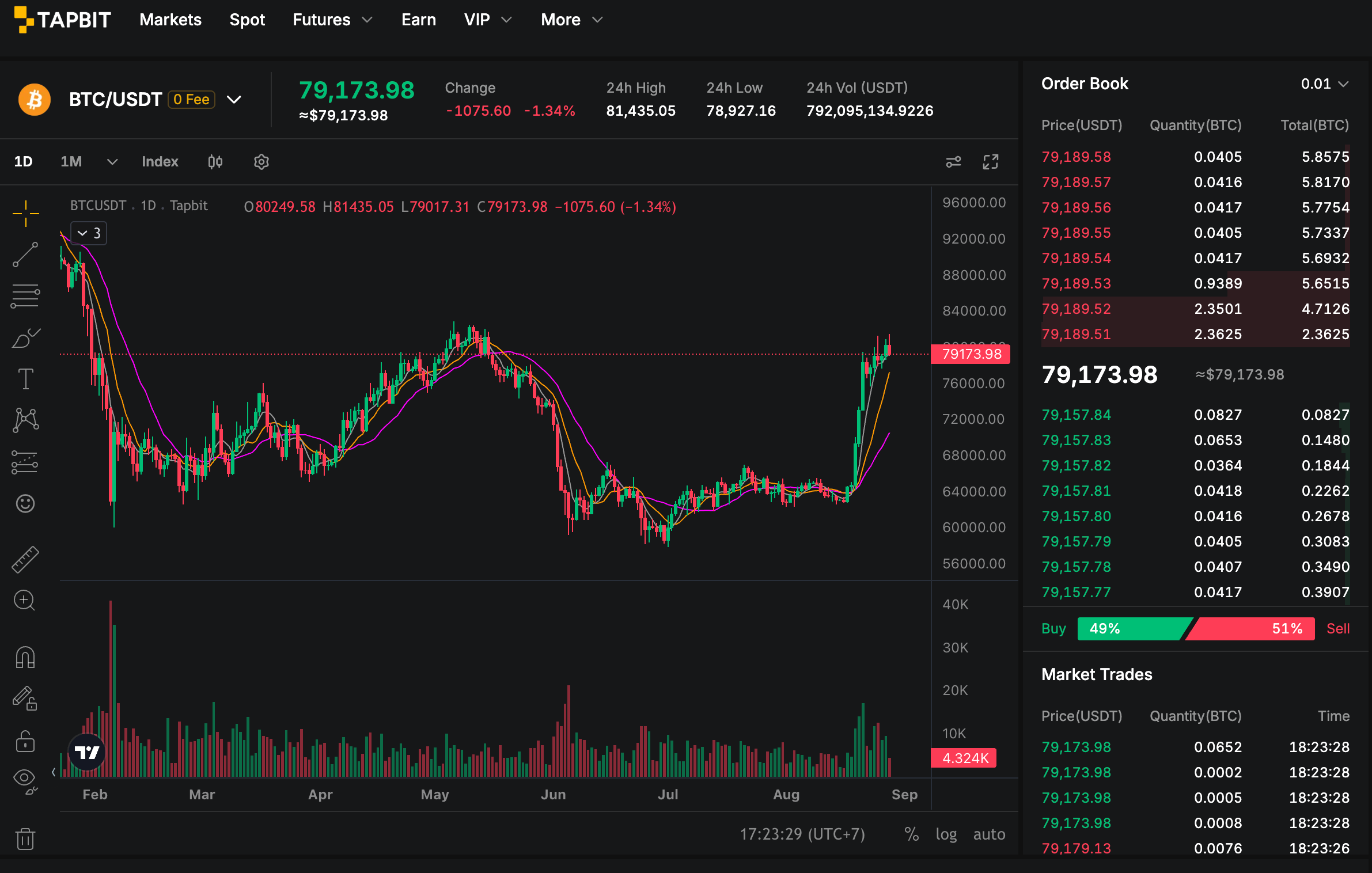
The supplied BTC/USDT snapshot shows Bitcoin near $79,174 after a sharp rebound from its summer range. That move illustrates Bitcoin’s sensitivity to changing liquidity expectations: once traders anticipate easier conditions, capital can return quickly. The same speed works in reverse when policy expectations turn hawkish.
How Gold Reacts to Inflation and Real Yields
Gold’s key macro variable is usually the real interest rate—the return on cash or government bonds after inflation. When real yields fall, holding a non-yielding asset becomes less costly, which can support gold. A weaker dollar also helps because gold is priced globally in dollars. Conversely, a strong dollar and rising real yields can pressure gold even when headline inflation is high.
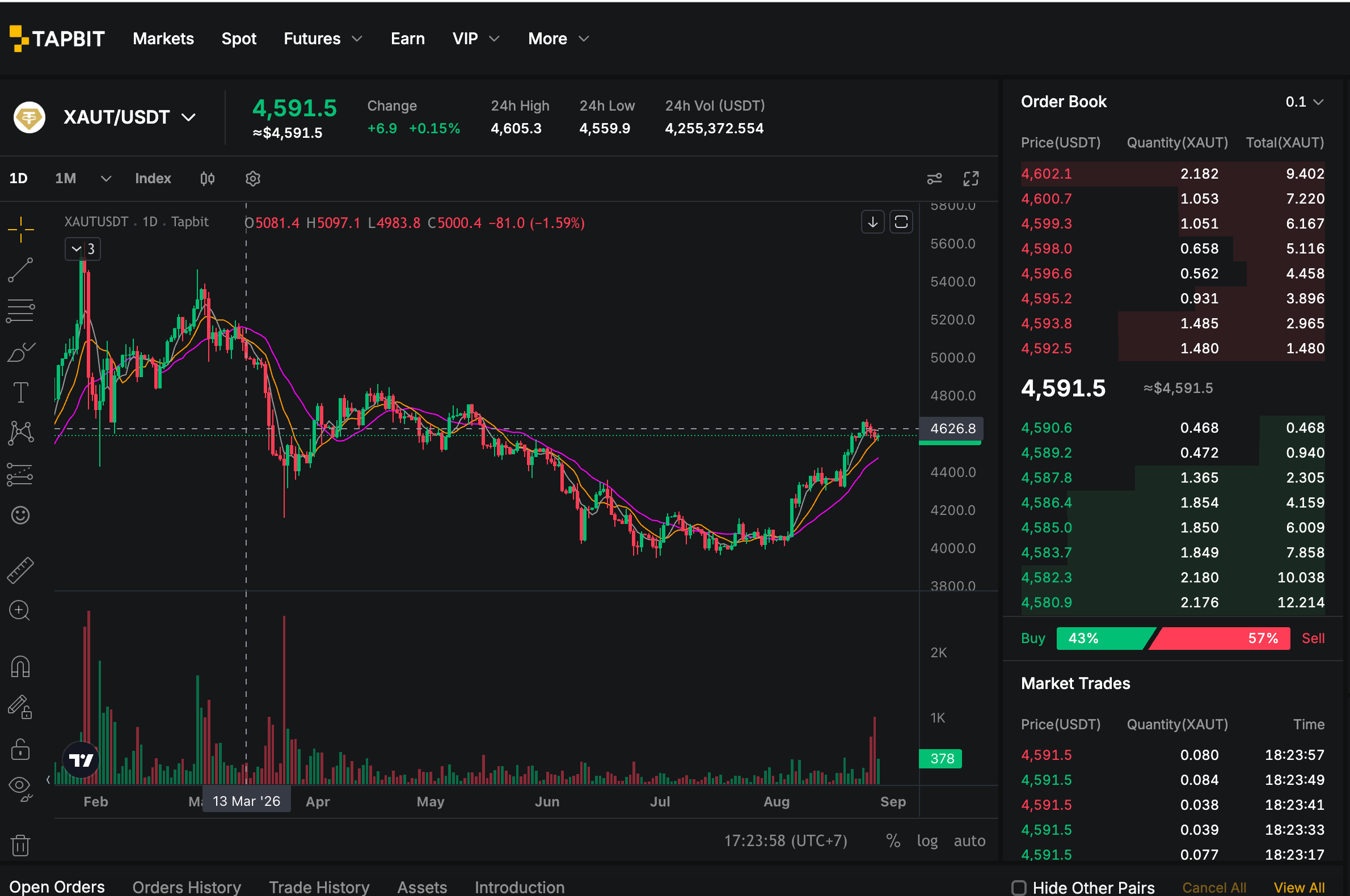
Gold also has a deeper safe-haven history. Central-bank demand, institutional portfolios, jewelry consumption, and physical-market flows create a broader demand base than Bitcoin currently has. The supplied XAUT/USDT snapshot shows the gold-linked token near $4,591.5 after recovering from its summer lows, while remaining below earlier peaks.
Why Fed Policy Can Move Bitcoin More Aggressively
Federal Reserve decisions affect the cost of leverage, dollar liquidity, bond yields, and investors’ willingness to take risk. Bitcoin trades around the clock and has a large derivatives market, so changes in rate expectations can trigger rapid repricing, liquidations, and momentum flows. A dovish surprise may produce a stronger percentage move in Bitcoin than in gold.
That larger reaction should not be confused with a more dependable hedge. If the Fed cuts because growth is deteriorating rapidly, Bitcoin may initially trade with equities and other risk assets. Gold may respond better if the dominant concern is recession, financial stress, or loss of confidence in policy.
When Bitcoin May Outperform XAU/USD
Bitcoin has the stronger upside case when inflation is cooling, the Fed is moving toward easier policy, real yields are declining, and global liquidity is improving without a severe recession. These conditions can support both scarcity assets and speculative demand. Bitcoin may also benefit from crypto-specific catalysts such as institutional inflows, broader custody access, or reduced selling pressure from long-term holders.
Because Bitcoin’s market is smaller and more reflexive than gold’s, inflows can have a larger price impact. That makes BTC attractive to traders seeking convex upside, but it also increases drawdown risk if expectations reverse.
When Gold May Be the Better Macro Hedge
Gold may react better when inflation remains persistent while growth weakens, geopolitical stress rises, or markets question the sustainability of government debt. It can also hold up better during abrupt deleveraging because many investors already treat it as a reserve and collateral asset.
For conservative exposure, the difference matters. Gold’s historical behavior is generally steadier, while Bitcoin offers a higher-risk bet on monetary scarcity and digital adoption. XAUT adds blockchain transferability to gold-linked exposure, but users should still understand the token’s issuer, redemption terms, custody structure, liquidity, and tracking behavior.
What Traders Should Watch Next
No single CPI print or Fed speech settles the comparison. The most useful signals are the direction of real yields, the dollar index, rate-cut probabilities, liquidity conditions, and the market’s reason for expecting policy changes. BTC-specific funding rates and open interest can reveal crowded positioning, while gold traders should monitor central-bank purchases and physical demand.
A simple framework is to ask what the market fears most. If it fears restrictive policy and falling liquidity, both assets can struggle. If it expects orderly disinflation and easier money, Bitcoin may have more upside. If it fears stagflation or systemic stress, gold may provide the more consistent defensive response.
Conclusion
Gold generally reacts more reliably to falling real yields, a weaker dollar, and defensive demand, while Bitcoin often delivers the larger move when Fed easing improves liquidity and risk appetite. Neither is a perfect inflation hedge in every market regime. The choice between Bitcoin and XAU/USD depends less on one inflation number than on how inflation changes rates, the dollar, growth expectations, and investor behavior.
FAQ
Is Bitcoin a better inflation hedge than gold?
Not consistently. Bitcoin has fixed supply and stronger upside potential, but gold has a much longer record across inflation cycles and usually lower volatility.
Why can Bitcoin fall after a high inflation report?
Hot inflation can increase expectations for higher rates, stronger real yields, and a firmer dollar. Those conditions can reduce liquidity and pressure risk assets, including Bitcoin.
Do Fed rate cuts always help Bitcoin and gold?
No. Cuts are generally supportive when they lower real yields and improve liquidity, but emergency cuts caused by severe economic stress may trigger an initial risk-off reaction.
Is XAUT the same as XAU/USD?
No. XAU/USD is the global spot-gold quotation against the U.S. dollar. XAUT is a tokenized-gold asset whose market price aims to reflect gold exposure but also carries token, issuer, custody, and liquidity considerations.


