

The Bank of Korea interest rate rose to 3.00% on August 27, 2026. The Monetary Policy Board increased the Base Rate by 25 basis points from 2.75%, delivering a second consecutive hike after July’s move from 2.50% to 2.75%.
The decision reflects an unusual combination: South Korea is growing strongly, especially through semiconductor exports, but inflation and financial-stability risks are also rising. The BOK is tightening to prevent those pressures from spreading even as Korean technology shares benefit from the global AI boom.
What Is the Bank of Korea Interest Rate Now?
The official Base Rate is 3.00%. Six Monetary Policy Board members voted for the increase, while Hwang Kunil preferred to keep the rate at 2.75%.
| Date | Base Rate | Change |
|---|---|---|
| May 29, 2025 | 2.50% | 25-bp cut |
| July 16, 2026 | 2.75% | 25-bp hike |
| August 27, 2026 | 3.00% | 25-bp hike |
The Base Rate guides broad financial conditions, but it is not the exact interest rate consumers receive on deposits, mortgages or credit cards. Banks price those products using funding costs, borrower risk, competition and market yields.
Why Did the Bank of Korea Raise Rates Again?
Inflation Is Still Above Target
The BOK said inflation is expected to remain above its target for a considerable period. Its August outlook projects consumer inflation of 2.7% in 2026 and 2.3% in 2027, while core inflation is expected to remain at 2.5% in both years.
Core inflation removes some volatile items and can reveal more persistent price pressure. The central bank is worried that higher costs and stronger demand could spread into more goods and services. Waiting until that process is fully visible can make inflation harder to control, which explains the BOK’s emphasis on preemptive action.
Growth Is Stronger Than Expected
South Korea’s exports and investment remain strong, led by semiconductors. The BOK now expects GDP to grow 3.3% in 2026 and 2.9% in 2027. A stronger economy gives the central bank more room to raise rates because demand and employment are better able to absorb tighter policy.
The semiconductor boom is doing more than supporting exporters. The BOK expects it to improve income conditions and gradually strengthen consumption. That creates a positive growth story but also adds demand-side inflation pressure.
Housing and Household Debt
The central bank also highlighted faster housing-price gains in Seoul and surrounding areas, together with household debt growth. Higher rates can cool borrowing demand and reduce speculative pressure, although the effect takes time and depends on lending rules and housing supply.
Was the Rate Hike Expected?
The decision was not a complete surprise, but economists were divided. A Reuters poll found that 18 of 35 economists expected the quarter-point hike. That helps explain why the immediate bond-market reaction was controlled rather than chaotic.
A priced-in decision can still move markets through its guidance. Investors want to know whether the BOK sees 3.00% as close to the peak or only another step in a longer cycle. Governor Shin Hyun Song signaled that further tightening could occur gradually as policymakers review inflation, growth and financial stability.
Will the Bank of Korea Raise Rates Again?
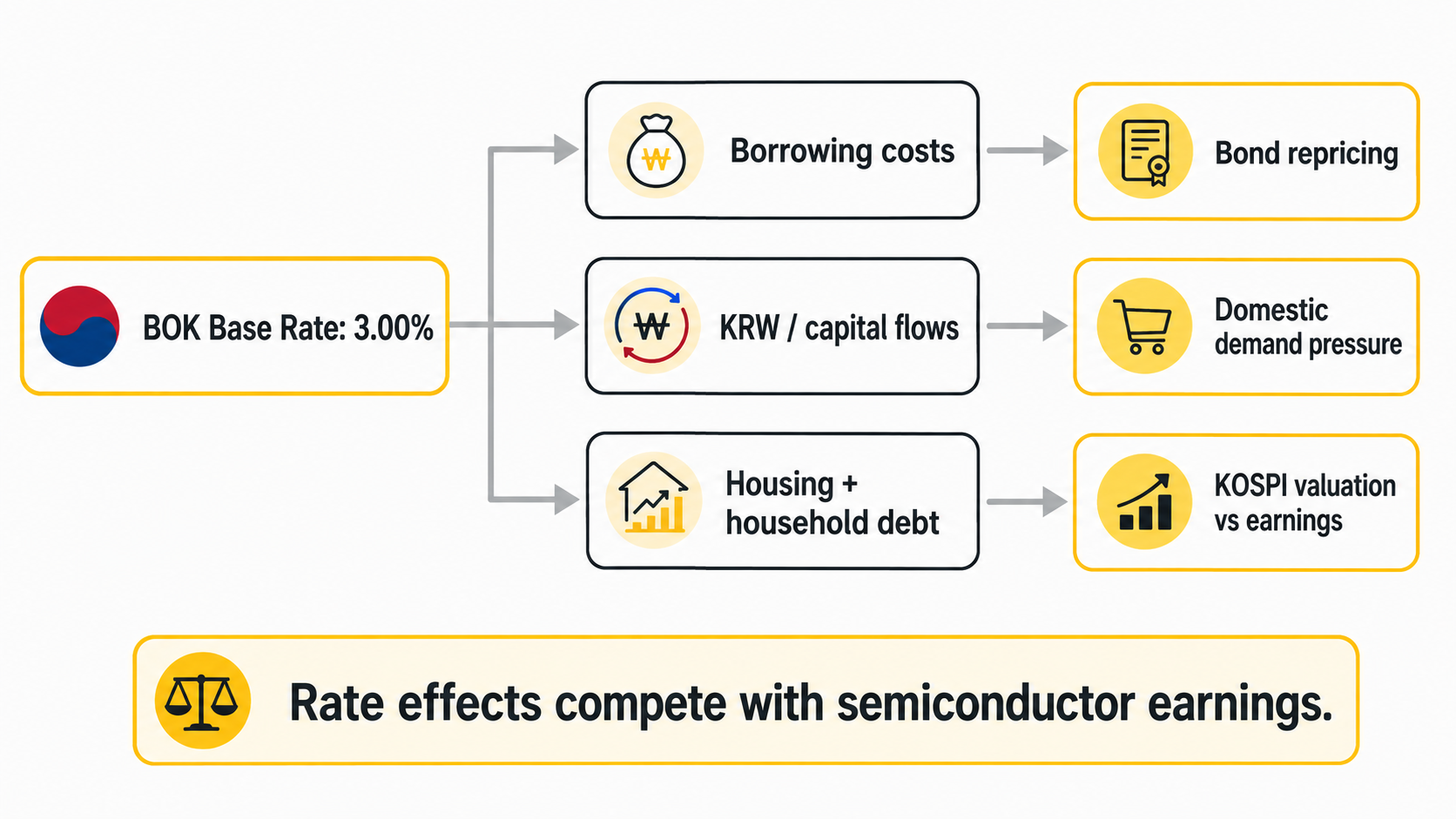
The BOK did not promise a fixed next move. Its statement said the timing and pace of further increases would depend on inflation, the domestic economy and financial-stability conditions.
Reuters reported that many analysts expect one additional move to 3.25% in early 2027, while some policy projections point to a possible 3.50% peak. Those are forecasts, not official commitments. A weaker semiconductor cycle, easing core inflation or a sharp external shock could slow the process. Persistent housing and price pressure could keep another hike on the table.
How the BOK Decision Affects the Won, Bonds and Korean Stocks
Korean Won
Higher local rates can support the won by improving the return available on Korean assets. The result is not automatic. U.S. interest rates, the dollar, energy prices and global risk appetite can outweigh a 25-bp Korean move.
Bonds and Borrowing Costs
Bond yields reflect the expected path of future rates. If investors expected an even more aggressive signal, a gradual message can allow bond prices to rise despite a hike. Banks, households and companies may still face higher financing costs as tighter policy moves through the economy.
Korean Equities
Higher rates normally pressure stock valuations because future earnings are discounted at a higher rate. Yet the KOSPI rose around 1.8% on August 27 as Nvidia’s strong earnings and long-term AI-spending outlook lifted Korean semiconductor shares. Earnings won the daily argument with interest rates.
Tapbit Learn’s KOSPI index guide explains why Korean stocks react to chips, exports, currencies and global policy at the same time.
Why Nvidia Matters to the BOK Story
Nvidia reported Q2 FY2027 Data Center revenue of $89 billion and guided total Q3 revenue to $108 billion, plus or minus 2%. That outlook supports expectations for continued demand for HBM and other components supplied by Korean companies.
Strong AI exports help growth and equities, but they can also strengthen income, investment and domestic demand. The same semiconductor boom that lifts the KOSPI is one reason the BOK believes the economy can handle higher rates.
For more context, see Tapbit Learn’s AI chip stock overview.
What the Decision Means for KORU-USDT Traders
KORU seeks three times the daily return of a South Korean equity benchmark. Tapbit’s KORU-USDT perpetual futures contract offers KORU-linked price exposure without ownership of ETF shares.
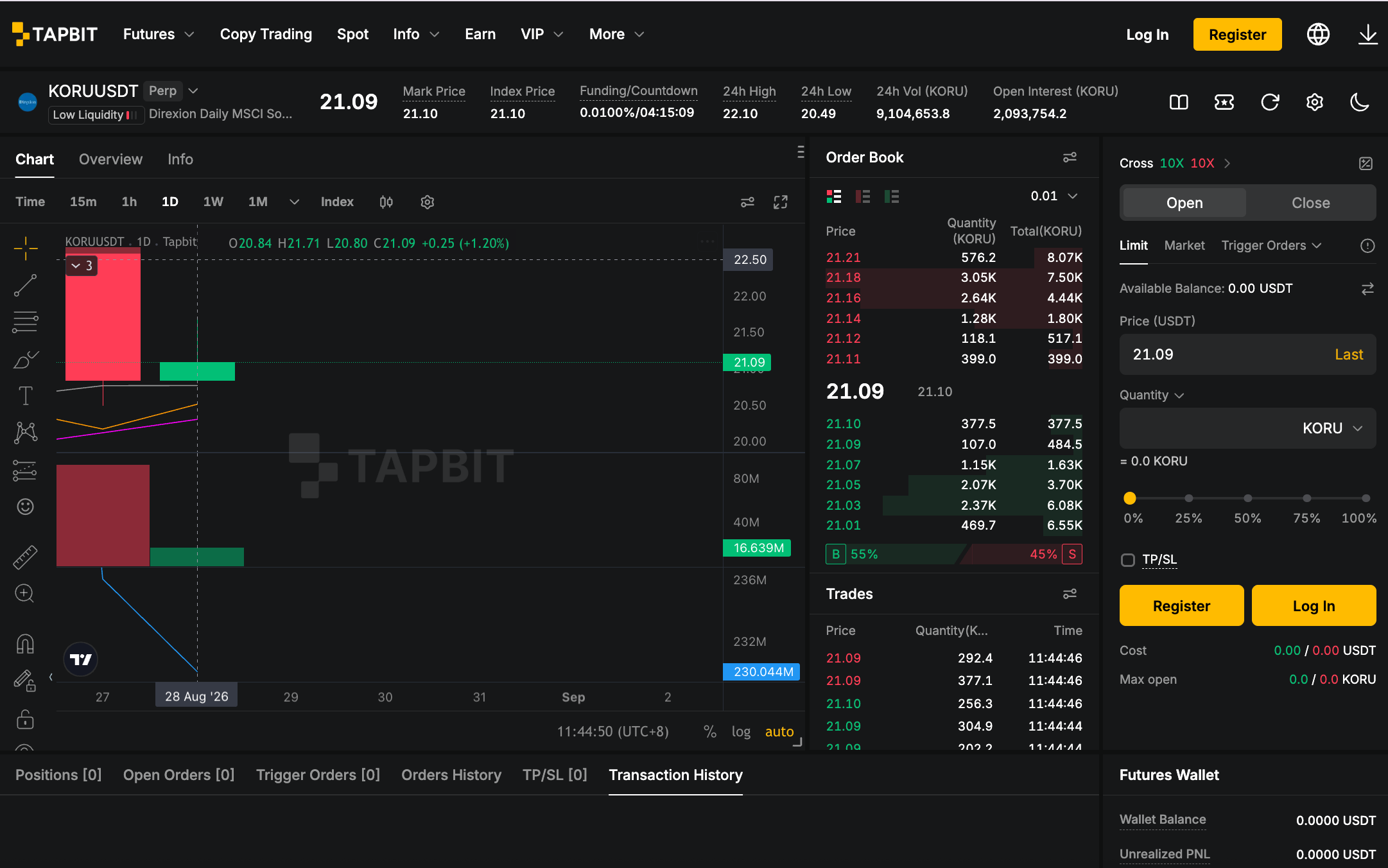
Rate news can move the won, bonds and equity valuations, while chip earnings can pull in the opposite direction. KORU adds daily leveraged-ETF exposure, and futures margin can amplify it again. Before trading, check leverage, funding, mark price and liquidation risk. Users can create an account and review the contract specifications first.
Bottom Line
The Bank of Korea raised its Base Rate to 3.00% because growth is strong enough to tolerate tighter policy while inflation, housing and household debt remain uncomfortable. Further hikes are possible, but not predetermined. For Korean markets, the next move will be decided by the balance between rate pressure and semiconductor earnings.
FAQ
What is the Bank of Korea interest rate now?
The BOK Base Rate is 3.00% after the August 27, 2026 decision.
Why did the BOK raise rates?
It cited stronger growth, persistent inflation and financial-stability risks linked to housing prices and household debt.
Was this the second consecutive rate hike?
Yes. The BOK raised the rate from 2.50% to 2.75% in July and to 3.00% in August.
Will the Bank of Korea raise rates again?
Another increase is possible, but the BOK says the timing and pace will depend on inflation, growth and financial-stability data.


