
Bitway has become one of the more closely watched tokens after BTW hit a new all-time high on August 17.
At last check, BTW was trading around $0.39 — up roughly 33% in 24 hours and more than 90% over the previous seven days. Daily volume has also surged, pushing the token into price-discovery territory.
The rally isn't hard to explain on the surface. BTW was still around $0.08 at the beginning of August — a several-fold increase in weeks.
The harder question is what's driving it.
There's no single announcement that explains the move. Bitway has been expanding staking incentives, Bitcoin-focused infrastructure, and trading availability, but none of those changes are new enough to account for this kind of spike. The move has clearly gone beyond what a product update can justify.
So BTW sits in an interesting spot: real product stack underneath, but also highly speculative conditions on top — momentum, liquidity, and a tight circulating supply are moving the token as much as anything else.
What Is Bitway?
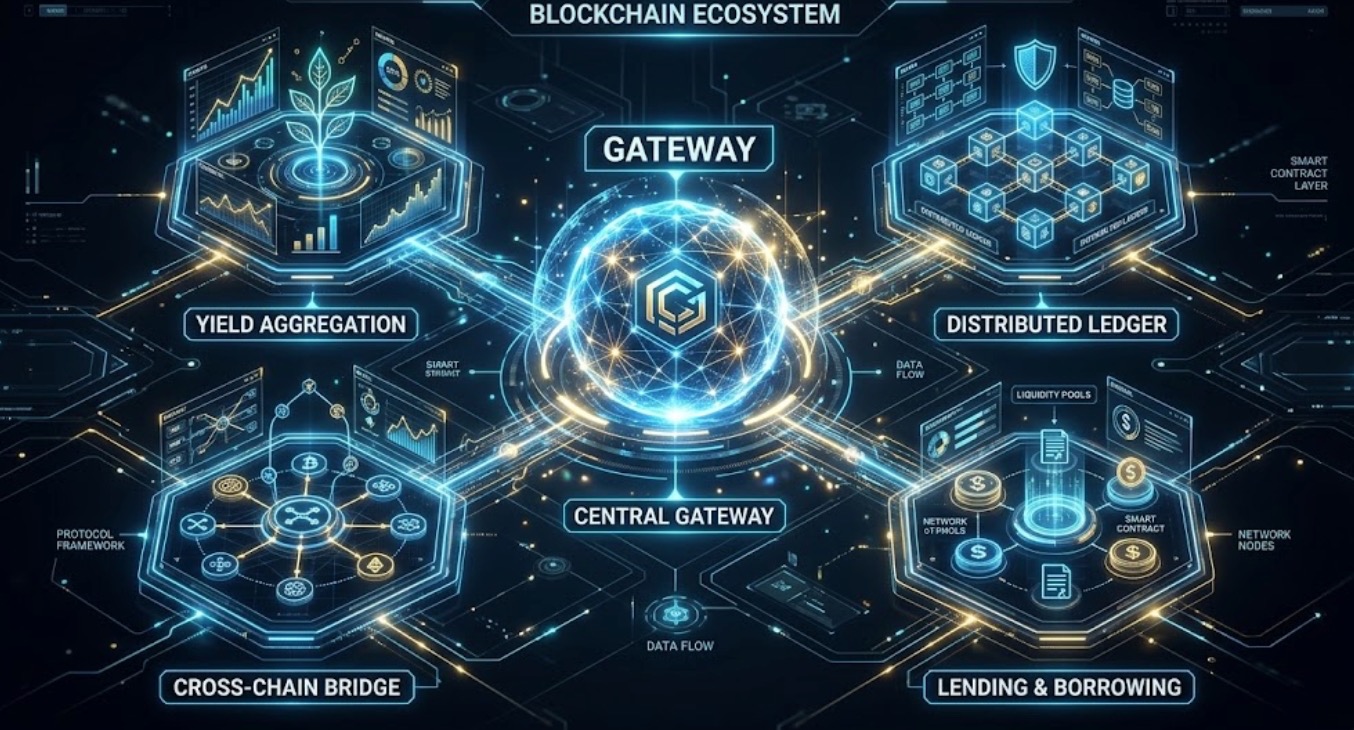
Bitway describes itself as an “Internet Capital Gateway,” with the goal of connecting on-chain capital to yield opportunities across both decentralized and traditional financial markets.
Its ecosystem currently includes several products. Bitway Earn is designed around yield-generating strategies. Bitway Ledger is a proof-of-stake Layer 1 designed with Bitcoin compatibility in mind. The project is also developing BTC-focused lending infrastructure and a Bitcoin bridge asset known as ɃTCT.
BTW is the native token tied to that ecosystem. According to Bitway’s documentation, BTW is intended to function as a governance asset, a staking token and the native gas token for Bitway Ledger.
This gives BTW a more defined utility structure than a token whose only purpose is speculation. Whether that utility translates into sustained demand, however, will depend on how widely Bitway’s products are actually used.
Why Did BTW Rally So Quickly?
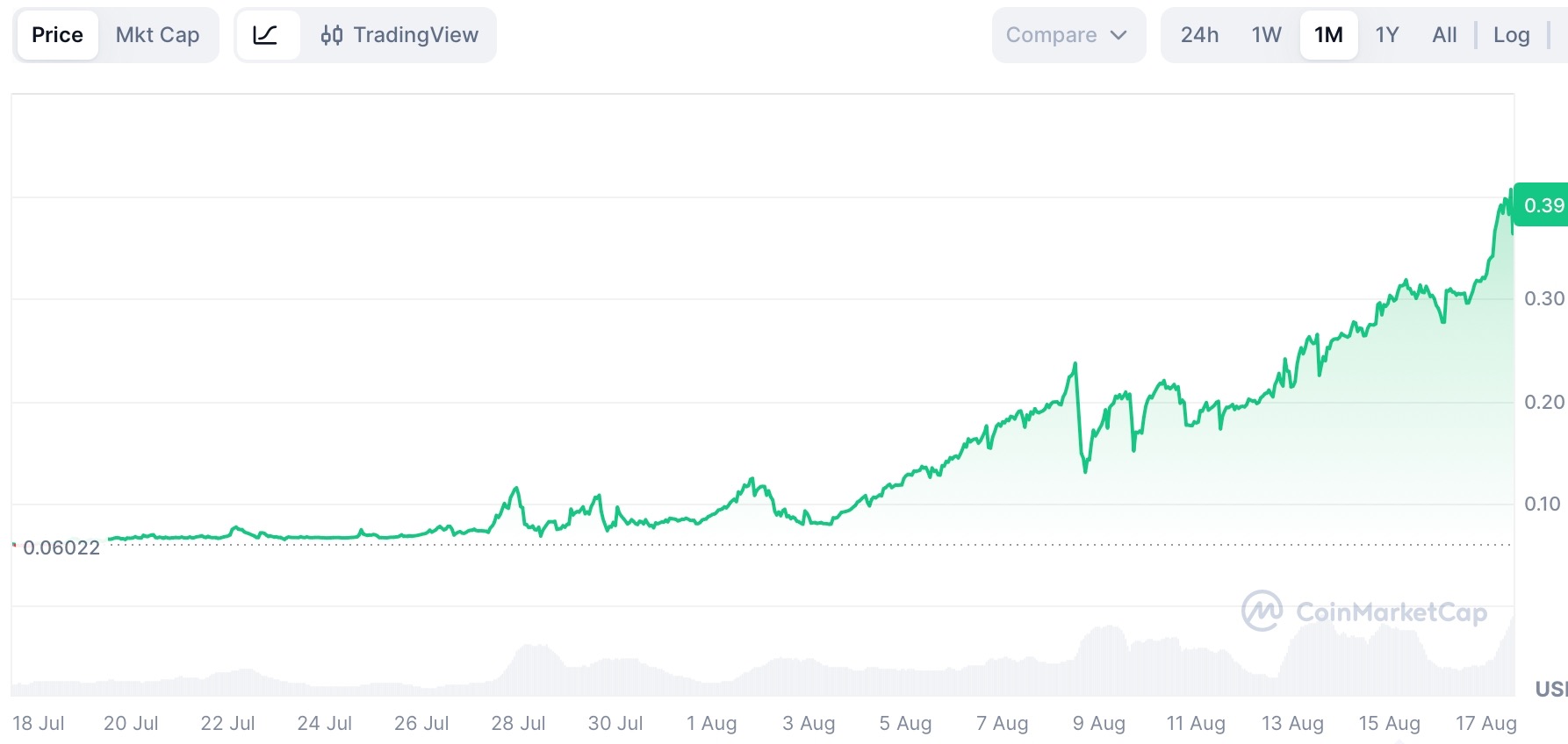
The most obvious factor is momentum. BTW entered August trading around $0.08 and then began a rapid sequence of higher highs. By August 11, the token had moved above $0.20. It continued climbing through the middle of the month before reaching the $0.40 area and setting a new all-time high.
Volume increased alongside the move. That matters because a rising price without higher participation can be fragile. In BTW’s case, the surge was accompanied by a sharp expansion in 24-hour trading activity, showing that more capital was actively moving through the market.
Still, there is no confirmed single event that explains the entire rally.
Recent staking and yield campaigns have brought more attention to Bitway, and broader interest in Bitcoin-native financial infrastructure may have helped. BTW has also gained more exchange exposure, including futures markets.
But the current price move appears to be the result of several forces acting together rather than one major announcement.
That usually means traders should pay closer attention to market structure than to headlines.
BTW Has Expanded Its Exchange Presence
Bitway has gradually become easier to trade. Bitget listed BTW/USDT spot trading in March 2026, while MEXC and decentralized markets such as PancakeSwap have also become important sources of liquidity.
Binance Futures later introduced a BTWUSDT perpetual contract in June with leverage of up to 10x.
That is relevant because futures listings can materially increase speculative activity. Traders no longer need to own the token to express a bullish or bearish view, and leverage can amplify both momentum and liquidations.
However, a Binance Futures listing should not be confused with a Binance Spot listing. Those are separate products, and the existence of a futures contract does not guarantee that BTW will later be listed on Binance Spot.
Bitway Earn Is More Complicated Than Simple Token Staking
One of the more visible recent developments around Bitway has been its incentivized yield program. The project has promoted strategies offering a base annual percentage return alongside BW Points. These campaigns have contributed to broader attention around the ecosystem.
But they should not be described as simple BTW staking.
Bitway Earn currently uses stablecoin-based vaults. Users can deposit assets such as USDT or USDC and receive vault tokens, while BW Points may later be converted into BTW according to terms that have not yet been fully disclosed.
That distinction matters. A headline such as “12% BTW staking yield” would not accurately describe the current structure.
The more accurate interpretation is that Bitway uses a combination of yield and points-based incentives to encourage participation in its broader ecosystem.
The Supply Structure Is One of BTW’s Biggest Risks
BTW has a maximum supply of 10 billion tokens. At the time of review, approximately 2.7 billion were circulating, representing roughly 27% of the maximum supply.
That leaves around 73% of the eventual supply still outside circulation. This is one of the most important facts for anyone evaluating BTW.
At a token price around $0.39, the circulating market capitalization was approximately $1.1 billion, while the fully diluted valuation was already around $4.1 billion.
The difference between those two figures is substantial. Market capitalization tells investors what the currently circulating supply is worth. Fully diluted valuation shows what the entire maximum supply would be worth if all tokens were circulating at the same price.
When only around one-quarter of supply is unlocked, the difference between market cap and FDV deserves close attention.
The Next Token Unlock Is Already Scheduled
Bitway’s vesting schedule shows that additional BTW will continue entering circulation over time. The next scheduled unlock is expected on September 2, 2026, involving approximately 101.6 million BTW.
That represents roughly 1% of the maximum supply. An unlock does not automatically mean that those tokens will immediately be sold. Some may be distributed for ecosystem use, incentives or other planned allocations.
Still, additional circulating supply can create pressure if demand does not grow at the same pace. Future unlocks become even more important because allocations for team members and backers are also subject to vesting schedules extending into later years.
This is why BTW’s current rally should be evaluated alongside its supply schedule rather than price alone.
What Makes Bitway Different?
Bitway is trying to build around Bitcoin rather than compete as another general-purpose smart-contract chain.
Its broader plan includes Bitcoin-compatible infrastructure, BTC lending, yield products and a bridge system using threshold-signature technology.
Bitway Ledger is designed to work with Bitcoin-style addresses, including Taproot and Native SegWit formats, while still operating as its own proof-of-stake network.
That positioning gives the project a clear narrative: use Bitcoin as a source of capital and connect it to a broader financial layer.
The question is whether users actually need Bitway’s products at scale. That will matter much more over time than whether BTW can gain another 20% or 30% during a short-term rally.
Security Audits Are a Positive Sign, Not a Guarantee
Bitway has published audit reports covering several parts of its ecosystem, including work from firms such as BlockSec and Salus. Audits are useful because they show that outside security teams have reviewed specific smart contracts or components.
They do not eliminate risk. Bitway includes several moving parts: a token, a proof-of-stake chain, a BTC bridge, a lending system and yield strategies that interact with centralized infrastructure.
Each additional component creates another potential failure point.
A smart-contract audit does not protect users from an exchange failure, custody problem, bridge exploit, market loss or future vulnerability introduced by an upgrade.
Audit history should therefore be considered one part of due diligence rather than proof that a project is risk-free.
Final Thoughts
Bitway is more than a token built around a short-term narrative. The project is developing a Bitcoin-focused ecosystem that includes a Layer 1 network, BTC lending, yield strategies, bridge infrastructure and a native token with governance, staking and gas utility.
At the same time, the current price action has moved extremely quickly. BTW has reached a new all-time high after gaining several hundred percent from its early-August levels, while only around 27% of its maximum supply is currently circulating.
That combination creates both opportunity and risk.
The bullish case depends on Bitway turning its product roadmap into real usage. The bearish case is that valuation and speculative momentum are moving faster than adoption.
For traders, the next few weeks will likely be less about whether BTW can produce another headline rally and more about whether it can hold its new price range while the market prepares for additional token supply.
Users who want to explore digital asset markets can visit the Tapbit homepage. Existing users can access their accounts through the Tapbit login page, while new users can create an account through the Tapbit registration page.
Frequently Asked Questions
What is Bitway (BTW)?
Bitway is a crypto project focused on connecting Bitcoin and digital assets with yield, lending and broader financial markets. Its ecosystem includes Bitway Earn, Bitway Ledger, BTC-focused lending infrastructure and the ɃTCT Bitcoin bridge asset.
What is BTW used for?
BTW is designed to function as the native gas token for Bitway Ledger, while also supporting governance, validator staking and delegation within the ecosystem.
Why is BTW price rising?
BTW has benefited from strong trading momentum, rising volume, increased exchange access and renewed attention around Bitway’s staking and Bitcoin-finance products. There has not been one confirmed announcement that fully explains the recent rally.


