

The final trading day of August served as a useful stress test for Wall Street.
US strikes on Iranian military sites near the Strait of Hormuz sent Brent crude back above $90 a barrel, pushed the 10‑year Treasury yield to roughly 4.75%, and pulled all three major indexes lower.
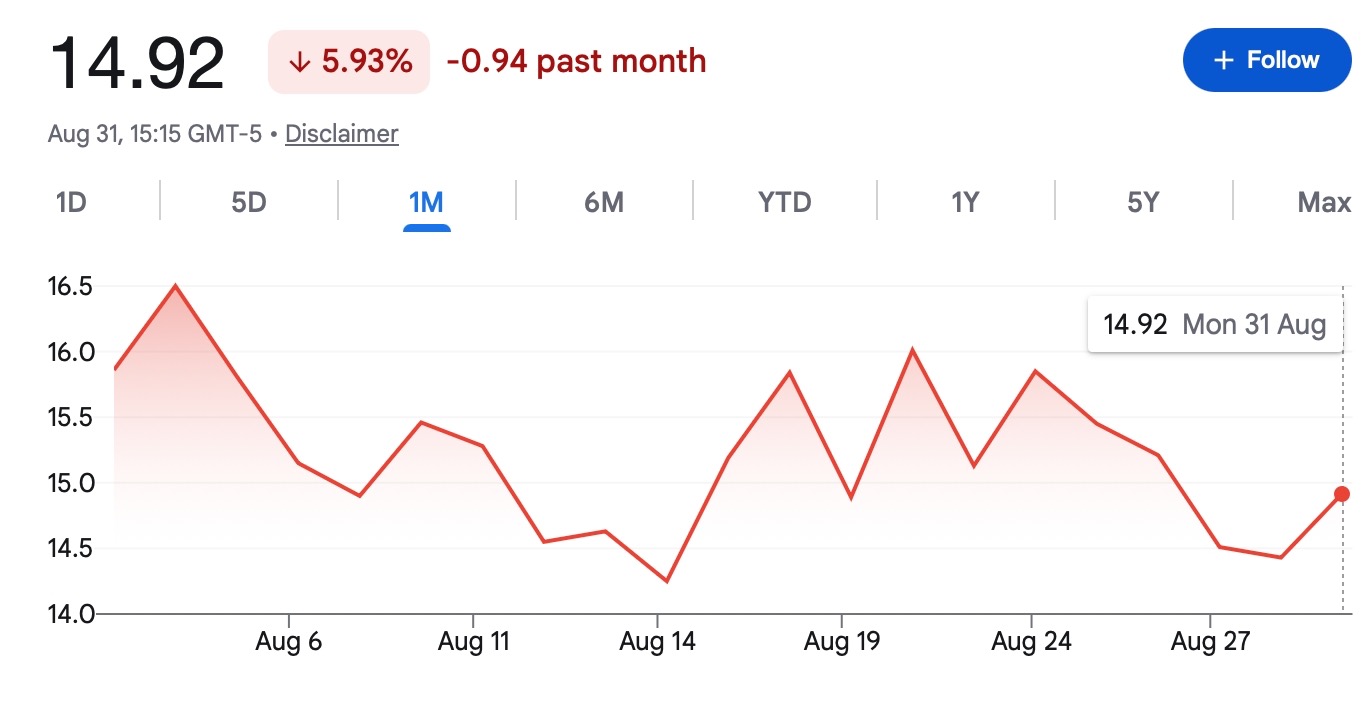
The VIX rose, but only to about 14.9.
That muted response sums up the market's current stance: investors are aware of the risks tied to oil, inflation and interest rates, but they're not paying up for equity protection.
September may test whether that confidence is well placed.
A Low VIX Does Not Mean Risk Has Disappeared
The Cboe Volatility Index, better known as the VIX, measures the volatility expected by the S&P 500 options market over the next 30 days. It is often called Wall Street’s fear gauge, although “insurance price” is a more useful description.
When investors expect larger market swings, demand for options protection usually increases and the VIX rises. When protection is cheap, the index falls.
The VIX reached approximately 14.18 on August 17, its lowest level of 2026 and reached 14.43 on August 28. It then rose toward 14.9 as oil prices and Treasury yields moved higher on August 31.
These readings are low, but not unprecedented. They show that traders expect relatively contained short-term movement. They do not show that geopolitical, economic or political risks have been resolved.
The distinction matters because volatility expectations can change much faster than the risks themselves.
Stocks Remain Strong, but the Cushion Is Smaller
The S&P 500 ended August 31 at 7,686.14 after falling 0.3% during the session. The Dow declined 0.7%, while the Nasdaq lost 0.1%. Despite the weak finish, all three indexes recorded gains for August.
The broader picture remains constructive. The S&P 500 was up approximately 12.3% for the year, the Nasdaq had gained 13.5%, and the Russell 2000 had advanced 19.1%.
Those returns help explain the low VIX. Strong earnings and continued spending on artificial intelligence have given investors reasons to stay in the market.
Valuation and interest rates leave less room for disappointment, however. A company’s future earnings become less valuable in present terms when bond yields rise. This is particularly relevant for technology and other growth stocks whose valuations depend heavily on profits expected several years ahead.
Low volatility becomes more fragile when stocks are expensive and borrowing costs remain high.
The Bond Market Is Carrying the Warning
The 10-year Treasury yield climbed to approximately 4.75% at the end of August. That move may matter more to equities than the midterm election itself.
Higher yields compete with stocks for capital. They also increase financing costs for companies, households and the federal government. If yields are rising because investors expect stronger growth, equities may absorb the pressure. If they are rising because inflation or fiscal risks are returning, the result is less comfortable.
Oil adds another complication.
Brent crude rose 2.7% on August 31 after military action near the Strait of Hormuz. A sustained increase in energy prices would raise costs across transportation, manufacturing and consumer goods. It could also make it harder for the Federal Reserve to bring inflation down.
This is where the low VIX faces its real test. The market can tolerate a geopolitical headline. It may react differently if higher oil prices begin changing inflation data and monetary policy.
The Federal Reserve Is Not United
The Federal Reserve held rates steady at its July meeting, but the decision concealed an important division.
Three policymakers preferred a quarter-point rate increase. Officials were watching oil prices, inflation expectations and the effect of higher policy-rate assumptions on bond yields.
That disagreement makes the September 15–16 FOMC meeting more significant than a routine policy update.
The Fed will publish a new rate decision and updated economic projections. Investors will be listening for any shift in the inflation outlook and for evidence that more officials support tighter policy.
A hawkish outcome would not automatically push stocks lower. It would, however, challenge a market that currently expects limited volatility.
September Has Several Ways to Disturb the Calm
The next test arrives quickly.
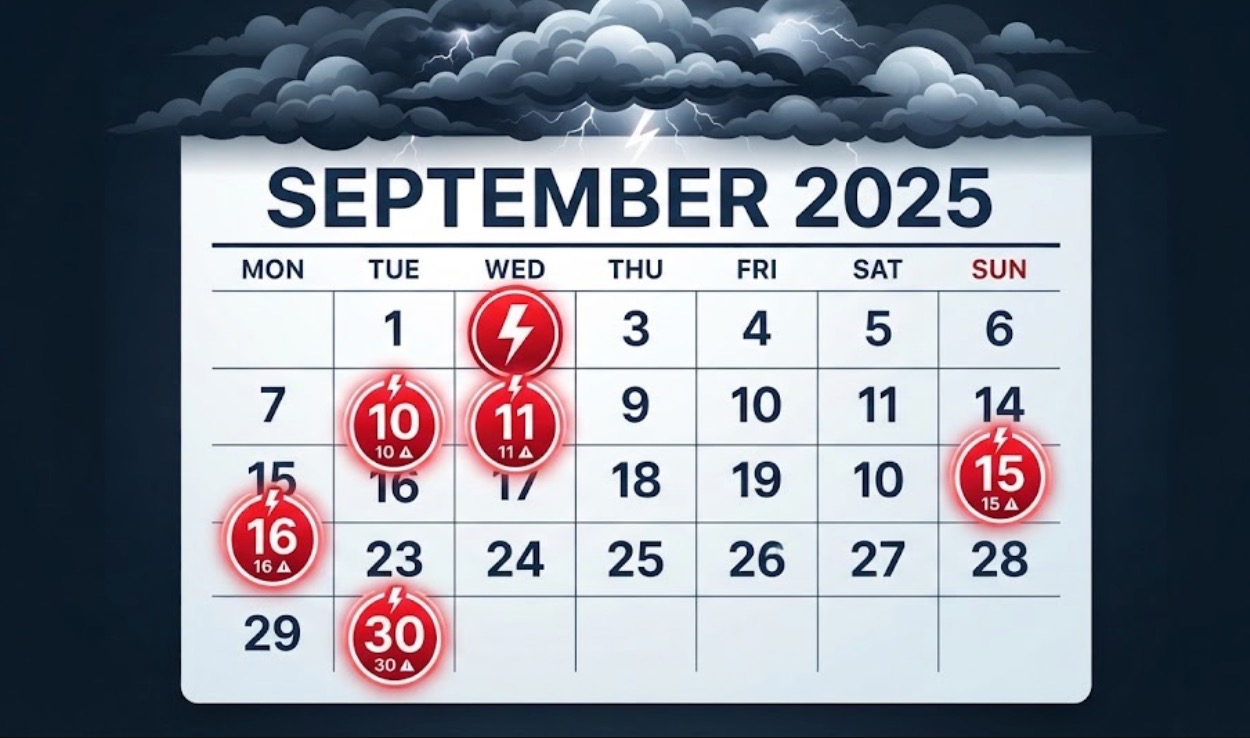
The August employment report is scheduled for September 4. Strong hiring and wage growth could reinforce the case for higher rates. A weak report could replace inflation concerns with worries about economic growth.
The producer price index follows on September 10, with the consumer price index due on September 11. These releases will show whether rising energy and business costs are beginning to reach consumers.
The FOMC meeting on September 15–16 will bring those signals together. The Fed must decide whether persistent inflation deserves more attention than the risk of slowing activity.
Personal income, spending and the PCE price index are scheduled for September 30. By then, investors should have a clearer view of whether August’s low VIX reflected a genuinely stable economy or confidence that had run ahead of the data.
The Midterm Election Is a Risk Window, Not a Crash Signal
Midterm-election years have a reputation for producing weak markets before the vote and stronger returns afterward.
Historical data offers some support for that pattern. Policy uncertainty tends to increase as control of Congress becomes less predictable. Once the election is over, investors have more information about taxes, spending, trade and regulation.
The pattern is not reliable enough to trade on its own.
Research from Morgan Stanley found little evidence of sustained equity outperformance or underperformance during the three to six months following midterm elections. Interest-rate markets have generally responded more to Federal Reserve policy than to election results.
The election may still matter for individual sectors. Energy, healthcare, defense, technology and financial companies could react to changes in congressional control or policy expectations. For the overall market, earnings, inflation and bond yields are likely to remain more important.
Treating every midterm year as a coming crash ignores the economic conditions surrounding each election.
The Calm Has a Price
The VIX is low because investors expect the S&P 500 to remain relatively stable, not because the market has run out of risks.
That expectation now has to survive an employment report, inflation data, an increasingly divided Federal Reserve and an unsettled energy market. The midterm election adds another layer of uncertainty, but it is not the only story and may not be the most important one.
A low VIX can persist while stocks continue rising. It can also leave the market poorly prepared when the underlying assumptions change.
The useful question is therefore not whether the VIX is predicting a crash. It is whether September’s economic data will justify the low price investors are currently paying for protection.
Tapbit readers can track global markets alongside crypto developments through the Tapbit platform. Account access is available from the login page, and new users can complete registration here.
Frequently Asked Questions
What is the VIX?
The VIX is an index calculated by Cboe from S&P 500 option prices. It represents the market’s expectation of stock-market volatility over approximately the next 30 days.
Why is the VIX near its 2026 low?
Strong equity performance, supportive corporate earnings and confidence that recent market shocks will remain contained have reduced demand for short-term options protection.
Does a low VIX mean the stock market will fall?
No. The VIX can remain low for long periods while stocks rise. A low reading shows that expected volatility is limited; it does not predict the market’s direction.


