
SpaceX stock ended August at $141.50, delivering a straightforward headline figure: SPCX gained 21.55% over the month.
The price history, however, is more layered.
After listing at $135 in June, it briefly touched $225, fell as low as $104.83 in early August, and then recovered above its IPO price. The monthly return is real — but it reflects a rebound from a post‑IPO selloff, not fresh upside.
For investors evaluating SpaceX stock, the entry point now matters almost as much as the exit price.
How Much Did SpaceX Stock Return in One Month?
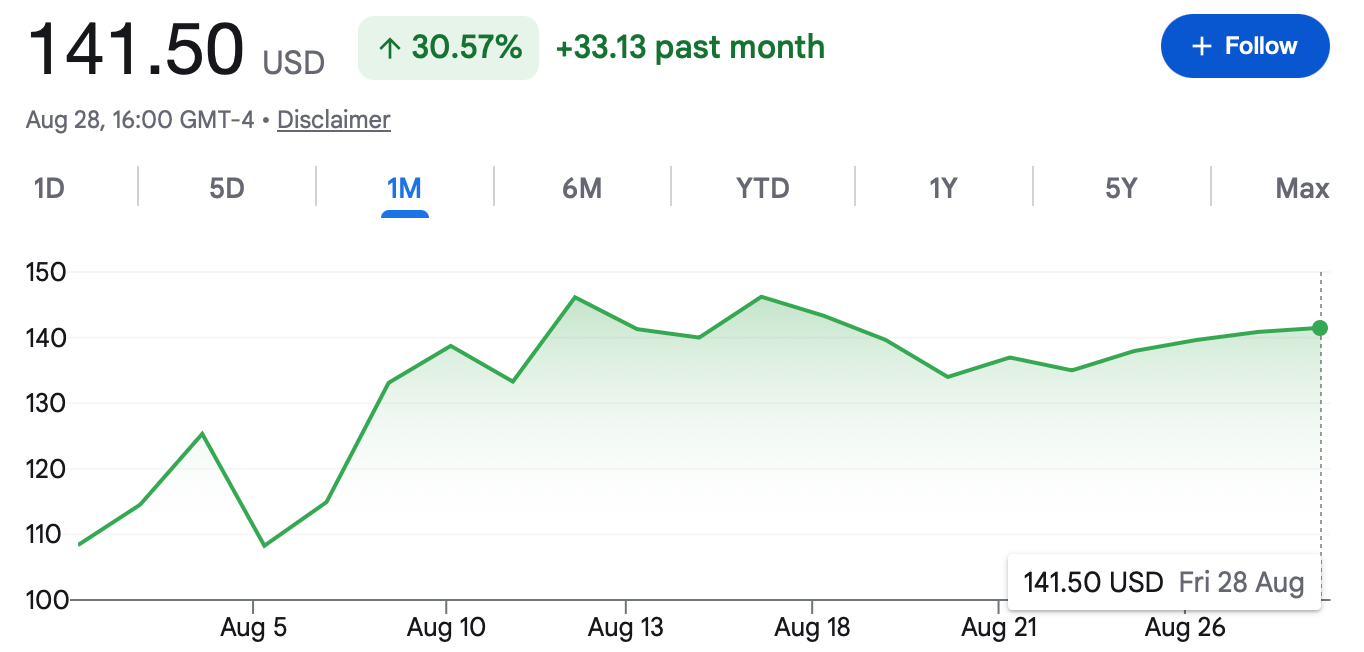
SpaceX closed at $116.41 on July 28 and $141.50 on August 28. That produces a one-month return of 21.55%.
A different comparison produces an even larger number. SpaceX closed July at $108.37, meaning the stock gained approximately 30.57% during August.
Both figures are correct, but they measure different periods:
-
Trailing one-month return through August 28: 21.55%
-
August month-to-date return: 30.57%
The dates should always accompany the percentage. A report that simply says “SpaceX gained 30% in one month” can be misleading if it is actually measuring the return from July’s final session.
Three Prices Explain the SPCX Chart
SpaceX priced its initial public offering at $135 per share and opened at approximately $150 on June 12. The shares then reached a high of $225.64 as investors rushed to gain public-market exposure to Starlink, launch services, Starship and the company’s expanding AI infrastructure business.
That enthusiasm did not last.
By early August, SPCX had fallen to $104.83, more than 50% below its June peak. The August recovery brought the stock back above its IPO price, but not back to its opening price or anywhere close to the record high.
At $141.50, SpaceX was 4.81% above its $135 IPO price, 5.67% below its $150 opening price and 37.29% below its $225.64 high.
Calling the move either a successful IPO or a failed IPO misses the point. Investors who bought the offering price were slightly ahead by the end of August. Those who bought during the opening surge remained deeply underwater.
Investors Sold the Spending, Then Reconsidered the Growth
SpaceX’s first quarterly report as a public company arrived at a difficult moment. The stock was already under pressure, and investors were concerned about how much money the company would need to fund Starlink, Starship and AI infrastructure simultaneously.
The headline growth was substantial. Second-quarter revenue reached approximately $7.81 billion, up 91.9% from the same period a year earlier. Connectivity, launch activity and AI infrastructure contracts all contributed to the increase.
The company nevertheless reported a net loss of $541 million. Capital expenditure and infrastructure commitments remained high as SpaceX expanded its satellite network, developed Starship and built additional computing capacity.
The market initially focused on the cost. Shares dropped after the report as investors questioned how quickly revenue growth could turn into sustainable free cash flow.
The selling eventually gave way to a different interpretation. Revenue had nearly doubled, the quarterly loss was smaller than analysts had expected, and Starlink continued to show that SpaceX was no longer dependent entirely on individual rocket launches.
The Lockup Expiration Did Not Produce the Feared Selloff
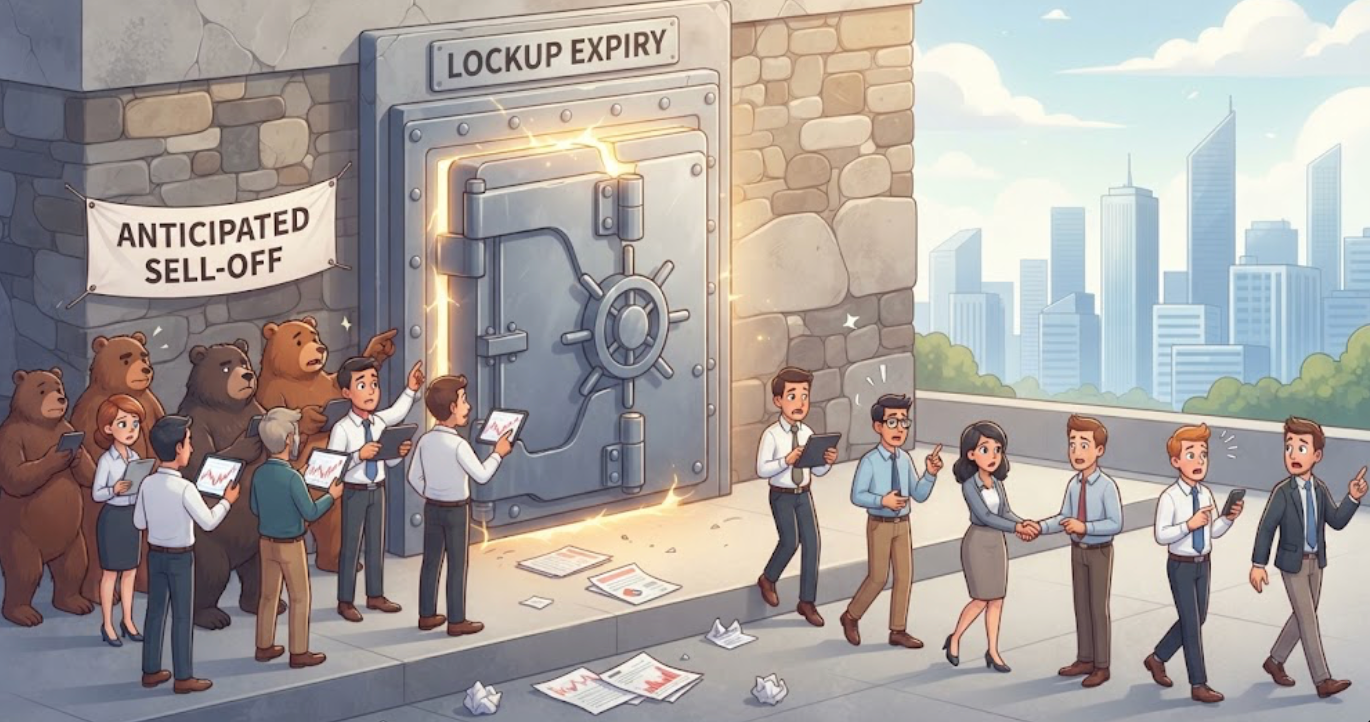
The August rally was also shaped by an event that did not happen. More than 900 million SpaceX shares became eligible for sale on August 6 as part of the company’s staggered post-IPO lockup schedule. Investors had spent weeks preparing for employees and early shareholders to sell newly available stock.
SPCX fell heavily before the expiration. When the date arrived, the expected wave of selling did not overwhelm the market. The stock rose 6.1% that day and closed at $114.92.
Shares becoming eligible for sale is not the same as those shares being sold. Early holders may retain their positions, sell gradually or wait for a higher price.
Once the market saw that the first major release could be absorbed, some of the discount attached to the expected supply began to disappear. Short covering likely added momentum to the recovery.
That does not make future lockup events irrelevant. SpaceX’s tradable float will continue expanding, giving the market more information about what employees and early investors consider an acceptable selling price.
SpaceX Is Being Valued as More Than a Launch Company
Launch services remain central to the company, but Starlink has added recurring connectivity revenue. Direct-to-cell services could extend that network into mobile communications. Government and defense contracts provide another source of demand, while Starship is designed to support larger missions and lower launch costs if the program succeeds.
AI infrastructure has added another layer. SpaceX is spending heavily on computing capacity and related facilities, attempting to participate in the infrastructure behind AI services rather than limiting itself to rockets and satellite broadband.
These businesses have different economics.
Launch contracts are project-based. Starlink depends on subscriber growth, equipment costs and network capacity. AI infrastructure requires large upfront investment in hardware, power and facilities. Government work can produce durable revenue but also introduces political and procurement risk.
Investors are therefore not applying only one simple valuation model. SPCX trades partly as an aerospace company, partly as a communications network and partly as an AI infrastructure business.
That combination creates more growth paths, but it also makes the stock easier to overvalue when several optimistic assumptions are priced at once.
What Would Turn the Rebound Into a Longer Recovery?
A lasting recovery needs more than the absence of insider selling.
Starlink must continue adding revenue without allowing network and equipment costs to rise at the same rate. SpaceX needs to show progress toward reducing losses while funding Starship and AI expansion. The market will also look for evidence that new infrastructure contracts can produce recurring cash flow rather than isolated announcements.
The $135 IPO price remains a useful reference. Holding above that level would suggest that public investors are willing to support the original offering valuation after seeing earnings and the initial lockup releases.
The June high presents a much harder test. Returning to $225.64 would require an increase of approximately 59% from the August 28 close. That move would probably need stronger financial results, meaningful Starship progress or evidence that the AI infrastructure strategy is producing attractive returns.
A Strong Month Inside a Volatile IPO
SpaceX stock delivered a 21.55% trailing one-month return through August 28 and gained more than 30% from the end of July. Those figures make SPCX one of the month’s more visible large-cap recoveries.
They do not erase the earlier decline.
The stock remains below its opening price and more than 37% under its June high. Investors are still deciding how to balance rapid revenue growth against losses, capital expenditure and future share supply.
SPCX recovered because the worst fears surrounding earnings and the first lockup expiration did not fully materialize. The next stage will depend on whether SpaceX can convert technological scale into financial returns.
Tapbit readers can monitor global asset developments and related market analysis through Tapbit. Account access is available through the Tapbit login page, and new users can register for Tapbit.
Frequently Asked Questions
What was the SpaceX stock return over the past month?
SPCX gained 21.55% from its July 28 closing price of $116.41 to its August 28 closing price of $141.50.
How much did SpaceX stock gain in August 2026?
SpaceX gained approximately 30.57% from its July 31 close of $108.37 to its August 28 close of $141.50.
What is the SpaceX stock ticker?
SpaceX trades on Nasdaq under the ticker SPCX. Trading began on June 12, 2026.


