

What Is United States Water Reserve (USWR)?
United States Water Reserve, commonly searched as USWR, is a crypto token that uses a water-reserve and public-resource style narrative. The name can sound formal, but investors should separate branding from verified fundamentals.
A token using terms such as “United States,” “Water,” and “Reserve” should not automatically be treated as a government project, regulated reserve product, or real-world asset fund. Those claims require public documentation, legal structures, custody details, and independent verification.
In practical market terms, USWR should be evaluated like any other speculative crypto asset: by checking its contract address, liquidity, trading volume, holder structure, and whether the project provides transparent information.
USWR Price Today: What the Price Actually Means
The USWR price is simply the latest market value at which buyers and sellers are exchanging the token. For smaller tokens, that number can be fragile. A displayed price may look stable on a chart, but the real trading experience can be very different if liquidity is limited.
For example, a token can show a quoted price while having shallow liquidity, wide spreads, or large slippage. That means a small buy or sell order may move the price sharply. This is why investors should not look at USWR price alone.
| Price Signal | Why It Matters |
|---|---|
| Market price | Shows the latest quoted token value |
| Liquidity | Determines whether trades can enter or exit smoothly |
| Volume | Shows whether there is active market participation |
| Spread | Reveals the gap between buyers and sellers |
| Slippage | Shows how much price changes during execution |
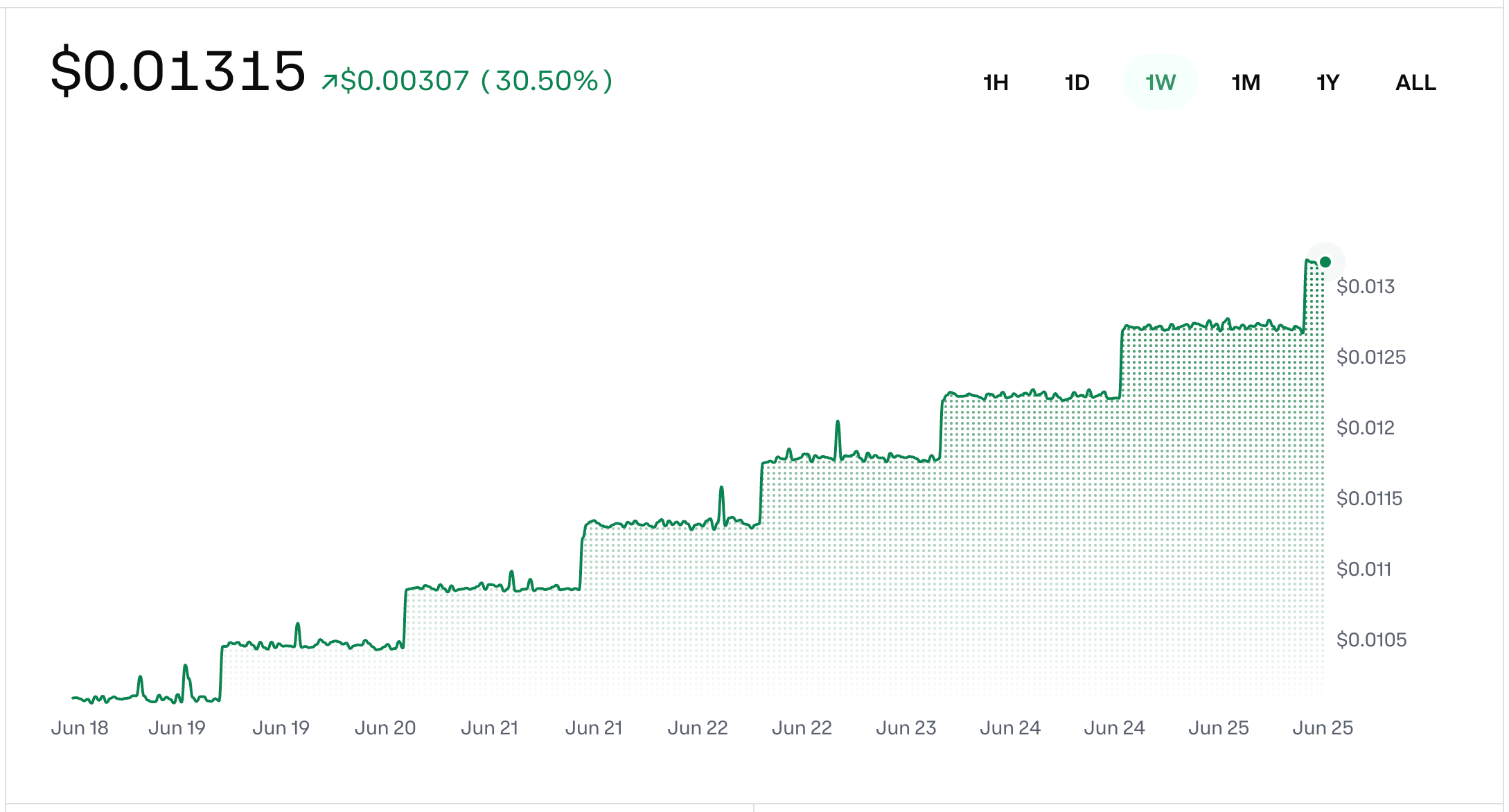
Why USWR Price Can Move So Quickly
USWR price may move quickly because small-cap crypto tokens are often driven by attention, liquidity shifts, and narrative momentum. If a token gains traction on social media or appears on trending lists, short-term demand can rise quickly.
The same dynamic can reverse just as fast. If volume fades, liquidity is removed, or early holders sell into demand, the price can fall sharply. This is especially important for tokens with limited public documentation or highly concentrated ownership.
Possible USWR price drivers include social media promotion, water-resource narratives, speculative buying, new market-page visibility, liquidity changes, and broader interest in real-world asset themes.
USWR Token Overview
| Item | Details |
|---|---|
| Token Name | United States Water Reserve |
| Symbol | USWR |
| Asset Type | Cryptocurrency token |
| Main Narrative | Water reserve and public-resource branding |
| Market Category | Speculative digital asset |
| Main Question | Whether reserve-related claims are verifiable |
This overview is not a claim that USWR has verified reserves. It is a framework for understanding how the token is positioned and what investors should check before relying on the narrative.
How to Check the Real USWR Price
Before trading USWR, investors should confirm they are looking at the correct token. Similar names and copycat contracts are common in crypto, especially around trending assets.
A practical research process includes checking the official contract address, reviewing the liquidity pool, comparing volume across data sources, and confirming whether the token can be bought and sold without unusual restrictions.
- Verify the contract address from official project channels.
- Check liquidity depth and recent trade activity.
- Review holder concentration and top wallet behavior.
- Look for buy and sell tax information.
- Confirm whether the contract has permissions that affect trading.
- Compare price data across multiple reliable market tools.
Users who want a broader crypto platform entry point can explore Tapbit’s market access and rewards page while researching digital asset opportunities.
Is USWR Backed by Real Water Reserves?
This is the most important question around the project. A real water-reserve or resource-backed token would typically need clear legal rights, asset custody disclosures, valuation reports, audits, and documentation explaining how token holders benefit.
Without that evidence, investors should not assume that USWR is backed by water assets, government programs, or physical reserves. Reserve-style language can be marketing rather than legal or financial substance.
USWR Price Risks Investors Should Know
| Risk | Potential Impact |
|---|---|
| Branding confusion | Investors may assume official or asset-backed status without proof |
| Low liquidity | Exits may be difficult during sell pressure |
| Holder concentration | Large wallets may increase volatility |
| Limited transparency | Harder to assess project fundamentals |
| Speculative momentum | Price may rise and fall mainly on hype |
These risks do not prove that USWR is illegitimate. They simply show why investors should verify facts before treating the token as a serious long-term position.
Trading Checklist Before Buying USWR
Before buying any small or emerging token, a checklist can reduce avoidable mistakes. USWR is no exception.
- Confirm the exact token contract.
- Check whether liquidity is locked or removable.
- Review 24-hour trading volume and number of transactions.
- Look at holder distribution and top wallet activity.
- Read available project documentation carefully.
- Avoid assuming reserve backing without legal proof.
- Use position sizing that reflects high volatility risk.
Final Verdict
United States Water Reserve (USWR) may attract attention because of its water-reserve name and resource-themed narrative. However, the USWR price should be interpreted carefully. A quoted market price does not prove liquidity, legitimacy, or real asset backing.
Investors should treat USWR as a speculative crypto token unless the project provides verified documentation supporting stronger claims. The safest approach is to research contract data, liquidity, trading activity, and transparency before making any decision.
FAQ
What is United States Water Reserve (USWR)?
USWR is a cryptocurrency token using water-reserve style branding. Investors should verify project details before assuming any real-world asset backing.
Why does the USWR price move quickly?
USWR may move quickly because smaller tokens can be affected by limited liquidity, social media attention, and speculative trading.
Is USWR backed by real water reserves?
Do not assume so unless legal documents, audits, asset disclosures, and custody information are publicly verified.
How should investors check the USWR price?
They should verify the contract address, liquidity pool, trading volume, holder distribution, and market data across reliable tools.
Is USWR suitable for beginners?
Beginners should be cautious. USWR should be treated as high-risk speculation unless stronger verified fundamentals are available.


