American Oil Asset Supply, commonly referred to as AOAS, is a cryptocurrency token native to the Solana blockchain. The project appears to use an oil-themed financial narrative, combining terms associated with American energy, asset supply, and digital markets.
That kind of branding can attract attention because oil is one of the world’s most important commodities. In crypto, however, investors need to be careful. A token using the word oil does not automatically mean it is backed by barrels of crude oil, energy infrastructure, physical reserves, or regulated commodity claims.
AOAS should be viewed first as a speculative crypto token unless the project provides clear proof of asset backing, custody arrangements, audits, and legal rights.
AOAS Token Overview
| Project Element | Description |
|---|---|
| Token Name | American Oil Asset Supply |
| Symbol | AOAS |
| Blockchain | Solana |
| Asset Type | Cryptocurrency token |
| Main Narrative | Oil-themed digital asset and DeFi speculation |
| Risk Level | High |
| Key Question | Is there verified backing or only market narrative? |
Like many emerging Solana tokens, AOAS may gain attention through decentralized trading activity, social media discussion, and speculative momentum. Its price can be influenced more by liquidity and sentiment than by traditional commodity fundamentals.
Why Oil-Themed Crypto Tokens Attract Interest
Oil is familiar to global investors. It is linked to inflation, energy security, geopolitics, commodities, and macroeconomic cycles. When a crypto token uses oil-related branding, traders may see it as part of a larger real-world asset or commodity narrative.
This does not mean the token is actually connected to real oil assets.
| Narrative Element | Why It Matters |
|---|---|
| Oil Branding | Creates a familiar commodity theme |
| American Energy Language | Suggests national asset or supply-chain relevance |
| Solana Launch | Enables fast, low-cost trading |
| DeFi Positioning | Appeals to speculative crypto users |
| Asset Supply Naming | May sound more formal than a typical meme token |
The key point is simple: a strong narrative can generate attention, but attention is not the same as value.
Is AOAS Backed by Real Oil?
Investors should not assume AOAS is backed by real oil unless the project provides verifiable evidence.
Before treating AOAS as an oil-backed token, users should look for legal registration documents, verified reserve disclosures, custody or storage details, independent audits, redemption rights, a commodity-linked pricing mechanism, public team information, and regulatory disclosures.
Without these materials, AOAS should be analyzed as a speculative Solana token rather than a tokenized oil product.
AOAS and the Solana Ecosystem
Solana has become a popular blockchain for fast-moving token launches because transactions are quick and relatively low-cost. This creates an active environment for new DeFi tokens, meme coins, and narrative-driven assets.
For AOAS, being on Solana may help with trading accessibility and community growth. But it also means investors must be especially careful with copycat tokens and contract verification.
A token can trend quickly on Solana, but it can also lose liquidity just as quickly. Traders should verify the official contract address before interacting with any AOAS market.
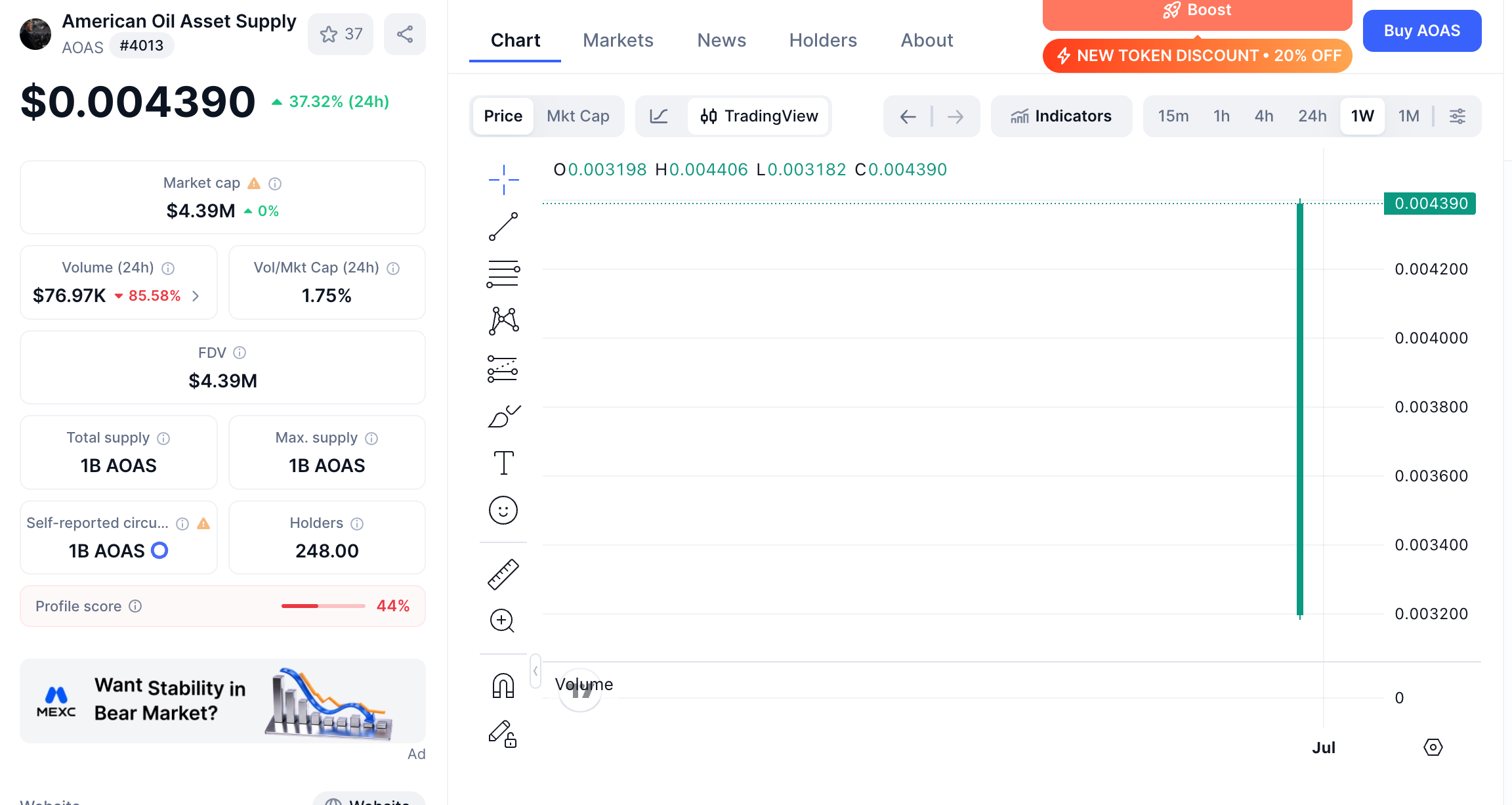
AOAS Tokenomics: What to Check
Before buying AOAS, investors should study tokenomics rather than relying only on the oil narrative.
| Area to Review | Why It Matters |
|---|---|
| Total Supply | Shows maximum token quantity |
| Circulating Supply | Helps estimate available market supply |
| Holder Distribution | Reveals whale or insider concentration |
| Liquidity | Determines whether users can enter or exit efficiently |
| Trading Volume | Shows real market activity |
| Contract Permissions | May reveal minting or freeze authority risks |
| DEX Pool Depth | Affects slippage and price stability |
If liquidity is thin, even a small trade can move the market sharply. If a few wallets control a large percentage of supply, sudden sell pressure can create major downside risk.
Main Risks of AOAS
AOAS is highly speculative. The biggest risk is that investors may confuse oil-themed branding with actual oil backing.
| Risk Factor | Potential Impact |
|---|---|
| Oil Narrative Confusion | Buyers may assume asset backing without proof |
| Low Liquidity | Exits may be difficult during sell-offs |
| Copycat Tokens | Similar names may mislead traders |
| Limited Transparency | Project claims may be hard to verify |
| Whale Concentration | Large holders may control price action |
| Solana Meme-Cycle Volatility | Price may move sharply on hype |
Investors should avoid treating AOAS like a commodity ETF, oil stock, or regulated energy product unless verified legal and asset documentation exists.
How to Research AOAS Before Trading
The first step is contract verification. Search results and social media posts can point to different tokens with similar names, especially when a project uses broad terms like oil, asset, supply, or American.
A basic AOAS research checklist includes verifying the official contract address, checking liquidity pool size, reviewing holder concentration, confirming whether liquidity is locked, looking for a real website or verified social channels, checking recent trading volume, reviewing contract permissions, and avoiding random links.
Users exploring emerging digital asset markets can start with the Tapbit platform for broader crypto market access and tools. If AOAS is not directly listed, traders should be extra cautious and avoid unofficial or copycat assets.
Is AOAS a Good Investment?
AOAS may appeal to speculative traders who follow Solana tokens, oil narratives, and real-world asset themes. If the token gains community attention, trading volume, and stronger liquidity, it could attract short-term market interest.
However, that does not automatically make AOAS a good investment.
For most beginners, AOAS should be treated as a high-risk speculative token. Its investment case depends on whether the project can prove transparency, utility, liquidity, and credible backing. Without that, the oil narrative alone is not enough.
Conclusion
American Oil Asset Supply (AOAS) is a Solana-based crypto token associated with an oil-themed digital asset narrative. While the name may sound connected to commodities or real-world assets, investors should not assume AOAS is backed by oil unless clear documentation proves it.
The safest approach is to evaluate AOAS through evidence: contract verification, liquidity, holder distribution, trading volume, project transparency, and actual utility.
For users who want to monitor broader crypto opportunities, the Tapbit rewards page can provide access to platform campaigns and market resources. Still, speculative tokens like AOAS require careful research and strict risk control.
FAQ
What is AOAS token?
AOAS stands for American Oil Asset Supply and is described as a Solana-based cryptocurrency token with an oil-themed market narrative.
Is AOAS backed by real oil?
Investors should not assume AOAS is backed by real oil unless reserve disclosures, audits, custody details, and legal rights are publicly verified.
Is AOAS on Solana?
AOAS is described as native to the Solana blockchain.
Is AOAS risky?
Yes. Risks include low liquidity, limited transparency, copycat tokens, whale concentration, and confusion between oil branding and real asset backing.
What should investors check before buying AOAS?
Check the contract address, liquidity, holder distribution, trading volume, project documentation, and contract permissions.


