

The crypto market has a habit of manufacturing "parabolic candles" out of thin air, but every so often, a move happens where the liquidity and the narrative actually align. Over the past 48 hours, Starpower (STAR) has been that outlier. After months of dead-flat price action, the token didn't just bounce—it exploded 250%, aggressively testing the $0.25 level and forcing its way into the mainstream conversation.
But if you’re looking at the STAR chart and thinking this is just another MEXC listing pump, you’re missing the bigger picture. We’re seeing a significant transition in how the market values DePIN (Decentralized Physical Infrastructure Networks), specifically as a solution to the brewing energy crisis caused by the AI boom.
The Liquidity Trigger: From "Niche" to "Mainstream"
For most of early 2026, STAR was stuck in a low-liquidity trap, oscillating between $0.04 and $0.06. That changed on May 14, 2026. While the MEXC spot listing provided the initial spark, the real fire started when Binance Futures launched the STARUSDT Perpetual Contract (05:30 UTC).
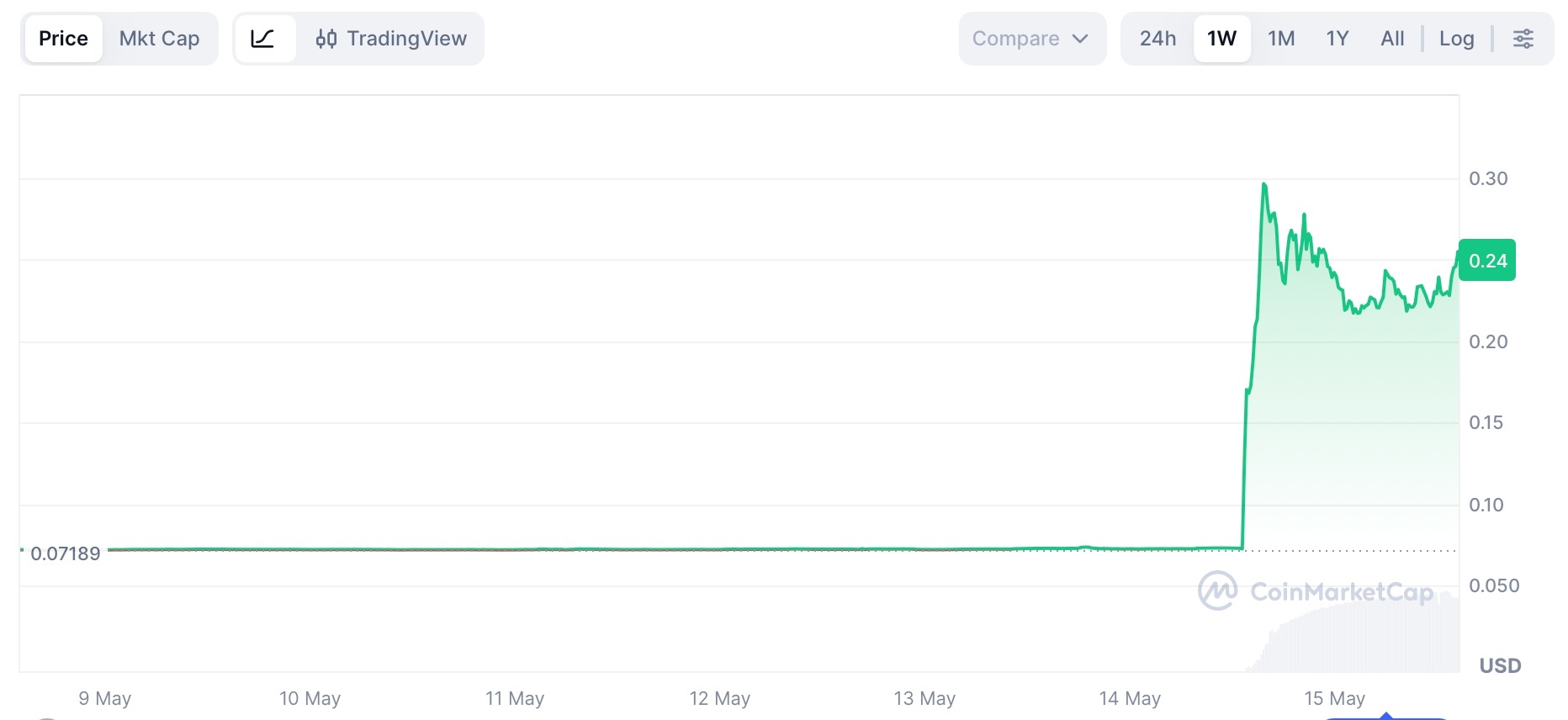
This is a critical turning point for any mid-cap project. The introduction of perpetual contracts brings in institutional market makers and high-frequency traders who provide the depth needed for larger capital entry. It effectively moved STAR from a speculative "micro-cap" into a legitimate liquid asset. When you see a 250% move accompanied by $70M+ in daily volume, it tells you that the "smart money" is no longer just watching from the sidelines—they are active participants in the order book.
Why the Market Suddenly Cares About "Energy DePIN"
The narrative here is simple but incredibly potent: AI is hungry, and the grid is failing. Every new Nvidia H100 chip hitting a data center adds more pressure to an already strained global power grid. Starpower is positioning itself exactly at that friction point.
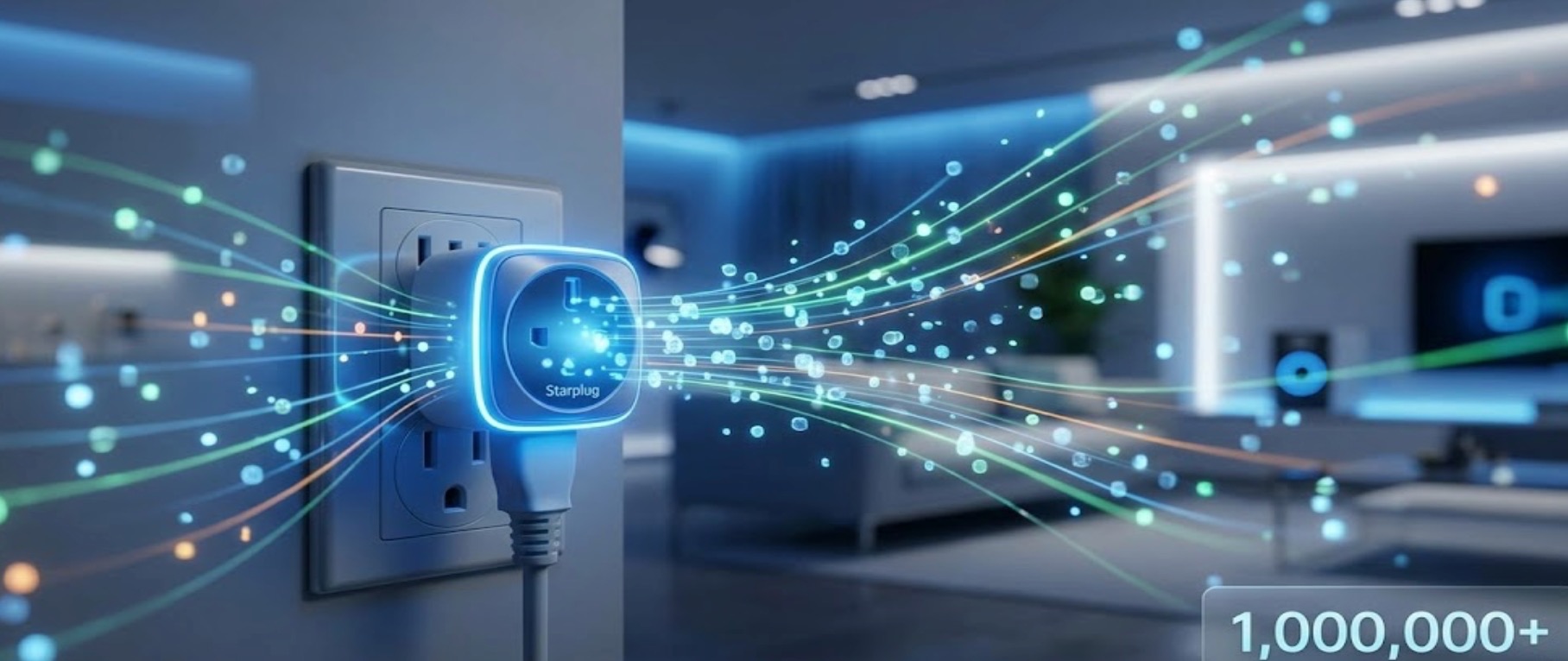
By building a Virtual Power Plant (VPP), Starpower isn't just selling tokens; they are attempting to solve a physical problem. Their network uses smart plugs and home batteries to balance local energy loads. When the grid is stressed, the network responds.
The project claims to have already surpassed 1 million connected devices and generated $2 million in real-world revenue. In a space where most projects are "whitepapers and vibes," seeing seven-figure revenue and a target of $10 million by the end of the year is exactly what institutional backers like Framework Ventures and Solana Ventures look for.
Beyond the Chart: The Hardware Reality
The real test for Starpower lies in its hardware stickiness. Unlike DeFi, where capital can move in a click, DePIN relies on physical installations.
The STAR token functions as the incentive layer for this "Energy Mining." Users aren't just clicking buttons; they are contributing actual wattage and data from devices like the Starplug and GVP01 batteries. This creates a higher barrier to entry but also a much "stickier" ecosystem. If Starpower successfully launches its Energy Marketplace—allowing STAR to be traded for carbon offsets or actual energy credits—the token moves from a speculative asset to a functional commodity.
A Word of Professional Caution
As a market participant, it’s important to stay grounded. Parabolic runs like the one we just saw are rarely sustainable in a straight line. With the introduction of 3x and higher leverage on major exchanges, the risk of "long squeezes" and sharp volatility spikes has increased exponentially.
The $0.25 to $0.30 range is a heavy psychological and technical resistance zone. While the fundamental narrative of "AI meet Energy" is arguably the strongest of 2026, the short-term price action will likely see a period of cooling off as early buyers take profits.
Final Thoughts
Starpower is a prime example of a Real-World Asset (RWA) project that has found its "Product-Market Fit" within the DePIN sector. For Tapbit users, the takeaway isn't just about the 250% gain; it's about watching how decentralized networks can solve industrial-scale problems like energy scarcity. If the revenue continues to scale alongside the device count, the volatility we're seeing now might just be the baseline for a much larger cycle.
Ready to trade the DePIN narrative?
-
Manage Your Exposure: Log in to Tapbit to execute your trades with institutional-grade liquidity.
-
New to the Desk? Register here to secure your welcome rewards and position your portfolio for the 2026 cycle.
Frequently Asked Questions (FAQ)
What exactly is a Virtual Power Plant (VPP)?
A VPP is a network of decentralized energy resources—like home batteries, solar panels, and smart appliances—that work together as a single power plant. Starpower uses blockchain to coordinate these devices and reward owners with STAR tokens.
How does Starpower generate actual revenue?
Revenue is generated through the sale of hardware (Starplugs, batteries) and, more importantly, through providing "demand-response" services to traditional power grids. By helping utilities manage peak loads, the network captures value that is then shared with token holders and contributors.
Is the STAR token supply capped?
Yes. The maximum supply is 1,000,000,000 (1 billion) STAR. As of mid-2026, the circulating supply is approximately 184–186 million tokens.


