
The AI trade is no longer as simple as asking which company is the leader. For much of the AI boom, Nvidia was the obvious answer. Its GPUs, CUDA software ecosystem, networking products and data center platform made it the dominant name in AI infrastructure. But in 2026, the market has started to ask a different question.
Not only: who is strongest? But also: who still has room to surprise?
That is why the comparison between AMD stock and Nvidia stock has become more interesting. Nvidia remains the most important AI chip company, but AMD stock has gained attention because investors are repricing its role in data center infrastructure, EPYC CPUs, Instinct accelerators and rack-scale AI systems.
In short, Nvidia is still the leader. AMD is the expectation-change story.
The AI Trade Is Broadening
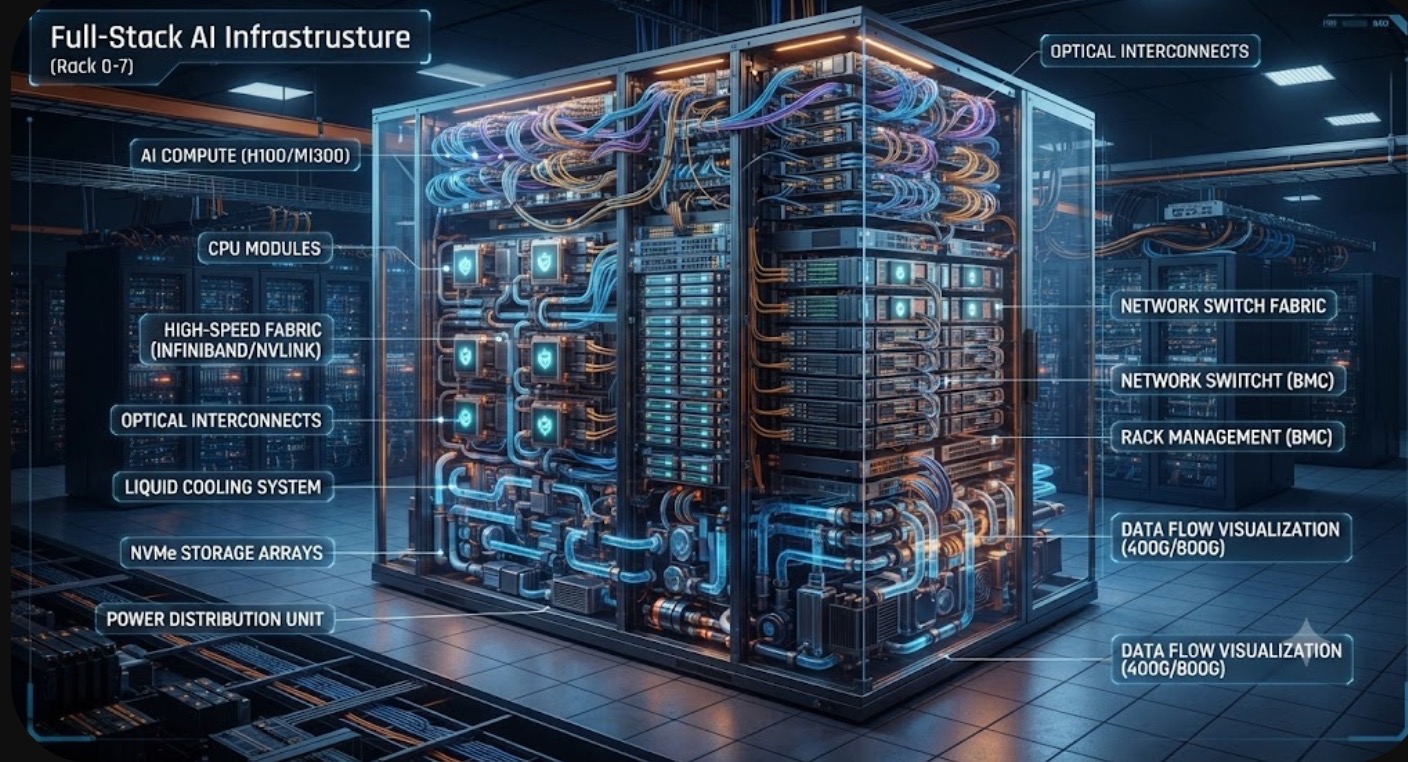
The AI trade started with GPUs, but it has expanded into a full infrastructure cycle.
Modern AI data centers need more than one type of chip. They require GPUs, CPUs, high-bandwidth memory, networking, storage, power management, cooling and software optimization. This broader view has helped investors look beyond Nvidia and consider which companies may benefit from the next phase of AI spending.
AMD has become one of the biggest beneficiaries of that shift.
Tom’s Hardware reported that AMD’s first-quarter 2026 revenue reached $10.253 billion, up 38% year over year, while data center revenue rose 57% to $5.8 billion. The growth was driven by EPYC CPUs and Instinct accelerator demand, which strengthened the case that AMD is becoming more relevant to AI infrastructure buyers.
This matters because the market had previously treated AMD as a strong chip company, but not necessarily as a full AI infrastructure challenger. Stronger data center numbers changed that perception.
Why AMD Stock Has Attracted More Attention
AMD stock has benefited from the idea that the market may have underestimated the company’s AI position.
The company is not only competing through GPUs. It also has a strong CPU franchise through EPYC, which matters for data center workloads, cloud infrastructure and AI inference. As AI systems scale, CPUs remain important for orchestration, data movement and general-purpose workloads around accelerators.
AMD’s AI story also became more system-level.
At CES 2026, AMD introduced the Instinct MI430X, MI440X and MI455X accelerators along with the Helios rack-scale AI architecture. Tom’s Hardware reported that Helios uses Zen 6 EPYC “Venice” CPUs, 72 MI455X GPUs and 31 TB of HBM4 memory, positioning it for large-scale AI and high-performance computing deployments.
That is important because hyperscale customers increasingly want complete infrastructure solutions, not only individual chips.
The market is now asking whether AMD can move from being an alternative supplier to becoming a meaningful second platform in AI infrastructure.
Nvidia Still Has the Stronger Moat
AMD’s improved position does not mean Nvidia has lost leadership. Nvidia still has several advantages that are difficult to copy quickly.
The first is software. CUDA remains one of Nvidia’s most important moats because many AI developers, frameworks and enterprise workflows are already optimized for Nvidia hardware.
The second is platform depth. Nvidia is not only selling GPUs. It sells a full stack that includes accelerators, CPUs, networking, software libraries, system designs and developer tools.
The third is roadmap confidence. At CES 2026, Nvidia introduced the Vera Rubin AI platform, described as a successor to Blackwell and designed for advanced AI workloads. Reports said Rubin is expected to support increasingly demanding AI training and deployment needs, with major technology companies likely to be early adopters.
This is why Nvidia stock remains a core AI holding for many investors. The company is still the benchmark for AI infrastructure.
But strong leadership is not always the same thing as stronger near-term stock performance.
Expectations Matter More Than Size Alone
The AMD vs Nvidia comparison shows one of the most important rules in markets: price movement often depends on expectations.
Nvidia entered 2026 with extremely high expectations. Investors already understood its leadership in AI GPUs, software and data center systems. That does not make Nvidia weak. It means the stock needed more new surprises to move higher.
AMD entered the year from a different position. The market was less certain about its AI opportunity, so stronger data center revenue, EPYC demand, Instinct roadmap progress and system-level products created more room for positive revision.
This is why AMD stock can outperform even while Nvidia remains the stronger AI franchise.
Markets do not only reward absolute strength. They reward improvement relative to what was already expected.
The Recent Selloff Shows the Risk
The AI chip trade has also become crowded. On July 7, 2026, MarketWatch reported that the PHLX Semiconductor Index dropped 4.7% and fell below its 50-day moving average for the first time since April. AMD fell about 8%, Intel dropped 11% and Micron declined 7%, while the iShares Semiconductor ETF had pulled back 16% from its late-June peak.
This selloff did not mean the AI theme was dead. It showed that expectations had become aggressive.
When stocks rise quickly, even good fundamentals can become vulnerable to profit-taking. Investors may begin to question valuation, AI capital expenditure, competitive pressure and whether the next earnings cycle can justify the previous rally.
This applies to both AMD and Nvidia.
AMD must prove that its AI momentum can translate into durable revenue and margin growth. Nvidia must prove that its scale, platform and next-generation products can keep exceeding already-high expectations.
AMD Stock vs Nvidia Stock: Two Different AI Stories
AMD stock represents the expectation-revision story. Investors are watching whether AMD can gain more share in AI accelerators, expand EPYC CPU demand, win more hyperscale customers and make Helios a credible rack-scale AI platform.
Nvidia stock represents the leadership-continuity story. Investors are watching whether Nvidia can continue to protect its ecosystem, scale Blackwell and Rubin platforms, maintain pricing power and convert AI infrastructure demand into sustained earnings growth.
Both companies can benefit from AI. But they may trade differently because the market is asking different questions.
For AMD, the question is: can it become more important than investors previously believed?
For Nvidia, the question is: can it remain so dominant that its premium valuation continues to make sense?
What Traders Should Watch Next
For AMD, traders should watch data center revenue, EPYC demand, Instinct accelerator adoption, customer disclosures, Helios development and margin performance.
The company’s upcoming AI events and earnings reports could be important because the market wants more evidence that AMD’s AI opportunity is real and expanding.
For Nvidia, traders should watch Vera Rubin adoption, Blackwell ramp performance, CUDA ecosystem strength, data center revenue, gross margins and hyperscaler spending.
The broader semiconductor sector also matters. If AI hardware stocks remain under pressure, even the strongest individual companies may struggle in the short term.
Finally, traders should watch hyperscaler capital expenditure. If major cloud companies continue to spend aggressively on AI infrastructure, both AMD and Nvidia may benefit. If investors begin to doubt the return on that spending, the entire AI hardware trade could face valuation pressure.
Tapbit TradFi Special Event
For users interested in traditional finance market opportunities, Tapbit is running a TradFi Special event from July 6 to July 13.
Users can visit the official campaign page here: Tapbit TradFi Special Event
The AMD stock vs Nvidia stock comparison is a useful example of why TradFi themes matter for modern traders. AI, semiconductors, data centers, GPUs, CPUs and infrastructure spending are no longer isolated stock-market topics. They can influence broader risk appetite across both traditional markets and digital assets.
For crypto-native traders, following these TradFi themes can help explain why market sentiment shifts across sectors. When AI chip stocks rally, risk appetite may improve. When semiconductor stocks sell off, traders may become more cautious across high-growth assets, including crypto.
Users should review event details carefully and understand product risks before participating.
Tapbit View
AMD stock and Nvidia stock show two sides of the AI trade.
Nvidia remains the AI infrastructure leader. Its platform, software ecosystem and product roadmap still give it a powerful competitive position.
AMD, however, shows why markets care about changing expectations. Stronger data center performance, EPYC momentum and a clearer Instinct and Helios roadmap have helped investors rethink how much AI infrastructure opportunity AMD may capture.
For Tapbit users, the broader lesson is simple. Markets do not only price who is strongest today. They price what may change tomorrow.
That is why traders should look beyond headlines. A stock can be a market leader and still face valuation pressure. A challenger can be smaller and still outperform if expectations improve quickly.
Users can visit Tapbit to explore supported crypto services. Existing users can access their accounts through Tapbit Login, while new users can start through Tapbit Register.
Frequently Asked Questions (FAQ)
Why is AMD stock being compared with Nvidia stock?
AMD and Nvidia are both major semiconductor companies tied to AI infrastructure. Nvidia is the market leader in AI GPUs, while AMD is gaining attention through data center growth, EPYC CPUs, Instinct accelerators and rack-scale AI systems.
Does AMD outperforming Nvidia mean AMD is stronger?
Not necessarily. AMD may outperform because the market is revising expectations upward. Nvidia can remain the stronger AI platform while AMD stock benefits more from positive surprise.
What is AMD’s AI advantage?
AMD’s advantage is its combination of EPYC CPUs, Instinct accelerators and system-level products such as Helios. Its data center business has also shown strong growth.


