
SpaceX’s debut on the public market has done what few IPOs can still do: it pulled attention away from the usual macro headlines and gave traders a new story to price.
The company’s stock, trading under the ticker SPCX, surged after listing on Nasdaq, extending gains in its first full trading session and pushing SpaceX into the group of the world’s most valuable public companies. The headline is easy to understand: investors are excited about rockets, Starlink, AI, Elon Musk, and the possibility that SpaceX becomes one of the core infrastructure companies of the next decade.
But for traders, especially crypto traders, the more interesting part is not the rocket story. It is the market structure behind the move.
SpaceX is not simply being traded as a company with revenue, losses, growth targets, and a long-term vision. It is also being traded as a scarce asset. Only a small portion of its shares is currently available to the public, while the rest remains locked up. That limited float makes every wave of demand more powerful. When buyers rush in and there are not many shares available, prices can move quickly.
A good story can attract capital. A limited float can amplify the move.
The Real Test Comes After the Hype
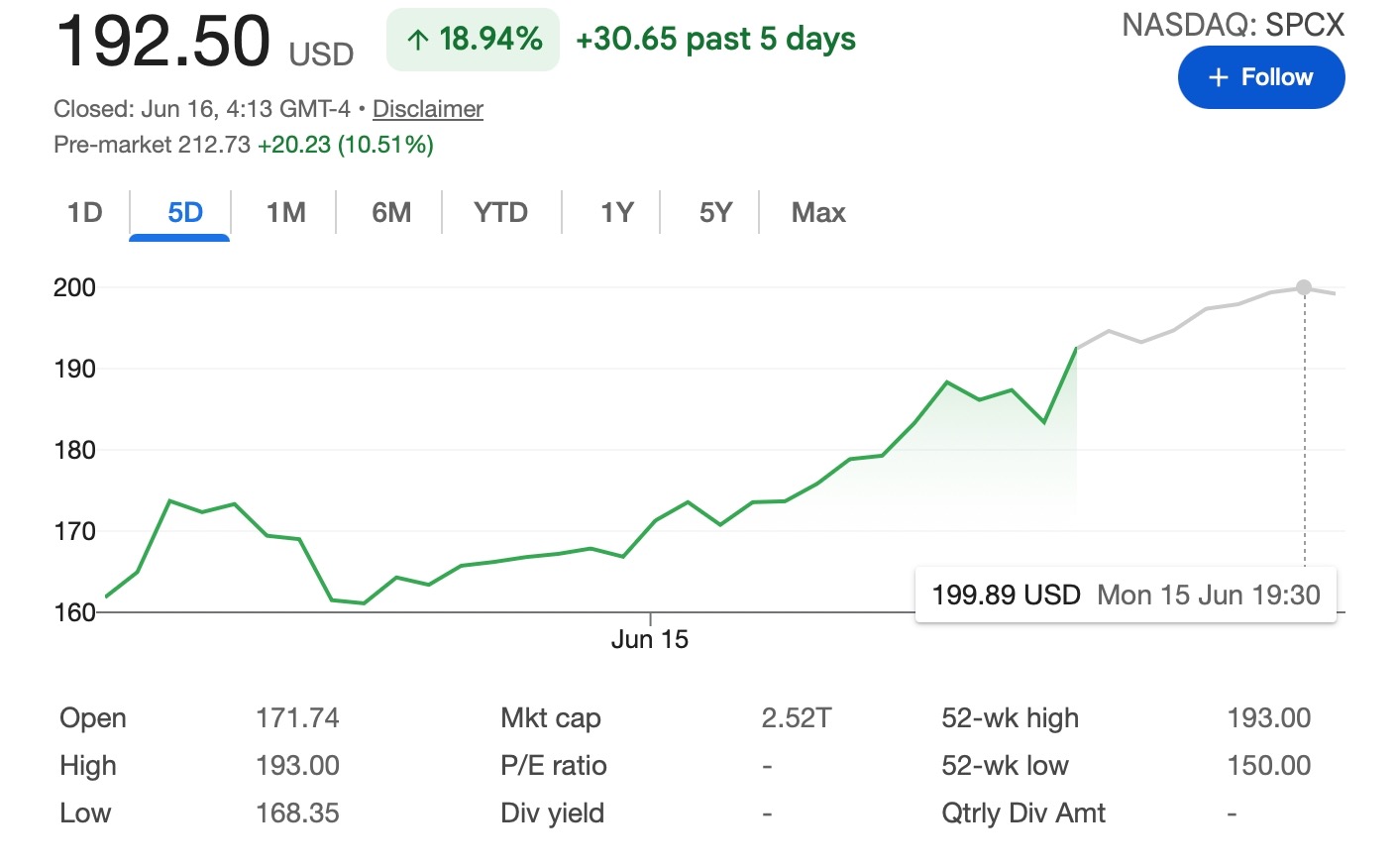
The first few days after a major IPO are rarely about a clean assessment of fundamentals. They are about positioning. Who got allocation? Who missed the deal? Who wants exposure? Who is forced to chase? Who takes profit?
That is why the next key question for SPCX is not only whether SpaceX can grow into its valuation. It is also when more shares become available.
Lockup expirations matter because they change the supply picture. A stock that looks extremely scarce in the first few sessions may become easier to trade later as insiders, employees, or early investors gain the ability to sell. More float can improve liquidity, but it can also remove some of the scarcity premium that supported the early rally.
This is familiar to anyone who follows token unlocks. A project can have a great roadmap and still face sell pressure when new supply hits the market. The same logic applies here. SpaceX may remain one of the most exciting companies in the world, but the stock still has to deal with supply, liquidity, and valuation.
For crypto traders, that is the first lesson from the IPO: do not just follow the narrative. Follow the float.
Starlink Is the Bigger Market Story
SpaceX’s valuation is not only about launch services. If the company were just a rocket business, the market would probably value it very differently.
The real growth story is Starlink. Starlink has already changed the way investors think about satellite internet. The next step is even more ambitious: direct-to-cell connectivity. In simple terms, the idea is that ordinary mobile phones could connect through satellites in areas where traditional network coverage is weak or unavailable.
If that scales, SpaceX is not just selling internet access. It is moving into global communications infrastructure. That is why the market is treating SpaceX less like a traditional aerospace company and more like a platform company. Rockets lower the cost of putting satellites into orbit. Starlink turns those satellites into a recurring revenue business. Direct-to-cell could expand the addressable market further. AI and data infrastructure add another layer to the story.
This is where the connection to crypto becomes more meaningful.
Crypto markets love infrastructure narratives. In different cycles, capital has rotated into layer-1 blockchains, DeFi protocols, oracle networks, storage projects, AI tokens, DePIN, and real-world asset infrastructure. The common thread is always the same: investors are trying to identify which networks could become essential in the next phase of the internet.
SpaceX is obviously not a crypto project. But its IPO strengthens the broader market appetite for big infrastructure stories. When investors are willing to pay a premium for future networks, that mindset can spill into digital assets.
The Risk: Paying Too Early for the Future
The biggest risk around SpaceX is not that the company lacks ambition. It clearly does not. The risk is that the market may already be pricing in a very large part of the future.
That is a common problem in both equities and crypto. Traders often identify the right theme but pay the wrong price. A company or project can be directionally correct and still deliver poor returns if expectations become too stretched.
SpaceX has a powerful business mix: launch services, Starlink, satellite infrastructure, potential mobile connectivity, and long-term plans tied to AI and space-based systems. But it is also capital intensive, highly ambitious, and now valued against extremely high expectations.
For crypto traders, the parallel is clear. The strongest narratives usually come with the highest risk of overpricing. When everyone agrees that a sector is the future, the trade often becomes more complicated.
That is why the SpaceX IPO should be watched less as a signal to chase and more as a case study in how markets behave when scarcity, liquidity, and narrative collide.
What to Watch Next
The first thing to watch is SPCX’s post-IPO trading behavior. If the stock continues to hold gains despite profit-taking, it would suggest that institutional demand remains strong. If volatility rises around lockup-related headlines, the market may be starting to focus more on supply than story.
The second thing to watch is whether the SpaceX halo effect spreads to related sectors. Satellite companies, launch competitors, telecom infrastructure names, AI infrastructure stocks, and even some crypto infrastructure narratives could see renewed attention.
The third thing to watch is Bitcoin. If BTC remains firm while high-growth equities continue to attract capital, it would support the idea that risk appetite is improving across markets. If Bitcoin weakens while speculative equities rally, the signal becomes less clear.
Bottom Line
SpaceX’s IPO is one of the clearest examples this year of how quickly capital can move when a powerful story meets limited supply.
For equity investors, SPCX is a bet on one of the most ambitious companies in the world. For crypto traders, it is something slightly different: a reminder that markets do not move on fundamentals alone. They move on liquidity, scarcity, timing, and belief.
The SpaceX story is not a reason to blindly chase space-themed assets or infrastructure tokens. But it is a reason to pay attention to where risk appetite is returning.
If the market continues to reward long-duration technology narratives, crypto sectors linked to AI, DePIN, decentralized infrastructure, and tokenized markets may come back into focus. The opportunity will not come from copying the headline. It will come from understanding the mechanism behind the move.
SpaceX did not just launch a stock. It launched another test of how much investors are willing to pay for the future.
Traders can follow more market updates on Tapbit, log in, or register to stay connected with global market opportunities.
Frequently Asked Questions (FAQ)
Why does SpaceX’s IPO matter to crypto traders?
SpaceX is not a crypto company, but its IPO is a useful signal for overall market sentiment. When investors are willing to buy high-growth, high-valuation technology assets, it often means risk appetite is improving. That kind of environment can also support interest in Bitcoin, Ethereum, AI tokens, DePIN, and other infrastructure-related crypto sectors.
What does “low float” mean in the case of SPCX?
Low float means only a small portion of the company’s shares is available for public trading. When demand is strong and available supply is limited, the stock can move sharply. This is one reason SPCX saw such strong early price action after listing.
Why is low float familiar to crypto traders?
Crypto traders often see similar dynamics when a token launches with limited circulating supply. If demand is high but only a small amount of supply is tradable, prices can move quickly. The same basic idea applies to SPCX, even though SpaceX is a public company rather than a crypto asset.


