
Why MSFT Is Still a Core AI and Cloud Stock
Microsoft remains one of the most important companies in the global technology market. Its business covers cloud computing, enterprise software, Windows, Office, GitHub, gaming, cybersecurity, developer tools, and artificial intelligence.
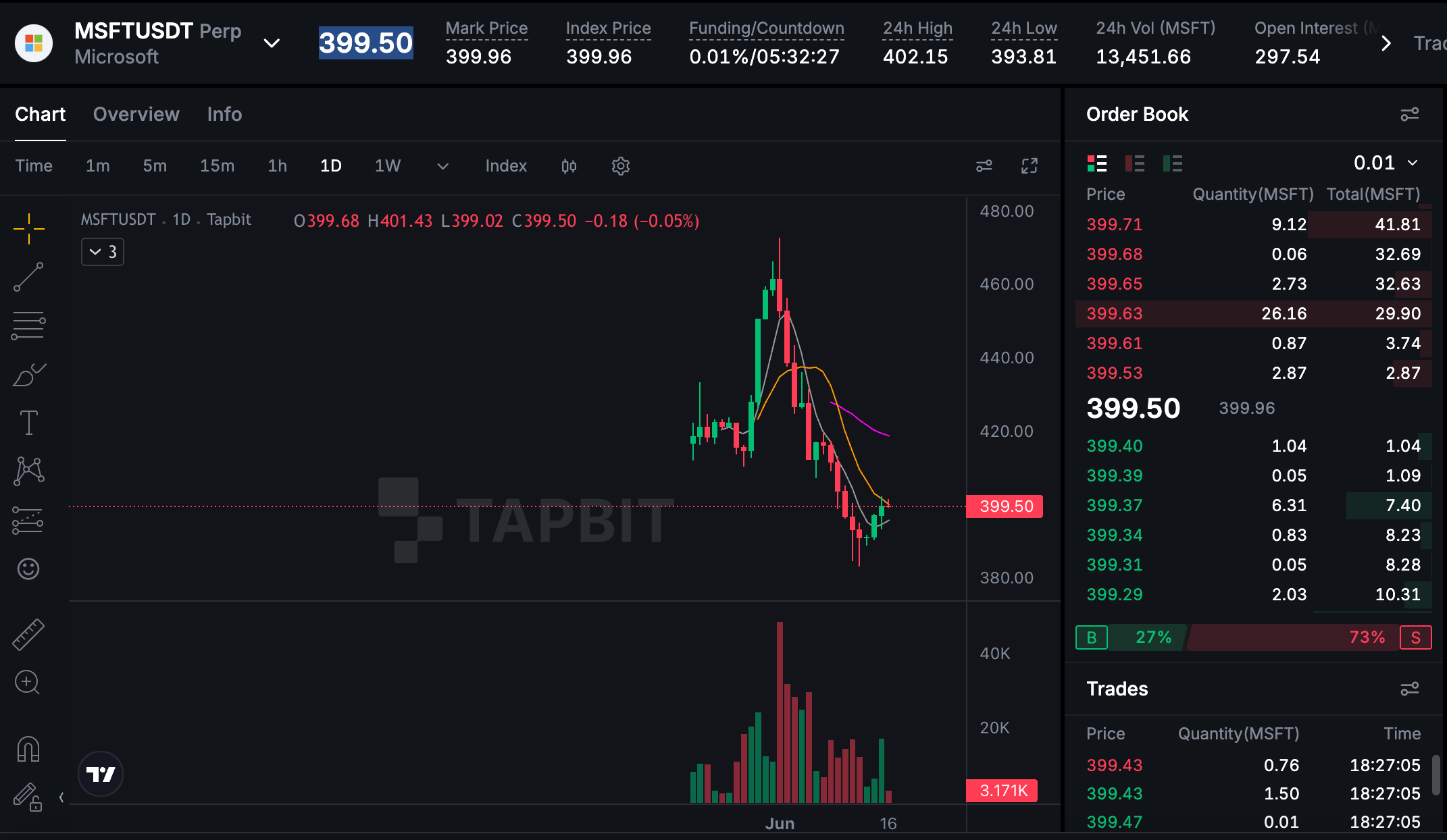
At the time of writing, MSFT stock is trading around $399.94. That price gives investors a clear reference point for evaluating whether Microsoft can rebound in 2026 or whether the stock still needs stronger proof of AI monetization.
In 2026, the MSFT investment case is still closely tied to two themes: Azure cloud growth and AI monetization.
Microsoft has invested heavily in AI infrastructure, Copilot products, GitHub AI workflows, and partnerships across the AI ecosystem. That gives the company one of the broadest AI strategies in the market. But it also creates a major question for investors: can Microsoft turn massive AI spending into durable revenue growth?
Can MSFT Stock Rebound in 2026?
MSFT can rebound in 2026 if investors regain confidence in Microsoft's AI return on investment.
The bullish case is not difficult to understand. Microsoft owns the enterprise software layer, runs one of the world's most important cloud platforms, and has deep AI integrations across productivity, coding, infrastructure, and business workflows.
But the market is no longer rewarding AI spending automatically. Investors want proof that AI products are creating paid adoption, improving margins, and strengthening Azure demand.
| Key Driver | Why It Matters |
|---|---|
| Azure growth | Shows cloud and AI infrastructure demand |
| Copilot adoption | Measures enterprise AI monetization |
| GitHub activity | Signals developer AI workflow demand |
| AI infrastructure capex | Tests return on investment |
| Enterprise software demand | Supports recurring revenue stability |
| Cloud competition | Affects margins and market share |
If Azure demand stays strong and AI products convert into recurring revenue, MSFT could recover from recent pressure.
Azure Growth: The Most Important Signal
Azure remains the key metric for Microsoft investors.
Cloud growth tells the market whether Microsoft is capturing enough AI infrastructure demand to justify its large spending plans. In recent results, Azure growth has remained strong, but investors continue to question whether supply constraints, capacity pressure, and huge capital expenditures will weigh on returns.
The market is watching several Azure-related questions:
- Is AI demand still outpacing available capacity?
- Can Microsoft expand data centers fast enough?
- Will cloud margins hold up despite high spending?
- Are enterprise customers increasing long-term cloud commitments?
- Can Azure keep competing effectively with AWS and Google Cloud?
A strong Azure outlook would support the bullish case for MSFT. A slowdown would make the rebound harder.
AI Spending Is Both the Opportunity and the Risk
Microsoft is spending aggressively on AI infrastructure. That is both the reason investors like the stock and the reason some are cautious.
AI workloads require data centers, chips, power, networking, and software layers. Microsoft needs this infrastructure to support Azure AI, OpenAI-related demand, GitHub Copilot, Microsoft 365 Copilot, and enterprise AI services.
However, high capex creates pressure. If AI revenue does not scale fast enough, investors may worry that Microsoft is spending ahead of demand.
| AI Opportunity | AI Risk |
|---|---|
| More enterprise AI usage | Returns may take longer than expected |
| Strong cloud demand | Infrastructure costs are rising |
| Copilot monetization | User conversion may be slower |
| GitHub AI workflows | Capacity pressure can create reliability issues |
| AI partnerships | Revenue sharing and dependency risks remain |
This is why MSFT's 2026 outlook is not simply bullish or bearish. It depends on execution.
Copilot and GitHub: Can AI Products Scale?
Microsoft's Copilot strategy is one of the biggest tests in enterprise AI.
The company has added AI assistants across Microsoft 365, Windows, GitHub, security, developer tools, and business applications. The goal is to make AI part of daily work for companies and developers.
GitHub is especially important because AI coding demand has grown quickly. Reports suggest GitHub activity has increased sharply as AI coding tools drive more code changes and developer workflows. That is positive for demand, but it can also create infrastructure strain.
If Copilot and GitHub AI products keep growing, Microsoft could strengthen its position as a leading enterprise AI platform. If adoption slows or reliability issues persist, investors may question the AI premium in MSFT stock.
How MSFT-USDT Futures Fit Into the Market
For traders who want to follow Microsoft-linked price action through crypto-style derivatives, Tapbit offers an MSFT-USDT futures market.
This allows users to track MSFT-related market moves through USDT-settled futures instead of traditional equity brokerage access.
Potential use cases include:
- Trading Microsoft AI and Azure narratives
- Taking long or short exposure
- Responding to earnings and cloud growth data
- Following Nasdaq and Big Tech momentum
- Using USDT-settled derivatives for flexible market access
Futures trading carries significant risk. Leverage can magnify both gains and losses, and fast price moves can trigger liquidation.
Bullish Scenario for MSFT
The bullish scenario for MSFT depends on Microsoft proving that AI infrastructure spending is paying off.
In this scenario, Azure remains strong, Copilot adoption grows, GitHub AI demand expands, and enterprise customers continue committing to Microsoft's AI stack.
Potential bullish catalysts include:
- Strong Azure growth
- Better-than-expected earnings
- Faster Copilot paid adoption
- Positive AI margin commentary
- Strong commercial cloud demand
- Analyst target upgrades
- Broader Nasdaq recovery
If these signals appear together, MSFT could recover and regain market leadership among large-cap technology stocks.
Bearish Scenario for MSFT
The bearish case is focused on spending, competition, and execution risk.
If AI infrastructure costs keep rising faster than monetization, investors may become less patient. Microsoft also faces competition from AWS, Google Cloud, Anthropic-related ecosystems, open-source AI, and other enterprise AI providers.
Downside risks include:
- Azure growth slowdown
- Higher-than-expected capex
- Slower Copilot conversion
- Cloud margin pressure
- AI partnership uncertainty
- Regulatory scrutiny
- Broader tech-sector selloff
Even a strong company can see stock pressure if expectations are too high.
What Traders Should Watch Next
MSFT traders should monitor:
- Quarterly earnings and guidance
- Azure revenue growth
- AI infrastructure spending
- Microsoft 365 Copilot adoption
- GitHub performance and AI developer demand
- Cloud margin trends
- Analyst price target changes
- Nasdaq and interest-rate sentiment
Users interested in broader platform campaigns can also explore the Tapbit rewards page.
Conclusion
MSFT remains one of the strongest AI and cloud stocks in the market, but its 2026 outlook depends on execution. Microsoft has the enterprise base, cloud infrastructure, software ecosystem, and AI partnerships to remain a leader.
The key question is whether AI spending turns into visible returns. If Azure stays strong and Copilot adoption improves, MSFT could rebound. If capex concerns grow or AI monetization disappoints, the stock may remain under pressure.
For traders using MSFT-linked futures, risk management is essential. MSFT price outlooks should be treated as scenarios, not promises.
FAQ
Can MSFT stock rebound in 2026?
MSFT can rebound if Azure growth remains strong, Copilot adoption improves, and investors regain confidence in Microsoft's AI spending returns.
What is MSFT trading at now?
At the time of writing, MSFT stock is trading around $399.94.
What drives MSFT stock price?
Key drivers include Azure growth, AI infrastructure demand, Copilot adoption, Microsoft 365 revenue, cloud margins, and broader tech-market sentiment.
Where can traders follow MSFT-linked futures?
Traders can view the MSFT-USDT futures market on Tapbit.
Are MSFT futures risky?
Yes. Futures can involve leverage, liquidation risk, and fast price swings, especially around earnings and major AI or cloud announcements.
What are the main risks for Microsoft?
Main risks include high AI capex, cloud competition, slower Copilot adoption, Azure growth concerns, regulatory scrutiny, and broader tech-stock volatility.


