
If you’ve been waiting for the "institutional adoption" narrative to actually show up in the order books, look no further than this week’s headlines. We have officially moved past the phase of vague pilot programs and "exploring blockchain". 2026 is the year Wall Street stopped "testing" and started "shipping" real products to both retail and institutional clients.
We’re seeing a massive dual-pronged strategy from Morgan Stanley that effectively creates a closed loop for the next generation of finance. By combining a aggressive retail assault via E*Trade with a sophisticated institutional digital wallet, they are positioning themselves to dominate the trillions in assets moving on-chain. Here is the unfiltered breakdown of why this matters for your portfolio and the hard data backing up this $26 billion awakening.
The E*Trade Land Grab: A Direct Hit to Native Crypto
The most aggressive move this week didn't come from a DeFi protocol, but from E*Trade. On May 6, 2026, Morgan Stanley officially launched a crypto trading pilot on the platform, and they aren't playing nice. By opening up direct trading for BTC, ETH, and SOL to a select group of their massive user base, they are signaling a total shift in how traditional brokerages view digital assets.
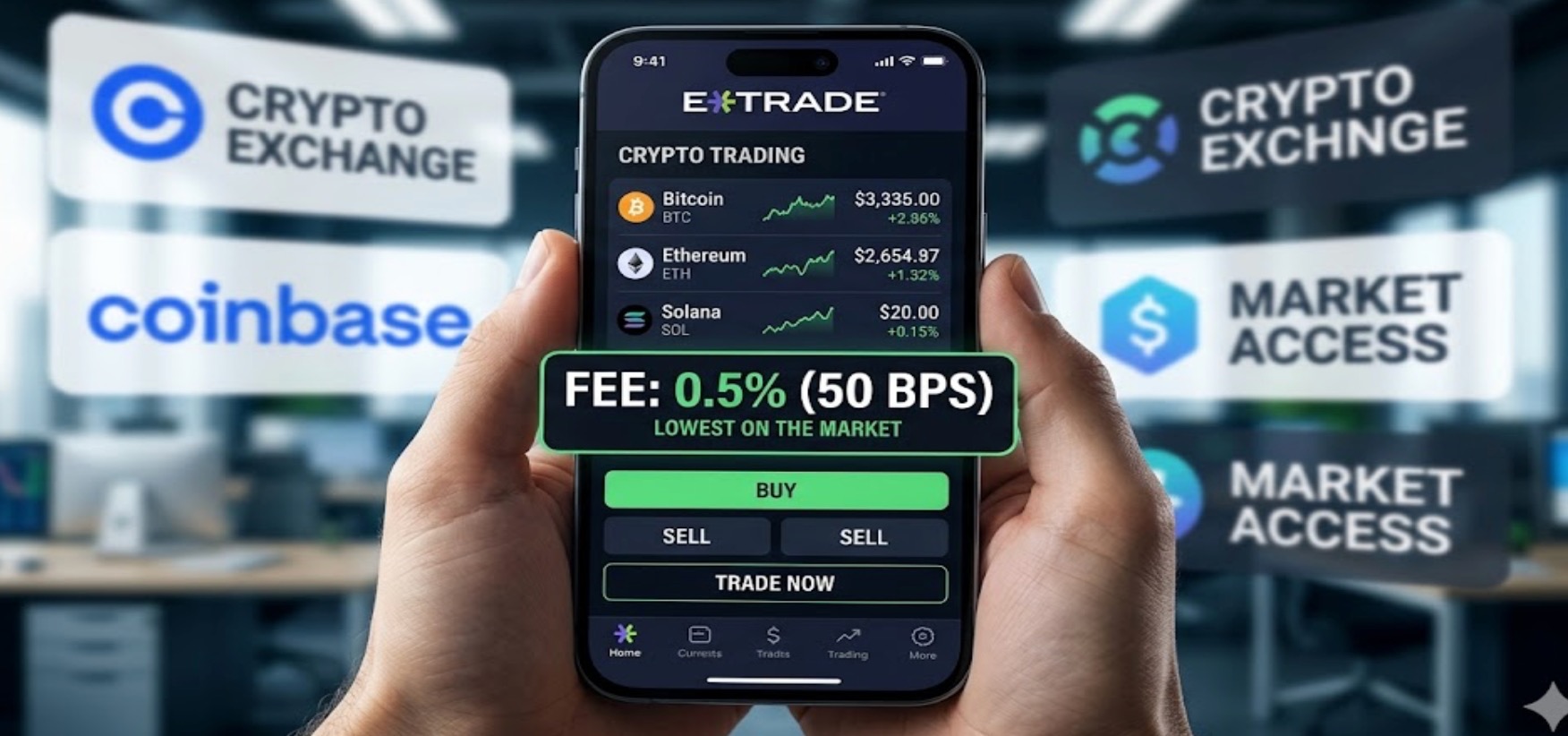
The real "warning shot" here is the fee structure. By setting fees at a flat 50 basis points (0.5%), Morgan Stanley is looking to bleed market share from native exchanges like Coinbase and other legacy players like Schwab. This isn't just about trading fees; it's a strategic "downward" move to capture retail order flow before they roll out their institutional digital wallet in the second half of 2026. This wallet will allow their wealthiest clients to hold tokenized stocks and bonds alongside crypto, effectively merging the two worlds in a single, secure interface.
RWA by the Numbers: This Isn't "Paper" Growth
The Real-World Asset (RWA) market has achieved escape velocity in early 2026. We aren't just hearing rumors; the on-chain data is undeniable and reflects a total value locked (TVL) that has surged by roughly 66% since the start of the year. According to deep-dive reports from KuCoin and BITmarkets, the RWA track has comfortably crossed the $23.6 billion to $26 billion threshold.
Even when you use the strictest criteria—stripping out stablecoins—the core RWA market closed Q1 at a massive $19.3 billion. Tokenized U.S. Treasuries are the undisputed anchor here, making up over 67% of that figure and holding strong above the $11 billion mark. This growth is driven by real-world operational needs: institutions want the safety of government debt but with the 24/7 liquidity and instant settlement that only blockchain rails can provide. Interestingly, it's not just bonds; tokenized gold and other commodities have seen an explosive 289% surge in trading volume as investors hunt for on-chain hedges.
The Power Players: BlackRock and Ondo
You can't talk about the $26B RWA boom without looking at the "apex predators" controlling the liquidity. The market has heavily consolidated around a few foundational players who have turned their funds into base-layer collateral for the rest of DeFi. BlackRock’s BUIDL fund is the perfect example; it has officially transcended being a mere asset management product to become a core primitive with a market cap of $2.28 billion.
Ondo Finance (ONDO) is another beast we are watching closely. As the primary bridge between Wall Street's yield and Web3 liquidity, Ondo smashed through $3.015 billion in TVL this April. They effectively have a monopoly on decentralized yield distribution right now, allowing investors to hold exposure to U.S. Treasuries directly in their digital wallets while using those same tokens as collateral in DeFi protocols. When you see names like BlackRock, Franklin Templeton, and Ondo consistently attracting billions in inflows, you know the RWA era has moved past the experimental phase.

Infrastructure: The Circle (CRCL) IPO Factor
The "secret sauce" making this all possible for big banks is compliance. The institutional stablecoin narrative was cemented when Circle (the issuer of USDC) went public on the NYSE back in June 2025 under the ticker CRCL. Circle now holds a market cap between $25.7 billion and $29.5 billion, providing the audited, regulated bridge that institutions like Morgan Stanley require.
Because major banks are now tightly integrated with Circle’s infrastructure, they are using USDC as the primary settlement rail for these tokenized assets. This allows for "atomic settlement"—where the payment and the asset transfer happen simultaneously in seconds rather than days. This efficiency gain is why USDC supply has grown over 30% in the last 12 months. For a wealth manager, shorter settlement times mean less risk and faster capital rotation, which is exactly why Morgan Stanley is betting so big on this tech for late 2026.
The Tapbit Takeaway: How We’re Trading It
The convergence is real. Morgan Stanley is bringing retail users in via E*Trade at 0.5% fees, while BlackRock and Ondo are locking institutional value on-chain.
-
Follow the Capital: Liquidity is concentrating in Treasuries and gold-backed assets. These are the safest entry points for those looking to follow the "big money".
-
Watch the Fee Wars: E*Trade’s entry is a signal that traditional finance is ready to compete on price. This will likely force the entire industry toward lower fees and better execution.
Ready to position yourself alongside the heavyweights?
-
New Users: Register on Tapbit and unlock rewards up to 5000 USDT.
-
Pro Traders: Log in to Tapbit to trade BTC, ETH, and SOL with institutional-grade liquidity.
-
Live Data: Check our real-time order books and RWA ecosystem listings on the Tapbit Homepage.
Frequently Asked Questions (FAQ)
Is Morgan Stanley actually letting people buy crypto now?
Yes, via the E*Trade pilot launched on May 6, 2026. They are offering BTC, ETH, and SOL to start, using it as a hook for their broader 2026 digital asset strategy.
Why are tokenized Treasuries so dominant in the RWA space?
They account for over $11 billion of the market because they deliver the "safe" yield of government debt with the perks of blockchain—like near-instant settlement and the ability to use the tokens as collateral.
What is the "Institutional Wallet" everyone is talking about?
Morgan Stanley is planning a H2 2026 launch for a digital wallet that will allow clients to manage tokenized stocks, ETFs, and private equity alongside their crypto holdings in one place.


