
Internet Computer (ICP) has returned to the crypto market conversation. The project has always had an ambitious goal: to let applications, data, smart contracts, and user interfaces run directly on-chain. In 2026, that idea is being viewed through a new lens: AI infrastructure.
AI agents, autonomous applications, cross-chain execution, secure identity, and decentralized data workflows all need infrastructure. That is where ICP’s narrative becomes interesting again.
But the price chart still tells a more cautious story.
CoinGecko currently lists ICP near $2.14, with a market cap of about $1.19 billion, 24-hour trading volume near $20.16 million, and a ranking around #58. ICP is still about 99.7% below its historical high of $700.65, which shows how much market confidence was lost after its early overvaluation cycle.
That makes ICP one of the more complicated AI-related crypto stories. The technology narrative is active. Developer activity remains strong. Chain Fusion gives ICP a differentiated cross-chain infrastructure angle. But the market still needs proof that these developments can create real usage, revenue, and demand for the ICP token.
Why ICP Is Back in the AI Conversation

ICP is not simply an “AI token.” Its relevance comes from infrastructure.
Most blockchains focus mainly on settlement, token transfers, and smart-contract execution. ICP is designed to host full applications through canisters, which can store logic and data directly on-chain.
That matters for AI because future AI agents may need to do more than generate text. They may need to: read on-chain and off-chain data, control wallets, execute transactions, manage permissions, interact across multiple chains, and operate inside verifiable execution environments.
If this type of autonomous workflow grows, infrastructure that can host applications and interact across chains may become more valuable.
This is why ICP’s AI narrative is not only about marketing. It connects to the project’s original technical design.
Chain Fusion Is the Core Technical Story
Chain Fusion is currently one of ICP’s most important narratives.
ICP’s official developer documentation describes Chain Fusion as a cross-chain interoperability approach that allows canisters to interact directly with networks such as Bitcoin, Ethereum, Solana, and other chains. Canisters can read state, hold assets, sign transactions, and submit transactions without relying on traditional bridges or trusted intermediaries.
That is important because bridges have historically been one of crypto’s weakest security points.
ICP’s approach uses chain-key cryptography, allowing canisters to derive keys and request threshold signatures without any single node holding the private key. In practice, this means a canister can control addresses on external chains and execute cross-chain actions in a more native way.
For AI agents, this could matter. An AI agent that only gives recommendations is useful. But an AI agent that can securely execute cross-chain tasks, manage assets, and interact with multiple networks becomes a very different type of application.
That is the long-term opportunity ICP is trying to capture.
Bitcoin and Ethereum Integration Strengthen the Case
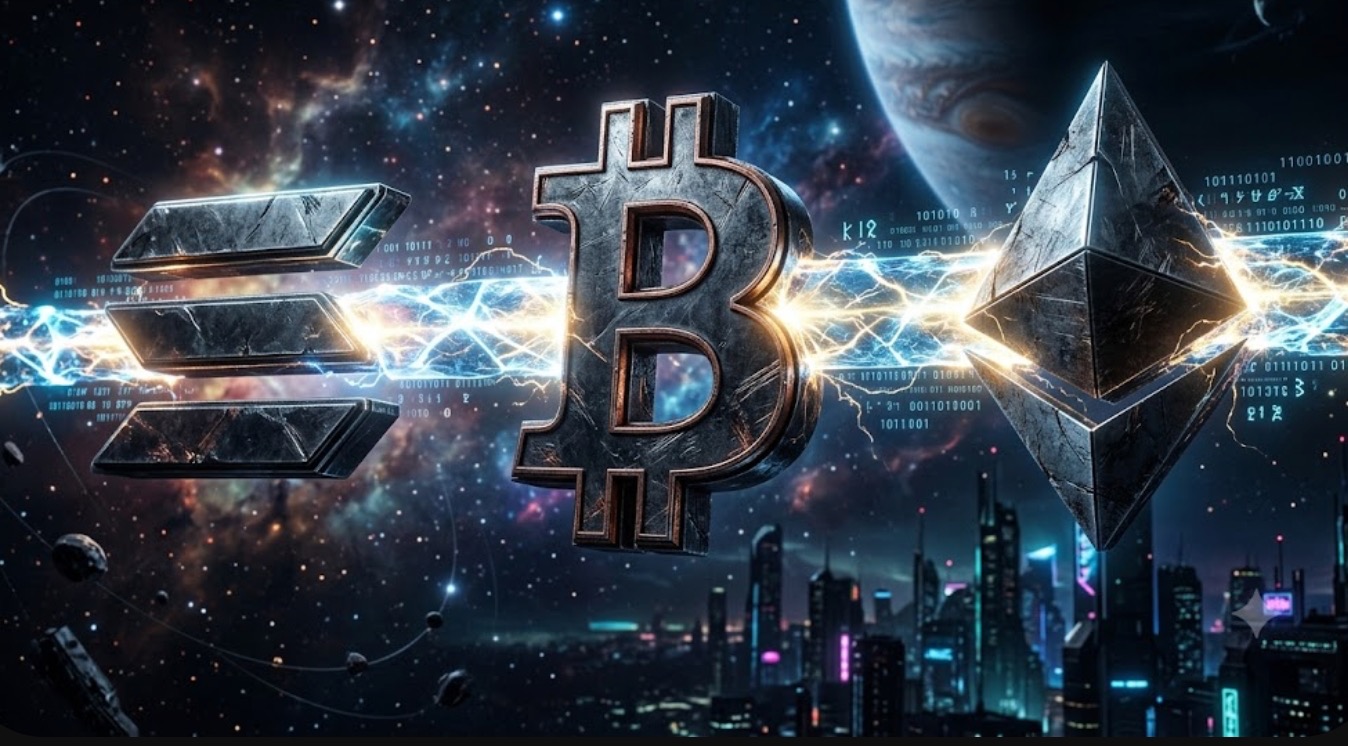
ICP’s Bitcoin integration is one of its strongest examples.
A research paper on enabling Bitcoin smart contracts through the Internet Computer explains that ICP and Bitcoin nodes can interact directly, avoiding bridge-based wrapped Bitcoin models. The paper notes that this design enables Turing-complete Bitcoin-based decentralized applications with fast finalization and low execution costs.
ICP’s Ethereum integration also supports the Chain Fusion thesis. Official documentation says canisters can interact with Ethereum and EVM-compatible chains through HTTPS outcalls and chain-key ECDSA signatures, allowing them to read state and authorize transactions without relying on bridges or trusted intermediaries.
This gives ICP a clearer infrastructure story than many AI-themed tokens. The question is no longer whether ICP has technical differentiation. The question is whether developers and users will adopt it at scale.
Developer Activity Is a Positive Signal
One of ICP’s strongest recent signals is developer activity. Santiment’s June ranking of AI and Big Data crypto projects placed Internet Computer at #2, behind Chainlink and ahead of NEAR, OriginTrail, Livepeer, Injective, and Filecoin.
Developer activity does not guarantee price appreciation. But it does show that the project is still being actively built.
That matters for ICP because its biggest challenge is not only technical execution. It is market trust. After such a large historical drawdown, investors need to see that the ecosystem is still active, still shipping, and still attracting builders.
Developer activity helps support that case. But it must eventually turn into user activity.
MULTI/DEX Shows Ecosystem Experimentation
Recent ecosystem updates also point to continued experimentation.
CoinMarketCap AI reported that MULTI/DEX launched in Play Mode on Internet Computer in July 2026. It described the project as a fully on-chain, NNS-governed exchange combining a central limit order book with an AMM, supporting spot and margin trading in a community testing environment using simulated assets. The report also noted more than $243 million in simulated volume.
This is useful because it shows what ICP is trying to demonstrate: complex financial applications can operate fully on-chain.
However, traders should be careful. Simulated volume is not the same as real liquidity. Play Mode is not the same as sustained market demand. A test environment can prove technical capability, but real adoption requires real users, real capital, real fees, and repeat usage.
That is why MULTI/DEX is a positive development, but not yet a complete investment thesis.
Why Tokenomics Still Matters
ICP also needs to address supply and economic design.
CoinMarketCap AI’s ICP price outlook highlighted “Mission 70,” describing it as a tokenomics initiative aimed at reducing annual inflation from around 9.72% toward roughly 2.92%–5.42% by the end of 2026. The same analysis noted that tokenomics tightening could be bullish if network usage grows, but real-world adoption remains the key test.
This is an important point. Lower inflation can improve the supply side, but it cannot create demand by itself.
For tokenomics improvements to matter, ICP needs stronger network usage. If more applications consume cycles, more users interact with canisters, and more developers build cross-chain or AI-related applications, then the token economy becomes more meaningful.
Without demand growth, supply changes may only have limited market impact.
ICP Price Outlook: Three Scenarios
Base Case: Slow Recovery and Range Trading
In the base case, ICP continues trading in a low range while the market waits for clearer adoption data.
Chain Fusion, Bitcoin integration, AI agent infrastructure, and developer activity remain positive narratives, but price momentum stays limited because real usage is still being tested.
This scenario assumes ICP remains relevant, but not yet re-rated.
Bull Case: AI and Chain Fusion Drive Real Usage
In a bullish scenario, ICP begins to show visible adoption across Chain Fusion applications, AI workflows, decentralized identity, on-chain applications, and DeFi products such as MULTI/DEX.
If developer activity turns into real users, fees, and liquidity, the market could begin to reprice ICP as more than a legacy comeback token.
This would require proof that ICP can support applications people actually use, not just applications that demonstrate technical potential.
Bear Case: Narrative Without Demand
In a bearish scenario, AI excitement fades, Chain Fusion adoption remains limited, and ICP continues to struggle with market skepticism.
If price stays near historical lows while ecosystem activity fails to grow, traders may continue treating ICP as a technically interesting but commercially unproven project.
In this case, developer activity alone may not be enough to support a major recovery.
Conclusion
Internet Computer is gaining renewed attention because its infrastructure fits several important crypto themes: AI agents, cross-chain execution, decentralized applications, Bitcoin integration, and on-chain governance.
Chain Fusion gives ICP a differentiated technical story. Developer activity remains strong. Ecosystem experiments such as MULTI/DEX show that the network is still pushing toward complex on-chain applications.
But ICP’s price remains near historical lows, and the market has not yet confirmed a strong recovery. That means the next stage is about proof.
ICP does not need another broad AI slogan. It needs visible usage, stronger liquidity, real applications, and measurable demand for its network.
Traders can track live market conditions through the Tapbit homepage. Existing users can access their accounts through Tapbit login, while new users can begin from the Tapbit registration page.
Frequently Asked Questions (FAQ)
What is Internet Computer (ICP)?
Internet Computer is a blockchain network designed to host applications, data, and smart contracts directly on-chain through canisters.
Why is ICP connected to AI crypto?
ICP is connected to AI crypto because its infrastructure can support applications, data, identity, and cross-chain workflows that may be useful for AI agents and autonomous applications.
What is Chain Fusion?
Chain Fusion is ICP’s cross-chain interoperability approach. It allows canisters to read state, hold assets, sign transactions, and interact with networks such as Bitcoin, Ethereum, and Solana without relying on traditional bridges.


