

For most of this year, crypto traders had a fairly simple macro playbook: wait for the Fed to cut, watch liquidity improve, and expect risk assets to breathe again.
That story has become much less comfortable.
Bitcoin has managed to recover from its early-June low, but the rebound does not change the bigger shift taking place in macro markets. The market is no longer asking whether the first rate cut is just around the corner. It is asking whether the Federal Reserve may have to keep rates high for longer — and whether another hike is still possible before the year is over.
That is why the June FOMC meeting matters, even if the rate decision itself may be uneventful.
The Fed is widely expected to leave rates unchanged at its June 16–17 meeting. In normal circumstances, that would make the meeting easy to ignore. This time, it is different. The focus is not the current rate level. The focus is the message: how the Fed describes inflation, how it frames the labor market, and how much room it leaves for future tightening.
The Market Has Had to Reprice the Fed
The shift did not happen out of nowhere. The latest U.S. employment data showed that the labor market is still holding up better than many had expected. At the same time, inflation remains too sticky for the Fed to declare victory. Headline CPI has moved higher again, while core inflation is not low enough to give policymakers a clean path toward easing.
This is an awkward mix for risk assets. Growth is not weak enough to force cuts, and inflation is not soft enough to let the Fed sound relaxed.
A few months ago, traders were still debating how many cuts might arrive in 2026. That debate has now changed. The more relevant question is whether the market was too quick to assume that easing was inevitable.
For crypto, this matters because Bitcoin and Ethereum have become deeply tied to the global liquidity cycle. When rate-cut expectations rise, crypto usually benefits from easier financial conditions and stronger risk appetite. When those expectations fade, the market has to adjust.
That adjustment is what we are seeing now.
CME and Polymarket Are Telling Different Parts of the Same Story
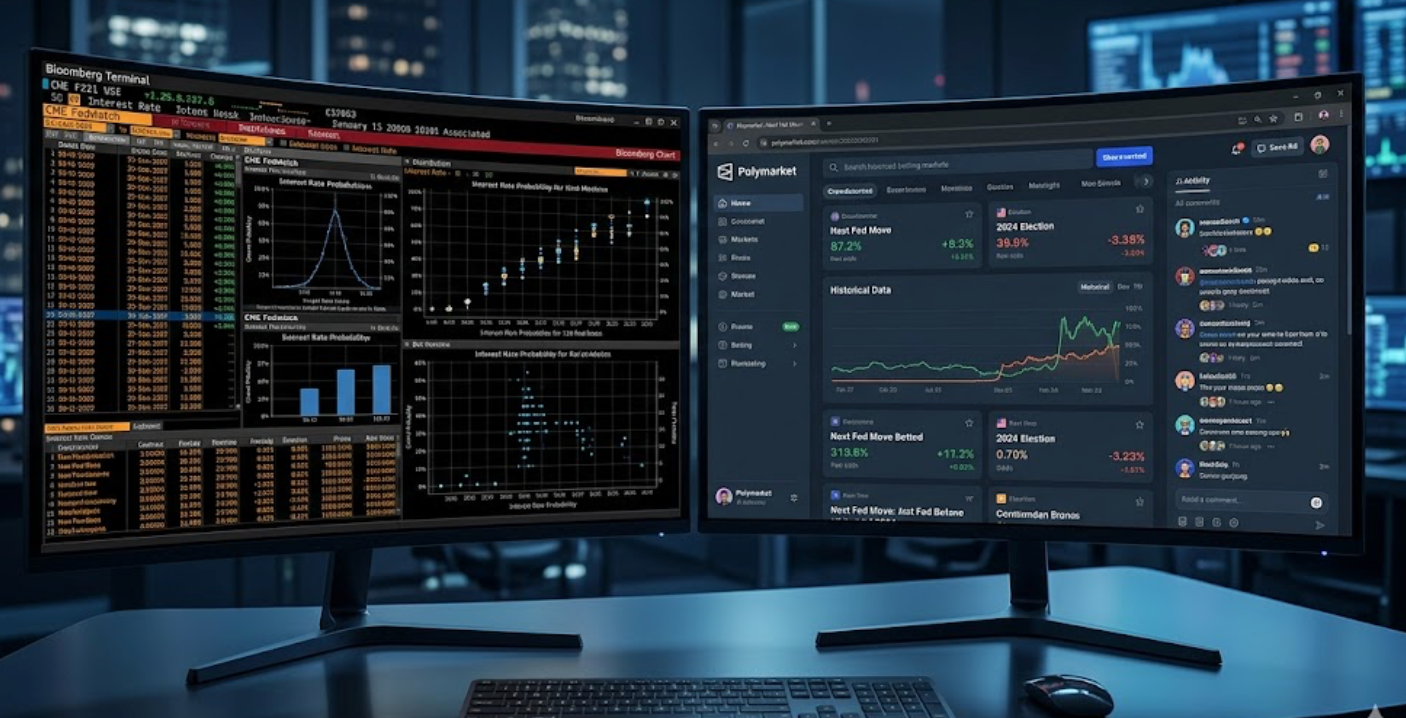
One of the more interesting signals right now is the gap between professional rate markets and prediction markets.
Fed funds futures have been pricing a much higher probability of a 2026 rate hike than retail-driven prediction markets such as Polymarket. On the surface, that looks like a disagreement. In reality, it may be more useful to read it as a timing gap.
CME FedWatch is based on futures pricing, where institutional traders, hedge funds and banks are not simply making directional guesses. Many of them are hedging real exposure. That market tends to move quickly when macro risk changes, because the cost of being wrong can be significant.
Prediction markets work differently. They are cleaner as event markets, but they are also more exposed to sentiment, liquidity and narrative momentum. They often react strongly once a story becomes obvious, but they may lag when the first repricing begins in professional markets.
So the exact percentage is less important than the direction of travel. Both markets have moved away from the old rate-cut consensus. The difference is that institutional rate markets are expressing the risk more aggressively.
For crypto traders, that is the key signal.
Warsh’s First Meeting Could Matter More for Tone Than Policy
Kevin Warsh’s first meeting as Fed Chair adds another layer of uncertainty.
The market knows the Fed is unlikely to move rates in June. What it does not know is how Warsh wants to communicate policy. If the Fed becomes less willing to guide markets clearly, or if it changes how it presents the future rate path, volatility could rise.
That matters for crypto because digital assets are especially sensitive to changes in the policy anchor. When investors feel they understand the Fed’s path, risk assets can price around it. When the path becomes less clear, markets demand a higher risk premium.
This is why the press conference may matter more than the statement headline. Investors will be watching whether Warsh pushes back against rate-cut expectations, whether he leaves the door open to further tightening, and whether he signals a different approach to the dot plot or forward guidance.
The biggest market-moving line may not be “rates are unchanged.” It may be anything that suggests the Fed is no longer comfortable with the market’s assumptions.
Why Higher-for-Longer Is a Problem for Crypto
Crypto does not react to Fed policy in a straight line. It is not as simple as “rate hikes bad, rate cuts good.” But the pressure points are clear.
The first is opportunity cost. Bitcoin does not pay yield. Neither does Ethereum in the same way a Treasury bill does. When short-term U.S. yields are attractive and real rates stay positive, investors need a stronger reason to hold volatile, non-cash-flow assets.
The second is ETF flow. Spot Bitcoin ETFs have turned into one of the most important channels for institutional exposure. When macro conditions look friendlier, inflows can support the market. When rate expectations turn hawkish, those same products allow institutions to reduce risk quickly. Recent ETF outflows show that this channel is already reacting to the change in macro tone.
The third is leverage. Crypto rallies often become powerful when liquidity expands and volatility is being bought. In a tighter-rate environment, that process can reverse. Traders cut exposure, funding appetite weakens, and high-beta assets become more vulnerable to sharp moves.
That is why the recent crypto pullback should not be viewed only as a crypto-native event. The pressure is coming from outside the industry. Macro expectations have shifted, and crypto is adjusting to that shift.
Bitcoin Is Holding, but the Ceiling Is Still There
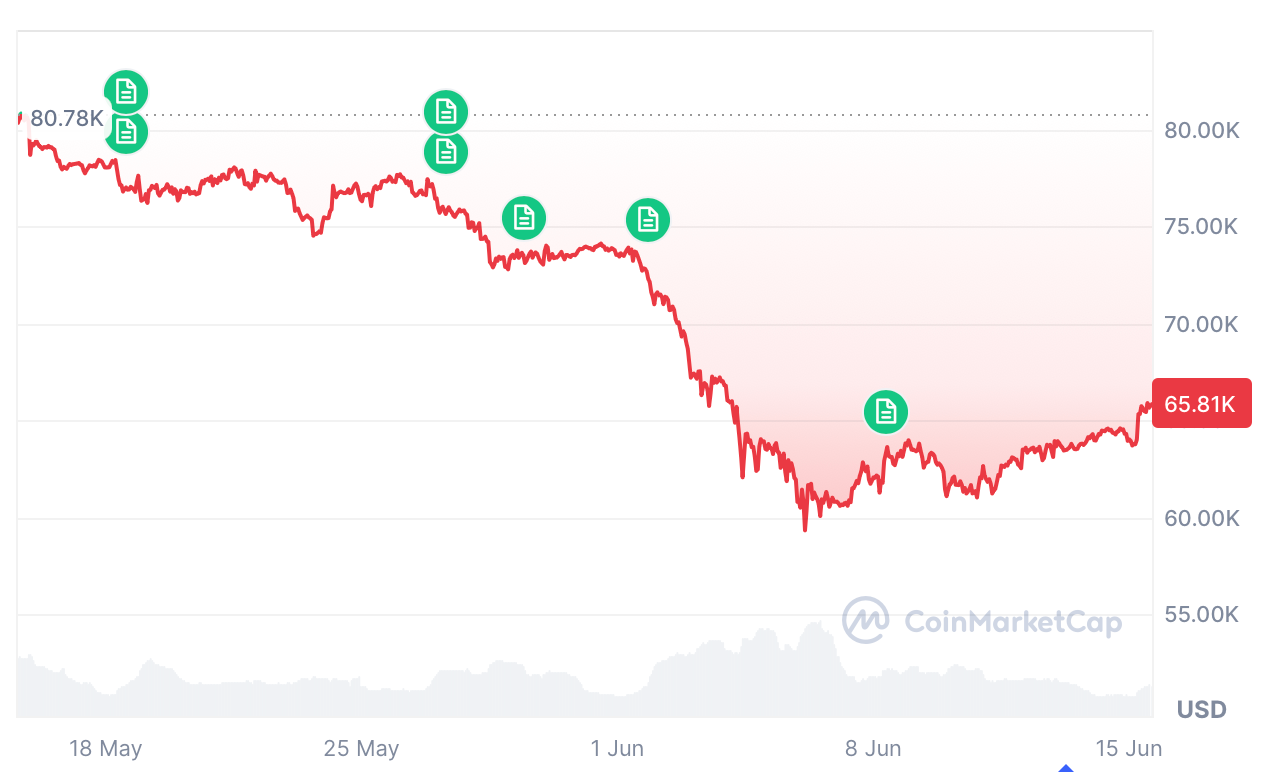
Bitcoin’s recovery from the early-June selloff is encouraging, but it does not yet mean the macro overhang has disappeared.
The market is still stuck between two forces. On one side, long-term demand for Bitcoin remains intact, and buyers have continued to appear near important support levels. On the other side, ETF outflows, sticky inflation and higher-for-longer rate expectations are limiting upside momentum.
In the near term, the market reaction to the June FOMC meeting may depend less on the rate decision and more on tone.
If the Fed sounds cautious but balanced, Bitcoin may continue to consolidate. If Warsh leans hawkish or removes language that markets interpret as dovish, BTC and ETH could face renewed pressure. If the Fed avoids validating rate-hike fears, a relief rally is possible — especially if ETF flows stabilize.
But a sustained upside breakout probably requires more than one soft Fed meeting. The market would need clearer evidence that inflation is cooling, labor conditions are softening, and rate cuts are becoming realistic again.
Until then, the upside may remain capped.
What to Watch After the FOMC
For crypto investors, the June decision is only the first checkpoint.
The more important questions are what comes next. Does the Fed still see inflation as the dominant risk? Does the dot plot continue to act as a useful guide, or does the new leadership reduce its importance? Do ETF flows stop bleeding? Does the next CPI print confirm the inflation rebound or ease market concerns?
These are the signals that will shape the next phase of crypto pricing.
The market does not need the Fed to cut immediately for crypto to recover. But it does need confidence that policy is not becoming more restrictive. Right now, that confidence is missing.
Bottom Line
The June FOMC meeting is unlikely to bring a rate hike. But that is not the point.
The point is that the market has moved on from the easy rate-cut story. Crypto is now trading a more difficult macro setup: sticky inflation, resilient employment, uncertain Fed communication and weaker ETF flows.
That does not mean Bitcoin’s cycle is over. It does mean the market may need a stronger catalyst before the next clean leg higher. For now, “higher for longer” is the macro ceiling crypto has to break through.
Traders can follow more market updates on Tapbit, log in, or register to stay connected with global market opportunities.
Frequently Asked Questions (FAQ)
Will the Fed raise rates at the June meeting?
A rate hike at the June meeting is not the market’s base case. Most expectations point to the Fed keeping rates unchanged. The real focus is not whether the Fed moves this month, but whether it signals that rates may stay high for longer than investors previously expected.
Why is the market talking about rate hikes again?
Because the latest U.S. data has made the rate-cut story harder to defend. Employment remains resilient, while inflation is still too sticky for the Fed to declare victory. That combination reduces the pressure on policymakers to cut rates and keeps the possibility of a tighter policy path alive.
Why does Fed policy matter so much for Bitcoin?
Bitcoin is increasingly traded as a macro-sensitive asset. When liquidity expectations improve and rate-cut bets rise, risk appetite usually strengthens. When rates are expected to stay high, investors become more selective, leverage falls, and non-yielding assets such as Bitcoin face more pressure.


