

Interest in Ethereum-related investment products is picking up again, and one ticker has started attracting particular attention in South Korea: ETHU.
“ETHU” appeared as a breakout query associated with Ethereum. The timing is notable. Ether has recently recovered toward $2,000, US spot Ether ETFs have returned to net inflows over parts of July, and traders are once again looking for products that can amplify short-term ETH movements.
ETHU offers that amplified exposure, but its structure is more complicated than its name may suggest.
What Is ETHU?

ETHU is the ticker for the 2x Ether ETF issued by Volatility Shares. The fund began trading in June 2024 and is listed on Cboe.
Its objective is to deliver approximately twice the daily performance of Ether before fees and expenses. If ETH rises by 3% during the fund’s measurement period, ETHU is designed to gain approximately 6%. If ETH falls by 3%, the fund could lose approximately 6%.
The key word is “daily.” ETHU does not promise twice Ether’s return over one week, one month or any other extended holding period. Its leverage target resets each trading day.
It is also important to distinguish ETHU from a spot Ether ETF. According to the fund’s official description, ETHU invests in derivatives and collateral assets rather than holding ETH directly. Its portfolio primarily uses cash-settled CME Ether futures to create leveraged exposure.
As of July 24, 2026, the fund reported approximately $714 million in net assets and a closing price of $15.60. These figures show that ETHU is no longer a marginal product, although its size should not be interpreted as evidence of future performance.
Why Is ETHU Attracting Attention in Korea?
The most immediate reason is Ether’s recent price recovery.
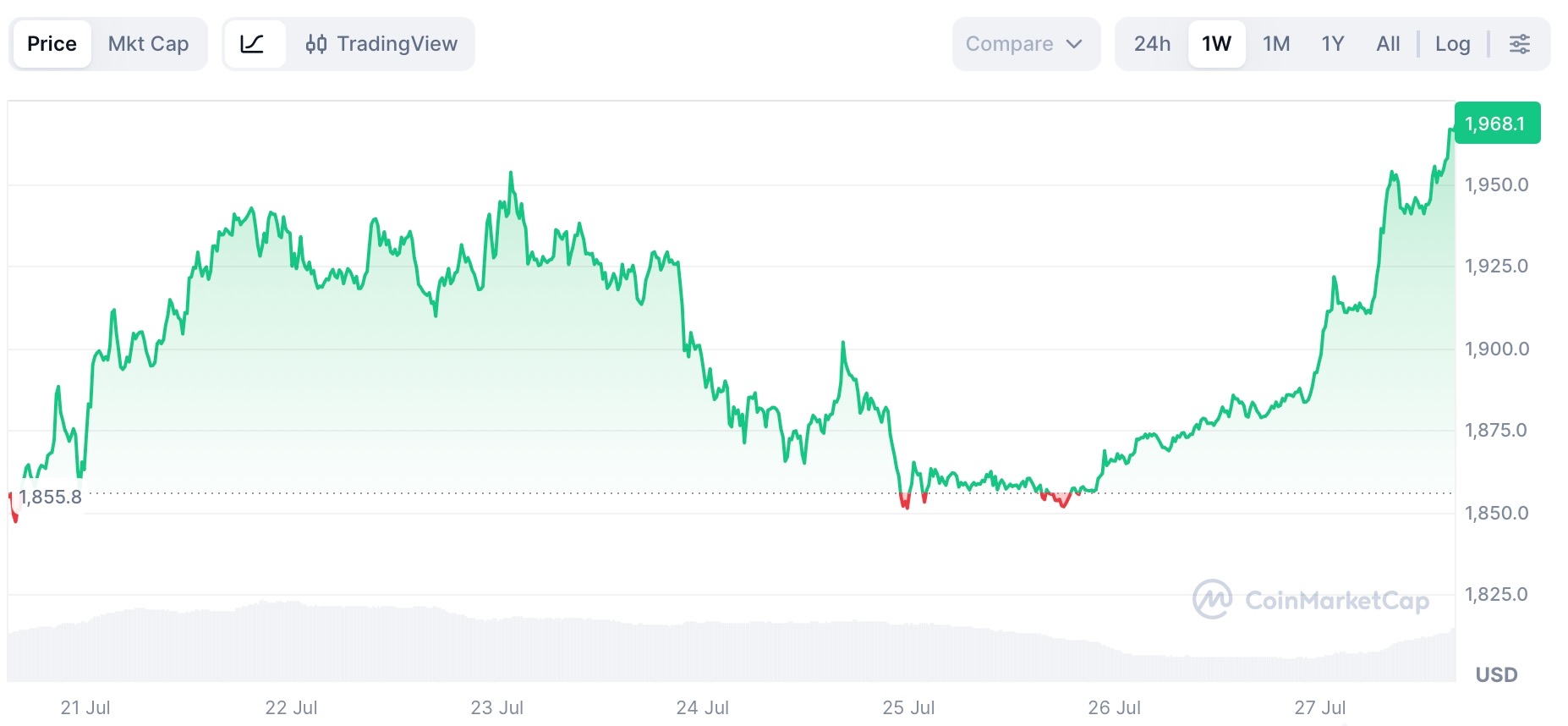
As of July 27, ETH was trading near $1,965, with a gain of roughly 4% over 24 hours and about 5% over seven days, according to CoinGecko. A larger short-term move in ETH can create an even larger move in ETHU, making the ETF attractive to traders looking for tactical exposure.
The Korean market is also familiar with leveraged ETFs. Products designed to track twice the daily performance of stock indexes have long been part of the local trading landscape. In July, KODEX Leverage, which targets twice the daily return of the KOSPI benchmark, recorded substantial net purchases amid heightened market volatility.
That does not prove Korean investors are buying ETHU at the same rate. It does, however, help explain why a product built around “2x daily exposure” can quickly gain attention among Korean market participants.
Local coverage of Ethereum ETF flows may be contributing as well. Korean financial media recently highlighted renewed inflows into US spot Ether ETFs, bringing Ethereum-linked investment products back into the conversation.
Ether ETF Demand Has Improved, but the Picture Is Uneven
US spot Ether ETFs experienced a noticeable recovery in the middle of July.
Farside Investors recorded net inflows of $38 million on July 20, $37.5 million on July 21, $72.7 million on July 22 and $26.3 million on July 23. From July 14 through July 24, the funds attracted approximately $224.7 million in combined net inflows.
However, the latest session in that period tells a more cautious story. On July 24, spot Ether ETFs recorded a combined net outflow of $70.7 million, led by withdrawals from BlackRock’s ETHA and Fidelity’s FETH.
The takeaway is not that institutional demand is moving steadily higher. Instead, Ether ETF flows have recovered from their late-June weakness but remain volatile and concentrated among a small number of products.
ETHU is not included in these spot ETF flow figures. Nevertheless, stronger interest in the broader Ether ETF category can increase attention around other ETH-linked products, particularly those offering leveraged exposure.
How ETHU’s 2x Daily Exposure Works
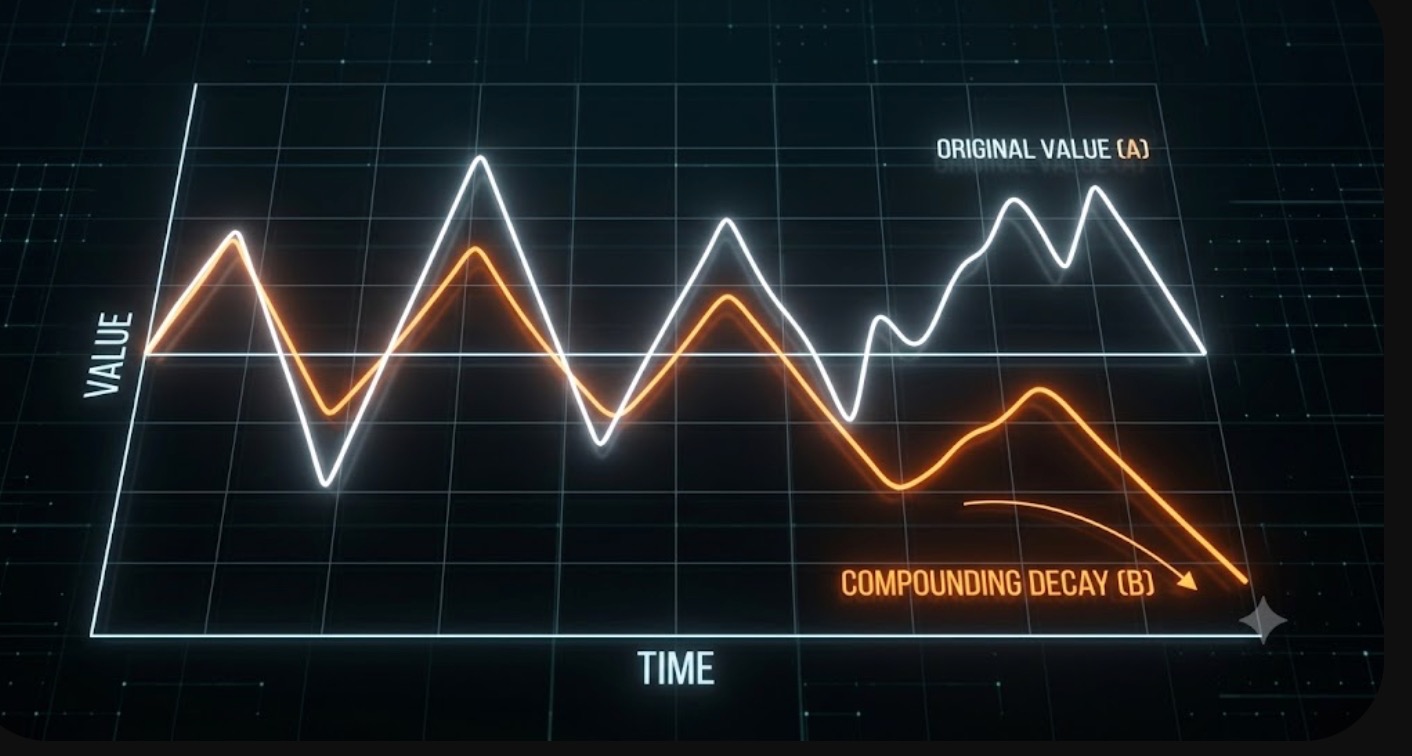
ETHU is designed for daily returns rather than long-term return matching.
Suppose ETH gains 5% in one trading day. Before accounting for fees, tracking differences and market conditions, ETHU would target a gain of about 10%.
The same leverage applies when the market moves lower. A 5% decline in ETH could translate into a loss of approximately 10% for ETHU.
Actual performance may differ from the target because the fund uses futures contracts. Futures prices do not always move in perfect alignment with the spot price of Ether, while trading costs, portfolio rebalancing and market liquidity can also affect results.
The US securities market also has fixed trading hours, while ETH trades around the clock. Significant cryptocurrency price movements outside US market hours may therefore lead to gaps when ETHU begins trading again.
Why Compounding Changes Longer-Term Returns
Daily leverage creates path-dependent results. The order and size of daily price movements matter, not just the difference between the starting and ending ETH prices.
Consider a simple example: ETH rises 10% on the first day and then falls approximately 9.09% on the second day. After the second move, ETH is back at its original price.
ETHU would theoretically rise about 20% on the first day and fall about 18.18% on the second. An investment that began at $100 would end at approximately $98.18, even though ETH finished unchanged.
This does not mean leveraged ETFs always experience automatic decay. During a consistent directional trend, daily compounding can sometimes produce a return greater than twice Ether’s cumulative move. In a volatile market that repeatedly changes direction, however, compounding can work against the holder.
The longer ETHU is held, the more its return can diverge from a simple calculation of two times ETH’s total performance.
The Main Risks ETHU Traders Should Understand
Leverage is the most visible risk. A sharp decline in Ether can produce a much larger percentage loss in ETHU, and the fund’s issuer warns that an investor could potentially lose the full value of an investment within a single day.
Tracking risk also matters. ETHU uses Ether futures rather than holding ETH directly, so its performance may be affected by futures pricing, liquidity, collateral management and the cost of maintaining or rolling positions.
There is also a timing mismatch. ETH trades continuously, but ETHU follows US securities market hours. News or liquidations that occur while the ETF is closed can result in a significant opening gap.
For Korean investors, exchange-rate movements introduce another variable because ETHU trades in US dollars. Access may also depend on an investor’s brokerage, eligibility and applicable local rules.
Finally, owning ETHU is not the same as owning Ether. ETHU shares cannot be transferred to an Ethereum wallet, used to pay network fees or deployed in on-chain applications.
What Could Keep ETHU in Focus?
Several indicators may determine whether the current attention continues:
-
ETH’s ability to hold the recent recovery and challenge the $2,000 area
-
Daily inflows and outflows from US spot Ether ETFs
-
ETHU trading volume and changes in fund assets
-
CME Ether futures liquidity and pricing
-
Ethereum network activity and demand for ETH
-
Changes in Korean rules governing access to leveraged or overseas investment products
Traders should look at these signals together. Search activity alone cannot confirm sustained demand, while one day of ETF inflows does not establish a longer-term trend.
Conclusion
ETHU is trending in Korea at a moment when Ether is recovering, ETF flows are returning to the market and leveraged products are receiving renewed attention.
Its appeal is straightforward: ETHU provides a way to pursue approximately twice Ether’s daily performance through a traditional exchange-traded product. Its risks are equally important. The fund resets daily, relies on futures and can behave very differently from a simple two-times ETH position when held for more than one trading session.
For traders following Ethereum through Tapbit, ETHU can also serve as a useful indicator of how demand for leveraged crypto exposure is developing in traditional markets. It should not, however, be confused with spot ETH or treated as a long-term two-times tracker.
Existing users can log in to Tapbit, while new users can register here to explore available digital asset markets. Product availability may vary by region.
Frequently Asked Questions
What is ETHU?
ETHU is the ticker for the Volatility Shares 2x Ether ETF. It seeks to deliver approximately twice the daily performance of Ether before fees and expenses.
Is ETHU a spot Ether ETF?
No. ETHU does not directly hold Ether. It primarily uses cash-settled CME Ether futures and collateral assets to create leveraged exposure to ETH price movements.
Why is ETHU trending in South Korea?
The recent interest appears to be connected to Ether’s price recovery, renewed attention to US Ether ETF flows and familiarity with leveraged ETFs in the Korean market. However, rising search interest does not necessarily mean that Korean investors are buying ETHU in large amounts.


