

The CLARITY Act 2026 remains one of the most important U.S. crypto-policy stories, but the latest update requires a careful distinction: the legislation has advanced, yet it has not become law. The House passed H.R. 3633 in 2025, the Senate Banking Committee moved forward with market-structure legislation in May 2026, and Senate leaders have continued working toward a full-chamber path after the August recess.
At the same time, the Securities and Exchange Commission is not waiting for Congress to resolve every issue. The SEC's 2026 regulatory agenda includes new work on crypto capital formation, tokenized securities and clearer rules for digital assets. That means the CLARITY Act 2026 is now part of a two-track regulatory story: Congress can create a durable statutory framework, while agencies can move faster on narrower rules.
Where Does the CLARITY Act 2026 Stand Now?
The formal House bill, the Digital Asset Market Clarity Act of 2025, passed the House and was referred to the Senate. In May 2026, the Senate Banking Committee conducted a major markup on digital-asset market structure. More recently, Senate leadership took procedural steps designed to keep the bill moving, but the chamber did not complete final passage before the August recess.
That makes the latest CLARITY Act 2026 status more advanced than a simple committee proposal but less final than many headlines imply. A September vote or another procedural step remains possible, while bipartisan negotiations continue around banking competition, ethics and the treatment of different categories of digital assets.
Tapbit Learn previously covered the earlier stage in its U.S. crypto bill update. The new angle is what happens after the summer legislative deadline and how SEC rulemaking changes the market's fallback scenario.
What Would the CLARITY Act Change?
The core purpose of the CLARITY Act 2026 is market structure. Crypto companies want clearer answers to questions that have been disputed for years: when is a token treated as a security, when is it a digital commodity, which agency supervises a trading venue and what registration path applies to brokers, exchanges and dealers?
The bill is designed to divide responsibilities between the SEC and Commodity Futures Trading Commission while creating rules for digital commodity intermediaries. The exact boundaries matter because platforms make listing, custody and compliance decisions based on legal classification. Uncertainty can reduce the number of assets available to regulated institutions even when investor demand exists.
Why the SEC Is Moving in Parallel
The SEC has already taken steps in 2026 to clarify how federal securities laws apply to crypto assets. In March, the agency published a crypto-asset interpretation and token taxonomy with the CFTC, addressing areas such as non-security crypto assets, staking, airdrops and investment-contract analysis.
Its July regulatory agenda also emphasized capital formation, tokenized securities and clearer rules for bringing crypto activity onshore. This parallel work matters because the CLARITY Act 2026 could still face political delays. Agency action cannot fully replace legislation, but it can reduce uncertainty in specific areas while Congress continues negotiating.
Why the Senate Path Is Still Difficult
A market-structure bill needs more than broad agreement that crypto rules should improve. Senators are negotiating details that affect banks, exchanges, stablecoin issuers, token projects and public officials. Banking groups have raised concerns about competition for deposits, while lawmakers have debated ethics rules connected to officials' crypto interests.
Those issues can change vote counts even when many senators support the general idea of clearer regulation. The CLARITY Act 2026 therefore remains a probability-weighted catalyst rather than a completed event. Traders should watch the actual Senate calendar, amendment text and vote threshold instead of reacting only to optimistic headlines.
What the CLARITY Act 2026 Means for Bitcoin
Bitcoin is not dependent on the bill for its protocol to function. The network is open-source and operates independently of U.S. corporate registration. The potential benefit is market infrastructure: clearer rules can make it easier for exchanges, brokers, custodians, ETF issuers and institutional desks to understand their obligations.
That can matter for liquidity. Better-defined custody and trading rules may reduce legal uncertainty for institutions. However, regulation does not automatically create demand. Bitcoin still needs real spot buying, ETF flows, macro support and healthy liquidity to sustain a price move.
What Could the Bill Mean for Altcoins and DeFi?
For many altcoins, classification matters more directly. A token's legal treatment can affect exchange listings, broker access, disclosures and which regulator has authority. DeFi introduces additional questions because software developers, front-end operators and decentralized protocols do not always fit traditional intermediary categories.
The CLARITY Act 2026 could therefore have a larger structural effect on the long tail of crypto assets than on Bitcoin itself. The final text matters more than the bill name. Traders should focus on definitions, registration rules, exemptions and treatment of non-controlling developers.
What Crypto Traders Should Watch Next
- Senate timing: whether leadership schedules a post-recess vote or another procedural step.
- Amendments: especially ethics, banking and consumer-protection provisions.
- SEC proposals: new rules on token sales, capital formation and tokenized securities.
- SEC-CFTC coordination: whether agencies continue narrowing jurisdictional uncertainty.
- Market reaction: whether regulatory optimism produces sustained spot volume rather than a one-day headline move.
Bitcoin Markets on Tapbit
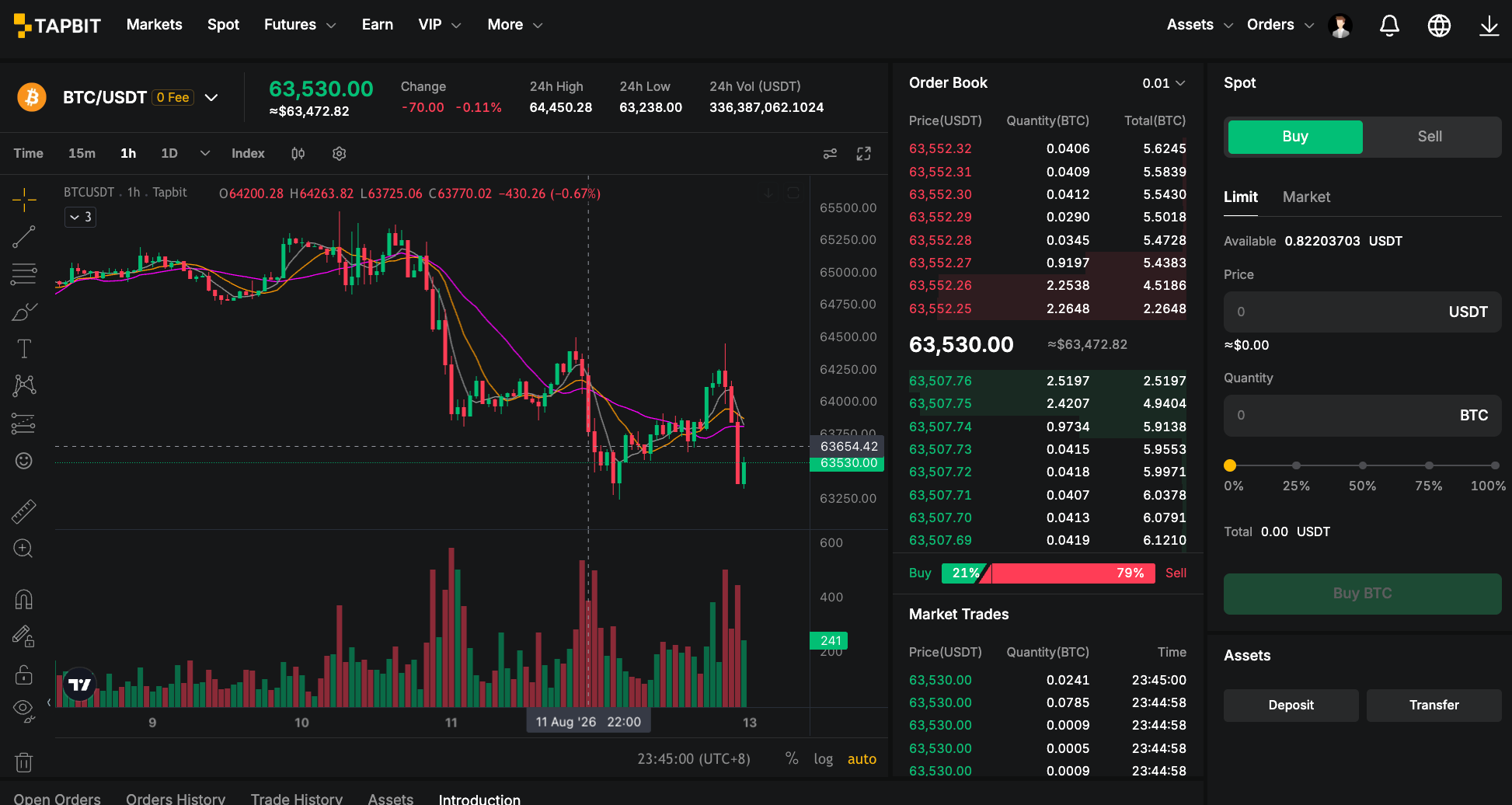
Bitcoin is available through Tapbit's supported markets, including BTC-USDT spot trading. Users who want to explore available crypto markets can create an account and review the live market directory before trading. Regulatory progress should not be treated as a guaranteed bullish signal; price still depends on demand, liquidity and risk conditions.
FAQ
Has the CLARITY Act 2026 passed?
No. The legislation has advanced significantly, but it has not completed the full Senate process or become law.
What does the CLARITY Act do?
It aims to create a clearer U.S. digital-asset market structure, including definitions, registration pathways and a division of responsibilities between the SEC and CFTC.
Why is the SEC acting before Congress finishes?
Agencies can clarify existing law and propose rules within their authority while Congress considers broader statutory changes. The two processes can move in parallel.
Does the CLARITY Act control Bitcoin?
No. The legislation concerns U.S. market regulation around digital assets and intermediaries. It does not control Bitcoin's open-source protocol or decentralized network.
Bottom Line
The CLARITY Act 2026 is still a live regulatory catalyst, not a finished law. The Senate path remains open after the August recess, while the SEC is advancing crypto rules in parallel. For traders, the key distinction is between political progress and actual implementation. The strongest signal will be concrete legislative text, votes and agency rules that change how U.S. exchanges, custodians and market participants operate.


