

What is ADI coin? ADI is the core utility token of ADI Chain, a blockchain ecosystem focused on regulated finance, institutional infrastructure and real-world asset applications. According to official ADI documentation, the token is designed to pay network gas, support smart-contract execution, act as a settlement asset inside the ecosystem and participate in staking incentives.
That makes the answer to what is ADI coin broader than “another altcoin.” ADI Chain is positioning itself as infrastructure for governments, financial institutions and regulated applications, including payments, stablecoins and tokenized assets. The token is intended to provide the economic layer that keeps those services operating.
What Is ADI Coin and What Is ADI Chain?
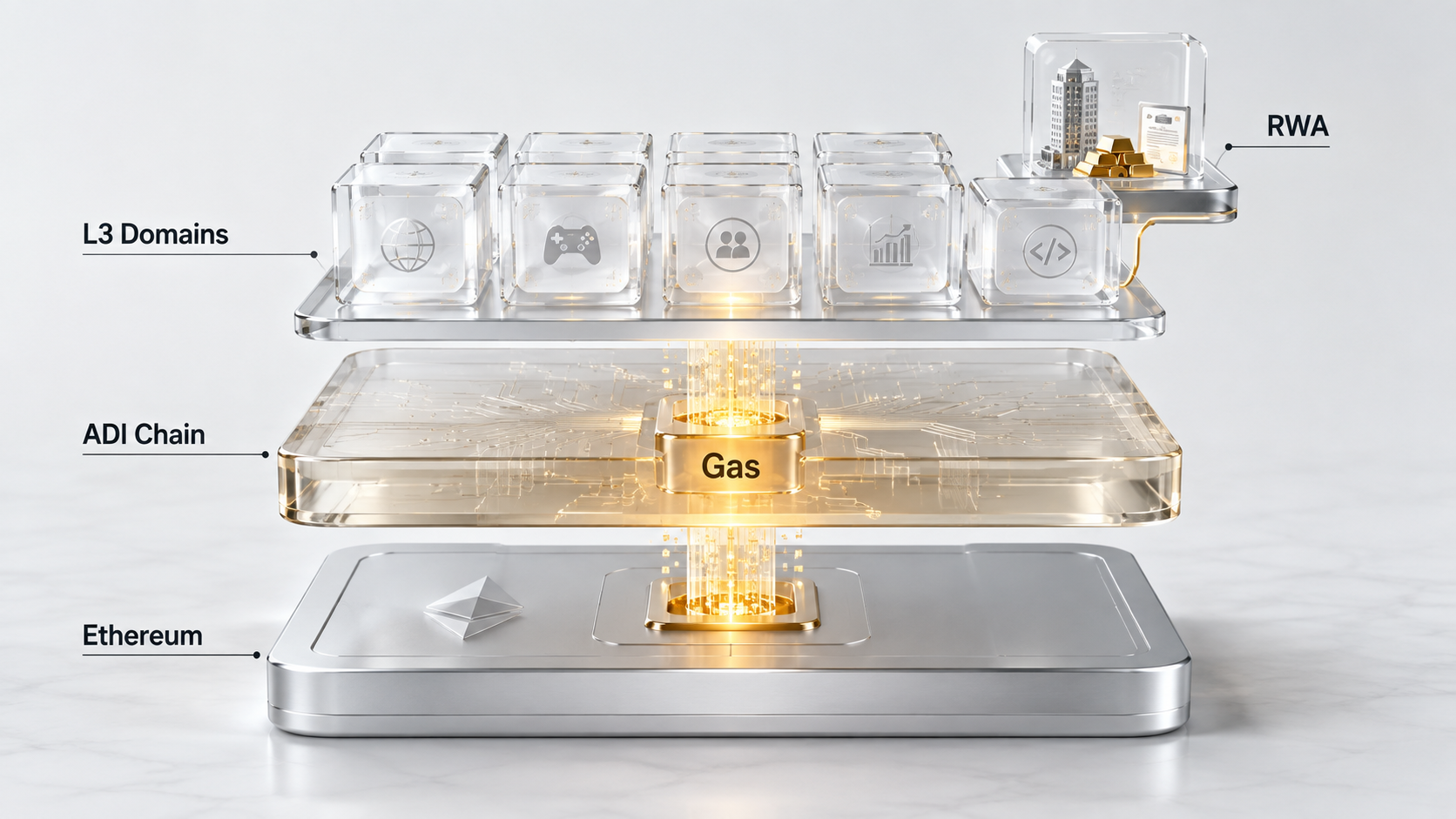
ADI Chain is an Abu Dhabi-based blockchain project governed by the ADI Foundation. Its public architecture uses Ethereum as the settlement layer, ADI Chain as the execution layer and configurable Layer-3 rollups for institutions or jurisdictions that need their own compliance, governance and gas policies.
This architecture helps explain what is ADI coin. The token is not simply attached to the project for market speculation. Official materials assign it operational roles across the network, especially gas payments, value transfer and staking.
Tapbit Learn previously covered the market narrative in its ADI Chain RWA and valuation analysis. This glossary focuses instead on the token's function, supply and risk structure.
What Is ADI Coin Used For?
Gas and Smart-Contract Execution
ADI is designed to be the native gas token for transactions on ADI Chain and its associated Layer-3 domains. When users or institutions send transactions, interact with applications or execute smart contracts, the network can use ADI for fees rather than requiring separate ETH management at the execution layer.
Settlement and Medium of Exchange
Official documentation also describes ADI as a medium of exchange between enterprises, developers, validators, users and ecosystem services. This is important to what is ADI coin because network utility depends on real transaction demand, not only exchange trading.
Staking and Incentives
The token documentation describes staking through a treasury-backed pool. The stated model is intended to support rewards without relying entirely on new token issuance. Users should still verify current staking terms, lock periods and smart-contract risks before assuming any quoted yield is permanent.
Why Is ADI Connected to RWA and Institutional Blockchain?
ADI Chain describes itself as infrastructure for regulated finance at institutional scale. Its public materials discuss stablecoin settlement, government-grade systems, cross-border infrastructure and real-world asset tokenization. That places ADI near the RWA narrative, where traditional assets or financial claims are represented and settled using blockchain rails.
Recent ecosystem activity strengthens the institutional narrative, but it should not be confused with guaranteed token demand. The key long-term question for anyone asking what is ADI coin is whether real applications generate enough transactions and economic activity to create sustainable demand for gas, settlement and staking.
ADI Tokenomics: How Many ADI Coins Exist?
Official ADI documentation lists a genesis supply of 999,999,999 tokens. The allocation is spread across several groups with multi-year unlock schedules.
| Allocation | Share | General Unlock Structure |
|---|---|---|
| Community Fund | 35% | 72 months |
| Treasury Reserves | 25% | 108 months |
| Private Investors | 12% | 72 months with a 12-month cliff |
| Partnerships | 10% | 72 months with a 12-month cliff |
| Team | 10% | 72 months with a 12-month cliff |
| Token Incentivization Pool | 4% | Available at TGE |
| Liquidity | 4% | Available at TGE |
Tokenomics is central to what is ADI coin because a project can have strong infrastructure plans while still facing supply pressure. Long vesting periods reduce immediate circulation, but future unlocks can increase the amount of ADI available to the market over time. Traders should distinguish genesis supply, circulating supply and unlocked supply when evaluating valuation.
ADI Coin vs ONDO: Similar RWA Theme, Different Utility
ADI is not currently confirmed as a Tapbit-listed product. Traders looking for a related RWA market on Tapbit can instead review ONDO-USDT perpetual futures. The comparison is thematic, not equivalent exposure.
ONDO is associated with the Ondo Finance ecosystem and tokenized financial assets, while ADI is positioned as the utility and gas token of a broader institutional blockchain stack. Holding or trading ONDO therefore does not provide exposure to ADI Chain, and the two assets can respond to different catalysts. Tapbit Learn's ONDO token guide explains that RWA ecosystem in more detail.
How to Trade a Related RWA Market on Tapbit
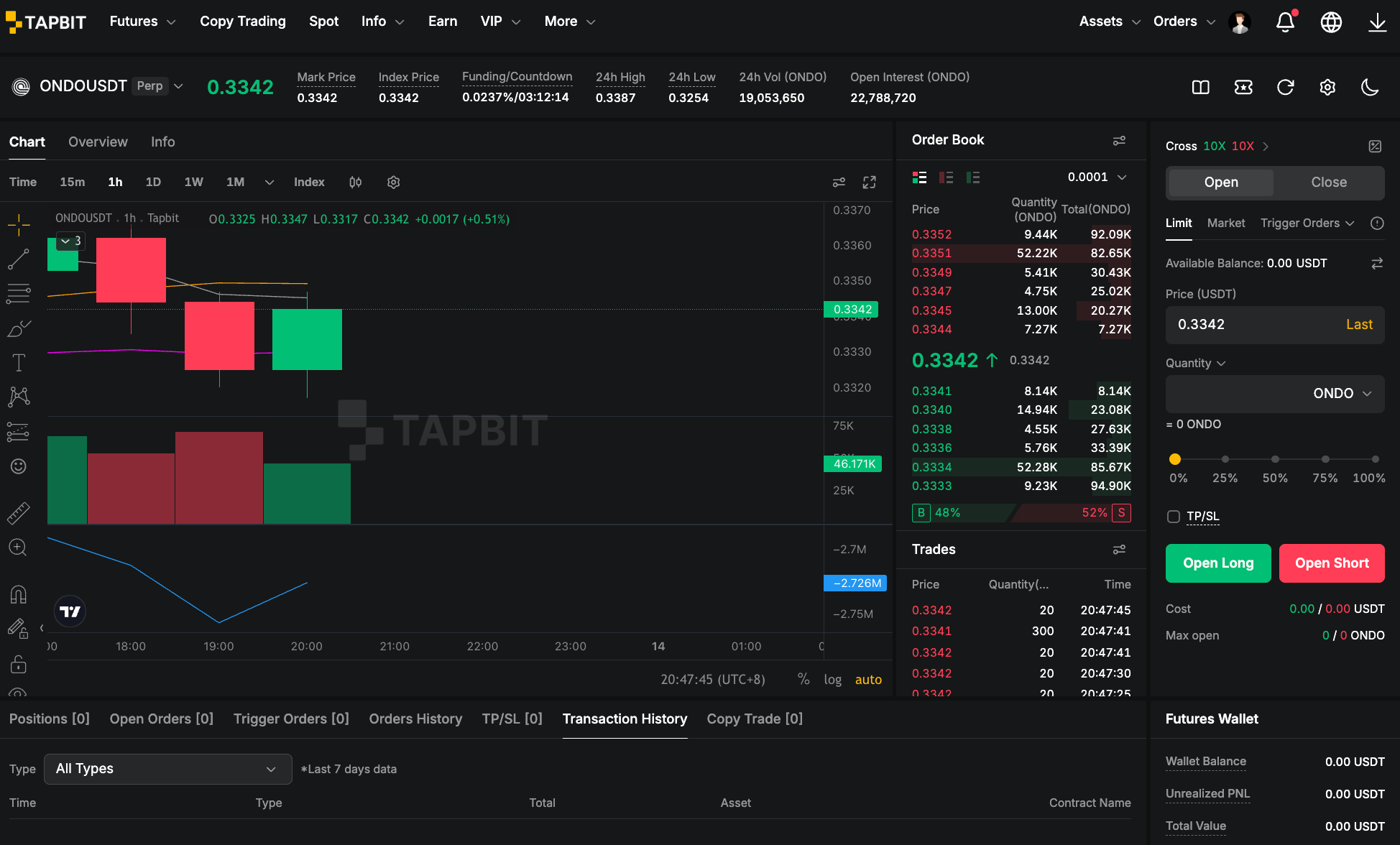
For users who specifically want an RWA-related crypto derivative, Tapbit offers ONDO-USDT perpetual futures. This does not mean Tapbit supports ADI, and ONDO should not be presented as a substitute for ADI.
-
Create an account or log in to Tapbit.
-
Open ONDO-USDT and check the contract name, mark price, index price and funding countdown.
-
Select Limit, Market or Trigger, set quantity and leverage, review margin mode, then choose Open Long or Open Short.
-
Add TP/SL, confirm required margin and monitor Positions, Open Orders, Trigger Orders and liquidation risk.
What Are the Main ADI Coin Risks?
- Adoption risk: institutional blockchain projects can take years to move from partnerships to large transaction volumes.
- Supply risk: future vesting unlocks can increase circulating supply even when genesis supply is fixed.
- Regulatory risk: regulated-finance infrastructure depends on rules that vary by jurisdiction.
- Utility risk: stated token functions matter only if applications generate real network activity.
- Market risk: ADI can trade on narrative and liquidity conditions that move faster than project fundamentals.
FAQ
What is ADI coin?
ADI is the utility token of ADI Chain. It is designed for gas, smart-contract execution, settlement, staking and ecosystem incentives.
How many ADI coins are there?
Official documentation lists a genesis supply of 999,999,999 ADI, with allocations released under different vesting schedules.
Is ADI coin available on Tapbit?
ADI product support on Tapbit has not been confirmed. Users should not assume a listing based on third-party pages or similarly named assets.
What similar RWA coin is available on Tapbit?
Tapbit supports ONDO-USDT perpetual futures. ONDO shares an RWA theme with ADI, but it is a different token with different utility and market drivers.
Bottom Line
So, what is ADI coin? It is the utility token at the economic center of ADI Chain's regulated-finance infrastructure. Its strongest thesis is that real institutional activity could create demand for gas, settlement and ecosystem participation. The main risks are slower-than-expected adoption, future token unlocks and the gap between infrastructure announcements and measurable network usage. ADI is not confirmed on Tapbit; related RWA exposure such as ONDO should be treated as a separate asset, not a replacement.


