
Satsuma Technology originally decided to become one of the most visible Bitcoin treasury companies in the UK market. Less than a year later, that strategy is being dismantled.
The London-listed company has sold its entire Bitcoin position, raised roughly £31.9 million from the disposal and is preparing to return most of the remaining cash to shareholders. It also plans to leave the London Stock Exchange in September, subject to approval from the UK High Court.
The speed of the reversal is striking. In 2025, Satsuma raised substantial capital from a group of well-known crypto investors and built a sizable Bitcoin reserve. By the summer of 2026, more than 90% of voting shareholders had backed a proposal to sell the assets, close the existing operation and distribute the cash.
This was not simply a reaction to a weak Bitcoin market. It was also a verdict on the economics of the public-company treasury model.
Satsuma Has Now Sold All of Its Bitcoin
Satsuma confirmed that it sold 669.4867 BTC between July 24 and July 31, 2026. The company received an average net price of £47,667 per Bitcoin, generating total proceeds of £31,912,395. After the sale, Satsuma reported cash holdings of approximately £35.3 million as of August 3.
The company plans to return £30.7 million to eligible shareholders. Around £2 million will remain inside the business, while a further amount has been reserved for transaction costs, winding-down expenses and the delisting process.
If the capital reduction receives court approval, holders of the company’s B shares are expected to receive 0.2734 pence per share.
The final court hearing is currently scheduled for September 8, with the delisting expected on September 14. Payments to shareholders are expected later in the month.
The Bitcoin sale itself is already complete. The remaining uncertainty is legal and administrative rather than market-related.
The Treasury Strategy Lasted Less Than a Year
Satsuma’s Bitcoin push accelerated in 2025, when it raised around £163.6 million through convertible loan notes.
The financing attracted several prominent names from the digital asset industry, including Pantera Capital, Digital Currency Group, Kraken, ParaFi Capital and Blockchain.com. Some of the subscriptions were made directly in Bitcoin, with more than 1,000 BTC contributed during the fundraising process.
At the time, the company presented the strategy as a way to build a listed Bitcoin treasury vehicle in the UK. The basic idea was familiar: raise capital, acquire Bitcoin and allow public-market investors to gain exposure through the company’s shares.
That model works best when the stock trades at a premium to the value of the Bitcoin held on the balance sheet. A premium gives management room to issue new shares or raise more capital without heavily diluting existing investors. The additional funds can then be used to buy more Bitcoin.
Satsuma never established that kind of self-reinforcing cycle. Instead, the company’s shares fell sharply, Bitcoin moved below Satsuma’s average acquisition cost and the stock began trading at a deep discount to the value of the assets held by the business.
Once that happened, the treasury structure stopped looking like an advantage.
The Main Problem Was the Discount to Asset Value
A Bitcoin treasury company asks investors to pay for more than the Bitcoin itself.
Shareholders are also paying for the company’s management, financing strategy, listing status and ability to increase Bitcoin exposure over time. If investors believe management can create additional value, the stock may trade above the company’s net asset value.
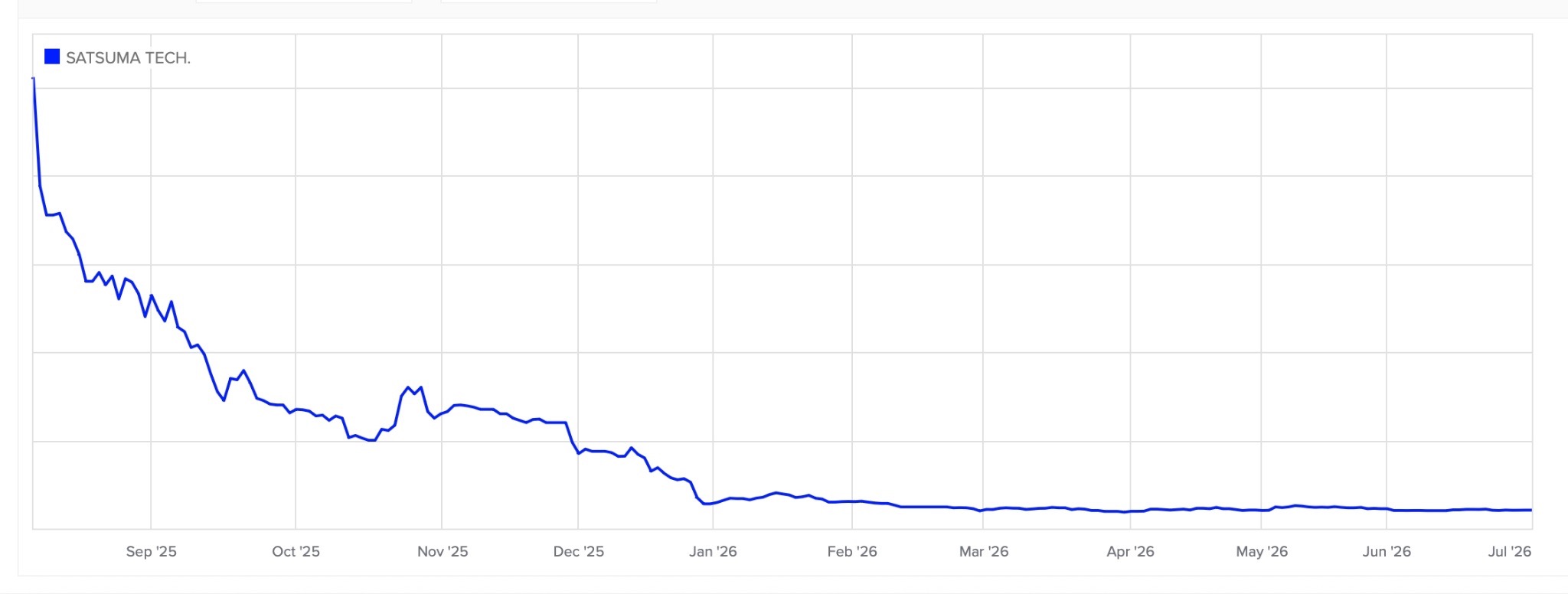
If that confidence disappears, the opposite can happen. Satsuma’s shares fell from a 52-week high of roughly 13.9 pence to a final closing price near 0.209 pence before trading was suspended. The decline was close to 98.5%.
The company was still holding hundreds of Bitcoin, but the stock market no longer valued the corporate structure built around those assets.
For shareholders, that created a simple question: why continue to own shares in a company trading below the value of its cash and Bitcoin when the assets could be sold and the proceeds returned directly?
The eventual vote suggests that most participating investors saw little reason to preserve the existing structure.
More than 90% supported the capital return, and a similar percentage backed the plan to cancel the company’s listing.
Bitcoin’s Decline Made the Situation Worse
Satsuma’s average acquisition cost was much higher than the price it ultimately received. At the end of June, the company reported an average purchase cost of approximately £84,026 per Bitcoin. Its final disposal price was £47,667.
Using those figures as a rough guide, the loss on the final Bitcoin position was around £24 million. The exact accounting result may differ because of acquisition timing, transaction costs and other adjustments, but the size of the gap is clear.
Satsuma bought into the treasury strategy at a time when investor demand and Bitcoin expectations were stronger. When the market turned, it was left holding assets below cost while its own shares traded at an even steeper discount.
That combination is particularly difficult for a treasury company.
A lower Bitcoin price reduces the value of the balance sheet. A collapsing share price closes off the easiest route to new funding. Once both happen at the same time, management loses much of the flexibility needed to continue expanding the strategy.
Debt and Convertible Financing Added Pressure
The company’s financing structure also played a role. Satsuma raised money through convertible notes, which gave investors the option to convert their claims into equity under certain conditions. When the share price and market outlook deteriorated, some holders were no longer willing to take stock.
The company had already sold 579 BTC in December 2025 to meet repayment obligations to noteholders who chose not to convert.
That sale was an early sign that Satsuma’s Bitcoin position was not a permanent reserve. The assets could be sold when financing terms, investor decisions or liquidity needs required it.
This is an important lesson for the broader market. Corporate Bitcoin holdings are often described as if they have been removed from circulation indefinitely. In practice, those assets remain part of a company’s capital structure.
They may be sold to repay creditors, satisfy shareholders, cover expenses or wind down the business.
The Company Is Not Entering Formal Bankruptcy
Satsuma is closing its Bitcoin treasury operation, but it is not necessarily disappearing as a legal entity.
After returning most of its capital and leaving the stock exchange, the company expects to retain around £2 million. Management has suggested that the remaining business could operate as a cash shell and potentially pursue a reverse takeover or another transaction in the future.
For that reason, describing the process as a complete corporate liquidation can be misleading. The company has liquidated its Bitcoin position and is winding down its existing operating strategy. It is also removing its shares from the public market. But the legal entity may continue in a much smaller form.
The distinction matters, especially for investors trying to understand what happens after the capital return.
What Pantera’s Role Tells Us
Pantera Capital was one of the investors involved in Satsuma’s 2025 fundraising and was later reported to be among the shareholders supporting the return of capital.
That shift is notable. Institutional investors may support a treasury strategy while the company has a credible path to growth, financing and market recognition. But their priorities can change quickly when the stock trades at a large discount and management can no longer demonstrate a clear advantage over direct Bitcoin ownership.
In that situation, selling the assets and returning cash may offer a more certain outcome than waiting for the market to revalue the company.
Satsuma’s shareholder vote shows how quickly control of the strategy can move from management to investors when the economics no longer work.
The board itself was divided. Four directors reportedly preferred to preserve the listed treasury structure, while two supported the capital return. Shareholders ultimately made the decision.
What This Means for Other Bitcoin Treasury Companies
Satsuma’s experience does not prove that the Bitcoin treasury model is unworkable. Some companies have used the strategy successfully, particularly when they have access to deep capital markets, strong investor demand and shares that trade above net asset value.
But the model is far less forgiving than it can appear during a rising market.
A treasury company must manage several risks at once. Bitcoin can fall below the company’s purchase cost. The stock can trade below the value of the underlying assets. Debt may need to be repaid before the market recovers. New fundraising can become too expensive, and operating costs continue even when the treasury is no longer growing.
The strategy becomes especially fragile when the company has no meaningful operating business outside its Bitcoin holdings. At that point, investors may see the listed structure as an unnecessary layer between themselves and the underlying asset.
Satsuma reached that point pretty quickly.
Final Thoughts
Satsuma’s Bitcoin treasury strategy ended because the structure stopped working for shareholders.
The company bought Bitcoin at a high average cost, its shares collapsed, the stock traded below asset value and the financing model became increasingly difficult to sustain. Once investors concluded that the public company no longer added value, the case for selling the assets became hard to ignore.
The company has now sold all 669.4867 BTC and is preparing to return £30.7 million to eligible shareholders, subject to court approval.
What we can learn is that bitcoin treasury companies can benefit from rising prices and strong investor demand, but they are not passive vaults. They are leveraged corporate structures with governance, financing and market risks of their own.
When the premium disappears, the strategy can unwind much faster than it was built.
Traders can visit Tapbit to review available markets and current product information. Existing users can log in to Tapbit, while new users can create an account here. Availability, trading conditions and contract specifications should always be confirmed on the relevant product page.
Frequently Asked Questions
Why did Satsuma sell all of its Bitcoin?
The company’s shares were trading at a deep discount to the value of its assets, while its Bitcoin position was also below its average acquisition cost. Most voting shareholders concluded that selling the assets and returning cash was more attractive than continuing the treasury strategy.
Is Satsuma going bankrupt?
No formal bankruptcy has been announced. The company is winding down its Bitcoin treasury operation, returning most of its capital and leaving the London Stock Exchange. It expects to retain roughly £2 million and may continue as a cash shell.
When will Satsuma leave the London Stock Exchange?
The delisting is currently expected to take place on September 14, 2026, provided the capital reduction receives court approval.


