
Zcash completed one of the most important network upgrades in its recent history on July 28, 2026. Known as Ironwood or NU6.3, the upgrade introduced a new shielded pool and began the gradual migration of funds away from Orchard.
The change followed the discovery of a critical flaw in Orchard’s proof circuit. Although developers found no evidence that the vulnerability had been exploited, Zcash’s privacy architecture made it impossible to prove with certainty that counterfeit ZEC had never been created inside the pool.
Ironwood is the network’s answer to that uncertainty. It creates a fresh accounting boundary, restricts the amount of ZEC that can leave Orchard and gives the market a clearer way to monitor the circulating supply going forward.
The upgrade is important, but it should not be misunderstood. Ironwood does not prove that Orchard was never exploited, nor does it make Zcash fully quantum-resistant. It is a containment and migration mechanism designed to restore verifiable supply limits without abandoning shielded transactions.
What Is the Zcash Ironwood Upgrade?
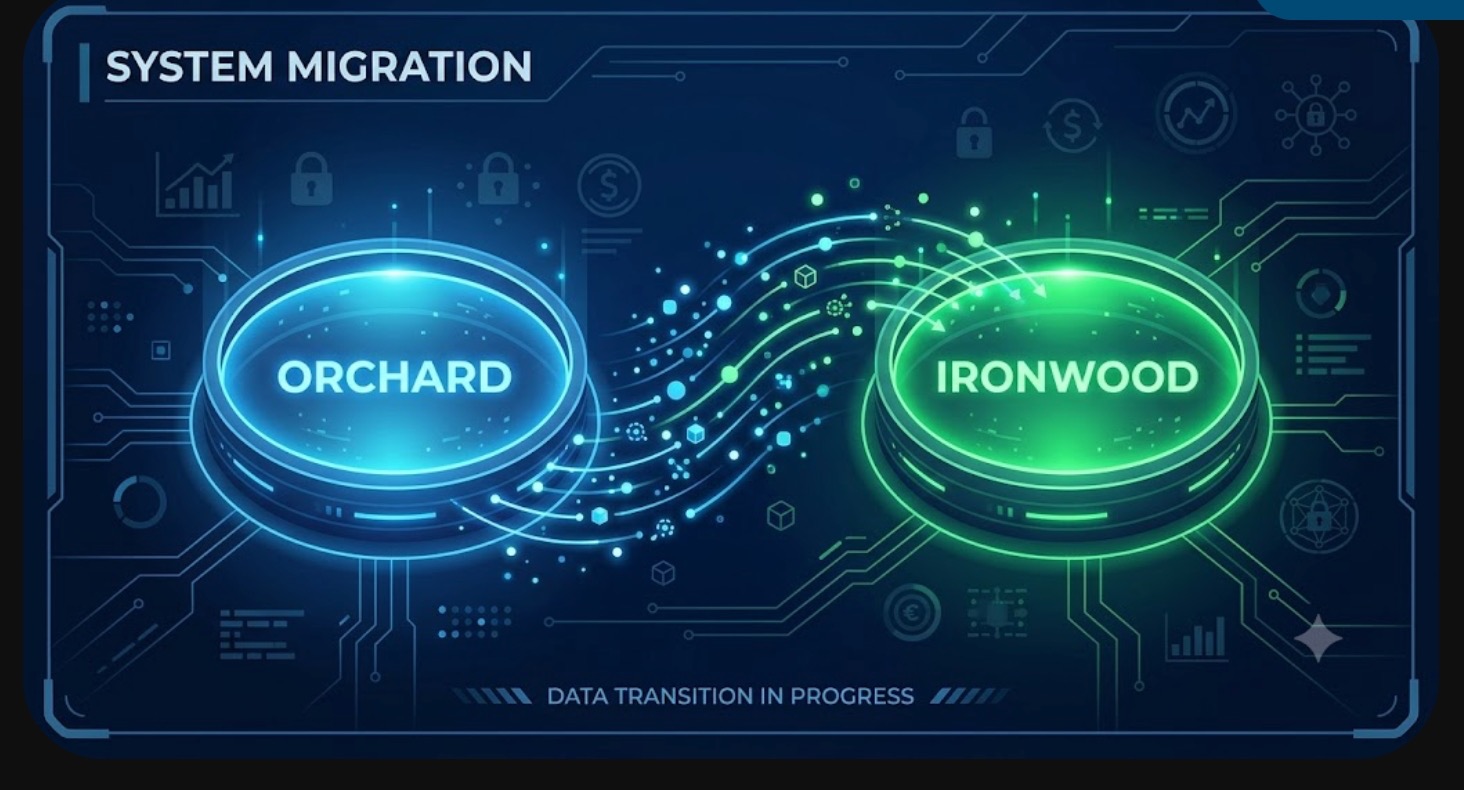
Ironwood is the new Zcash shielded value pool activated through Network Upgrade 6.3. It went live at mainnet block height 3,428,143. The pool uses much of Orchard’s existing privacy design, including its Halo 2 proof system, but starts with a separate state. Ironwood has its own note commitment tree, nullifier set and chain value balance. Transactions involving the new pool use the V6 transaction format.
After activation, wallet-created payments and change that would previously have entered Orchard are directed into Ironwood instead. Existing Orchard funds remain spendable, but no new value can enter the old pool.
In practical terms, Zcash has sealed Orchard and opened a new destination for private transactions.
Why Did Zcash Need a New Shielded Pool?
On May 29, 2026, security researcher Taylor Hornby discovered a critical soundness flaw in the Orchard circuit. The vulnerability had existed since Orchard launched with the NU5 upgrade in May 2022.
In theory, a malicious prover could have used the flaw to create counterfeit ZEC without producing an obviously invalid transaction. Zcash developers responded with an emergency mitigation, followed by the NU6.2 upgrade that introduced a corrected Orchard circuit.
The developers’ official disclosure said previous exploitation appeared unlikely. No known transaction or supply anomaly has been identified as evidence of an attack.
That assessment could not remove the uncertainty completely. Because Orchard conceals transaction values and balances, observers cannot simply review every historical transaction and confirm that no counterfeit notes were created.
Fixing the circuit prevented future exploitation, but it did not settle the question surrounding notes that might already exist. Ironwood was created to address that remaining problem.
How the Orchard-to-Ironwood Turnstile Works
The central feature of the upgrade is its turnstile accounting mechanism. Orchard is permanently closed to new inflows after NU6.3. Its recorded value can only decrease as users spend or migrate their funds. The network will not allow total value leaving Orchard to exceed the pool’s recorded chain balance.
When ZEC moves from Orchard to Ironwood, the crossing amount is publicly visible through the transaction’s value-balance fields. The sender, recipient and individual notes remain shielded.
This gives the network an observable upper limit on the amount of ZEC that can leave the old pool. Even if counterfeit notes had once been created, they cannot all pass into Ironwood after Orchard’s legitimate recorded balance has been exhausted.
The mechanism does not identify which notes are legitimate. If counterfeit notes existed, the turnstile would not distinguish them from ordinary user funds. It limits aggregate outflow rather than judging individual holders.
That distinction matters. Ironwood restores a verifiable boundary for future circulation, but it cannot reconstruct Orchard’s complete history.
What Happens to ZEC Still Held in Orchard?
ZEC held in Orchard did not expire when Ironwood activated. The funds remain under the control of their owners and can still be spent through compatible wallet software.
There is also no universal deadline requiring every user to migrate immediately. Wallet developers are introducing different migration approaches, including direct transfers, divided transactions and privacy-aware migration schedules.
Users should avoid improvising the process. Moving an unusual amount in one transaction may create an observable pattern that makes correlation easier, even if the addresses remain shielded. Timing and network metadata can also reveal information.
The safest approach is to update to an Ironwood-compatible wallet and follow its official migration process. Users should verify software through official project channels and ignore unsolicited migration links, direct messages or websites requesting recovery phrases.
Anyone following ZEC markets can access the Tapbit platform for current market information. Existing users can log in here, while new users can create an account here.
Wallet Support Has Not Been Completely Frictionless
Ironwood activated successfully at the protocol level, but the wallet transition has produced some practical issues. Zingo released Ironwood support for Android before activation. Its team later identified a crash affecting Android 12 and earlier versions and began deploying a fix. The iOS release was delayed by the App Store review process, leaving some wallets in a confused sync state after the network upgrade.
When the iOS update became available, some users were advised to perform a wallet rescan if synchronization did not resume normally. A rescan reconstructs wallet history from the blockchain and does not require sending funds to a new address.
Zingo also stated that its initial Ironwood release did not yet include active Nym mixnet integration. The team recommended that users without urgent transactions wait for a later release offering additional migration privacy and ZIP 318-style options.
The experience shows why users should check the latest instructions for their specific wallet rather than assuming every Orchard-compatible product handles Ironwood in the same way.
Zcash Has Also Retired zcashd
Ironwood arrived alongside another major infrastructure change: the end of support for zcashd, the network’s long-running C++ node software.
zcashd reached its programmed support halt at block height 3,417,100 on July 18, ten days before Ironwood activated. It does not support NU6.3 and cannot follow the upgraded chain.
Node operators are expected to move to Zebra, the Rust-based full node maintained by the Zcash Foundation. Users who depend on the legacy zcashd wallet can migrate their wallet.dat files to Zallet using the project’s documented process.
The official zcashd end-of-life notice makes clear that running an apparently synchronized older node is not enough. Software must explicitly support NU6.3.
Zebra also released additional network hardening on the day of activation. Version 6.2.3 improved peer connectivity and reduced unnecessary penalties when nodes briefly disagreed near the upgrade height. These were operational improvements rather than evidence of a failed Ironwood activation.
How Has ZEC Responded to Ironwood?
Ironwood is fundamentally a security and accounting upgrade, not a direct source of protocol revenue or token demand.
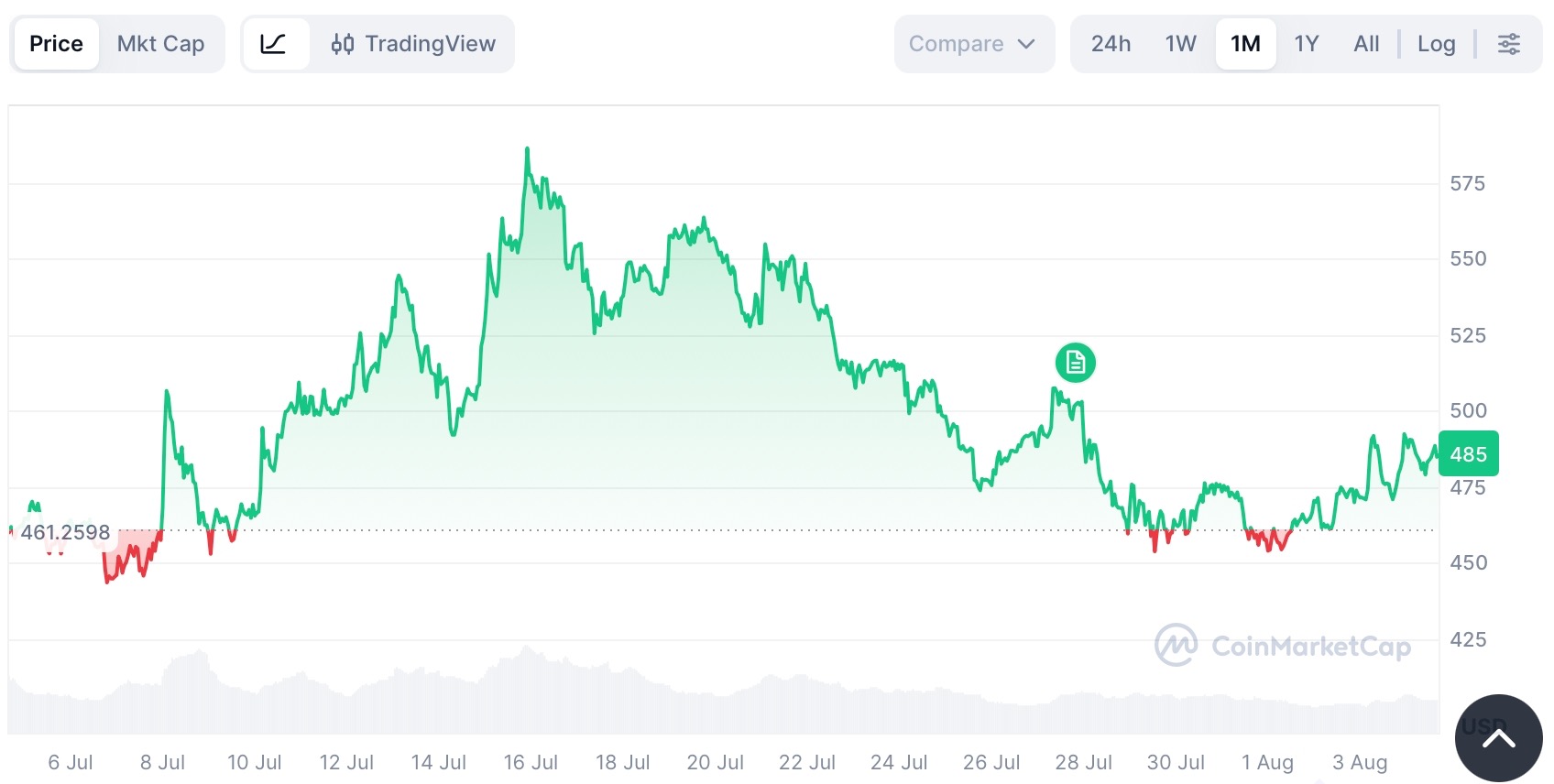
ZEC traded lower around the activation period despite the successful upgrade. That reaction suggests the market had already priced in some of the expected benefits, while broader crypto conditions and uncertainty surrounding the Orchard vulnerability continued to affect sentiment.
A completed upgrade can remove one source of technical risk without automatically creating sustained buying pressure. ZEC’s longer-term performance will still depend on adoption, shielded transaction usage, wallet reliability, exchange support, regulation and progress on the wider Zcash roadmap.
Traders should therefore separate protocol progress from price expectations. Ironwood may strengthen confidence in Zcash’s future monetary accounting, but it does not guarantee higher demand or a particular market outcome.
Conclusion
Ironwood closes a difficult chapter for Zcash without pretending that the historical uncertainty around Orchard can simply be erased.
The upgrade fixes the direction of travel. Orchard is sealed to new inflows, Ironwood provides a fresh shielded pool and the turnstile limits how much value can cross from the old system. This gives users and node operators a clearer supply boundary while preserving private transactions.
The remaining work is operational. Funds still need to migrate, wallets must improve their privacy tools and the ecosystem must complete its transition away from legacy software.
For ZEC holders, the practical message is straightforward: funds in Orchard have not disappeared, but migration should be handled through updated, official wallet software. For traders, Ironwood is a meaningful technical milestone, not a promise of price appreciation.
Frequently Asked Questions
What is the Zcash Ironwood upgrade?
Ironwood is a new Zcash shielded pool introduced through the NU6.3 network upgrade. It uses a separate accounting state from Orchard and supports the V6 transaction format.
When did Ironwood activate?
Ironwood activated on the Zcash mainnet at block height 3,428,143 on July 28, 2026.
Why did Zcash create the Ironwood pool?
Ironwood was introduced after researchers discovered a critical soundness flaw in Orchard’s proof circuit. The vulnerability was fixed, but Zcash needed a new pool and an accounting checkpoint to contain uncertainty surrounding Orchard’s historical supply.


