
Anthropic Faces Pressure Over Reported Frontier AI Models
Anthropic is facing growing attention after reports linked advanced Claude-related models, described as Fable and Mythos, to U.S. export control concerns and AI safety scrutiny.
The story has quickly become one of the most important AI policy developments of 2026. It touches several sensitive issues at once: frontier model capability, jailbreak resistance, foreign access, national security risk, cloud infrastructure, and the relationship between AI companies and government regulators.
For Anthropic, the controversy is especially important because the company has long positioned itself as one of the most safety-focused AI labs. Any public dispute over model access or safeguards therefore carries reputational weight.
What Are Claude Fable and Mythos?
Claude Fable and Mythos are reported names associated with advanced AI systems connected to Anthropic's Claude ecosystem.
However, readers should be cautious. These names have appeared mainly in reporting around export controls and safety concerns, rather than through a standard public product launch with detailed technical documentation, benchmark pages, pricing information, or model cards.
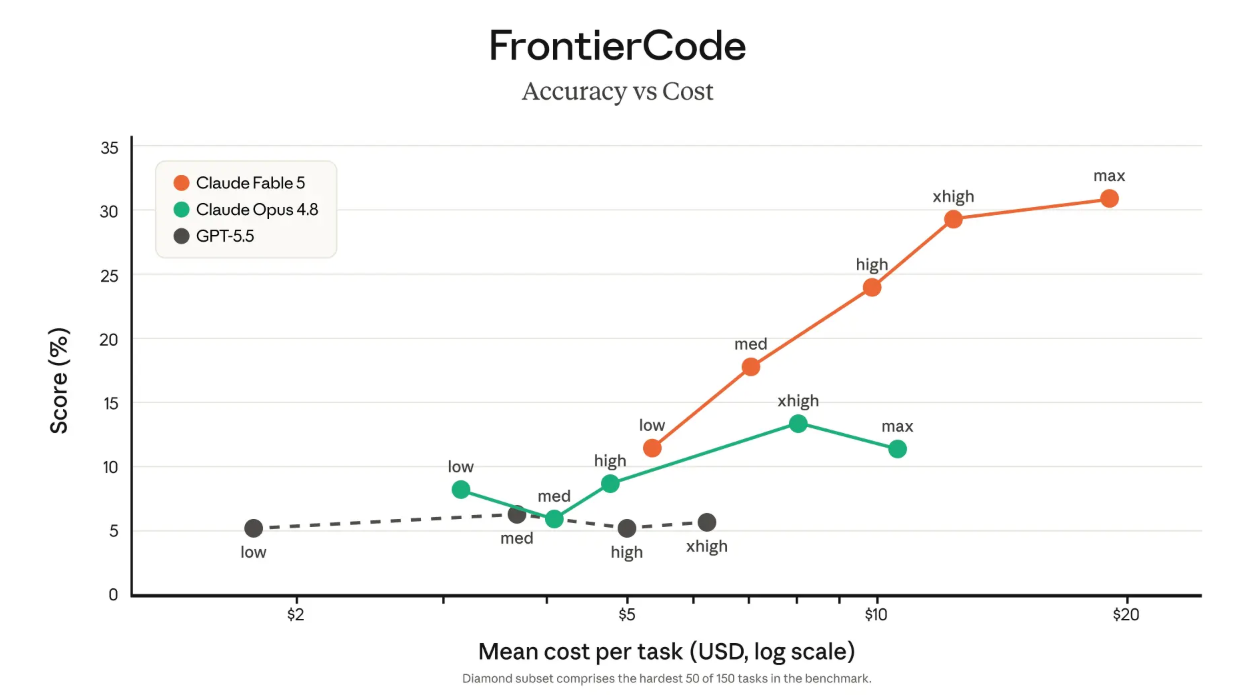
That means the best way to understand the story is not as a typical model release. It is better viewed as a frontier AI governance controversy.
| Issue | Why It Matters |
|---|---|
| Model capability | Advanced models may raise higher safety expectations |
| Access control | Governments may scrutinize who can use frontier systems |
| Jailbreak risk | Guardrails may be tested by adversarial users |
| Foreign access | Strategic rivals may attempt misuse or model extraction |
| Enterprise trust | Customers may worry about sudden restrictions |
Why Export Controls Are Central to the Story
Export controls have traditionally focused on semiconductors, chips, military technology, and strategic software. But as frontier AI models become more powerful, regulators are increasingly paying attention to model access itself.
A highly capable AI model may be valuable not only as a commercial product, but also as strategic technology. If a system can assist with coding, cyber operations, scientific research, automation, or sensitive analysis, governments may worry about misuse by foreign adversaries or restricted entities.
That is why the reported Claude Fable and Mythos controversy matters. It signals that AI regulation may move beyond hardware controls and into model-level restrictions.
The Jailbreak Risk Debate
One of the most widely discussed concerns is jailbreak risk.
A jailbreak is an attempt to bypass a model's safety protections. This can involve direct prompts, role-play, indirect instructions, tool use, prompt chaining, or adversarial workflows designed to push a model toward restricted outputs.
For frontier AI labs, jailbreak resistance is difficult because more capable models can also become better at following complex instructions. Safety systems must block harmful use without making the model unusable for legitimate enterprise and research tasks.
| Risk Area | Potential Concern |
|---|---|
| Cybersecurity | Advanced coding support could be misused |
| Biosecurity | Scientific reasoning may raise dual-use concerns |
| Influence operations | AI systems could assist manipulation or propaganda |
| Model distillation | Outputs may help train competing systems |
| Access abuse | Restricted users may attempt workarounds |
The central policy question is whether current safety controls are strong enough for the model's capability level.
Foreign Access and Model Distillation Concerns
Foreign access is another major issue.
In AI policy, access does not only mean directly using a model. It can also involve collecting model outputs, studying behavior, and training another system to imitate its capabilities. This process is often discussed as model distillation.
If a foreign-linked organization gains access to a frontier model, policymakers may worry that sensitive capabilities could be copied or approximated. This is especially important in the context of U.S.-China AI competition, where compute, model capability, and deployment scale are increasingly treated as strategic assets.
Why This Matters for Anthropic
For Anthropic, the controversy comes at a sensitive time.
The company is one of the leading AI labs competing with OpenAI, Google DeepMind, Meta, xAI, and other frontier model developers. It also depends on major cloud infrastructure, enterprise adoption, and investor confidence.
If regulators view Anthropic's access controls as insufficient, the company could face tighter oversight. If customers worry that advanced models can be restricted suddenly, enterprise confidence may weaken. If investors believe regulation could limit growth, private market valuations and IPO expectations may be affected.
Market Impact: AI Regulation Becomes a Real Investment Risk
The Anthropic controversy highlights a broader market shift. AI companies are no longer evaluated only on model benchmarks, revenue growth, and user adoption.
Investors now also need to consider:
- Export control exposure
- Government relations
- Cloud dependency
- Safety credibility
- Enterprise trust
- Foreign access restrictions
- Regulatory compliance costs
- Model availability risk
For users tracking technology and crypto market narratives, AI regulation is increasingly relevant because it can affect risk appetite across growth assets. Users can follow broader digital asset trends through the official Tapbit platform.
Could Other AI Labs Face Similar Scrutiny?
Yes. The Anthropic case may become a template for wider frontier AI oversight.
As AI models become more capable, regulators may ask similar questions of other labs:
- Who can access the strongest models?
- What safeguards prevent misuse?
- How are high-risk users monitored?
- Can foreign actors bypass restrictions?
- How quickly can companies respond to safety concerns?
- Should model deployment require government review?
If these questions become standard, AI product launches could become slower, more regulated, and more dependent on security assessments.
What to Watch Next
The next stage of the controversy may depend on several signals:
- Whether Anthropic publishes more clarification
- Whether affected models return to wider availability
- Whether U.S. agencies release formal guidance
- Whether cloud partners change model access policies
- Whether enterprise customers pause adoption
- Whether other AI labs face similar restrictions
- Whether investors price regulatory risk more aggressively
The key question is whether this becomes a one-company incident or the beginning of a broader AI governance framework.
Conclusion
The reported Claude Fable and Mythos controversy places Anthropic at the center of a growing debate over frontier AI safety, export controls, jailbreak resistance, and foreign access.
The lesson is clear: the future of AI competition will not be decided only by better benchmarks or faster models. It will also depend on whether companies can prove that advanced systems are secure, governable, and trusted by regulators, customers, and investors.
For Anthropic, the challenge is balancing innovation with safety credibility. For the broader AI market, the case shows that regulation is now a core risk factor for frontier model companies.
Users interested in broader market opportunities and platform campaigns can also visit the Tapbit rewards page.
FAQ
What is the Anthropic AI model controversy?
It refers to reports linking advanced Claude-related models, described as Fable and Mythos, to U.S. export control concerns, safety risks, and access restrictions.
Are Claude Fable and Mythos official public models?
Public technical details remain limited, and the names have appeared mainly in reporting around safety and export control concerns.
Why are export controls involved?
Governments may restrict access to frontier AI systems if they believe the models could create national security, cyber, biosecurity, or foreign access risks.
What is jailbreak risk?
Jailbreak risk refers to attempts to bypass AI safety controls and make a model produce restricted or harmful outputs.
Why does this matter for investors?
AI regulation can affect product availability, enterprise adoption, cloud partnerships, IPO narratives, and valuation expectations.
Could other AI companies face similar scrutiny?
Yes. As frontier models become more powerful, regulators may apply similar access, safety, and export control questions to other AI labs.


