


U.S. banking regulators have drawn a clearer line around one of the biggest questions in tokenized finance: does putting a security on blockchain automatically make it harder for banks to hold?
For now, the answer looks like no.
In fresh guidance released this week, the Federal Reserve, the FDIC and the OCC said the U.S. bank capital framework is “technology neutral,” meaning the technology used to issue or transfer a security does not, by itself, change how that asset should be treated for capital purposes. For the tokenization market, that is a meaningful signal. It does not create a special lane for blockchain-based assets, but it does remove the idea that tokenized securities should face an automatic penalty simply because they live on distributed ledger rails.
The timing matters. Tokenization has moved well beyond a niche crypto talking point and is now showing up in serious conversations across both Wall Street and digital-asset markets. Products tied to tokenized Treasuries, tokenized funds and tokenized stocks have gained attention over the past year, and traders on Tapbit and other major exchanges have been watching the trend as the line between traditional finance and crypto infrastructure gets thinner.
What the Fed actually said
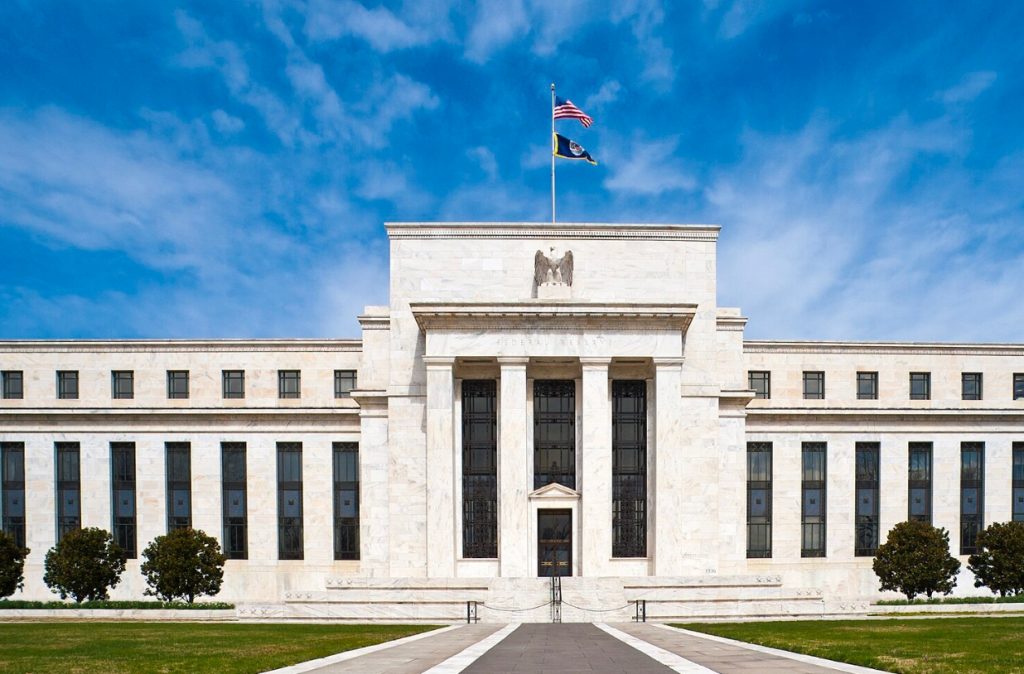
The regulators’ message was narrower than some of the market headlines suggested, but still important. Their point was not that tokenized securities deserve lighter treatment. It was that banks generally should not treat them differently from the traditional version of the same asset if the legal rights are the same.
That means an eligible tokenized security should generally receive the same capital treatment as its non-tokenized equivalent. The same logic also applies to certain derivatives linked to those securities. In addition, regulators said a tokenized security can still qualify as financial collateral under the existing capital rule if it meets the same requirements that would apply in traditional form.
In practical terms, that reduces uncertainty for banks that may want exposure to tokenized assets but were unsure whether blockchain alone would trigger a tougher capital outcome.
Why the market cares
This is one of those regulatory updates that sounds technical at first glance but carries broader implications. Tokenization has long been pitched as a way to modernize financial plumbing — faster settlement, lower operational friction, wider access and, eventually, more liquid secondary markets. That thesis gets much harder to sell if regulated institutions face extra balance-sheet costs just for touching the blockchain version of an otherwise familiar asset.
That is why this week’s clarification landed well with the market. It does not suddenly open the floodgates, but it removes one obvious obstacle. For crypto investors, it is another sign that parts of the U.S. regulatory system are leaning toward fitting digital wrappers into existing financial frameworks instead of inventing an entirely separate rulebook every time blockchain enters the picture.
That broader tokenization story has also been reflected across the market infrastructure side of crypto. Tapbit users following crypto market trends have seen how quickly narratives around real-world assets and tokenized finance can spill over into sentiment around exchanges, custody, and on-chain settlement rails.
No special treatment, but no automatic punishment either
The most important nuance here is that regulators did not hand tokenized securities a free pass. They also did not create a new crypto-specific capital framework. Instead, they chose a simpler route: if the substance of the instrument is the same, the capital treatment should generally be the same too.
That approach matters because it keeps the focus on legal rights and risk characteristics instead of technology branding. A blockchain-based wrapper does not make an asset magically safer. But under this guidance, it also does not make the asset automatically more punitive from a capital standpoint just because it is issued or transferred onchain.
Regulators also said this treatment does not hinge on whether the tokenized security sits on a permissioned blockchain or a permissionless one. That point may matter over time as more institutions experiment with different issuance and settlement models.
The SEC has been moving in a similar direction
The banking agencies’ position also fits with the broader U.S. regulatory tone around tokenization this year. In late January, SEC staff said tokenized securities are still securities under federal securities laws, even when ownership records are maintained in whole or in part on crypto networks. In other words, putting the asset onchain may change the delivery mechanism, but it does not erase the underlying legal character of the instrument.
That is the thread tying these moves together. Washington is not treating tokenization as a legal reset button. It is signaling that existing frameworks still apply, and that what matters most is whether the tokenized product really carries the same rights, obligations and risk profile as the traditional version it is meant to represent.
Why this matters for crypto traders
For most retail crypto traders, this is not the sort of headline that sends Bitcoin jumping 10% in an afternoon. But that does not make it unimportant. Tokenization has become one of the most credible long-term bridges between crypto infrastructure and traditional capital markets. Every time regulators make that bridge easier to understand, the sector gets a little more investable.
That is especially relevant at a time when crypto markets are increasingly sensitive to institutional flows, product structure and regulatory tone. A clearer framework for tokenized securities does not guarantee mass adoption, but it does give banks, issuers and market participants one less reason to stay on the sidelines.
For exchanges and trading platforms, it also reinforces the idea that the next phase of crypto growth may not come only from speculative tokens, but from blockchain infrastructure being used to move familiar financial products more efficiently. That is one reason tokenization remains a closely watched theme across both traditional finance desks and crypto-native platforms like Tapbit.
The bigger takeaway
The real takeaway from this week’s guidance is not that U.S. regulators have suddenly become permissive. It is that they are starting to answer tokenization questions in a more practical way. Rather than treat every blockchain-based financial product as something entirely foreign, they are asking a simpler question: is this economically and legally the same instrument, or not?
That may sound modest, but for tokenized finance it is a meaningful development. Markets rarely shift because of one dramatic regulatory breakthrough. More often, they move because the rules become a little clearer, the language gets less hostile and institutions get more comfortable testing the edges of what is possible.
That is what happened here. The wrapper changed. The rulebook, at least for now, mostly did not.
Ready to dive into crypto? Sign up on Tapbit today and kick off your trading journey in seconds.
FAQ
What did the Fed say about tokenized securities?
The Fed, together with the FDIC and OCC, said the bank capital framework is technology neutral. In general, tokenized securities with the same legal rights as traditional securities should receive the same capital treatment.
Does this mean tokenized securities get special treatment?
No. Regulators did not create a special benefit. They clarified that tokenized securities generally should not face a harsher capital treatment solely because they use blockchain technology.
Does this only apply to permissioned blockchains?
No. The guidance indicates that the capital treatment does not generally depend on whether the tokenized security is issued on a permissioned or permissionless blockchain.
Why is this important for crypto markets?
It supports the broader tokenization narrative by reducing uncertainty for banks and institutions that may want to work with blockchain-based versions of traditional assets.
Did the SEC also comment on tokenized securities?
Yes. SEC staff recently said tokenized securities remain securities under federal securities laws, even when ownership records are maintained on crypto networks.
Disclaimer: This article is for informational and educational purposes only and does not constitute investment advice. Crypto markets are highly volatile, and small-cap tokens can move sharply in both directions.