Only four months after joining, the Song Xiaodong team was reported to part ways with Meta, citing incompatible work styles
 Tapbit Wire
Original Compilation: Machine Heart
Recruiting in June, and rumors of parting ways in October?
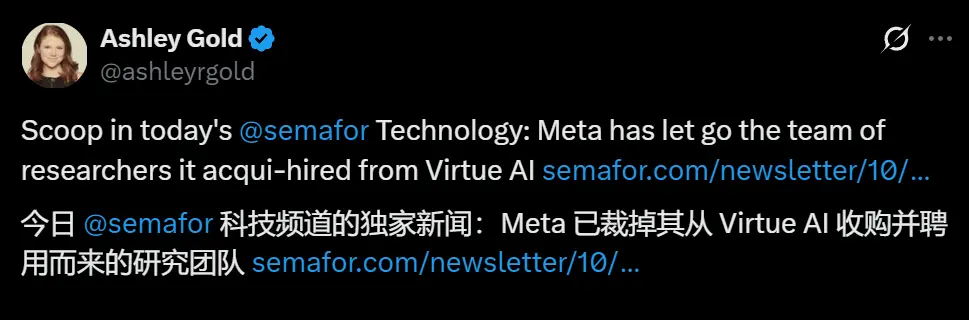
The Virtue AI team, led by UC Berkeley computer science professor Dawn Song, has reportedly encountered issues in its collaboration with Meta, citing "clashing work styles."
Dawn Song is highly regarded in both academia and industry, recognized as one of the most influential scholars in the fields of computer security and AI safety. Her 2005 paper on "Dynamic Taint Analysis" is considered a classic in the field of computer security.
According to AMiner's rankings, she is the most cited scholar globally in the field of computer security. Her lab at Berkeley is known as a training ground for top talent in computer security.
In addition to her role as a professor, Dawn Song is also a founder of Oasis Labs and Virtue AI. According to Virtue AI's official website, their work includes simulating attacks, identifying vulnerabilities in AI, and providing protection during system operation, implementing security and governance rules. In simpler terms, they help AI undergo "safety check-ups" and install "guardrails" during operation.
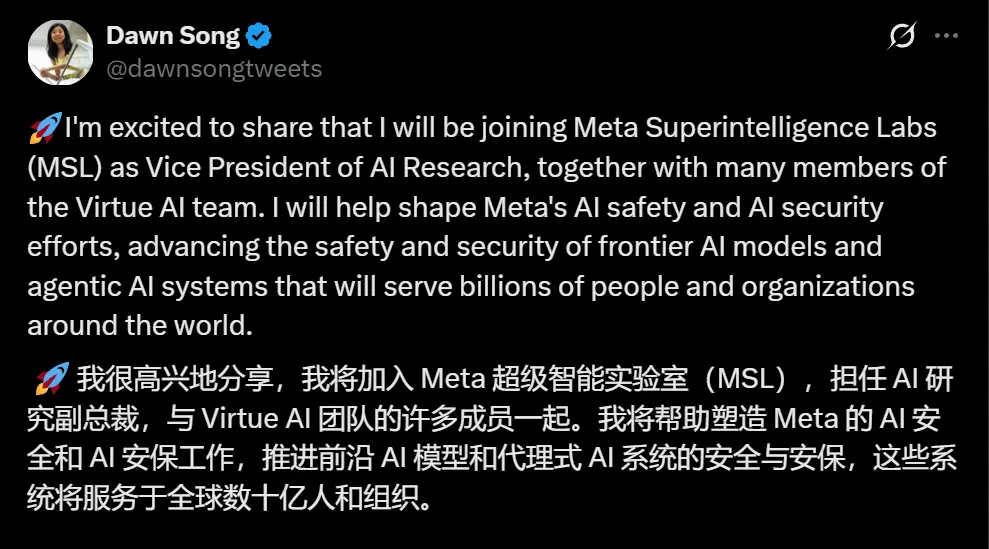
In June of this year, Dawn Song announced on social media that she had joined Meta's Superintelligence Labs. Media reports at the time indicated that two other founders of Virtue AI, Bo Li and Sanmi Koyejo, along with more team members, also joined. This recruitment was a way for Meta to bring in an independent team rather than acquiring the entire company.
For the talent team at Virtue AI, joining Meta was appealing because they were already conducting AI safety testing, red teaming, and post-launch protection for clients, but as a startup, their resources were limited. By joining Meta, they could directly apply these capabilities to products used by billions of users, transforming from "safety tools" to a foundational security infrastructure for a large platform.
At the same time, Meta needed them because it is aggressively pushing AI Agents and superintelligence. As time goes on, there are increasing concerns about models behaving erratically, data leaks, and being misled by malicious instructions. Therefore, they needed to quickly find a top-tier team that understands research and has practical experience in security implementation to ensure AI safety, reliability, and governance.
All of this seemed very reasonable, but in a recent article, foreign media outlet Semafor reported that "Meta spokesperson Andy Stone informed Semafor that the company is laying off a group of employees who were recruited from the AI safety startup Virtue AI, who have only been employed for four months since joining in June."
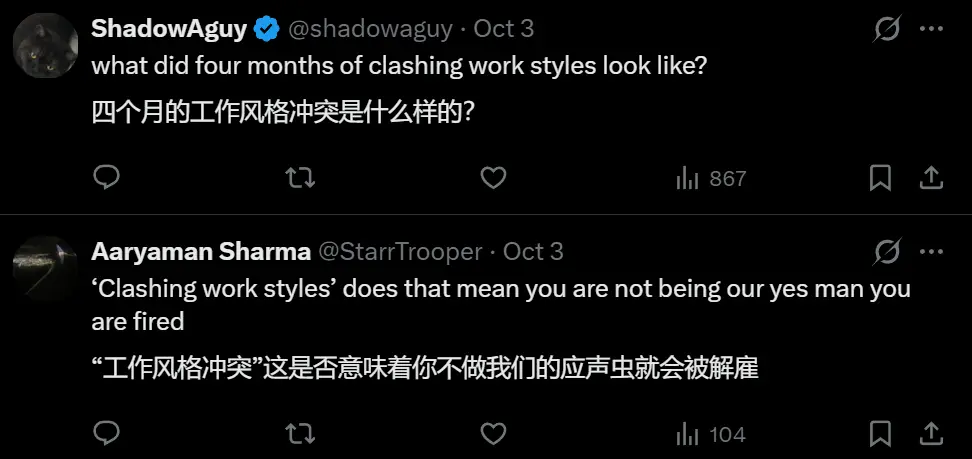
Why did it escalate so quickly? Meta explained that there were "clashing work styles" and that the collaboration did not develop as expected. At the same time, Meta stated that the Superintelligence Labs would continue to focus on AI safety, alignment, and frontier risks. Of course, this is just the company's side of the story, and the specific disagreements have not been disclosed.

Additionally, the report did not confirm whether Dawn Song and others completely left, and the team had not responded at the time of publication.
However, the real question left by this change in collaboration is still worth discussing, with the core issue being: how to enable excellent researchers to make an impact within the organization after bringing them in?
A study published by MIT Sloan in 2019 found that within the first year of a company being acquired, 33% of acquired employees chose to leave, while the rate for regular hires with similar skills and work experience was 12%. Although these percentages tend to equalize over time, during the three-year window they studied, acquired employees were 15% more likely to leave than new hires.
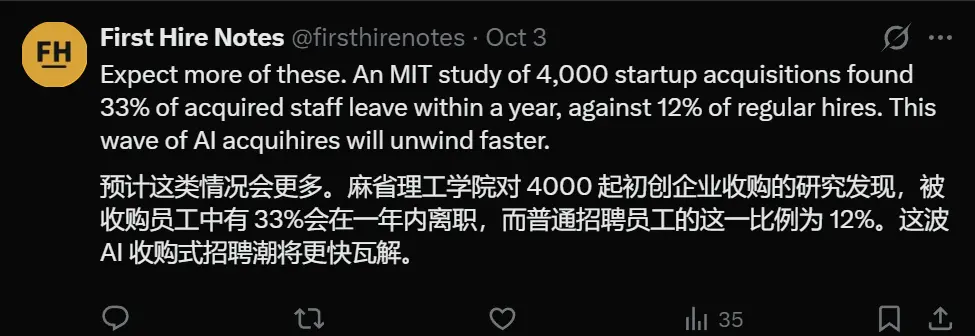
The article suggests that the high turnover rate among acquired employees is primarily due to "organizational mismatch": these individuals initially joined startups for the entrepreneurial atmosphere, autonomy, flexibility, and willingness to take risks, but after being acquired by a large company, they often face more bureaucratic processes and formal corporate culture, which directly conflicts with their preferences. Moreover, typical acquired employees usually have no choice in the buyer and cannot participate in post-acquisition organizational adjustments, which exacerbates their discomfort. Coupled with their inclination to start from scratch, they are more likely to leave, even starting competing companies.
Returning to the Meta incident, the explanation of "clashing work styles" is clearly unconvincing to many. As for the deep disagreements between the two parties, we will need to wait for an explanation from Virtue AI.