Hong Kong's first five-year plan: Cryptocurrency is not on the main table, but tokenization is
 Tapbit Wire
On September 16, 2026, Hong Kong announced its first five-year plan since the return to China—"The First Five-Year Plan for Economic and Social Development of the Hong Kong Special Administrative Region (2026-2030)."
The significance of this matter is undoubtedly heavy.
Since the return, the direction of economic and social development in this city has mainly relied on two lines: one is the Chief Executive's annual "Policy Address," which governs for one year; the other is the special blueprints and industry plans from various policy bureaus, which govern a specific field.
However, a mid-term development program that spans government terms, covers the entire city, and clearly connects with the five-year plan has been lacking.
This time, it has been filled in. Moreover, the way it has been filled in is very pointed: the plan clearly states at the beginning that it was formulated in the first year of the national "14th Five-Year Plan," with the main line being "integrating into and serving the overall national development."
The accompanying execution mechanism has also been clearly outlined.
The plan establishes a closed loop: the "Policy Address" sets the annual work plan, the "Budget" provides resource support, and the Chief Executive reports on the implementation to the President and the central government each year, while monitoring, evaluating, and making mid-term adjustments within the five-year period.
The entire document lists 105 indicators—22 major indicators, 57 work indicators, and 26 text indicators.
A document with indicators, resources, assessments, and feedback mechanisms is fundamentally different from a mere statement document. For businesses operating in Hong Kong and teams preparing to enter the Hong Kong market, the policy certainty for the next five years mainly comes from here.
I read through the entire 124 pages.
The first thing I did after finishing was to open the full text and search for keywords. The results were more interesting than I expected.
First, let's look at a set of numbers
I searched through the complete Chinese version on the official website word by word, and the results are shown in the image below.
Hong Kong Five-Year Plan (2026-2030) Keyword Search Results
A few comparisons are worth noting: artificial intelligence 67 times, green 56 times, Northern Metropolis 34 times, innovation technology 24 times; financial technology 6 times, tokenization 5 times, digital assets 3 times; stablecoins, blockchain, and digital renminbi each 1 time.
To avoid misunderstanding among friends, I must explain that "virtual assets" appeared 0 times in this document, not because the Hong Kong government wants to avoid this term, but because the government has already completed the unification of terminology.
In October 2022, the Financial Services and the Treasury Bureau released the "Policy Declaration on the Development of Virtual Assets in Hong Kong," using the term "virtual assets." By June 26, 2025, the same department released the "Policy Statement 2.0 on the Development of Digital Assets in Hong Kong," which had changed to "digital assets." Since then, policy-level expressions have basically unified to the latter, and this five-year plan continues to use this terminology.
So, the 0 times indicates a change in terminology, not a cancellation of cryptocurrency-related businesses.
Where does it appear in the chapters
The term "digital assets" appears 3 times, all concentrated in Chapter 6 "International Financial Center," Section 4—"Promoting 'Finance+' to Serve the Real Economy."
What is "Finance+"? It refers to finance combined with various scenarios. The plan lists six directions: technological innovation, trade, green development, intellectual property, shipping, and people's livelihood. Digital assets and tokenization are placed under the direction of "Finance + Technological Innovation."
It does not have its own chapter or section. It is just one sentence in a long paragraph.
This position itself is the answer.
If Hong Kong wants to turn cryptocurrency into an industry, a normal approach would be to open a separate chapter to clarify regulations, licenses, talent, market, and industry scale. This plan does not do that. It places digital assets in the drawer of "how finance serves the real economy."
Here are a few key sentences from that paragraph:
Adhering to the principle of "same business, same risk, same rules," build a globally leading licensing and regulatory system for digital assets, and promote the liquidity and market innovation development of digital assets.
The four points in "Column 3" are more specific actions:
Steadily promote the development of financial technology, including data and payment infrastructure, artificial intelligence, enhancing resilience, and financial tokenization as four key areas. Promote the practical application of tokenization technology to enhance various asset classes and use cases through the Financial Authority's Ensemble project. Prudently promote the development of emerging digital assets such as central bank digital currency (CBDC), stablecoins, tokenized deposits, tokenized bonds, and tokenized securities products. Deepen the application of the financial regulatory sandbox, expand coverage, and achieve a dynamic balance between financial innovation and regulation.
Four sentences, four actions. The word count is not large, but each sentence can be tied to specific matters.
These four actions are very concrete
I want to break them down one by one.
The first sentence is a principle.
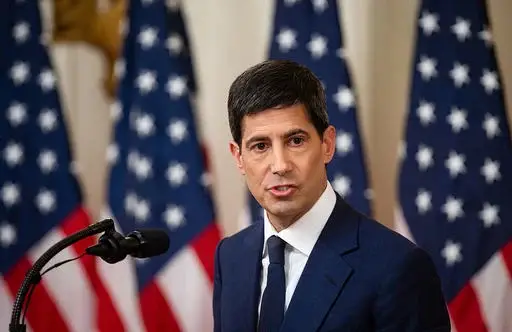
The phrase "same business, same risk, same rules" is not invented by the plan. When the Legislative Council passed the "Stablecoin Ordinance" in May 2025, the then Secretary for Financial Services and the Treasury, Xu Zhengyu, stated this verbatim. The plan has incorporated it unchanged, effectively upgrading a regulatory statement into a principle for the next five years.
This sentence is bidirectional for those doing business: a business will not enjoy more lenient rules just because it has the "on-chain" label; conversely, as long as the substance of the business is the same, the regulatory standards are predictable. For teams that are serious about their work and do not intend to profit from gray areas, this is actually good news.
The second sentence is the scope.
"Financial tokenization" is listed among the four key areas of financial technology, with the other three being data and payment infrastructure, artificial intelligence, and enhancing resilience. Among these four, tokenization is the only one that directly points to "how assets go on-chain."
This order also conveys information. The fact that data and payment infrastructure is listed first indicates that Hong Kong understands the foundation of digital finance as "data and payment," rather than "currency."
The third sentence is the lever.
The plan specifically names the Financial Authority's Ensemble project. The Financial Authority launched this project in March 2024, and in August of the same year, it launched the Ensemble Sandbox, which focuses on using experimental tokenized currency for interbank settlements: participating banks connect their respective tokenized deposit platforms to the sandbox to test real transaction processes such as Payment versus Payment (PvP) and Delivery versus Payment (DvP).
The first batch of experiments covers four themes: fixed income and investment funds, liquidity management, green and sustainable finance, and trade and supply chain finance.
I am not fond of the term "ecosystem," but here it is indeed creating an ecosystem. It is not testing "issuing a token," but rather how to use tokenization for the issuance, trading, and settlement of bonds, funds, and green assets.
The fourth sentence is the checklist.
"Central bank digital currency (CBDC), stablecoins, tokenized deposits, tokenized bonds, tokenized securities," five categories, clearly listed. It is prefixed with two words: "prudently."
These two words are very important. This document does not say "vigorously develop," but rather "prudently promote." The direction is given, but the pace is controlled.
The last sentence is the boundary. The regulatory sandbox needs to expand. The logic of the sandbox is to allow you to experiment in a controlled environment, but with oversight. This is both an opening for innovation and a delineation of boundaries.
After reading, my judgment is: Hong Kong provides certainty regarding digital assets, not imagination.
The licensing path will be clearer, and compliance standards will be more defined; however, the path of "issuing tokens and telling stories" will not receive any support in Hong Kong.
Supporting clues are hidden elsewhere
If you flip back further, you will find several clues in the plan that resonate with digital assets.
One clue is financial risk prevention. After discussing "Finance+," the next section is called "Strengthening Financial Risk Prevention," which includes a standalone sentence: consolidate cybersecurity, financial technology regulation, and anti-money laundering capabilities.
The mention of anti-money laundering and cybersecurity indicates that regulators are aware of the risk points in this type of business. For practitioners, this means that compliance costs will not decrease, and licensing thresholds will not be relaxed.
Another clue is digital bonds. The plan states that it will "steadily promote the normalization of government digital bond issuance, improve relevant laws and market support, and promote the popularization of digital bonds," while also advancing the commercialization, internationalization, and modernization of the Central Moneymarkets Unit (CMU).
The Hong Kong government has already issued several rounds of digital bonds, and "normalization of issuance" means it is no longer a pilot but a regular tool. The accompanying modernization of the CMU is a transformation of the infrastructure for custody and settlement.
Another clue is Cyberport. The plan positions Cyberport as a park focused on digital technology in the southern region, specifying the direction: "artificial intelligence, cybersecurity, blockchain, and financial technology." The term "blockchain" only appears once in the entire document, and it is here.
Another clue is digital trade. This section discusses expanding the import and export of digital technology, digital products, and digital services, with a mention of "token." Here, "token" is closer to the context of artificial intelligence, but its appearance in the digital trade chapter also indicates that the boundaries of "digital products" are widening.
There is also a clue in Qianhai. The plan mentions supporting the joint adoption of cross-border renminbi settlement and digital renminbi by Shenzhen and Hong Kong. The mention of digital renminbi in this section is placed alongside the internationalization of the renminbi.
These clues connect together, and the main line is actually quite clear.
My three judgments
The first judgment: the real main line is the digital foundation for the internationalization of the renminbi, with cryptocurrency as a supporting role.
Looking at these matters together—the offshore renminbi hub, the application of digital renminbi in Qianhai, government digital bonds, CMU modernization, CBDC, tokenized deposits, and tokenized bonds—they all point in the same direction: to make the renminbi more usable in cross-border trade, investment, and settlement, and to carry it in a digital manner.
Digital assets are a technical module on this foundation, not the foundation itself. The plan repeatedly mentions "renminbi pricing," "renminbi settlement," and "cross-border renminbi," rather than "cryptocurrency."
This also explains why the plan chose the term "digital assets." Its scope is broad enough to encompass the digital forms of traditional finance such as CBDC, digital bonds, and tokenized deposits; "virtual assets" has a narrower range and is long-term bound to the cryptocurrency context, which is insufficient to carry such a wide topic.
The second judgment: the division of labor between Hong Kong and the mainland in this field is clearer than many people think.
The mainland's rules do not touch on token financing or trading speculation; Hong Kong operates under the common law system, incorporating digital assets into licensing and regulatory frameworks, becoming an interface at the boundary of the system.
This plan does not overstep boundaries. It does not say what to open up, but states the need to build a system, engage in tokenization, and pilot sandboxes. All actions are within the framework of "financial infrastructure."
For practitioners, the practical implication of this boundary is: for businesses targeting the mainland, do not expect relaxed regulations; for licensed businesses targeting Hong Kong and international markets, certainty is increasing.
The third judgment: In the next five years, digital assets will not become the "main battlefield" in Hong Kong, but will become a "necessity."
You can tell by looking at the indicators.
Among the 105 indicators listed in the plan, 22 key indicators include 900 hectares of developed land in the Northern Metropolis, 70,000 residential units, 196,000 public housing units, and a hard target for innovation expenditure to reach 3% of GDP after 2030.
There are no indicators regarding digital assets.
This is not a lack of importance, but a positioning issue. The Northern Metropolis is a project that requires land, money, and time, so hard indicators must be established. Digital assets involve institutional development, and the progress depends on the market and international environment, making it unsuitable for hard indicators.
Therefore, a more accurate judgment is: it is not the main character, but it is a standard configuration. By 2030, if an international financial center does not have mature tokenization infrastructure and a regulatory system for digital assets, it will not be viable.
How Practitioners Can Make Good Use of This Document
I tend to treat policy documents as a ruler for judgment rather than action directives. This plan can be used in the following ways.
Look at the direction, and the encouraged areas are:
First, tokenization itself. Bonds, deposits, securities, funds, green assets are clearly stated in the plan, and there is a sandbox from the Monetary Authority in operation.
Second, payment and settlement infrastructure. Data and payment infrastructure are listed as the first key area of fintech.
Third, compliance and risk control tools. Fintech regulation, anti-money laundering, and cybersecurity are specifically mentioned, indicating that the demand in these areas is certain.
Fourth, innovation within the sandbox. The regulatory sandbox needs to be expanded, and for projects that can enter the sandbox, this is a relatively safe trial-and-error channel.
Looking at the boundaries, the areas that are less likely to be supported are:
Token issuance narratives. The "digital assets" in the policy document refer to licensed operations, tokenization, and infrastructure, not token issuance.
Trading and speculation. The plan does not provide any policy support for trading-related businesses, and the accompanying chapters emphasize risk prevention.
Retail financial innovation targeting the mainland. This point does not need to be elaborated.
Finally, here’s a pragmatic judgment method.
Break your business down into three layers—technology layer, service layer, and financialization layer. The technology and compliance service layers have no issues with direction; for the financial service layer, first check if there is a license and if there is a sandbox. If so, you can proceed; those looking to raise funds through borderline token issuance can just sleep it off.
Alright, the meeting is adjourned.