Federal Reserve Raises Interest Rates for First Time in Three Years, Where Are Stocks, Gold, and Bitcoin Heading?
 Tapbit Wire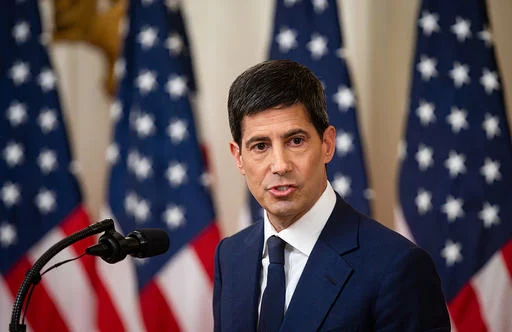
Kevin Warsh made his first move.
At 2:00 PM on September 16, the Federal Reserve voted unanimously 12-0 to raise interest rates by 25 basis points, lifting the federal funds rate target range to 3.75%-4.00%. This is the first rate hike since July 2023, ending a pause of over three years.
The market had already fully priced in this 25-basis-point hike, with the CME FedWatch giving a 92% probability before the vote. The real shock came from the dot plot released after the meeting and Warsh's press conference.
Dot Plot: A More Hawkish Signal Than the Rate Hike
The Summary of Economic Projections (SEP) and the dot plot were the real "weapons" of this meeting.
Among the 18 committee members, 12 believed there should be one more rate hike within the year, 4 thought there should be two more, and only 2 advocated for maintaining the current level. The median dot pointed to a year-end 2026 rate of 4.1%, implying at least another 25-basis-point hike.
Further-out projections were also hawkish: the median rate expectation for 2027 was 3.9% (suggesting a possible rate cut in 2027), the long-run neutral rate range was locked in at 3.0%-4.0%, and PCE inflation was not expected to return to the 2.0% target until 2029.
Translation: The Fed believes the current inflation problem cannot be resolved in one or two quarters. Interest rates will need to stay around 4% for at least a year before they can slowly decline.
Why Now?
Warsh's language at the press conference was unambiguous: "Inflation is too high, and it has been too high for too long."
The data supports his judgment. August PCE inflation was around 3.6%, far exceeding the 2% target. Core PCE was about 3.2%, and core CPI was about 2.4%. Diesel prices surged to $6 per gallon. The Middle East conflict continues to push energy prices higher, with no signs of easing on the supply-side price pressures.
The paradox is that the U.S. economy itself is not weak. August non-farm payroll data was strong, corporate earnings were healthy, and capital investment was growing. Warsh specifically noted this: "The decision to raise rates comes at a time when the U.S. economy appears to be strengthening."
This is what makes this rate hike unique: it occurs in the awkward zone of an "economy that's okay but inflation is stubborn." For the market, this scenario is harder to price than simple overheating because it means the Fed might push rates to restrictive levels before the economy starts to slow.
Impact on Various Assets
U.S. Stocks: Short-term negative already digested, mid-term focus on dot plot realization
The 25-basis-point hike itself has limited impact on U.S. stocks, as the market had already priced in a 92% probability. After the decision was announced, the S&P 500 and Nasdaq briefly rose, a classic "sell the rumor, buy the news" reaction.
But the dot plot is the real pricing anchor. If there is one more hike this year (median expectation), the federal funds rate will reach the 4.25%-4.50% range. This directly suppresses valuation multiples: if the 10-year Treasury yield follows upward, the rising discount rate on the denominator side will compress growth stock PEs.
The structural impact is more important: rates staying above 4% for over a year means "higher for longer" is back. The valuation repair space brought by the rate cut wave from H2 2024 to H1 2025 is now being clawed back.
The most direct victims are high-leverage, low-cash-flow growth companies. Beneficiaries are bank stocks (widening net interest margins) and energy stocks (oil-driven inflation is precisely their revenue source).
Gold: Short-term pressure, long-term logic unchanged
Rate hikes boost the dollar and real yields, which are two major headwinds for gold.
After the decision, the dollar strengthened, putting pressure on gold. The Fed's rate hike also directly raises the financing cost of holding physical gold, increasing inventory financing costs for refiners, jewelers, and industrial users.
But gold's long-term logic remains intact. The global central bank gold-buying trend is structural and will not reverse due to a single 25-basis-point rate hike. The Middle East conflict and geopolitical risks provide sustained safe-haven demand. If inflation truly doesn't return to 2% until 2029 as the Fed projects, gold's narrative as an inflation hedge will be repeatedly brought up by the market over the next three years.
Short-term selling pressure, long-term buying opportunity – this is the classic script for gold in the early stages of a rate hike cycle.
Bitcoin: On Top of the CLARITY Act Failure, a Dual Stress Test
Bitcoin had already fallen to $75,850 the day before the rate hike due to the failed CLARITY Act vote. After the rate hike announcement, BTC was roughly flat without further significant decline, as the market had already digested most of the risk appetite contraction the previous day.
The medium-term impact on BTC depends on one core variable: the direction of real interest rates.
When real rates (nominal rates minus inflation) rise, the opportunity cost of holding zero-yield assets (gold and bitcoin) increases, causing capital to flow out of these assets. Currently, with nominal rates at 4% and PCE inflation at 3.6%, real rates are only about 0.4%, still very low. If the Fed continues to hike to 4.25%-4.50% while inflation concurrently falls to around 3%, real rates would rise to 1.25%-1.50%, significantly increasing pressure on BTC.
But Bitcoin also has its own independent narrative. The ETF approval in January 2024, the halving effect in 2025, and the continued growth of institutional holdings – these structural supply-demand variables will not disappear because of one rate hike. In 2023, when the Fed held rates high, BTC still rose from $16,000 to over $40,000. The direction of interest rates is important, but it has never been the sole pricing factor.
The Fed in the Warsh Era: How Is It Different from Powell?
This is Kevin Warsh's third FOMC meeting since taking the helm of the Fed, but his first time moving rates. He chose to hold steady at the previous two meetings (June and July), although three members voted for a rate hike at the July meeting.
There are two notable differences between Warsh and Powell:
He refuses to provide forward guidance to the market. The Fed under Powell would signal its next move to the market through subtle wording changes. Warsh explicitly rejects this practice. This means every FOMC meeting could become a moment of suspense, structurally increasing market volatility.
He focuses more on inflation than employment.
During the 2021-2022 rate hike cycle, Powell repeatedly emphasized the "dual mandate" and tended to slow the pace of tightening when employment data deteriorated. Warsh's press conference today focused almost entirely on inflation, only briefly mentioning the strength of the job market. This suggests that even if future employment data weakens, Warsh may not pivot as quickly as Powell would.
When asked if Trump influenced the rate hike decision, Warsh directly denied it. Throughout his second term, Trump repeatedly pressured the Fed to cut rates, while today's decision pushed rates in the opposite direction. This long-distance standoff is far from over.
Over the past two years, many investors have been trading as if rate declines were an irreversible trend. Portfolio durations were extended, PE valuations expanded, and leverage ratios increased. Today's rate hike breaks that assumption. If inflation truly doesn't return to 2% until 2029 as the dot plot predicts, the interest rate environment over the next three years will be far more complex than the 2024-2025 rate cut channel.
For investors, the core conclusion is only one: Don't bet on the direction of rates; hedge against rate volatility. In a world of stubborn inflation, a non-weak economy, and a Fed chair who refuses to give forward guidance, every FOMC meeting has the potential to change the pricing anchor.