"Crypto Mom" Hester Peirce Departs, SEC Enters a Two-Person Era
 Tapbit Wire
Original | Odaily Planet Daily
Author | jk
On October 2, U.S. local time, "Crypto Mom" Hester Peirce left the U.S. SEC, formally stepping down from her role as Commissioner. She will next teach at Regent University School of Law, while the SEC she leaves behind has only Chairman Paul Atkins and Commissioner Mark Uyeda remaining — both Republicans — as the SEC officially enters a "two-person era."
Looking back on these eight years, it was less a term of office than a long-running debate: Peirce started from a minority position as a lone supporter of the crypto industry, and step by step turned her arguments into what are now the early contours of crypto regulation.
Before 2022: A Dissent of One
Peirce was sworn in on January 11, 2018. Before that, she had served as senior counsel on the Senate Banking Committee and as a senior research fellow at the Mercatus Center at George Mason University.
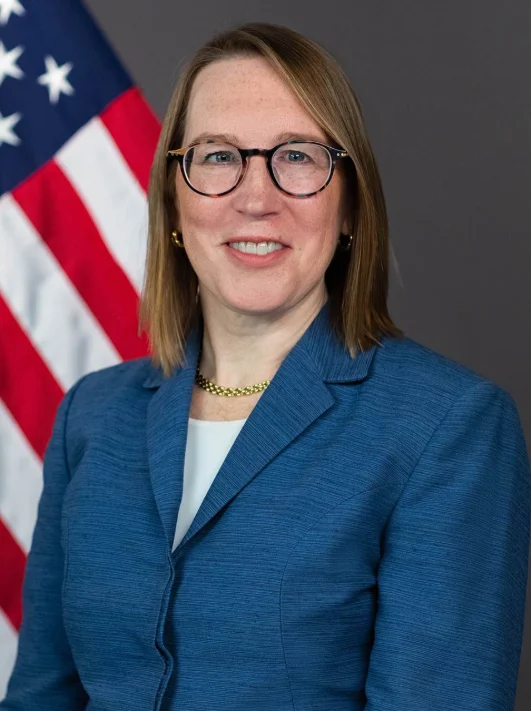
SEC.gov | Hester M. Peirce
Hester Peirce's photo on the SEC website, source: SEC
On July 26 of that year, the SEC once again rejected the Winklevoss brothers' Bitcoin ETF application. Peirce immediately issued a dissenting statement, arguing that the relevant rule change complied with the Securities Exchange Act of 1934 and should have been approved under precedent. The crypto community remembered this dissent, and bestowed on her the nickname "Crypto Mom."
In 2020, she proposed a plan that would give developers three years to build a functional or decentralized network, during which the full securities registration requirements would not immediately apply. On April 13, 2021, she released Safe Harbor 2.0, adding requirements for semi-annual disclosure updates and an exit report. The proposal was ultimately not adopted by the Commission. But it did not disappear because of that — corporate lawyers repeatedly cited it as a reference framework for designing token issuance structures.
After 2021, with Gary Gensler as Chairman, the SEC did not issue rules for token offerings, DeFi protocols, or crypto exchange registration, but instead proceeded through enforcement actions. Peirce called this approach "regulation by enforcement," a criticism that can be traced back to 2020.
According to reports, she dissented in the 2021 DeFi Money Market settlement, arguing that some of the projects pursued were failed experiments rather than fraud. When the SEC sued companies such as Coinbase, Kraken, Nexo, and Ripple, she publicly questioned whether it was worth devoting resources to these lawsuits, and worried that this would crowd out the agency's other work and leave improper precedents.
The Defiant's retrospective argued that between 2022 and 2023, she was the only person on the Commission who was supportive of crypto while also holding voting power, and compliance lawyers could only rely on reading her dissents as a substitute for official guidance.
2024: A Belated Approval
The Bitcoin ETF was another through-line of her tenure. She had criticized in speeches that the SEC had refused constructive engagement with crypto users and developers for four consecutive years, and had erected special hurdles for crypto assets in ETF approvals.
In 2024, spot Bitcoin ETFs were finally approved. But in her dissenting opinion at the time, she took aim more at the long delay that preceded it: she believed the SEC had wasted a decade, damaged public trust, drained staff resources, blurred the agency's role, and alienated a generation of product innovators from the SEC. Industry observers believe her early dissents paved the way for this approval, as well as for the SEC's softened stance toward meme coins and developer activity in 2025. It is not hard to understand why so many people prefer to remember her this way.
SEC Commissioner Hester Peirce Advocates Privacy Tech
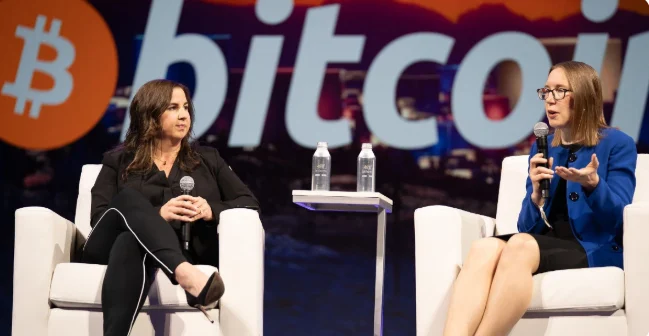
Hester Peirce at the Bitcoin conference
That same year, the White House changed hands, the upper channels of the crypto industry were opened, and the SEC welcomed a new helmsman.
2025: From Minority to Helmsman
On January 21, Acting Chairman Mark Uyeda announced the creation of a crypto task force and appointed Peirce as its head.
When the task force was established, the SEC's statement candidly acknowledged that it had previously relied mainly on enforcement to regulate crypto retroactively and reactively, and that the SEC "can do better" in providing viable paths for those seeking to register.

U.S. SEC's steadiest crypto advocate, Hester Peirce, to depart next week
A photo of Hester Peirce at an event
The task force subsequently listed ten priority areas, including the definition of securities status and custody arrangements, held public roundtables, rescinded the previous bank custody guidance, and added industry figures to provide input on tokenization and exchange rules. She described herself as a "liberty maximalist," and also said that many meme coins "likely are not within the SEC's jurisdiction," suggesting that Congress and the CFTC address the issue.
During her tenure as head of the crypto task force, the SEC's enforcement stance toward the crypto industry underwent a clear shift. In February 2025, the SEC first filed jointly with Binance to pause litigation, then agreed to dismiss its lawsuit against Coinbase, and on February 27 filed a dismissal with prejudice. On March 3, the SEC agreed to dismiss its lawsuit against Kraken, which Kraken said involved no admission of wrongdoing, fines, or business changes. On May 29, the SEC and Binance jointly filed to dismiss the case, also with prejudice.
According to Bloomberg, in the month leading up to early March, the SEC had dismissed or shelved at least nine cases against crypto companies. The Consensys case was also dismissed, and Robinhood Crypto announced that the SEC had closed its investigation into the company. The dismissal filings in the Coinbase and Binance cases both cited the crypto task force's ongoing work as the reason. While the dismissals were the SEC's overall decision and not Peirce's doing alone, the resolution of this batch of cases not only bore her imprint, but also fully retired the "regulation by enforcement" approach she had criticized for years.
What She Leaves Behind, and What Remains Unfinished
Her years of arguments are now turning into documents. It is widely believed that her earlier safe harbor thinking can already be seen in the SEC's proposals, exemptions, and guidance. But much of this work is still in progress:
Regulation Crypto Assets (token issuance rules): The SEC proposed this rule on August 18, providing a one-time "startup exemption" of up to $5 million (within four years), and a "financing exemption" of up to $75 million every 12 months, while ensuring crypto assets are no longer treated as the subject of an "investment contract." The proposal would also preempt state registration and qualification requirements, with the comment period closing on October 20. This is the SEC's first crypto-specific notice-and-comment rulemaking, proposed by Atkins, Peirce, and Uyeda through written vote, with no opposition. In her statement, Peirce said these exemptions and safe harbors cannot fit every model, and that this is just one step on the long road to a clear, reasonable, and enforceable regulatory framework.
Custody rules: The SEC released a custody proposal on October 1 that, under certain circumstances, would allow investment advisers and regulated funds to hold crypto assets themselves, and to use state trust companies as custodians, subject to certain conditions.
Transfer agent rule modernization: Proposed on September 1, this is the first substantive revision to transfer agent rules in more than 40 years. It would allow transfer agents to use blockchain or other distributed ledgers as the primary record of security holders or as a component thereof, though not mandating their use; transfer agents using blockchain or handling tokenized securities would need to preserve wallet addresses in their position detail records. However, the proposal does not determine whether a given crypto asset is a security.
Innovation Exemption: On September 17, the SEC issued this temporary, conditional exemption order allowing qualified tokenized securities venues to use automated market makers and liquidity pools to trade tokenized NMS stocks. The exemption lasts five years, expiring on September 17, 2031, and the SEC may shorten, extend, or adjust it at any time; it is positioned as a "sandbox" for reference in future rulemaking. The first tier of stocks (S&P 500 and Russell 1000 constituents, etc.) is limited to 75 securities with trading volume not exceeding 0.25% of the prior month's average daily volume, while the second tier is limited to 250 securities and 2.5%, and only secondary market trading is permitted. The SEC is simultaneously soliciting public comment on the exemption.
Variables in the Two-Person Era
Hester Peirce's second term expired in June 2025, and under the rules she could have continued serving for about 18 months, meaning she left roughly two months ahead of that deadline.
The SEC she leaves behind has only two Commissioners. Rules adopted in 1995 allow the Commission to continue operating with fewer than three members, but with only two people, any disagreement or recusal can bring matters to a standstill. The White House has not yet nominated a successor, and the successor to head the crypto task force is also undecided. At the congressional level, the CLARITY Act remains stalled in the Senate, and the industry lacks a comprehensive legislative framework dividing regulatory authority between the SEC and the CFTC; with legislation stalled, Regulation Crypto Assets has temporarily become the main vehicle for providing regulatory clarity in the near term. Some industry executives worry that rules lacking statutory backing could be changed by a future administration.
Conclusion
Eight years ago, when Hester Peirce walked into the SEC, crypto was still like a body of water without navigational markers. She brought only an untimely stubbornness: when everyone stood against the crypto industry, she still insisted on asking what good rules themselves should look like. And so a single dissent became a stone cast into the water, a safe harbor became a sketch, and a long minority stance became a signpost that later generations could cite again and again.
What "Crypto Mom" leaves behind in the field of industry regulation is not a completed edifice, but a finished blueprint, a few newly erected scaffolds, and a path she walked step by step. The path has no name yet, the rules are not yet fully finalized, and no one has yet taken up the baton — but the waters of crypto are no longer as silent as they were eight years ago.