

CMS Fields Author: Noah Birch Cover Image Prompt Reference: cover-xrp-etf-bitwise-watchlist Category: Market Insights Tags: XRP, ETF Language: English Title: XRP ETF: Bitwise Product, XRP Price Signals, and What Traders Should Check Slug: Cover Image Alt Text: Meta Title: Meta Description: Article Key Takeaways
An XRP ETF is a way to gain exposure to XRP through an investment product rather than directly holding the crypto asset. That structure is why traders keep searching for XRP ETF information: they want to know whether the product tracks XRP, how it trades, and how it differs from holding XRP on-chain or trading XRP pairs.
The current XRP market is also price-sensitive. XRP is trading near $1.059, but the bigger question is whether ETF-style demand, fund flows, and regulatory signals can support stronger interest. An XRP ETF article should not assume that every product is the same or that every market is approved in every jurisdiction.
Quick context table:
| Route | What It Gives | Main Risk |
|---|---|---|
| Direct XRP | Exposure to XRP price movement. | Wallet, custody, and spot-market volatility. |
| XRP ETF-style product | Traditional-market access to XRP exposure. | Premium/discount, liquidity, and product structure. |
| XRP futures | Derivative exposure for long or short views. | Leverage, funding, and liquidation risk. |
What Is an XRP ETF?
The points below break the topic into the main signals readers should review before drawing a conclusion.
XRP exposure through an investment product
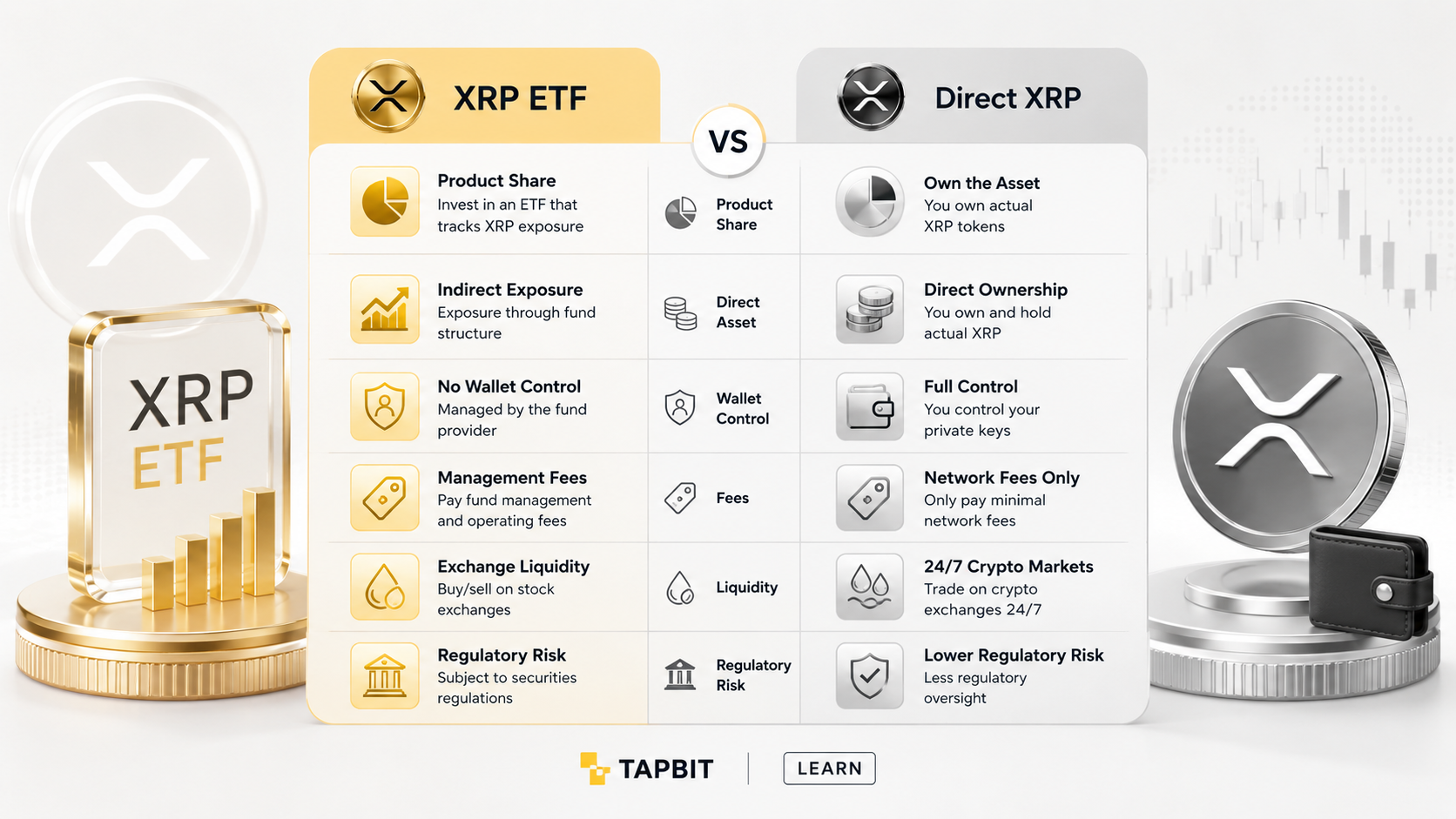
An XRP ETF or ETF-style product gives investors exposure to XRP through a listed financial product. Instead of directly managing a wallet, users buy or sell shares of the product through eligible market infrastructure.
The exact product structure matters. Some products may be spot-backed, some may use other mechanisms, and some may trade more like exchange-traded products in specific markets.
ETF-style trading vs direct XRP ownership
Direct XRP ownership means holding the crypto asset itself. ETF-style exposure means holding a product that attempts to reflect XRP price movement. That product may trade at a premium or discount to its net asset value and may include fees.
Why product structure matters
Product structure affects liquidity, fees, custody, redemption mechanics, and market-price behavior. Traders should always check the issuer, market venue, expense ratio, holdings, and risk disclosures.
Bitwise XRP ETF and Existing XRP Products
The points below break the topic into the main signals readers should review before drawing a conclusion.
What traders see in market results
Search results now show Bitwise XRP ETF-related product pages and finance quotes. This matters because the market is not only looking at hypothetical future approval. Some users are comparing existing XRP-related investment products and trying to understand how they trade.
NAV, market price, and bid-ask spread
ETF-style products can have a market price and a net asset value. If liquidity is strong, the two may stay close. If liquidity is weak or demand is one-sided, the product may trade at a premium or discount.
Bid-ask spreads also matter. A product can track XRP over time but still be costly to trade if spreads are wide.
Why not every XRP product is the same
An XRP trust, ETF, ETP, and futures product can all behave differently. Traders should avoid assuming that one headline tells the entire story.
XRP Price Today: What Traders Should Watch
Start with the live level, then compare it with the recent range and the signals that could confirm or weaken the move.
Current XRP price
XRP is currently near $1.059. That price level should be read alongside volume, broader crypto market direction, and any ETF-related flow data.
Short-term trend
A short-term XRP trend is stronger when price rises with volume and when broader altcoin sentiment is supportive. If XRP rises while Bitcoin and other major assets are weak, traders should ask whether the move is driven by XRP-specific news or short-term speculation.
Support and resistance levels
Before trading XRP, traders should mark recent support and resistance. Support shows where buyers recently defended price. Resistance shows where sellers may appear. Price levels matter more when they align with ETF headlines or fund-flow changes.
XRP ETF vs Bitcoin ETF
The comparison below helps separate similar-looking products that can carry very different rights, risks, and market behavior.
Market maturity
Bitcoin ETFs have a longer and deeper market structure than XRP-related products. BTC has broader institutional recognition, deeper liquidity, and more established derivatives markets.
Regulatory path
The regulatory path for XRP has historically been more complex. That does not mean XRP products cannot develop, but it does mean traders need to watch official filings, exchange rules, and issuer disclosures carefully.
Liquidity and fund-flow differences
Bitcoin ETF flows are often larger and more visible. XRP ETF-related products may have more concentrated flows. A smaller product can move quickly when demand rises, but it can also be more sensitive to outflows.
Approval Risks and Investor Questions
The main risks are easier to track when they are separated into market, product, and liquidity signals.
Is XRP a stock?
No. XRP is not a stock. It is the native asset of the XRP Ledger. An XRP ETF-style product may trade through traditional market infrastructure, but that does not make XRP itself a stock.
Is XRP the same as an ETF share?
No. XRP is the underlying crypto asset. An ETF share or ETF-style product is a financial product designed to provide exposure to that asset.
What wallet is used for XRP?
Direct XRP holders use wallets compatible with the XRP Ledger. ETF-style investors do not usually manage an XRP wallet directly, because the product handles exposure through its own structure.
What Could Move XRP ETF Interest Next?
The points below break the topic into the main signals readers should review before drawing a conclusion.
Fund flows
Flows are one of the clearest signals. Strong inflows suggest demand for XRP exposure. Weak or negative flows may reduce enthusiasm.
Issuer updates
Issuer filings, fee changes, holdings updates, and exchange announcements can move interest quickly.
Regulatory decisions
Regulatory updates can change the market’s view of approval probability, product risk, and institutional access.
XRP price volatility
If XRP moves sharply, search demand for XRP ETF products usually increases. But price volatility cuts both ways. It can attract traders, and it can increase risk.
Tapbit supports both XRP spot and XRP futures. Traders can use the spot page to review direct XRP/USDT market conditions or the futures page to compare contract price, 24H change, order-book depth, margin settings, and risk controls before opening a long or short position. Futures are derivatives, so traders should set TP/SL and understand liquidation risk before entering the market. Users can also create an account after reviewing available XRP markets in their region.
For more context, readers can compare this topic with XRP ETF inflows, BlackRock XRP ETF facts, and top altcoins today.
FAQ
The points below break the topic into the main signals readers should review before drawing a conclusion.
What is an XRP ETF?
An XRP ETF is an investment product designed to provide exposure to XRP without requiring users to directly hold the crypto asset.
Is XRP a stock?
No. XRP is a crypto asset. ETF-style products can trade like financial products, but XRP itself is not a stock.
How much is one XRP?
XRP is currently near $1.059, though the price changes throughout the day.
Is an XRP ETF the same as holding XRP?
No. Holding XRP directly and holding an ETF-style product are different. Product structure, fees, custody, and liquidity can all differ.
What should traders check before trading XRP?
They should check current price, liquidity, support/resistance, regulatory news, and whether the specific spot or futures market is supported.


