

Bitcoin price today is near $79,083 after BTC briefly reached about $80,812 and fell as low as roughly $77,972 during the latest 24-hour window. The move above $80,000 created a three-month high, but the return below that level shows why an intraday breakout and a confirmed breakout are not the same thing.
Bitcoin now faces a simple test: can real spot demand and exchange-traded fund inflows keep supporting the market after the first burst of short covering fades? The answer will depend on ETF flows, the dollar, bond yields and whether buyers defend the upper-$70,000 area.
Bitcoin Price Today: Where Is BTC Trading Now?
BTC is trading around $79K, down roughly 2% over 24 hours after touching the low-$80,000s. That pullback does not automatically end the rally. Markets often return to a breakout level to test whether previous resistance can become support.
The important difference is how Bitcoin behaves around $78,000–$80,000. A quick reclaim of $80K would show that buyers remain willing to pay above the round number. Repeated rejection, declining volume and a break below the recent low would make the move look more like a temporary squeeze.
Why Did Bitcoin Break Above $80,000?
A Softer Dollar and the Debasement Trade
Reuters linked the rally to a weaker U.S. dollar and concerns about currency debasement. U.S. Treasury measures aimed at calming long-term bond yields encouraged investors to look again at assets outside cash and government debt. Gold and Bitcoin both benefited from that narrative.
This does not mean Bitcoin always rises when the dollar falls. It means a softer dollar can reduce one source of pressure, especially when investors are already worried about fiscal deficits and the purchasing power of traditional currencies.
Spot Bitcoin ETF Inflows
Several consecutive sessions of net inflows into U.S. spot Bitcoin ETFs added a more durable source of demand. ETF buying matters because it represents capital entering regulated products rather than only leverage moving between crypto exchanges.
The quality of the signal depends on persistence. One large inflow day can help price, but a multi-day sequence is more convincing. Traders should watch whether inflows continue after BTC has already made a fast move.
Short Covering Accelerated the Move
When Bitcoin rises quickly, traders holding short positions may be forced to buy BTC or close derivatives to limit losses. That buying can push price higher again, producing a short squeeze. A squeeze adds speed, but it does not prove that long-term investors are accumulating. Once forced buying ends, the market needs fresh spot demand.
Is the Bitcoin $80K Breakout Confirmed?
Not yet. Bitcoin crossed $80K, but it has not established a stable series of closes above it. Four confirmation signals are useful:
- Daily closes: BTC should close above $80K rather than only produce a brief wick.
- ETF flows: Continued inflows would show that institutional demand is not limited to the first breakout session.
- Spot volume: Healthy spot buying is more durable than a move led mainly by leveraged futures.
- Macro support: A softer dollar and stable or falling real yields would keep the liquidity backdrop supportive.
If these signals weaken together, the probability of a failed breakout increases.
Bitcoin Support, Resistance and Invalidation Levels
The first support area is approximately $77,900–$78,000, close to the latest intraday low and the lower edge of the breakout test. Below that, the $76,800–$77,000 area becomes important because it marks the zone Bitcoin left before the push through $80K.
Immediate resistance sits around $80,800–$81,000. A clean move through that area, supported by volume, would reduce the risk that the first breakout was only a liquidity spike. These are working zones, not exact walls; crypto can move through them quickly during macro headlines.
Bitcoin Bull, Base and Bear Scenarios
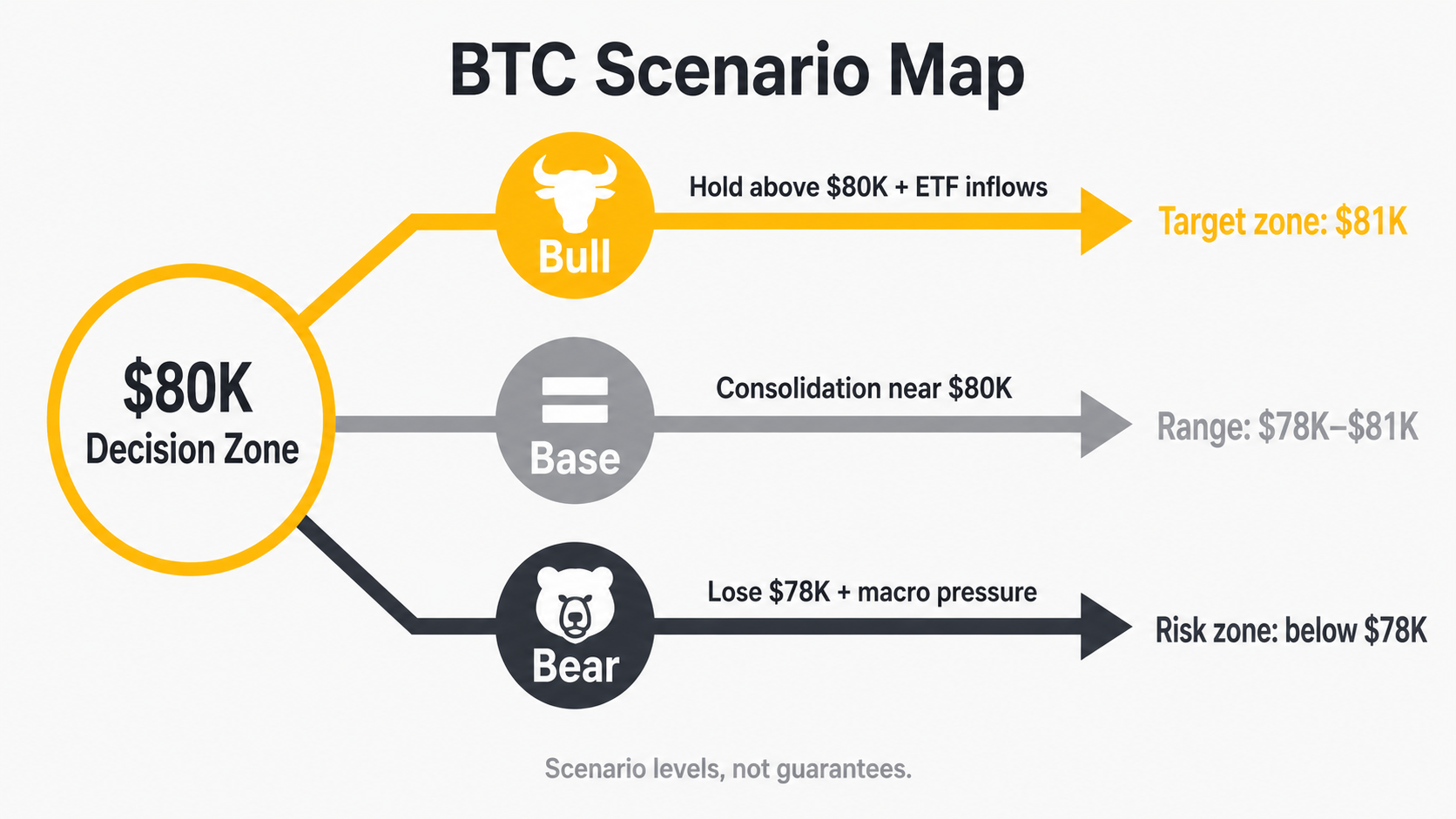
Bull scenario: Bitcoin reclaims $80K, closes above the recent $80,800 high and receives continued ETF inflows. That would open room for the low-to-mid $80,000s while keeping a larger $95K–$100K discussion conditional on sustained demand.
Base scenario: BTC ranges between about $78K and $81K while traders wait for inflation data, Federal Reserve guidance and additional ETF-flow evidence. Consolidation after a fast rally can be healthy if support remains intact.
Bear scenario: BTC loses $77,900, the dollar strengthens and ETF flows reverse. A failed breakout could pull price back toward the mid-$70,000s as late buyers reduce risk.
How to Trade BTC-USDT Futures on Tapbit
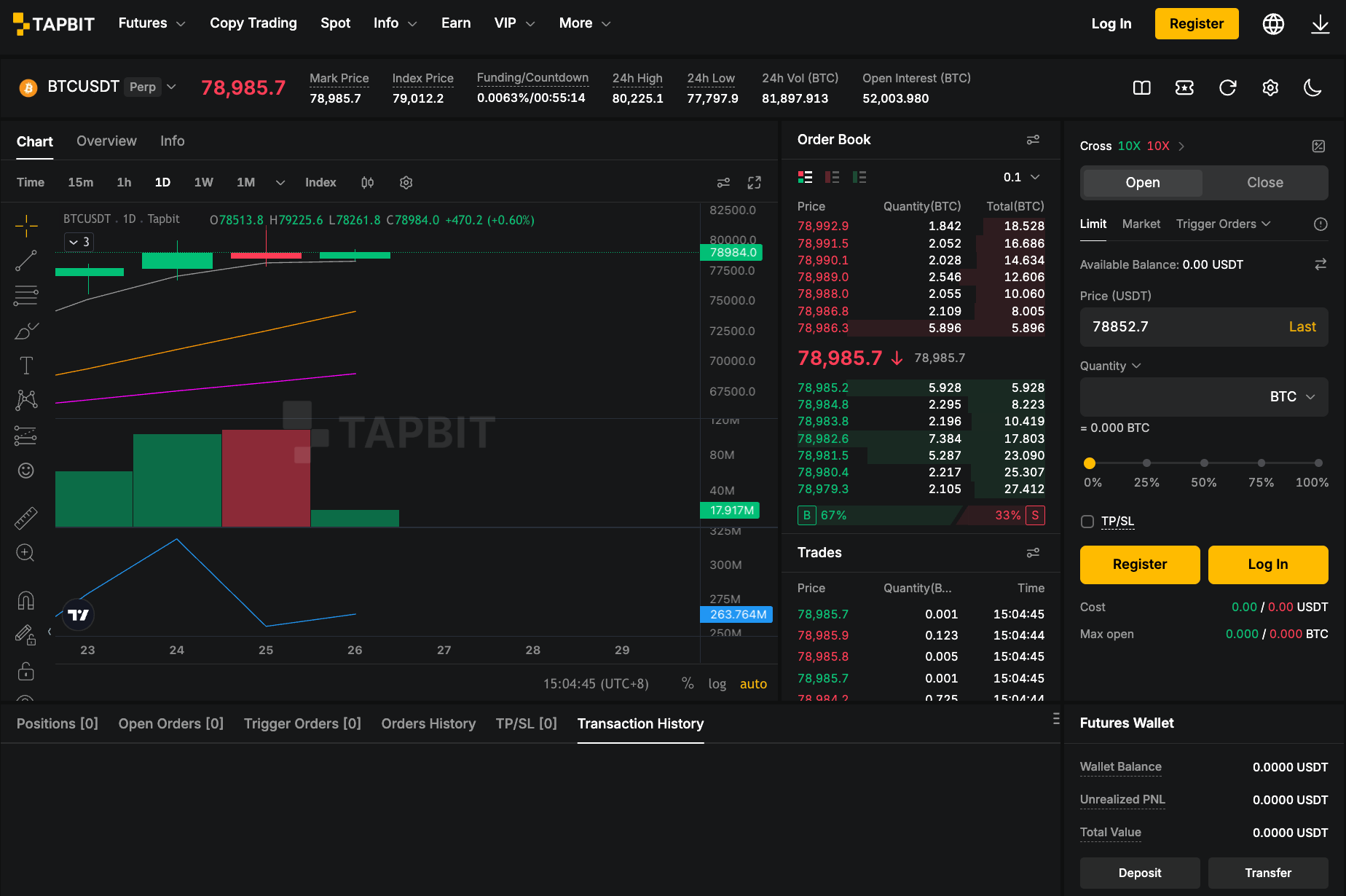
Tapbit users can trade both directions through the BTC-USDT perpetual futures contract. This is a derivative. A futures position does not provide direct ownership or custody of Bitcoin, cannot be withdrawn as BTC and does not give on-chain rights.
- Use Tapbit to create an account or log in.
- Open BTC-USDT futures and review the mark price, index price, funding countdown and contract rules.
- Choose the order type, size, leverage and margin mode, then select Long or Short.
- Set take-profit and stop-loss levels and monitor liquidation risk.
Leverage magnifies losses as well as gains. Around a breakout level, rapid reversals can liquidate positions before the broader scenario has time to develop.
For context, compare this move with Tapbit Learn’s earlier article on whether Bitcoin could break $80K and its analysis of Wall Street’s $150K Bitcoin target. The earlier setup and the current confirmation test answer different questions.
Bottom Line
Bitcoin reached $80K, but the market has not yet proved that it can stay there. Continued ETF inflows, strong spot volume, a softer dollar and daily closes above the recent high would confirm the bullish case. Losing the $78K area would turn the move into a failed-breakout warning.
FAQ
What is the Bitcoin price today?
Bitcoin is trading near $79,083 in the latest working snapshot after a 24-hour range of roughly $77,972 to $80,812.
Why did Bitcoin reach $80,000?
A softer dollar, fiscal concerns, renewed spot Bitcoin ETF inflows and short covering all contributed to the rally.
Is Bitcoin’s $80K breakout confirmed?
Not yet. BTC needs stronger closes above $80K, continued spot and ETF demand and supportive macro conditions.
Do BTC-USDT futures give me Bitcoin?
No. BTC-USDT futures are derivatives. They provide price exposure but not direct ownership, custody or withdrawal of Bitcoin.


