

AI has changed the way markets look at electricity. For years, power companies were often treated as defensive, dividend-oriented businesses. They were important, but not usually the center of growth-stock conversations. That changed as AI data centers became one of the biggest new sources of electricity demand.
Large AI systems need chips. They need servers. They need cooling. But above all, they need reliable power. As hyperscalers build bigger data centers and AI factories, investors have started paying more attention to companies that can supply large-scale, dependable electricity.
That is why Vistra has become one of the more important names in the AI power trade. Vistra is not a crypto company. It is a major U.S. power and retail energy company listed on the New York Stock Exchange under the ticker VST. Its appeal comes from power generation, nuclear assets, cash flow, and its position in a market where data center demand is becoming harder to ignore.
VSTON brings that story into crypto markets. But traders should understand exactly what that means.
VSTON is a tokenized stock product linked to Vistra. It may provide economic exposure to VST’s market performance, but it is not the same as owning Vistra shares directly. That difference matters, especially in a market where tokenized real-world assets are growing quickly but product structures can vary widely.
The opportunity is clear: tokenized access to one of the strongest AI power stories in public markets. The risk is just as clear: mistaking tokenized exposure for stock ownership.
What Is VSTON?
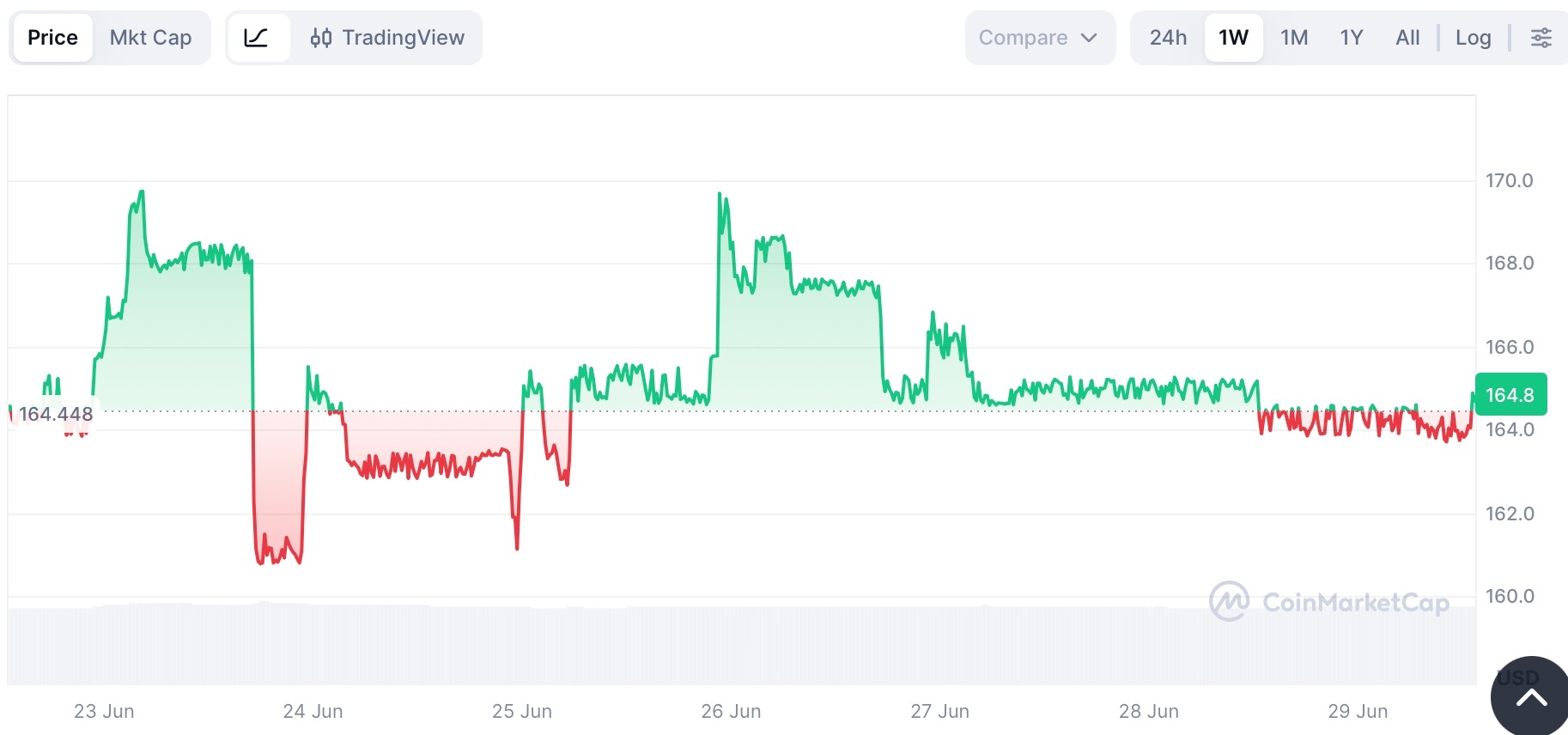
VSTON is a tokenized stock product connected to Vistra Corp. It is associated with Ondo’s tokenized stock framework, which is designed to give eligible users onchain exposure to U.S.-listed securities.
In simple terms, VSTON is built to reflect the economic performance of Vistra’s stock. If VST rises because investors become more bullish on Vistra’s power assets, VSTON may also benefit. If VST falls because of weaker earnings, regulatory pressure, market rotation, or a change in AI power sentiment, VSTON may also come under pressure.
That sounds straightforward, but the structure is important. VSTON should not be treated like a standalone crypto coin. It does not have the same kind of native blockchain economy as a Layer 1 token, DeFi token, or meme coin. Its main reference point is Vistra’s stock performance, combined with the rules, liquidity, and structure of the tokenized product itself.
It is better to think of VSTON as a tokenized exposure product. That wording is less exciting than calling it a “new coin,” but it is more accurate.
Why Vistra Is Getting So Much Attention
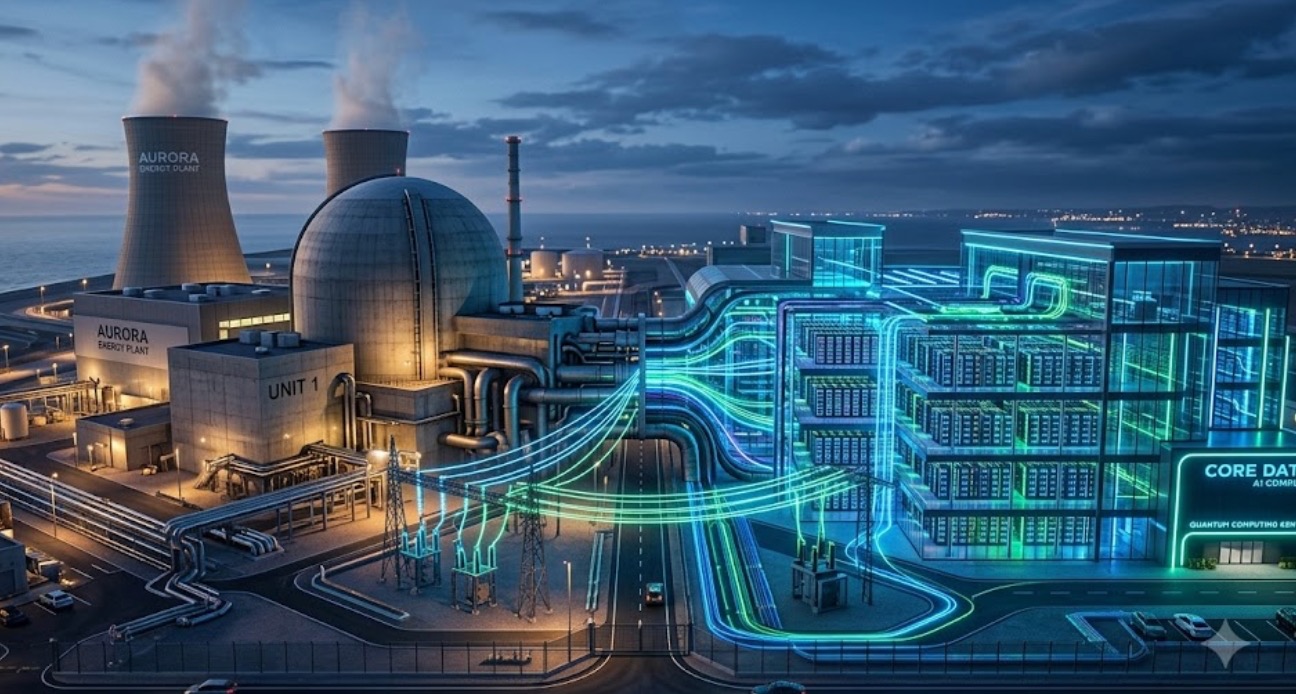
The Vistra story has become stronger because electricity has become part of the AI infrastructure trade.
AI data centers are power-hungry. As models grow larger and inference demand increases, electricity supply becomes a real constraint. Hyperscalers need reliable energy, long-term capacity, and power partners that can support large infrastructure plans.
Vistra fits into that conversation because it owns a large generation fleet, including nuclear assets, and operates in power markets that are seeing rising demand. Recent company results have also kept the stock on investors’ radar. Vistra reported strong Q1 2026 net income and adjusted EBITDA, while reaffirming full-year guidance for adjusted EBITDA and adjusted free cash flow before growth.
The market is also watching Vistra’s relationship with large technology buyers. Its agreement with Meta to support nuclear power supply from Perry and Davis-Besse, plus additional capacity from upgrades across nuclear facilities, has helped connect the company more directly to the data center and AI demand story.
Then there is Helix Digital Infrastructure. KKR, KIA, NVIDIA, and Vistra launched Helix with more than $10 billion in long-term capital commitments aimed at supporting next-generation AI infrastructure. Vistra’s role as preferred power provider gives the company another link to the AI data center buildout.
That is why VST has become more than a traditional utility trade. It is now part power company, part nuclear story, part AI infrastructure beneficiary.
VSTON Brings the VST Story Onchain
VSTON matters because it gives crypto-native users a way to access a traditional equity theme through tokenized rails.
This is part of a broader shift in markets. Tokenized Treasuries, tokenized stocks, real-world asset products, and stock-linked crypto instruments are all trying to bring traditional financial exposure into blockchain-based environments.
For users who are already comfortable with stablecoins, onchain wallets, and crypto exchanges, that can be attractive. Instead of opening a traditional brokerage account, some users may prefer products that settle through digital asset infrastructure and trade against crypto-denominated pairs.
But this convenience comes with trade-offs. A tokenized stock product is not automatically the same as the underlying stock. VSTON may track Vistra’s economic performance, but users should not assume they receive the same rights as VST shareholders.
That is the key point. The product can provide exposure. It does not necessarily provide ownership.
Liquidity Is the Practical Risk
The biggest practical issue with VSTON is liquidity. Vistra itself is a large, actively followed public company. VST can trade with meaningful volume on the New York Stock Exchange. VSTON, however, is much smaller in tokenized markets.
That creates a real difference between the underlying asset and the tokenized version.
Thin liquidity can lead to wider spreads, more slippage, and less reliable price discovery. A trader may see VST moving clearly in U.S. equity markets but find that VSTON does not move with the same depth or efficiency. In some cases, the tokenized product may trade at a premium or discount to the implied value of the underlying stock exposure.
This is not just a technical detail. It affects real trading outcomes.
If a user enters a thin market with a large order, execution may be worse than expected. If the user needs to exit quickly during a volatile move, liquidity may not be deep enough. If market makers are less active, tracking gaps can become more visible.
That is why VSTON traders should check trading volume, order book depth, spreads, supported venues, and redemption information before entering a position. A strong underlying stock story does not automatically create strong token liquidity.
The AI Power Trade Is Real, But It Is Not Risk-Free
The bullish case for Vistra is easy to understand. AI data centers need power. Reliable generation is becoming more valuable. Nuclear energy is gaining attention because it can provide large-scale, low-carbon baseload electricity. Technology companies are signing long-term power agreements to support data center expansion. Vistra has assets that fit this market.
That is why investors are interested. But the story still has risks.
Power companies face commodity price exposure, regulatory scrutiny, capacity market changes, environmental rules, operating risk, plant outages, financing conditions, and political pressure. Nuclear assets may be valuable, but they also require strong execution and long-term regulatory oversight. Electricity demand from AI may grow, but investors also need to watch whether expectations move too far ahead of actual contracted demand and realized earnings.
VST has already become a high-profile AI power name, which means the stock may be more sensitive to sentiment. If the AI infrastructure trade cools, power names connected to the theme could also pull back.
For VSTON traders, this means there are two layers of risk. The first is Vistra’s underlying business and stock performance. The second is the tokenized product structure.
Both matter.
What Could Support VSTON?
VSTON could benefit if Vistra’s equity story remains strong.
Positive drivers may include stronger electricity demand, additional data center or hyperscaler power agreements, favorable nuclear economics, higher capacity revenue, strong free cash flow, and continued investor appetite for AI power infrastructure.
The Helix Digital Infrastructure partnership also matters because it links Vistra to a larger AI infrastructure narrative involving major capital providers and NVIDIA. If investors continue to view power supply as a bottleneck for AI growth, Vistra may remain one of the names traders watch.
For VSTON specifically, better liquidity would also help. More trading activity, deeper order books, tighter spreads, and better price alignment with VST would make the tokenized product more useful for active traders.
What Tapbit Users Should Know
VSTON brings Vistra’s AI power story onto crypto rails. That makes it relevant for traders interested in tokenized real-world assets, AI data center power demand, nuclear energy, and stock-linked crypto products. Vistra itself has a strong market narrative, supported by earnings, nuclear power agreements with Meta, and its role in Helix Digital Infrastructure.
But VSTON is not VST stock. It is a tokenized exposure product with its own risks, including eligibility restrictions, issuer structure, liquidity, tracking error, redemption mechanics, and the absence of traditional shareholder rights.
The opportunity is tokenized access to the AI power trade. The risk is confusing that exposure with direct stock ownership. For traders, VSTON is worth watching, but it should be approached carefully. In tokenized markets, the underlying asset matters. The structure matters just as much.
Users can visit Tapbit to review supported crypto markets and available trading opportunities. Existing users can log in, while new users can register here.
Frequently Asked Questions (FAQ)
What is VSTON?
VSTON is a tokenized stock product linked to Vistra Corp., the U.S. power and retail energy company listed under the ticker VST. It is designed to give eligible users economic exposure to Vistra’s stock performance through a tokenized structure.
Is VSTON a normal crypto coin?
No. VSTON is not a typical crypto coin like a Layer 1 token, DeFi token, or meme coin. It is better understood as a tokenized stock product that references Vistra’s stock performance.
What is Vistra?
Vistra is a major U.S. power generation and retail electricity company. It owns and operates a large energy portfolio, including nuclear and other dispatchable power assets.


