

AI crypto has never lacked big stories. What it has often lacked is real usage.
That is why Venice AI stands out.
Venice is not just another project using the AI label. It offers a working private AI platform, supports text and image generation, provides API access for developers and has built a token model around AI compute access. The project’s native token, VVV, is designed to connect users, developers and AI agents with private inference capacity.
This makes VVV different from many AI tokens that depend mostly on market hype. But different does not mean risk-free.
Venice may have real product traction, but VVV still needs to prove that platform growth can translate into durable token demand. After a sharp pullback from recent highs, traders are no longer asking only whether private AI is a strong narrative.
They are asking a harder question: Can VVV capture the value of Venice’s growth?
What Is Venice AI?

Venice AI is a privacy-focused AI platform.
Its main idea is simple: users should be able to access AI tools without giving up unnecessary control over their prompts, outputs or personal data. In a market where many AI services are centralized, Venice positions itself around private, less restrictive AI access.
The platform supports AI functions such as text generation, image generation and developer API usage. This gives it a product layer that is easier to understand than many early-stage AI crypto projects.
Users do not need to imagine what Venice might become someday. They can look at what the platform is trying to do now: provide AI access, support creators and developers, and build a token-linked compute economy around that usage.
That is the foundation of the VVV story.
What Is VVV?
VVV is the utility token connected to the Venice ecosystem.
It is designed to give users and developers access to AI compute capacity through staking-based mechanisms. Instead of only paying for AI access through traditional subscriptions or per-request billing, Venice introduces a crypto-native model where token participation can be tied to inference access.
This is important because it gives VVV a clearer use case than many narrative-driven AI tokens.
The token is not only about governance or speculation. Its intended role is connected to the demand for private AI compute.
In theory, the more users, developers and AI agents need Venice compute, the more relevant VVV becomes.
But theory is not enough. The market now wants to see whether that utility can scale.
Why Private AI Matters
Private AI has become an important topic because users are becoming more aware of how AI platforms handle data.
People use AI tools for writing, coding, research, images, business ideas, personal questions and sensitive workflows. That creates a trust problem. Users want powerful AI, but they may not want every prompt or output tied to centralized data systems.
Venice’s pitch is that AI access should be more private, more open and less dependent on centralized control.
This message fits well with crypto users. Crypto culture has long valued self-custody, privacy, censorship resistance and open access. Venice applies some of that thinking to AI usage. That is why the project has attracted attention in the decentralized AI sector.
The narrative is strong because it connects two major themes:
-
AI is becoming essential.
-
Privacy is becoming more valuable.
VVV sits at the intersection of both.
Venice Is Not Just a Narrative
One reason Venice has gained more attention is that it appears to have more traction than a typical AI token story.
The platform has reported meaningful user activity, API usage and revenue. It has also attracted outside investment, giving the company more resources to expand infrastructure and product development.
This matters because AI crypto projects are often criticized for having weak products or unclear demand.
Venice has a more concrete case. There are users. There is an AI product. There is API activity. There is a business model around subscriptions and developer access. There is a token mechanism connected to compute usage.
That gives the project more substance than many AI tokens. But for VVV holders, the key issue is not only whether Venice the company can grow. The key issue is whether Venice’s growth benefits VVV directly.
The Role of DIEM
Venice’s DIEM mechanism is one of the more interesting parts of the model.
DIEM is designed as a compute credit system that helps stabilize access to AI inference. The idea is to make AI usage more predictable for users and developers, while VVV remains the broader utility and value-capture asset.
This structure attempts to solve a real problem. AI compute costs can be volatile. Developers and AI agents need predictable pricing if they are going to build products on top of an AI platform. A credit system can make that easier.
But DIEM also adds complexity. A dual-token model can work if the roles are clear and demand is real. It can create confusion if users do not understand why both tokens are needed or if one token captures more utility than the other.
For VVV, DIEM adoption will be important to watch.
If DIEM becomes widely used for API access and compute credits, it may strengthen the overall Venice economy. If it remains underused, the token model may look more theoretical than practical.
Funding Helps, But It Also Raises Questions
Venice’s recent funding gives the company more credibility.
Capital can help the team build infrastructure, improve products, expand compute capacity and reduce dependence on rented GPU resources. For an AI platform, this matters because compute access is expensive and capacity can become a bottleneck.
If Venice can build more reliable infrastructure, it may improve margins and user experience. That is the positive side.
The more complicated side is alignment.
When a project has both company equity and a public token, traders need to understand who benefits from which part of the business. Equity holders may benefit from company revenue, ownership and future enterprise value. Token holders benefit only if token design connects platform growth to token demand.
This does not mean the structure is bad. It means users should ask better questions. For VVV, the key issue is whether the token remains central to the ecosystem as Venice grows.
Why VVV Has Pulled Back
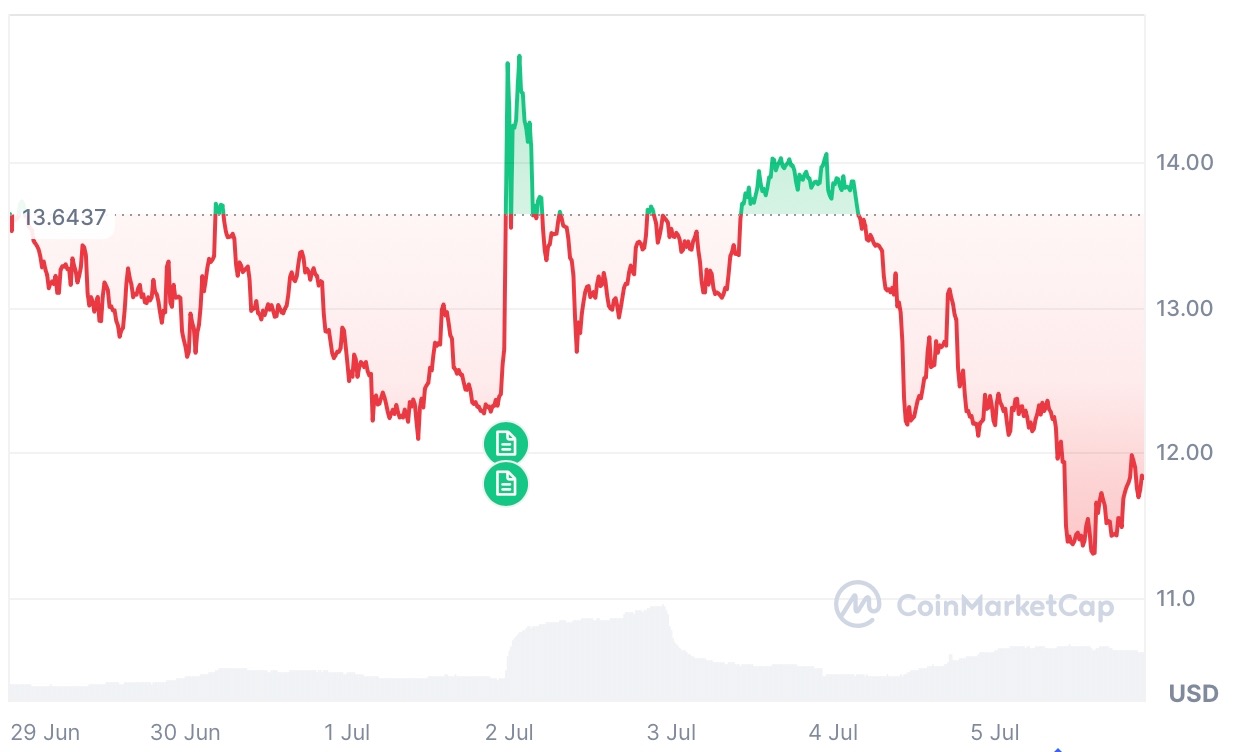
VVV’s recent pullback shows that the market is not treating the token as a risk-free AI growth asset.
There are several possible reasons.
First, AI tokens are volatile. Sentiment can change quickly, especially after strong rallies.
Second, traders may be questioning tokenomics, emissions and future supply pressure.
Third, investors may be separating Venice’s company growth from VVV’s token value. A strong funding round can help the company, but token holders still need evidence that the token captures that growth.
Fourth, broader crypto market conditions can pressure smaller and mid-sized tokens even when project news is positive.
This is why VVV is interesting but risky. The project may have real traction, but the token still trades like a high-beta AI crypto asset.
What Could Support VVV?
Several factors could improve the VVV outlook.
The first is continued platform growth. More users, more API calls and more developer activity would support the idea that Venice is building real AI demand.
The second is stronger staking demand. If users and developers lock VVV to access compute capacity, token utility becomes more tangible.
The third is DIEM usage. A working compute credit system could make Venice more useful for developers and AI agents.
The fourth is clearer value capture. Traders will want to understand how platform revenue, compute demand, buybacks, burns or staking mechanics affect VVV.
The fifth is better liquidity. Healthy market depth can reduce volatility and make the token more tradable.
The sixth is continued product expansion. Features such as image editing, social AI content tools and API improvements can help keep users engaged.
If these areas improve, VVV may regain attention as one of the stronger utility-focused AI tokens.
Bottom Line
Venice is one of the more interesting AI crypto projects because it has more than a slogan.
It has a privacy-focused AI product, developer API access, reported user traction, a compute-linked token model and a broader vision for private AI infrastructure.
That makes VVV worth watching.
But the token still needs to prove itself. The market is no longer satisfied with AI narratives alone. Traders want to see whether VVV staking, DIEM credits, API demand and platform usage can create sustainable token value.
Venice may continue growing as an AI company. The bigger question is whether VVV can capture that growth. For now, VVV remains a high-potential but high-risk AI utility token. The private AI story is real. The token value case still needs proof.
Users can visit Tapbit to explore supported crypto markets and educational resources. Existing users can log in, while new users can register here.
Frequently Asked Questions (FAQ)
What is Venice AI?
Venice AI is a privacy-focused AI platform that offers AI tools such as text generation, image generation and developer API access. Its main goal is to provide users with more private and less restrictive AI access compared with traditional centralized AI services.
What is VVV?
VVV is the utility token connected to the Venice ecosystem. It is designed to support access to AI compute capacity through staking-based mechanisms. In simple terms, VVV is meant to connect token participation with private AI inference usage.
Why is VVV different from many other AI tokens?
VVV is linked to a working AI platform rather than only an AI narrative. Venice has a product layer, API usage, user activity and a token model connected to compute access. This gives VVV a clearer utility case than many AI tokens that rely mainly on market hype.


