
AMD is no longer being valued like a traditional semiconductor company. The market now sees it as one of the few credible challengers in the AI accelerator race.
That shift matters. For years, AMD was mainly discussed through CPUs, gaming GPUs and competition with Intel. Today, the conversation is different. Investors are focused on data centers, AI accelerators, rack-scale systems and whether AMD can take meaningful share in a market still dominated by Nvidia.
The opportunity is real. AMD’s data center business is growing quickly. Its Instinct GPU roadmap has become more important. The OpenAI partnership has given AMD a level of validation that many investors had been waiting for.
But the stock is no longer cheap.
AMD now trades with high expectations. Investors are not simply asking whether AMD can participate in the AI boom. They are asking whether AMD can convert AI demand into real shipments, stronger margins and durable market share.
That is the real test for AMD stock.
Why AMD Matters in the AI Chip Race

AI infrastructure needs more than software. It needs chips, memory, networking, power, cooling and massive data center investment. At the center of that buildout are AI accelerators, the processors used to train and run large AI models.
Nvidia remains the clear leader in this market. But the market does not need AMD to replace Nvidia for the stock story to work. AMD only needs to become a meaningful second source for major AI customers.
That is an important distinction.
Large cloud companies and AI labs do not want to depend on one supplier forever. They need more capacity, more negotiating power and more flexibility in hardware design. If AMD can offer competitive performance, better availability or attractive pricing, it can win share even in a market where Nvidia remains dominant.
That is why investors are watching AMD closely. The AI chip market is large enough that even a modest share gain could change AMD’s earnings profile.
Data Center Is the Core Growth Engine
AMD’s AI story is not only about future products. It is already showing up in the data center segment.
The company’s data center revenue has become the main driver of its growth narrative, supported by demand for EPYC server CPUs and Instinct GPUs. This segment matters because it is where the AI infrastructure cycle is most visible.
For investors, this is the part of AMD that now carries the most weight.
Gaming and client CPUs still matter, but they are no longer the center of the stock debate. The market is focused on whether AMD can keep expanding inside AI data centers.
That means every earnings report will be judged through a data center lens.
-
Are hyperscale customers ordering more?
-
Are Instinct GPUs ramping?
-
Are margins improving?
-
Is AMD gaining share?
-
Is guidance strong enough to support the valuation?
These questions now drive the stock more than traditional PC or gaming cycles.
Why the OpenAI Deal Matters
The OpenAI partnership is one of the most important validation points for AMD. OpenAI’s planned deployment of AMD GPUs gives the market a stronger reason to believe AMD can compete in large-scale AI infrastructure. This is not only about headline order size. It is about credibility.
For a long time, the biggest concern around AMD in AI was not simply hardware. It was software and ecosystem adoption.
Nvidia’s CUDA ecosystem has been a powerful moat. Many AI developers and companies already build around Nvidia’s tools, libraries and workflows. That makes switching or diversifying difficult.
When a major AI company commits to AMD hardware at scale, it suggests that AMD’s hardware and software stack may be good enough for serious AI workloads. That changes the conversation. It does not mean AMD has solved every ecosystem challenge. But it does mean the market can no longer ignore AMD as a real AI infrastructure supplier.
MI450 and Helios Are the Next Big Test
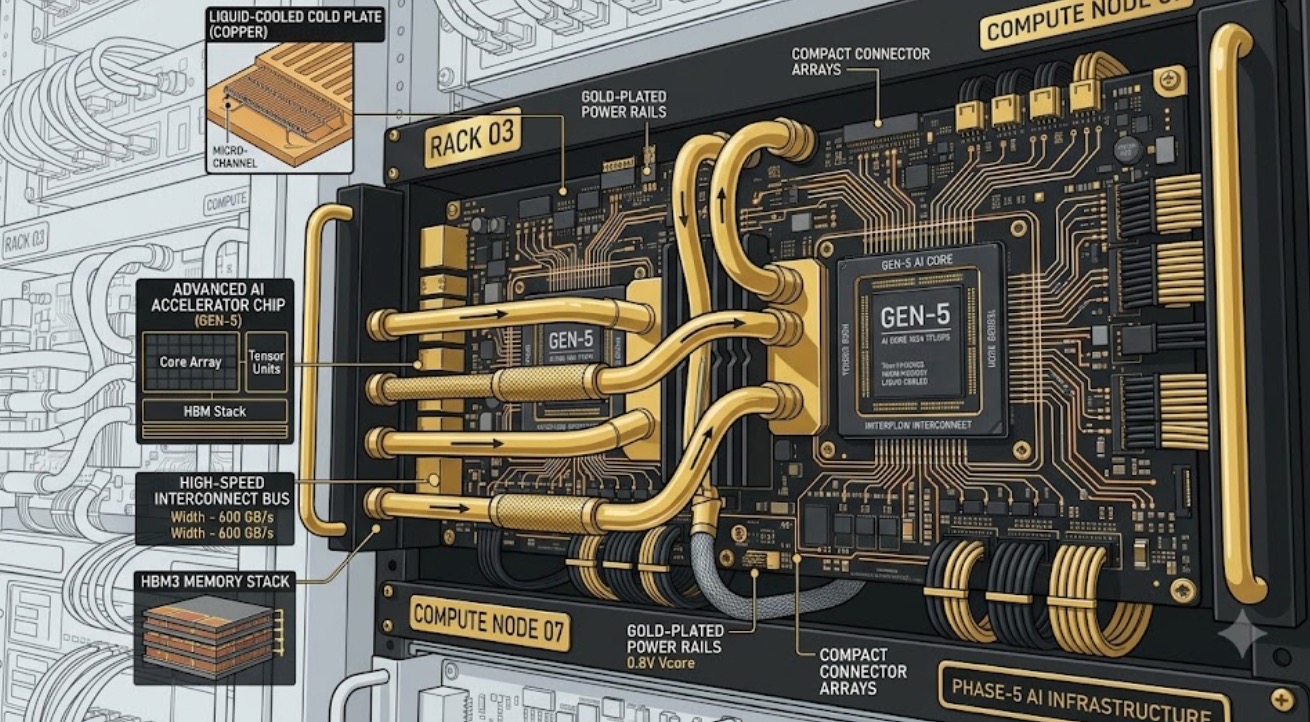
The next stage of the AMD story depends heavily on execution. The Instinct MI450 series and Helios rack-scale platform are central to AMD’s AI roadmap. These products are designed to move AMD beyond selling individual chips and toward delivering more complete AI infrastructure solutions.
That is important because the AI market is moving toward full systems. Customers are not only buying GPUs. They are buying racks, networking, memory, cooling designs and integrated platforms that can be deployed at scale.
AMD’s Helios strategy aims to address that shift.
If AMD can deliver competitive rack-scale performance, it may become more attractive to large AI customers looking for alternatives or additional supply.
But this is also where risk increases. Roadmaps are not the same as revenue.
AMD still needs to prove that MI450 and Helios can be manufactured, delivered, deployed and supported at scale. The market will be watching shipment timing, customer adoption, supply chain readiness and software performance.
For AMD, the next phase is not about promising a stronger AI platform. It is about delivering one.
The Bull Case for AMD
The bullish case is clear.
AI demand remains strong. Data center spending continues to rise. Major AI companies need more compute. Nvidia supply remains expensive and heavily allocated. Cloud customers want alternatives. AMD has a credible roadmap and now has high-profile customer validation.
If AMD can gain even a moderate share of the AI accelerator market, revenue growth could remain strong.
The company also has a broader platform advantage. It sells CPUs, GPUs and increasingly complete AI infrastructure solutions. That gives AMD a chance to participate across more parts of the data center stack.
In this scenario, AMD does not need to dominate the market. It only needs to keep winning enough customers to prove that it is a real second platform in AI compute.
That would support the long-term growth story.
AMD Does Not Need to Beat Nvidia
One of the most important points for investors is that AMD does not need to beat Nvidia outright.
The AI accelerator market is not a winner-take-all story forever. Large customers want supply diversity. They want pricing flexibility. They want negotiating leverage. They want options as AI workloads become more complex and expensive.
That creates room for AMD. Even if Nvidia remains the leader, AMD can still build a meaningful business by serving customers that need additional capacity or alternative platforms.
This is why AMD’s share target matters more than market leadership. A move from small AI GPU share to meaningful double-digit share would be a major shift for AMD’s earnings power.
That is the real upside case.
Bottom Line
AMD has become one of the most important names in the AI chip race. Its data center growth is real. The OpenAI partnership provides important validation. The MI450 and Helios roadmap gives AMD a clearer path into large-scale AI infrastructure.
But the market already knows this.
AMD stock now carries high expectations. Future upside depends on execution, not only narrative. Investors need to see real shipments, customer adoption, margin strength and evidence that AMD can convert AI validation into sustainable market share.
The opportunity is large. So is the pressure.
AMD does not need to defeat Nvidia to create value. It only needs to become a durable second platform in AI compute. The next question is whether it can prove that at scale.
Users can visit Tapbit to explore supported crypto markets and educational resources. Existing users can log in, while new users can register here.
Frequently Asked Questions (FAQ)
What is AMD?
AMD, or Advanced Micro Devices, is a U.S.-listed semiconductor company that designs CPUs, GPUs and data center chips. It trades on the stock market under the ticker AMD.
What is AMD stock?
AMD stock refers to shares of Advanced Micro Devices. It is a traditional equity and is not a cryptocurrency.
Why is AMD getting attention in the AI market?
AMD is getting attention because its data center business is growing quickly and its Instinct GPU roadmap gives it a stronger position in the AI accelerator market.


