
If you were watching the charts over the weekend, you already know the market just took a massive geopolitical hit.
President Trump’s 48-hour ultimatum to Iran—demanding the immediate reopening of the Strait of Hormuz under threat of targeted strikes on energy infrastructure—didn’t just dominate the news cycle. It completely scrambled algorithmic trading models across Wall Street and crypto.
When macro tail-risks like a Middle East blockade hit the wire, the market stops caring about tokenomics or chart patterns. Capital flows violently to wherever it feels safest. But this time, the traditional "safe haven" playbook broke down.
Here is a raw look from the Tapbit Exchange trading desk at what actually happened to the liquidity across Oil, Bitcoin, and Gold, and how you should be positioning your portfolio for the fallout.
Why Oil is Driving the Bus Right Now
You can't trade crypto this week without keeping one eye on the energy markets.
The Strait of Hormuz handles roughly 20% of the world's daily oil supply. With Tehran digging in its heels and threatening a permanent closure, energy markets went into full-blown panic buying mode. Brent crude blasted straight through the $112 mark, with near-term futures pricing in a very real threat of $115 to $119 per barrel.
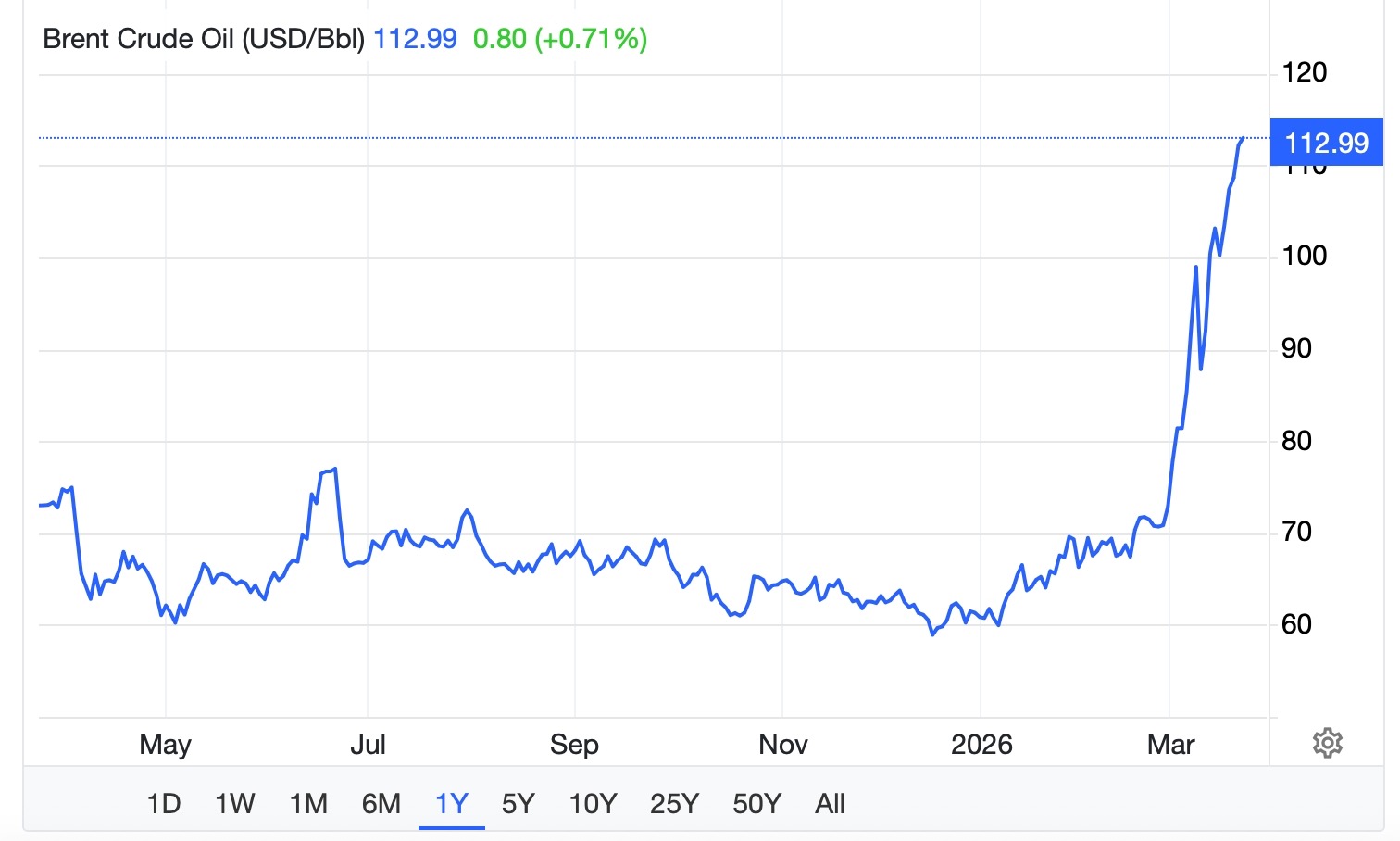
Why does this matter for crypto? Because $115+ oil means inflation is about to come roaring back. If energy costs spike, the Federal Reserve is forced to keep interest rates painfully high to cool the economy down. And high interest rates are the kryptonite of risk-on assets.
Bitcoin Takes the Margin Hit (For Now)
So, how did Bitcoin react to the threat of a regional war? Exactly the way a highly liquid, high-beta risk asset always does: it flushed the leverage.
As fear gripped the broader markets, traders facing margin calls in traditional equities rushed to sell their most liquid assets to raise cash. We saw BTC break hard below the $69,000 support level, triggering a cascade of long liquidations.
If you pull up the live data on CoinMarketCap (or check our own live Crypto Prices dashboard), you'll see Bitcoin is currently fighting a brutal trench war in the $68,000 to $68,900 zone.
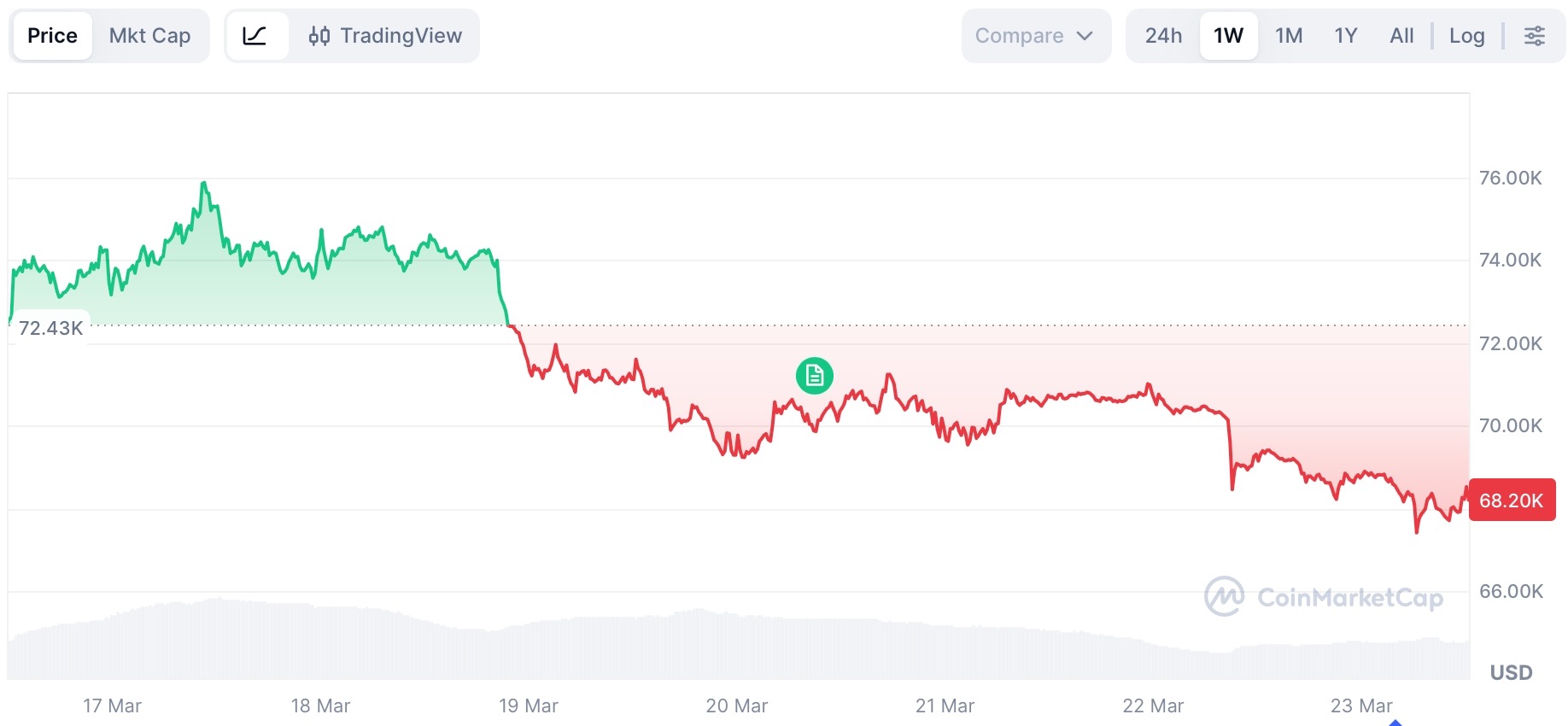
But here is the alpha: while retail traders were panic-selling the bottom of the wick, on-chain data suggests institutional funds are stepping in to bid the $68K floor. The smart money knows that if this geopolitical mess triggers another wave of inflation, the U.S. dollar's purchasing power will drop. In the long run, that makes a hard-capped asset like Bitcoin highly attractive. The current dip is simply the market shaking out the weak hands.
The Gold Anomaly: Why the Ultimate Safe Haven Crashed
This was the biggest shock of the week. Ask any legacy trader what happens when war breaks out, and they will tell you to buy gold. But if you look at the charts on TradingEconomics this morning, you’ll see physical gold actually plunged—dropping violently into the $4,200s per troy ounce to hit new local lows.
Why did gold crash during a global security crisis? Two words: The Dollar.
When panic peaks, global institutions don't buy gold; they hoard U.S. Dollars (cash) because it is the most liquid asset on earth. This massive flight to cash caused the U.S. Dollar Index (DXY) to spike. Since gold is priced in dollars, a surging dollar automatically pushes the price of gold down. Add in the fact that the market is suddenly terrified of higher interest rates (due to the oil spike), and holding a non-yielding metal like gold suddenly looks a lot less appealing to hedge funds.
How to Trade the Chaos on Tapbit
We are currently trading in a purely headline-driven environment. A single tweet or military update can swing the market 5% in either direction within minutes.
If you are actively trading this week, you need to adjust your strategy:
-
Chop Your Leverage: Market makers are actively hunting for liquidity on both sides of the order book right now. Stop-losses are getting hunted. Log in to your Tapbit account and dial down your leverage on all perpetual futures. Surviving the chop is more important than catching the exact bottom.
-
Use Oil as Your Leading Indicator: For the next few days, crude oil is the ultimate compass. If oil continues to break out toward $120, expect more downside pressure on crypto. If tensions cool and oil pulls back, Bitcoin is coiled like a spring for a relief rally.
-
Keep Powder Dry: Maximum macro fear creates generational buying opportunities. If you haven't already, register for your free Tapbit account, secure your stablecoins, and get your limit orders ready in the mid-$60K range just in case we get one final capitulation wick.
Frequently Asked Questions (FAQ)
Why did Bitcoin drop when geopolitical tensions usually make it a safe haven?
In the long term, Bitcoin acts as a hedge against fiat inflation. However, in the immediate aftermath of a global shock, it trades like a high-beta risk asset. When panic hits traditional markets, hedge funds and institutional traders face massive margin calls. To cover those margins and raise cash, they are forced to sell their most liquid, profitable assets—which often means dumping Bitcoin. The current drop to the $68,000 range is a mechanical liquidity flush, not a failure of Bitcoin's fundamentals.
How does a blockade in the Strait of Hormuz actually affect crypto prices?
It all comes down to inflation and interest rates. The Strait of Hormuz handles roughly 20% of the world's daily oil supply. If it closes, crude oil prices skyrocket. High oil prices lead to higher shipping and manufacturing costs, which drives up global inflation. To fight that inflation, the Federal Reserve is forced to keep interest rates higher for longer. Elevated interest rates make borrowing expensive, which traditionally drains capital away from risk-on assets like cryptocurrency.
Why did Gold crash instead of pumping during a war threat?
Historically, gold is the ultimate safe haven, but in extreme liquidity crises, the playbook flips. When absolute panic sets in, global institutions don't buy gold; they hoard the U.S. Dollar because it is the most liquid asset on earth. This massive flight to cash causes the U.S. Dollar Index (DXY) to spike violently. Because gold is priced in dollars, a surging dollar automatically suppresses gold prices. Furthermore, the threat of higher interest rates makes holding a non-yielding asset like gold highly unattractive to institutional capital.
Are my funds safe on Tapbit during extreme market volatility?
Yes. Tapbit operates with a 1:1 reserve ratio and utilizes institutional-grade cold wallet storage to protect user assets. While the market prices of the assets you hold will fluctuate based on global events, the physical security and accessibility of your funds on the exchange remain completely unaffected.


