
SPY is one of those tickers almost everyone in traditional markets knows. It is simple, liquid, and often treated as a quick read on U.S. stocks.
But in crypto, SPY can get confusing. Some users talk about SPY as the actual ETF. Others mean tokenized SPY exposure. Some are looking at SPYUSDT contracts. These products may all follow the same general price direction, but they are not the same thing.
That difference matters.
Owning SPY through a broker means owning ETF shares. Trading a SPY-linked token or USDT-settled contract means trading price exposure. One is an investment product tied to the S&P 500. The other is usually a trading instrument.
SPY is basically the market in one ticker

SPY is the SPDR S&P 500 ETF Trust. It tracks the S&P 500 Index, which covers roughly 500 of the largest listed companies in the U.S.
That means one SPY share gives investors broad exposure to U.S. large-cap stocks. It includes tech giants, banks, healthcare companies, consumer brands, industrial names, and more.
This is why traders often use SPY as shorthand for the U.S. market. If SPY is strong, risk appetite is usually healthy. If SPY starts breaking down, people pay attention quickly.
Why traders still care about SPY
SPY is not the cheapest S&P 500 ETF. Long-term investors often compare it with VOO or IVV, which track the same index at lower fees.
So why does SPY remain so important?
Liquidity.
SPY has deep trading volume, tight spreads, and one of the most active options markets in the world. That makes it useful for active traders, institutions, hedgers, and anyone who needs to move in and out quickly.
A simple way to look at it: VOO and IVV are often better for long-term passive exposure. SPY is the trader’s version of the S&P 500.
Why crypto traders watch SPY
Crypto does not move in a vacuum. When U.S. equities are strong, risk appetite usually improves. That can help Bitcoin, Ethereum, and large-cap altcoins. When SPY weakens, especially on rising yields or Fed concerns, crypto can feel the pressure fast.
That is why SPY matters even to users who never buy stocks. It gives a quick read on whether markets are leaning risk-on or risk-off.
Right now, U.S. equities are still trading near high levels, supported by strong mega-cap names and periods of improving risk sentiment. But the market is sensitive. Inflation data, rate expectations, oil prices, geopolitical headlines, and tech earnings can all shift the mood quickly.
For crypto traders, SPY is not just a stock-market chart. It is a sentiment gauge.
There is no official SPY crypto coin
This is the part users should be careful with.
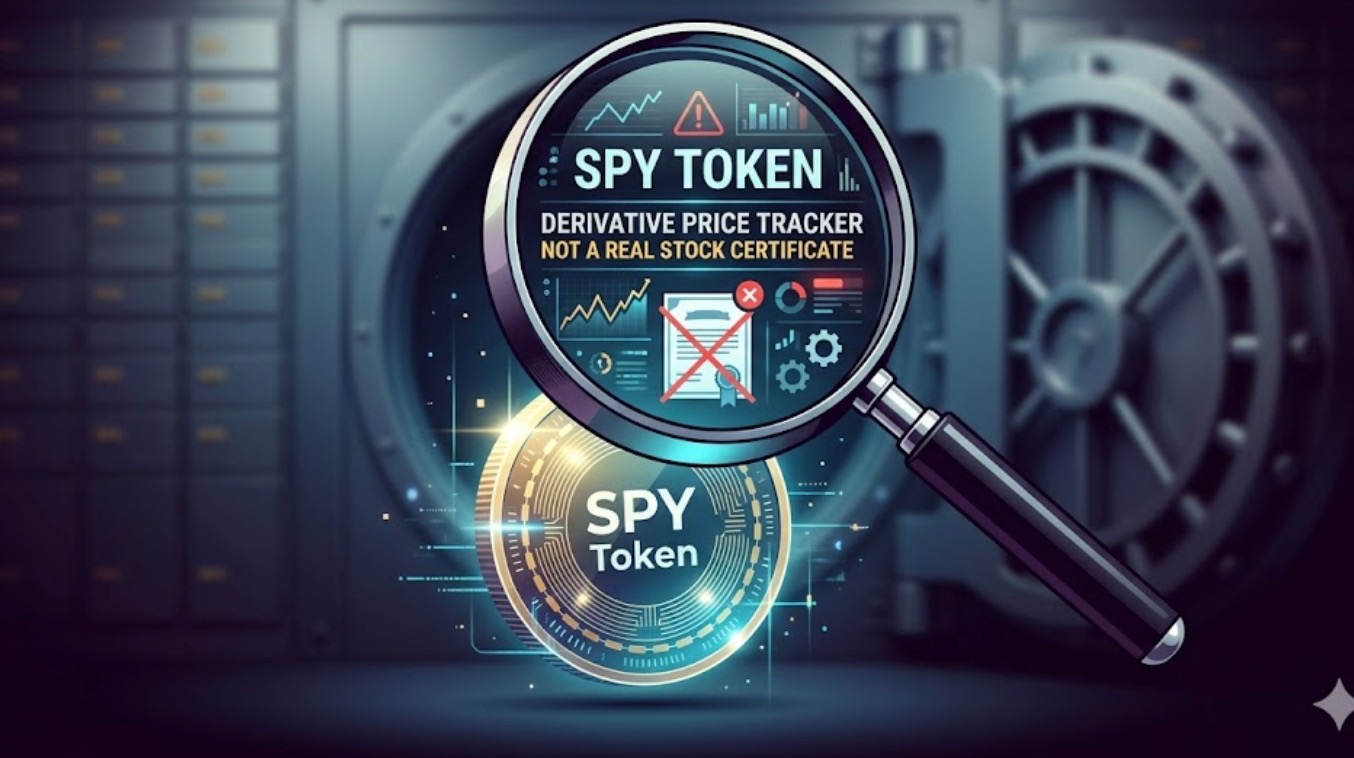
State Street, the issuer of SPY, has not issued an official SPY crypto token. If a platform offers a tokenized SPY product or a SPYUSDT contract, that product is not the same as holding the real ETF.
It may track SPY’s price. It may allow users to go long or short. It may be useful for trading. But it usually does not give ETF ownership, dividends, shareholder rights, or the same protections as holding SPY through a regulated brokerage account.
That does not mean SPY-linked crypto products are useless. It just means users need to know what they are trading. They are trading exposure, not ownership.
Tokenized SPY and SPYUSDT are trading tools
Tokenized equities and USDT-settled contracts have become more popular because crypto users want access to traditional market themes without leaving the digital asset environment.
The appeal is clear: stablecoin collateral, easier access, flexible trading, and the ability to express a view on U.S. stocks from a crypto account.
But these products add their own risks.
Tracking can drift. Liquidity can be thinner than the real ETF. Spreads can widen when U.S. markets are closed. Perpetual contracts may include funding fees and liquidation risk. Leverage can turn a small SPY move into a large loss.
This is especially important because SPY itself is not a wild micro-cap token. Traders may assume it is “safer” because it tracks the S&P 500. But once leverage is added, the risk profile changes completely.
What traders should check first
Before trading any SPY-linked crypto product, users should ask a few basic questions.
-
Does the product represent real ETF ownership, or only price exposure?
-
Is it tokenized spot exposure or a derivative contract?
-
Are there funding fees?
-
How deep is the order book?
-
Does it trade smoothly when U.S. markets are closed?
-
What happens during major macro events?
These questions matter more than the ticker name. A product can say SPY and still behave very differently from the actual ETF, especially in fast markets.
Tapbit View
SPY remains one of the most important tickers in global markets. It tracks the S&P 500, reflects broad U.S. equity sentiment, and gives traders a clean view of risk appetite.
For crypto users, SPY-linked products can be useful. They offer a way to trade U.S. stock-market direction using crypto-market tools. But they should not be confused with owning the actual SPY ETF.
That is the key distinction. SPY shares are ETF ownership. Tokenized SPY or SPYUSDT products are price exposure. One is built for traditional markets. The other is built for traders who want access through crypto rails.
Both can have a place, but they are not interchangeable.
For anyone trading SPY-linked products, the focus should be simple: understand the product, control leverage, watch liquidity, and remember that even the broad U.S. market can move sharply when macro conditions change.
Traders can follow more market updates on Tapbit, log in, or register to stay connected with global market opportunities.
Frequently Asked Questions (FAQ)
What is SPY?
SPY is the SPDR S&P 500 ETF Trust. It tracks the S&P 500 Index, giving investors exposure to a broad basket of large U.S. companies through one ticker.
Is SPY the same as buying one company’s stock?
No. SPY is an ETF, not a single company. When someone buys SPY through a brokerage account, they are buying shares of a fund that tracks the S&P 500.
Why do crypto traders watch SPY?
SPY is often used as a quick signal for U.S. stock-market sentiment. When SPY is strong, risk appetite is usually healthier. When SPY weakens, crypto markets can also come under pressure.


