

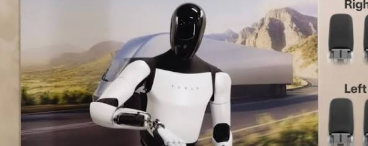
Tesla’s robot future is becoming a labor story and an investment story at the same time. The company is building Optimus as a general-purpose humanoid robot for unsafe, repetitive or boring tasks, including factory work. Auto workers see the possibility of safer jobs, but they also see machines that could reduce headcount, intensify production targets and shift bargaining power toward management.
Investors are watching for a different reason: Optimus could expand Tesla beyond electric vehicles if the robot becomes reliable, affordable and useful at scale. Traders who want TSLA price exposure can view the TSLA/USDT futures market on Tapbit. This is a derivative rather than Tesla stock, so it does not grant share ownership, voting rights or dividends and may involve leverage, funding, liquidation and tracking risk.
Why Tesla Is Pushing Deeper Into Robotics
Tesla says its strengths in real-world AI, computer vision, batteries, motors and manufacturing can transfer from vehicles to humanoid robots. The company’s official AI page describes Optimus as a bipedal autonomous machine designed for tasks people find unsafe, repetitive or boring. That mission makes factories a logical early testing ground because processes are structured and performance can be measured.
Tesla reported further Optimus progress in 2025 and said its Gen 3 design was intended for mass production. Management planned to begin production before the end of 2026 and described an eventual capacity goal of one million robots per year. These are ambitious plans, not established output. The gap between a prototype performing a controlled task and a robot working reliably across thousands of shifts remains substantial.

Why Auto Workers Fear Automation
The first concern is job substitution. If a robot can move materials, handle components or complete repetitive assembly steps continuously, fewer workers may be needed for the same output. Even when layoffs do not happen immediately, hiring can slow and entry-level pathways can shrink.
The second concern is control over the job. Automation can set a faster pace, generate detailed performance data and divide skilled work into smaller machine-directed tasks. Workers may also fear that maintenance and programming roles will not be available to the same people whose manual jobs change. Training, reassignment, pay protection and worker involvement therefore matter as much as the technology itself.
| Automation outcome | Potential benefit | Worker concern | Investor question |
|---|---|---|---|
| Robots handle hazardous tasks | Fewer injuries and less physical strain | Safety gains may arrive with job cuts | Do incident costs and downtime fall? |
| Repetitive work is automated | Higher consistency and throughput | Entry-level roles may disappear | Does output rise without quality losses? |
| Human-robot collaboration | Workers focus on judgment and repair | Training and wage gains may be uneven | Can Tesla redeploy labor productively? |
| Data-driven production | Faster problem detection | More monitoring and work intensification | Are savings durable and scalable? |
Automation Does Not Always Mean Fewer Workers
Technology can replace tasks without eliminating entire occupations. A large robot fleet would create demand for technicians, safety specialists, trainers, software engineers, parts suppliers and fleet operators. Lower manufacturing costs could also support higher output, creating work elsewhere in the production system.
The distribution of benefits is the real issue. A transition may look positive at company level while creating losses for specific plants, job classifications or communities. Workers are more likely to support automation when they have credible retraining, transparent safety standards, pathways into higher-skilled roles and a share of productivity gains.
Why Investors Are Watching Optimus
Tesla’s valuation has long reflected expectations beyond current vehicle sales. A commercially viable humanoid robot could open new revenue from hardware, software, servicing and possibly robot-fleet operations. Internal factory use could provide an early proof point: Tesla can test whether Optimus improves productivity before selling it to outside customers.
Investors should separate technical progress from financial value. A robot can look impressive in a demonstration yet remain too slow, fragile or expensive for broad deployment. The important evidence is repeatable task completion, uptime, cost per productive hour, production yield, customer commitments and gross-margin potential.
What Could the Robot Strategy Change for Tesla?
Successful factory deployment could reduce exposure to labor shortages, improve consistency and allow facilities to operate with greater flexibility. Tesla might also reuse components and AI infrastructure across vehicles, autonomy and Optimus, spreading research costs over several product lines.
Failure would be costly. Robotics requires capital for factories, actuators, computing, supply chains and field support. If commercial readiness takes longer than expected, spending could rise before meaningful revenue appears. The program also faces safety, regulatory, reliability and liability questions whenever robots operate close to people.
Signals That Matter More Than Robot Demonstrations
Investors should watch factory deployments that perform useful work without constant human intervention. Details about production volume, unit cost, failure rates and task duration would be more informative than isolated videos. Outside customer pilots would provide another important test of whether the product works beyond Tesla-controlled environments.
Labor indicators matter too. Hiring patterns, retraining programs, injury rates and staffing per unit of production can reveal whether automation is improving work, replacing it or doing both. Rising productivity accompanied by stable quality and manageable capital spending would support the investment case; repeated delays or unclear economics would weaken it.
Key Risks for Workers and Investors
For workers, the main risks are displacement, unequal access to new roles, intensified monitoring and reduced bargaining power. For Tesla, the risks include technical delays, high production costs, hardware failures, workplace incidents and regulation. Public resistance could grow if deployment is framed only as labor replacement.
For traders, expectations may move faster than fundamentals. TSLA can react sharply to product announcements, timelines and demonstrations before revenue is visible. Leveraged derivatives add another layer of risk because an adverse move can trigger liquidation even if the long-term robotics thesis remains unchanged.
Conclusion
Tesla’s robot future could make factories safer and more productive, but it could also redistribute jobs, skills and power across the auto industry. Workers are justified in asking who benefits, who is retrained and who bears the transition cost. Investors should focus on reliable deployment, unit economics and measurable productivity rather than spectacle. Optimus becomes financially meaningful only when Tesla proves that robots can perform useful work at scale and at a cost customers will accept.
FAQ
What is Tesla Optimus designed to do?
Tesla describes Optimus as a general-purpose humanoid robot for unsafe, repetitive or boring tasks in workplaces and potentially homes.
Will Tesla robots replace auto workers?
They may replace particular tasks and reduce some labor demand, but deployment could also create technical, maintenance and safety roles. The net effect depends on scale, output growth and retraining.
Why does Optimus matter to Tesla investors?
It could create new revenue and lower factory costs, but investors need evidence of reliability, production scale, unit economics and customer demand.
Is TSLA/USDT the same as owning Tesla stock?
No. A TSLA-linked derivative provides price exposure and generally does not include shareholder rights, dividends or ownership of the underlying shares.
What should investors watch next?
Useful factory deployments, Gen 3 production progress, unit cost, uptime, external pilots, capital spending and transparent labor outcomes are key signals.


