
Strategic American Oil Fund generally refers to crypto tokens using the SAOF ticker, but the name is frequently confused with SAOS, or Strategic American Oil Supply. These are not interchangeable assets. Public market trackers show multiple oil-themed tokens across Solana and Base, sometimes with similar names but different tickers and contract addresses.
None of the reviewed public information proves that SAOS or SAOF provides ownership of physical oil, a legal interest in the U.S. Strategic Petroleum Reserve, or exposure equivalent to a regulated oil fund. Users can create a Tapbit account to explore supported crypto markets and risk-management tools. This does not mean SAOS or SAOF is listed on Tapbit.
What Is Strategic American Oil Fund?
Strategic American Oil Fund is the name used by at least two publicly tracked crypto tokens carrying the SAOF ticker. One appears on Solana, while another market page identifies a Base-network contract.
The branding suggests a structured financial vehicle linked to American energy resources. However, a token’s name does not establish that a legal fund exists. Publicly reviewed pages do not provide sufficient evidence of a regulated issuer, oil custodian, reserve audit, redemption facility, or enforceable claim on petroleum assets.
SAOF should therefore be treated as an unverified, oil-themed crypto token unless stronger legal and financial documentation becomes available.
SAOS vs SAOF: What Is the Difference?
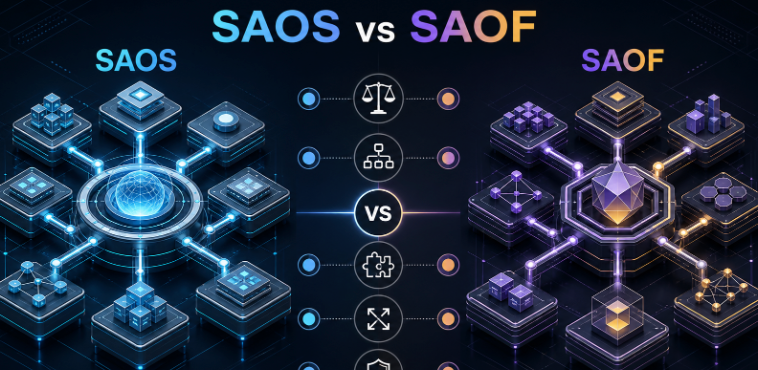
| Feature | SAOS | SAOF |
|---|---|---|
| Common project name | Strategic American Oil Supply | Strategic American Oil Fund |
| Typical narrative | U.S. oil supply and energy security | Oil fund or tokenized oil exposure |
| Reported network | Solana | Solana and a separate Base token |
| Asset type | Narrative-driven crypto token | Unverified oil-themed token |
| Verified physical oil backing | Not established | Not established |
| Government connection | Not established | Not established |
| Main risk | Story mistaken for reserve exposure | Name and contract confusion |
The most important point is that a ticker cannot identify a token reliably. Buyers need the complete contract address and network before reviewing price, liquidity, or ownership data.
Why SAOS and SAOF Are Easy to Confuse
Both names borrow language associated with American energy policy and institutional finance. “Strategic” resembles the U.S. Strategic Petroleum Reserve, while “fund” sounds like an ETF, commodity pool, or professionally managed investment vehicle.
Crypto naming is not centrally controlled. Multiple developers can launch tokens with identical names or tickers, and market-data sites may automatically create separate pages for each contract.
- SAOS is widely described as Strategic American Oil Supply on Solana.
- A Solana SAOF token uses the Strategic American Oil Fund name.
- A separate Base contract is labeled Strategic American Oil Fund (SAOS) while displaying SAOF as its ticker.
- Search engines may blend information from these unrelated pages.
This makes contract-level verification essential. A chart for one SAOF asset cannot be used to value another token using the same name.
Is SAOS Backed by Oil?
Reviewed information does not establish that SAOS owns petroleum, holds oil futures, or provides redemption rights. It is more accurately described as a Solana narrative token using oil supply, energy security, and real-world asset themes.
Some market pages have reported a one-billion-token supply, but supply data does not demonstrate asset backing. A genuine oil-linked product would need custody agreements, reserve reports, audits, pricing rules, and clear legal rights for holders.
Without those elements, SAOS gives traders exposure to a market story rather than verified barrels of crude oil.
Is SAOF a Real Oil Fund?
The available evidence does not confirm that either identified SAOF token is a regulated oil fund. The Solana token is marked as unverified by at least one wallet data service, while the Base listing supplies on-chain price data but does not establish an underlying commodity portfolio.
A real oil fund would normally disclose its issuer, jurisdiction, investment mandate, assets held, custodian, management fees, audited statements, investor eligibility, redemption procedures, and valuation benchmark.
An on-chain contract and market-data page do not substitute for those disclosures. Coinbase or wallet price tracking also does not necessarily mean the asset is listed, endorsed, or reviewed as a regulated product.
SAOS and SAOF Contract Confusion
| Label Seen Online | Network | Reported Identifier |
|---|---|---|
| Strategic American Oil Supply (SAOS) | Solana | A distinct SAOS contract tracked by Solana DEX tools |
| Strategic American Oil Fund (SAOF) | Solana | 3BtRXdy2vU2915qjKamwFDsQnkUjRyAXRA7Mjk1epump |
| Strategic American Oil Fund (SAOS), ticker SAOF | Base | 0x9Dd735b6E9a40A894992BE4A4F381319dE11E8D7 |
These entries should not be interpreted as endorsements. The existence of a blockchain address proves only that a token contract exists. It does not prove that the issuer owns oil, has regulatory approval, or will honor financial claims.
Before trading, match the address across the project’s website, verified social accounts, blockchain explorer, and main liquidity pool. If those sources conflict, stop rather than guessing.
SAOF Price and Liquidity Risks
Price pages have displayed materially different values for SAOF assets, partly because they track different contracts and networks. A market capitalization may be calculated by multiplying the most recent pool price by the token supply, even when only a small amount of liquidity supports that price.
- A small trade may move the quoted price sharply.
- Market capitalization may overstate realizable value.
- Investors may buy the wrong SAOF contract.
- Wide spreads and slippage may reduce sale proceeds.
- Concentrated holders may dominate available liquidity.
- Mutable metadata can allow branding information to change.
One Solana wallet tracker reported that the SAOF token’s metadata was mutable and that its top 20 holders controlled roughly one-third of supply at the time of its review. Such figures change, but they show why investors should inspect current on-chain data before trading.
How to Verify an Oil-Themed Token
First, confirm which asset is under review: SAOS, Solana SAOF, Base SAOF, or another contract. Then separate the on-chain token from its off-chain claims.
- Token identity: Which contract, network, issuer, and deployer are official?
- Asset evidence: Who owns the oil, where is it held, who audits it, and how is it valued?
- Holder rights: Can tokens be redeemed, and what legal claim exists if the issuer fails?
Investors should also inspect liquidity, transfer taxes, mint and freeze authority, upgrade controls, top holders, token age, and deployer history. Official-sounding branding should increase the need for verification, not reduce it.
Conclusion
Strategic American Oil Fund is not one clearly identifiable investment product. The SAOF name appears across multiple contracts, while SAOS refers to a separate Strategic American Oil Supply token. Similar branding, inconsistent labels, and different networks create substantial risk of analyzing or purchasing the wrong asset.
Neither SAOS nor the reviewed SAOF tokens should be assumed to represent physical oil, U.S. reserves, or a regulated commodity fund. Until a specific issuer publishes independently verified custody, audits, legal rights, and redemption terms, these assets are better classified as high-risk oil-themed crypto tokens.
Frequently Asked Questions
Is SAOS the same as SAOF?
No. SAOS commonly means Strategic American Oil Supply, while SAOF is used for Strategic American Oil Fund tokens. They have different contracts and may exist on different networks.
Is Strategic American Oil Fund backed by oil?
No sufficient independent evidence currently confirms physical oil backing, audited reserves, or redemption rights for the reviewed SAOF tokens.
Is SAOF an ETF?
No verified information establishes SAOF as a regulated exchange-traded fund. It should not be confused with traditional oil ETFs.
Why are there multiple SAOF contracts?
Crypto names and tickers are not unique. Different developers can create tokens with identical branding on Solana, Base, or other networks.
Does a Coinbase price page mean SAOF is listed on Coinbase?
Not necessarily. A price-tracking page can display market information for an asset without confirming a centralized-exchange listing or endorsement.
How can investors find the correct SAOF token?
Verify the network and complete contract address through consistent official channels, then match it with the blockchain explorer and primary liquidity pool.


