
Stellantis finally has some good EV technology news.
The company has started road testing Factorial Energy’s solid-state battery cells in a development version of the Dodge Charger Daytona. For an automaker that has spent the past year dealing with weak sentiment, EV strategy questions, and pressure across the European auto sector, that matters.
Solid-state batteries are one of the industry’s most important long-term bets. They promise lighter packs, better safety, faster charging, and more range. If the technology works at scale, it could reshape how electric vehicles are built.
But that is the future. The stock market is dealing with the present. And right now, investors are not rewarding Stellantis just because the company has a promising battery story. They want to see better margins, clearer EV demand, stronger execution, and proof that new technology can turn into real profit.
That is the tension around STLA. The battery story is improving. The business story still has work to do.
A Real Step Forward, Not a Finished Win

Moving solid-state batteries into road testing is not a small milestone.
Lab results are useful, but cars do not live in labs. Batteries have to handle heat, cold, charging cycles, acceleration, vibration, long drives, short drives, and ordinary driver behavior. Road testing is where a promising cell starts to face the real world.
Factorial’s technology has already shown strong performance in testing, including high energy density and fast charging. If Stellantis can eventually bring that into production vehicles, the company could have a stronger answer to some of the biggest EV concerns: range anxiety, charging time, battery weight, and safety.
Still, this is not a commercial launch. That is the part investors care about. Solid-state batteries have been “almost here” for years. The science is exciting, but the auto industry knows the hard part is manufacturing. Can the cells be produced in large volume? Can costs come down? Can reliability hold up? Can they fit into vehicles that sell at competitive prices?
Until those questions are answered, the market is likely to treat the news as encouraging but not decisive.
Why Stellantis Needed This Headline
Stellantis needed a better technology story.
The company owns a large portfolio of brands, including Jeep, Dodge, Ram, Peugeot, Fiat, Opel, and Maserati. That scale is useful, but it also makes the EV transition messy. Different markets want different models. Regulations are changing. Consumer demand is uneven. China’s EV makers are moving fast. European automakers are under pressure.
In that kind of environment, a next-generation battery partnership gives Stellantis something investors can point to and say: the company is still in the race.
A successful solid-state platform could help Stellantis improve range, reduce weight, speed up charging, and make EVs more appealing to buyers who are still hesitant. It could also help performance models stand out, especially if the technology works well in vehicles like the Dodge Charger Daytona.
But a future technology option does not solve today’s income statement. That is why the stock has not suddenly recovered.
Factorial Gives Stellantis a Seat at the Table
Stellantis’ investment in Factorial is important because it gives the company more than a casual connection to the technology.
It has a meaningful stake in the battery developer, which means it has both strategic and financial exposure to Factorial’s progress. That is useful in an industry where the next battery platform could decide who gains an edge in EVs.
Automakers do not want to wake up late to the next major battery shift. By working with Factorial now, Stellantis is trying to stay close to the technology before it becomes commercially mature. That is the right move.
But it also comes with patience. Battery partnerships take time. Testing takes time. Vehicle integration takes time. Scaling takes even longer.
For traders, that means the Factorial story may support the long-term thesis, but it may not change the near-term trading picture by itself.
Why STLA Is Still a Hard Stock to Trade
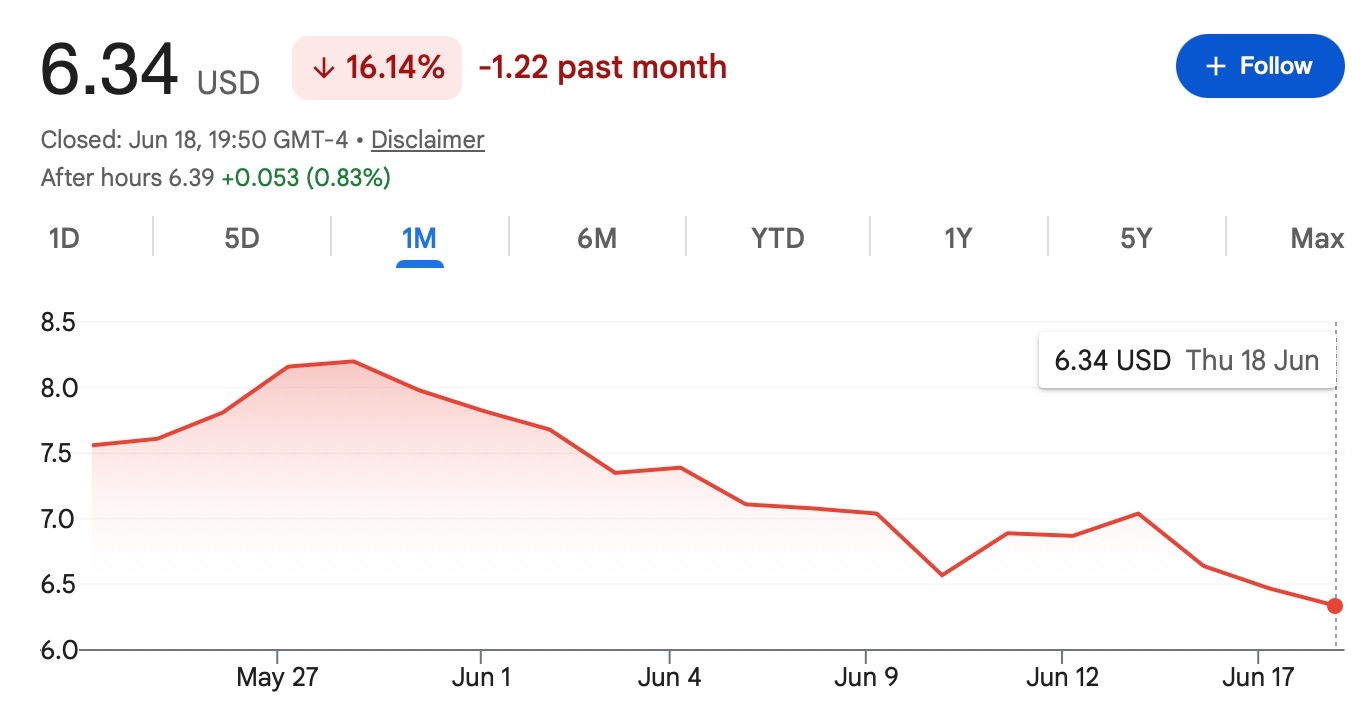
Stellantis can look cheap after a big decline. That does not automatically make it easy.
The company still has valuable brands, global manufacturing scale, and a possible path to stronger EV technology. If sentiment toward European autos improves, STLA could rebound sharply.
But there is a reason the stock has been under pressure. Legacy automakers are capital-intensive businesses. They have to defend their existing combustion-engine profits while spending heavily on EVs, batteries, software, and new platforms. That is expensive even in a strong market. It is harder when demand is uncertain and pricing power is weak.
That is why one good technology headline is not enough. The market wants a clearer answer on earnings.
Bottom Line
Stellantis has made real progress with Factorial’s solid-state battery technology.
That should not be dismissed. Road testing is an important step, and the potential benefits are meaningful: better range, faster charging, improved safety, and lighter battery packs.
But STLA’s stock weakness tells the other side of the story. The market is not only asking whether Stellantis has a future in EVs. It is asking whether the company can make that future profitable.
That is the real test. The battery breakthrough gives Stellantis a better long-term narrative. Now the company has to prove it can turn that narrative into earnings.
Explore the latest markets on Tapbit, log in to trade, or create an account to get started.
Frequently Asked Questions (FAQ)
What is Stellantis testing with Factorial Energy?
Stellantis is road testing Factorial Energy’s solid-state battery cells in a development version of the Dodge Charger Daytona. This moves the technology beyond lab testing and into real driving conditions.
Why are solid-state batteries important for EVs?
Solid-state batteries could offer higher energy density, faster charging, better safety, and lighter battery packs compared with traditional lithium-ion batteries. If they can be produced at scale, they could become a major advantage for future electric vehicles.
Does this mean Stellantis is ready to launch solid-state EVs?
Not yet. Road testing is an important step, but it is not the same as commercial production. Stellantis and Factorial still need to prove the technology can be manufactured reliably, affordably, and at scale.


