

Most of the time, interoperability sounds vague. Every chain wants to connect with every other chain. Every project wants to be the bridge between traditional finance and blockchain. Every token wants to sit somewhere in the middle of that story.
Chainlink and Quant are two of the few names that actually deserve to be in that conversation.
But they are not trying to win the same way. Chainlink is building the data and cross-chain messaging layer for public on-chain finance. Quant is building enterprise-grade connectivity for banks, capital markets, and regulated financial systems.
That difference matters for traders. LINK and QNT may both trade as interoperability tokens, but the numbers investors need to watch are not the same.
The Market Snapshot: LINK Is More Liquid, QNT Is More Enterprise-Driven
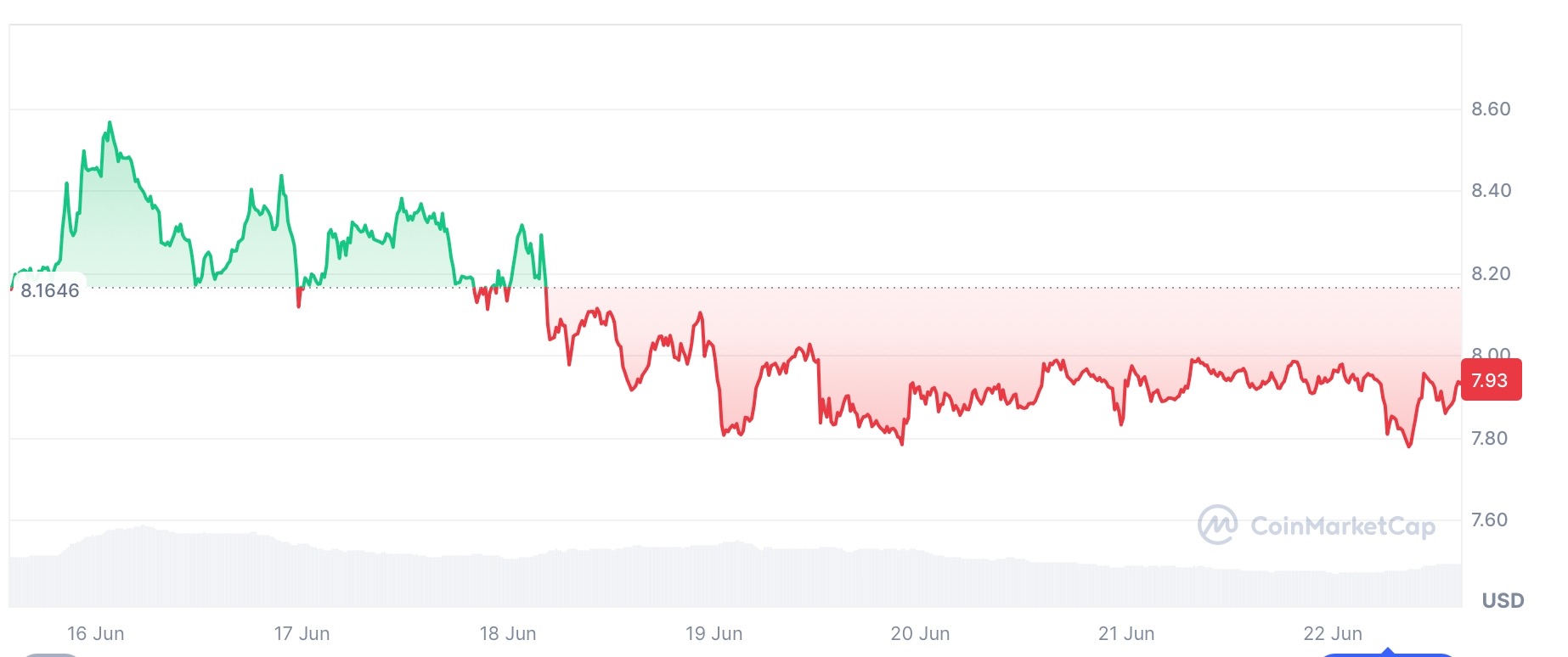
As of the latest market data, Chainlink trades around $7.90, with an intraday range of roughly $7.77 to $7.99. Quant trades around $70.87, with an intraday range of roughly $70.04 to $71.70.
LINK is the larger, more widely traded infrastructure token, with deeper visibility across DeFi, RWAs, data feeds, staking, and cross-chain messaging.
QNT trades more like a concentrated enterprise interoperability thesis, where the story depends less on daily DeFi usage and more on whether banks and capital market platforms actually use Quant’s technology in production.
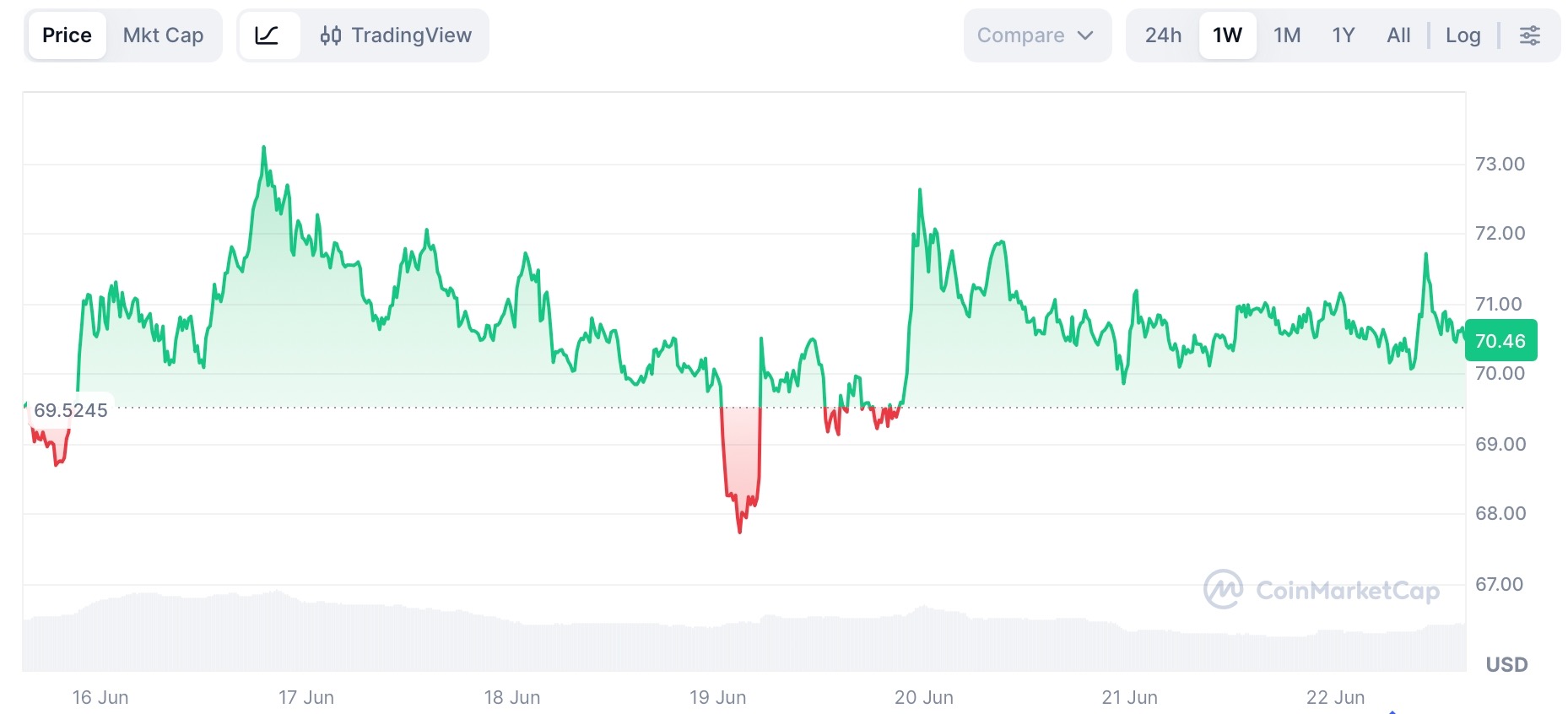
The price action itself is not screaming a breakout for either token right now. That is the important part. The market is not just paying for slogans anymore. Traders want evidence.
For LINK, that evidence comes from visible integrations, CCIP usage, oracle revenue, staking, and RWA adoption.
For QNT, it comes from enterprise launches, tokenized deposit projects, digital bond settlement, Overledger usage, and clearer signs that institutional adoption creates measurable QNT demand.
Chainlink’s Case: Data, CCIP, and the RWA Layer
Chainlink’s strongest argument is that it already sits inside the on-chain economy.
Its oracle networks have been used across DeFi for years. That gives LINK a base that most interoperability projects do not have. The newer question is whether Chainlink can extend that base into institutional tokenization.
The early signs are meaningful. In 2026, Chainlink highlighted several institutional and RWA-related developments. Canton Network adopted Chainlink’s data and interoperability standards, including Data Streams, SmartData, Proof of Reserve, and CCIP. That matters because Canton is built around institutional finance, privacy, and tokenized asset workflows.
Another important data point is the Spiko Amundi Overnight Swap Fund, known as SAFO. Chainlink’s Q1 2026 review said the fund reached more than $400 million in AUM within three weeks of launch. For traders watching RWA adoption, that is more useful than a generic “institutional interest is growing” headline.
It shows tokenized funds are no longer just a demo category. They are starting to attract real capital.
Chainlink is also positioning CCIP as infrastructure for asset managers, custodians, financial market infrastructures, and banks that want to distribute tokenized assets across multiple blockchains. That is the right market to target. Tokenized funds, stablecoins, collateral, and settlement assets all need reliable data, proof, and cross-chain communication.
The bull case for LINK is straightforward: If tokenized finance grows across many chains, Chainlink can become one of the default layers for data, proof, and messaging.
The risk is also clear. Partnerships and integrations are not enough. LINK needs real usage to translate into network fees, staking demand, and stronger value capture. Traders should not only count announcements. They should watch whether CCIP volume, oracle fees, Proof of Reserve coverage, and enterprise usage actually expand.
Quant’s Case: Banks, Capital Markets, and Enterprise Rails

Quant has a very different pitch.
It is not trying to be the oracle layer for DeFi. It is trying to connect traditional financial systems, private ledgers, public chains, and tokenized money infrastructure without forcing institutions to rebuild everything from scratch.
That is why Quant’s partnerships look different from Chainlink’s.
The Murex integration is one of the more important examples. Through the partnership, Murex clients can access tokenized deposit and digital bond issuance capabilities built on Quant Flow and Overledger. The point is not just “cross-chain.” The point is to bring tokenized assets into existing capital markets systems without requiring a full infrastructure replacement.
Quant also partnered with Dentsu Soken in Japan to support tokenized deposits, programmable payments, and digital money infrastructure. The announcement emphasized Japan’s shift toward tokenized financial systems, as well as Quant’s ISO 20022-native architecture and experience with projects such as the UK’s tokenized sterling deposits initiative.
This is where QNT’s thesis becomes interesting. If tokenized deposits and digital bond settlement become real banking products, Quant may be closer to the enterprise plumbing than most retail crypto traders realize.
But there is a catch. Quant’s enterprise story is strong, but token value capture is harder to track publicly. With Chainlink, traders can monitor visible integrations, supported networks, oracle services, staking updates, and RWA data products. With Quant, the adoption cycle is more closed, slower, and tied to bank partnerships that may not disclose detailed usage numbers.
That does not make QNT weak. It makes it harder to value.
The Key Difference: Visibility vs Depth
The simplest way to compare LINK and QNT is this:
Chainlink has more visible public-market traction.
Quant has deeper enterprise-finance positioning.
Chainlink’s ecosystem is easier to track because it operates across public chains, DeFi, RWA platforms, and cross-chain applications. Traders can follow supported networks, CCIP integrations, data services, staking participation, and new institutional products.
Quant’s ecosystem is harder to track because banks and capital market systems do not move like DeFi protocols. Deals may take longer. Pilots may stay private. Production rollouts may happen behind enterprise contracts. Usage may not show up clearly on public dashboards.
That creates two different investment styles. LINK is a scale-out infrastructure trade. QNT is a slow-burn enterprise adoption trade. One is easier to observe. The other may be stickier if it works.
What Tapbit Traders Should Take Away
For Tapbit users, the Quant vs Chainlink debate is less about choosing a winner and more about understanding what each token represents.
LINK is the trade for public on-chain infrastructure: data feeds, proof systems, CCIP, DeFi, RWAs, and institutional tokenization.
QNT is the trade for enterprise interoperability: banks, tokenized deposits, digital bonds, ISO 20022-aligned workflows, and legacy financial system connectivity.
Users can visit Tapbit to follow supported markets and monitor real-time price action. Existing users can log in, while new users can register here.
Frequently Asked Questions (FAQ)
What is the main difference between Chainlink and Quant?
Chainlink focuses on decentralized data, oracles, Proof of Reserve, and cross-chain messaging through CCIP. Quant focuses on enterprise interoperability, helping banks, capital markets, and regulated institutions connect traditional systems, private ledgers, and public blockchains through Overledger and related products.
Are LINK and QNT both interoperability tokens?
Yes, but they represent different types of interoperability. LINK is more connected to public blockchain infrastructure, DeFi, RWAs, and cross-chain messaging. QNT is more focused on enterprise systems, tokenized deposits, digital bonds, and regulated financial workflows.
Why is Chainlink important for RWA adoption?
Real-world assets need reliable data, proof, and cross-chain communication. Chainlink provides services such as price feeds, Proof of Reserve, Data Streams, SmartData, and CCIP, which can help tokenized funds, stablecoins, and institutional assets operate across multiple blockchain networks.


