

Shiba Inu is back in the spotlight. After a weak period for meme coins and smaller crypto assets, SHIB has shown signs of short-term recovery. Burn activity has picked up, exchange flow data has turned more constructive, and a new Japan retail access story has given traders another reason to watch the token.
At the same time, the market is not treating SHIB as a clear bullish reversal yet.
The token remains far below previous cycle highs. Its circulating supply is still extremely large. Burn events continue to attract attention, but their actual supply impact remains limited. Meanwhile, new AI-related hints from the Shiba Inu ecosystem may create narrative momentum, but traders still need to see whether these updates can turn into real usage and token demand.
That makes SHIB an interesting but risky market to watch. The current question is simple: Is SHIB starting a stronger recovery, or is this only another short-term bounce in a weak meme coin market?
SHIB Is Showing Early Recovery Signals
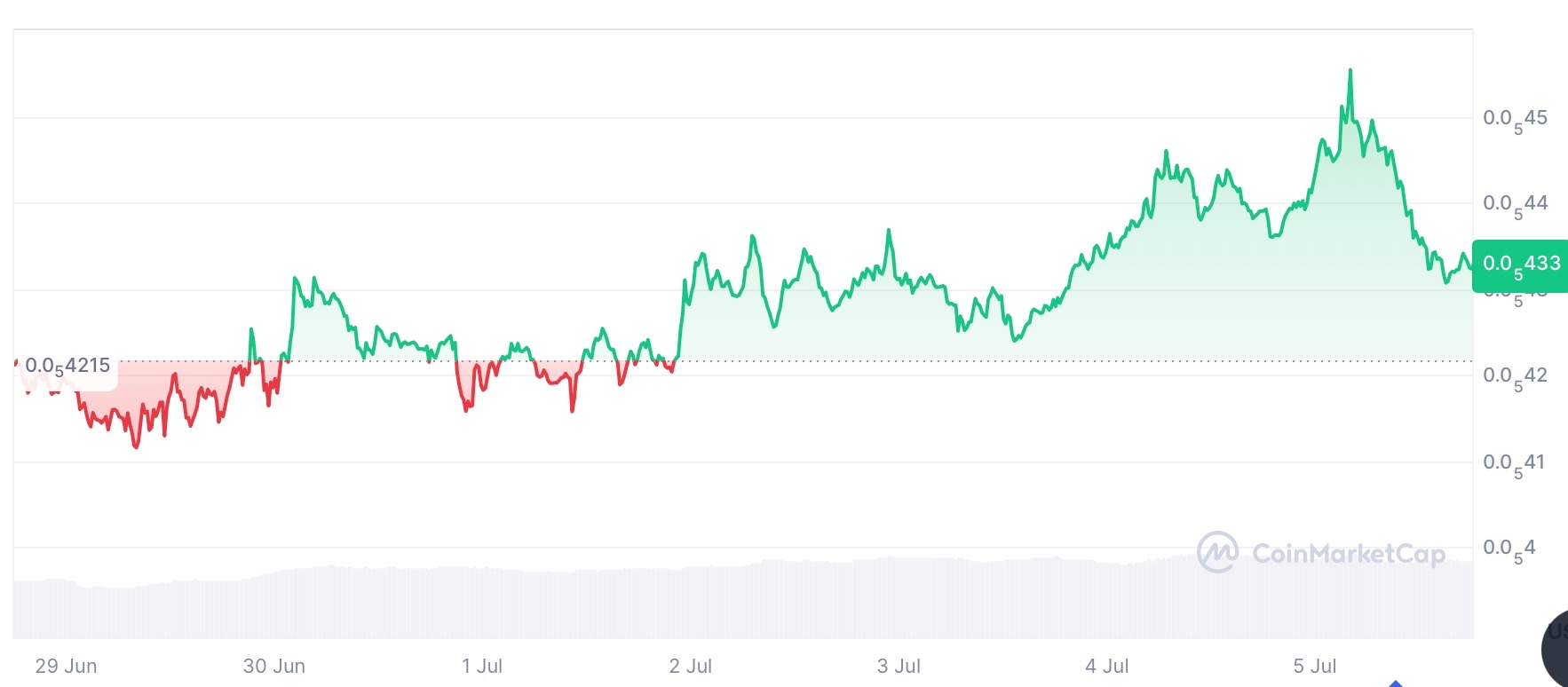
SHIB has recently shown signs of stabilization after a difficult market period.
For traders, this matters because meme coins often move in sharp cycles. When sentiment improves, tokens like SHIB can rebound quickly. But when liquidity weakens, they can also fall faster than larger crypto assets.
This is why SHIB’s latest movement needs to be read carefully. A short-term rebound can signal renewed interest, especially when it comes with stronger social activity, burn headlines or exchange outflows. But it does not automatically mean that the broader trend has reversed.
For SHIB to build a more convincing recovery, traders would need to see more than a temporary price bounce. They would need to see stronger demand, healthier liquidity, more sustainable ecosystem activity and clearer reasons for users to hold or use SHIB beyond speculation.
At the moment, SHIB’s recovery looks real, but still early.
Burn Activity Is Positive, But the Supply Problem Remains
SHIB burn data continues to be one of the most watched metrics in the community. The logic is easy to understand. If tokens are permanently removed from circulation, supply becomes smaller. In theory, lower supply can support price if demand stays stable or increases.
However, traders should be careful not to overstate the impact.
SHIB still has a massive circulating supply. Even when millions of SHIB are burned in a day, the dollar value and percentage impact can remain small compared with total supply. This means burn activity is useful as a sentiment indicator, but it is not yet powerful enough to change the supply structure by itself.
In other words, burns can support the SHIB narrative. They do not guarantee price appreciation.
For burn activity to become a stronger value driver, the market would need to see larger and more consistent burns connected to real ecosystem usage, transaction activity or revenue-based mechanisms. Without that, burn spikes may continue to create short-term headlines without changing the long-term supply debate.
Mercari Adds a Real Retail Access Story
One of the more important recent developments for SHIB is its new access point in Japan.
Mercari’s crypto service, through its partnership with Coincheck, has expanded support to additional crypto assets, including Shiba Inu. This gives SHIB exposure to a mainstream Japanese consumer app rather than only crypto-native trading platforms.
This matters for two reasons.
First, Mercari is not only a crypto platform. It is a widely used consumer marketplace. That means SHIB can become visible to users who may not normally follow crypto exchanges closely.
Second, the service allows users to access crypto through a familiar app experience. This lowers the barrier for smaller retail participation.
For SHIB, this is more meaningful than a simple exchange listing headline. It connects the token to a broader consumer distribution channel in Japan, one of the more important retail crypto markets.
Still, traders should stay realistic. More access does not always mean stronger sustained demand. A new retail channel can improve visibility and convenience, but long-term price support depends on whether users actually buy, hold, trade or use SHIB over time.
Mercari support is a positive signal. It is not enough by itself to confirm a new bull cycle.
Exchange Outflows Could Reduce Short-Term Selling Pressure
Another signal traders are watching is exchange flow. When more SHIB moves out of exchanges, some traders interpret it as a bullish sign. The reason is simple: tokens moved away from exchanges may be less likely to be sold immediately.
This can suggest accumulation, long-term holding or reduced short-term selling pressure.
For SHIB, recent exchange outflow discussions have supported the idea that some holders may be moving tokens into private wallets. That can help sentiment, especially after a period of weakness.
But exchange flow data should not be treated as a perfect signal. Large outflows do not always lead to price increases. Tokens can move for many reasons, including custody changes, internal wallet management or whale positioning. Also, flows can reverse quickly. If large amounts of SHIB later move back onto exchanges, selling pressure can return.
So the takeaway is balanced.
Exchange outflows are a constructive short-term signal, but traders should watch whether the pattern continues over multiple days or weeks.
AI Hints Add Narrative, But Utility Still Needs Proof
The Shiba Inu ecosystem has also seen renewed attention around AI-related hints. Shytoshi Kusama’s recent profile and public signals have pointed to work around an AI app or site, with references to R.OS, beta website completion and final bug checks. For the market, this creates another possible narrative layer around SHIB.
That is important because meme coins increasingly need more than community energy. The strongest meme assets today often combine culture with some form of ecosystem development, whether that is Layer 2 infrastructure, payments, gaming, AI, DeFi or consumer applications.
If Shiba Inu can connect its community to useful AI products, that could strengthen the long-term story.
But this is still an early narrative. Traders need to see concrete product details, public access, real users and a clear connection between AI activity and SHIB demand. Without that, AI-related updates may remain speculative rather than becoming a true value driver.
The market has already seen many crypto projects use AI narratives. SHIB needs execution, not only hints.
SHIB Still Faces Major Risks
The biggest challenge for SHIB remains the same: value capture.
SHIB has one of the strongest communities in crypto. It has brand recognition, exchange availability, meme power and global retail awareness. But the token still needs stronger utility to justify a durable long-term recovery.
There are several risks traders should watch.
The first is supply. SHIB’s circulating supply remains very large, and current burn levels are still too small to materially change that structure in the short term.
The second is market sentiment. Meme coins are highly sensitive to risk appetite. If broader crypto liquidity weakens, SHIB can come under pressure even if ecosystem news is positive.
The third is execution. Ecosystem updates, AI hints and infrastructure developments need to become real products with real users.
The fourth is competition. SHIB competes not only with DOGE, PEPE and other meme coins, but also with newer narrative-driven assets that can attract short-term attention quickly.
The fifth is liquidity. If trading volume falls, price moves can become more volatile and less reliable.
For these reasons, SHIB remains a high-risk asset despite its strong community and recent positive signals.
Bottom Line
SHIB has several reasons to be watched again. Burn activity is improving. Exchange flow signals look more constructive. Mercari has added a meaningful Japan retail access channel. AI-related hints from the Shiba Inu ecosystem may give the token another narrative layer.
But the bigger picture remains cautious. SHIB still has a massive supply. Burn activity remains small compared with total circulation. AI updates still need real product proof. Retail access needs to become sustained demand. And meme coin sentiment can shift quickly.
For now, SHIB looks like a cautious recovery rather than a confirmed bullish reversal.
The story is improving. The proof still needs to follow.
Users can visit Tapbit to explore supported crypto markets and educational resources. Existing users can log in, while new users can register here.
Frequently Asked Questions (FAQ)
What is SHIB?
SHIB, also known as Shiba Inu, is a meme coin that has grown into one of the most recognized community-driven crypto assets. It is widely followed by retail traders and is often influenced by market sentiment, ecosystem updates, burn activity and broader meme coin trends.
Why is SHIB gaining attention again?
SHIB is gaining attention because of several recent signals, including renewed burn activity, exchange outflow discussions, Mercari’s support for SHIB in Japan and AI-related hints from the Shiba Inu ecosystem. These factors have helped bring the token back into market discussions.
What does SHIB burn activity mean?
SHIB burn activity refers to tokens being permanently removed from circulation. In theory, reducing supply can support token value if demand stays the same or increases. However, SHIB’s total circulating supply remains very large, so current burn levels are still too small to significantly change the long-term supply structure by themselves.


