
AATF Coin has a name that immediately catches attention.
“American Account Trust Fund” sounds serious. It sounds financial. It may even remind some traders of savings accounts, trust funds, wealth planning or traditional investment products. That is exactly why the token has started to appear on watchlists and search results.
But a name is not proof. In crypto, a project can use words like “trust,” “fund,” “reserve,” “account” or “treasury” without being a regulated financial institution. That does not automatically make the project a scam, but it does mean traders need to slow down and verify what they are actually buying.
AATF is currently a very small, very new, finance-themed crypto token. Public market trackers show a low price, a reported supply of 1 billion tokens and limited trading activity. The project’s official website mainly focuses on how to buy the token and lists a Solana contract address. At the same time, there is limited public evidence of a detailed whitepaper, audited financial structure, regulated trust arrangement, named team, or traditional investor protection.
That makes AATF a high-risk token to research carefully. The right question is not simply “Is AATF legit or a scam?” The better question is: “What can be verified, what is still unclear, and what risks should traders check before buying?”
What Is AATF Coin?

AATF stands for American Account Trust Fund. It appears to be a Solana-based token using finance-themed branding around long-term wealth, account growth and trust fund language.
That branding is the first thing traders notice. It gives the token a more traditional financial tone than a typical meme coin. But based on currently available public information, AATF should not be treated as a regulated trust fund, asset-backed product or conventional investment fund unless the project provides clear legal documents, custody details, audits and regulatory disclosures.
For now, it is safer to understand AATF as a speculative crypto token with financial-style branding.
That distinction matters. A real trust fund is usually a legal arrangement involving trustees, beneficiaries, assets, records and enforceable obligations. A crypto token using the words “trust fund” does not automatically provide any of those protections.
Before buying AATF, traders should separate the name from the structure.
Why Traders Are Asking If AATF Is Legit
Small new tokens often attract attention quickly, especially when the price is low and the name sounds ambitious. AATF fits that pattern.
The token trades around fractions of a cent, which can create the feeling that it is “cheap.” But a low token price does not tell the full story. Traders need to look at market capitalization, fully diluted valuation, liquidity, volume and holder distribution.
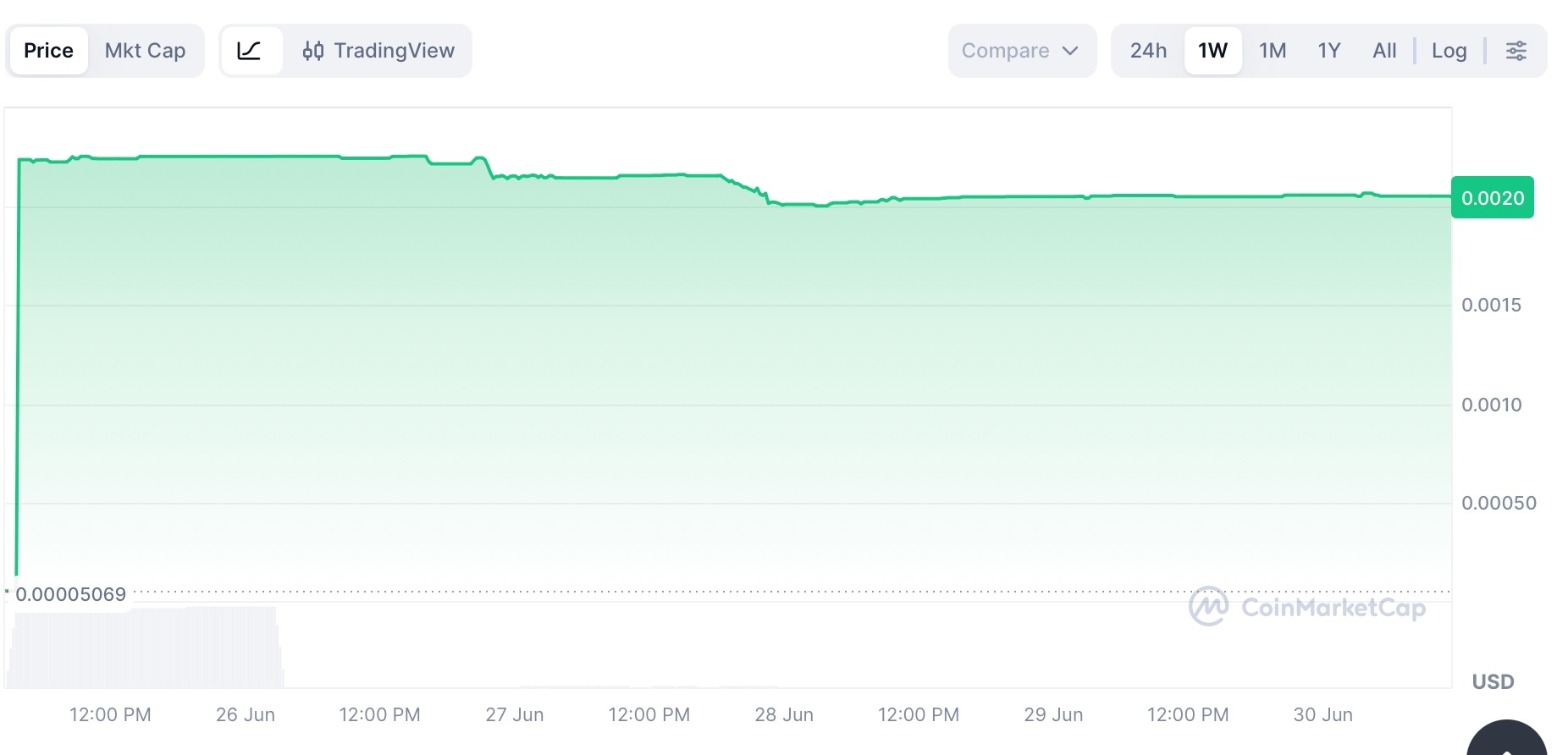
At the time of writing, public trackers showed AATF trading around $0.00205, with a reported maximum supply of 1 billion tokens and an estimated fully diluted valuation around $2 million. That is still a small market size compared with established crypto assets.
Small market size can create upside if demand grows.
It also creates risk. Low-liquidity tokens can move sharply in both directions. A small amount of buying can push the price up, but a small amount of selling can also push it down. If only a few wallets hold a large share of supply, price action may become even more unstable.
That is why “legit or scam” is not enough as a question. Traders need to understand whether the market is deep enough, whether the contract is correct, and whether the project has enough transparency to justify the risk.
Check the Official Contract First
The first step before touching any small token is contract verification.
For AATF, public trackers and the project’s website point to a Solana contract address beginning with ATFnv and ending with QJ8jjD. Traders should always compare the full address across multiple sources before buying.
This matters because fake tokens and copycat contracts are common.
When a token starts trending, scammers may create similar names on other chains, use nearly identical tickers, or promote fake contract addresses in social media replies. A trader who buys the wrong token may end up holding an unrelated asset with no real liquidity.
Before buying AATF, traders should check:
-
The full contract address
-
The blockchain network
-
The liquidity pool
-
The trading pair
-
Whether the address matches official and major data sources
-
Whether there are other tokens using the same or similar name
AATF-related searches already show the possibility of confusion across chains and contract pages. That makes contract verification especially important. Do not rely only on a ticker. Use the full contract address.
Liquidity Is the Biggest Practical Risk
Liquidity is one of the clearest risk signals for AATF. Public DEX data shows AATF’s active market is still very small, with limited daily trading volume and a relatively small liquidity pool. This does not prove the project is bad, but it does mean traders should be careful.
Thin liquidity creates several problems.
First, spreads can be wider. Traders may pay more to enter and receive less when exiting.
Second, slippage can be high. A trade that looks small on a major token can have a noticeable price impact on a thin pool.
Third, exits can become difficult. If sentiment changes and many holders try to sell at once, there may not be enough depth to absorb the selling smoothly.
Fourth, price discovery may be unreliable. A token can appear stable simply because there are not enough trades, not because there is strong market confidence.
For a token like AATF, traders should not only ask, “What is the price?”
They should ask, “Can I actually enter and exit at a fair price?”
A Low Price Does Not Mean AATF Is Cheap
Many new traders make the same mistake with low-priced tokens.
They see a token trading at $0.002 and think it has more room to grow than a token trading at $2 or $20. But token price alone is not a valuation tool. Supply matters.
If a token has a maximum supply of 1 billion, then a $0.01 price would imply a fully diluted valuation of about $10 million. A $0.10 price would imply about $100 million. A $1 price would imply about $1 billion.
Those targets are not impossible in crypto, but they require real demand, deep liquidity, strong distribution, market attention and usually a convincing reason for holders to stay.
For AATF, traders should be careful with “it only needs to reach one cent” thinking. The question is not whether one cent sounds small. The question is whether the project can support the market value implied by that price. Price targets should be linked to market cap, not emotion.
Does AATF Have Real Utility?
Utility is another area traders should review.
AATF’s branding suggests a financial growth theme, but traders should look for concrete answers. What does the token do? Who uses it? What problem does it solve? Is there a roadmap? Are there apps, integrations, revenue streams, staking functions or governance features? Are any of these live, or are they only marketing language?
A token can still trade without utility. Meme coins prove that community attention alone can move markets. But if the project is using finance-themed branding, traders should expect a higher level of clarity.
For now, AATF appears to be much stronger on branding than public documentation.
That is not enough for conservative traders.
The more serious the name sounds, the more evidence traders should demand.
Is AATF Really a Trust Fund?
This is one of the most important questions. Based on currently available public information, traders should not assume AATF is a real trust fund in the traditional legal sense.
A traditional trust fund usually involves a legal structure. There may be trustees, beneficiaries, legal documents, asset custody, reporting obligations and rules for how funds are managed. These protections do not automatically exist just because a crypto token uses the words “trust fund.”
If AATF wants to be treated as more than a finance-themed meme token, the project would need to provide clear documentation. That could include legal structure, asset backing, audit reports, custody details, team information and regulatory disclosures.
Without those, traders should treat “American Account Trust Fund” as branding, not as proof of investor protection.
This is not about attacking the project. It is about using the same standards traders should apply to any financial-sounding token.
What Tapbit Users Should Know
For Tapbit users, AATF is a useful example of how finance-themed tokens can attract attention quickly.
Based on currently available public information, it is not responsible to make a final claim either way. What can be said is that AATF is a very new, small, low-liquidity token with finance-themed branding and limited public documentation.
That makes it high risk. The name “American Account Trust Fund” may sound serious, but traders should not confuse branding with regulation, asset backing or investor protection. Until more information is available, AATF should be treated as a speculative crypto token rather than a traditional trust fund or verified financial product.
For traders, the checklist is clear: verify the contract, check liquidity, review holder distribution, examine tokenomics, look for a
Users can visit Tapbit to explore supported crypto markets and educational resources. Existing users can log in, while new users can register here.
Frequently Asked Questions (FAQ)
What is AATF Coin?
AATF Coin refers to American Account Trust Fund, a finance-themed crypto token that has gained attention because of its name and low token price. It appears to be a small-cap Solana-based token, but traders should treat it as a speculative crypto asset unless the project provides clear evidence of legal structure, asset backing, audits, and investor protections.
Is AATF Coin legit or a scam?
There is not enough public information to responsibly label AATF as either fully legitimate or a scam. What traders can say is that AATF is a very new, small, low-liquidity token with limited public documentation. That means it should be approached with caution and reviewed carefully before buying.
Why are traders asking if AATF is a scam?
Traders are asking because AATF uses financial-sounding branding such as “American Account Trust Fund.” Words like “account,” “trust,” and “fund” can make a token sound more official or safer than it really is. That creates a need for extra due diligence.


