
BlockDAG mining is entering a more realistic stage. For a long time, the discussion around BDAG mining was mostly about early access. The project promoted mobile mining, home mining devices and a more accessible proof-of-work model at a time when Bitcoin mining has become difficult for ordinary users to enter.
That story was easy to understand. Bitcoin mining is dominated by large operators with specialized hardware. BlockDAG, by contrast, offers several entry points, from the X1 mobile app to X-series mining devices such as X10, X30 and X100. For retail users, that makes the mining process feel much more approachable.
But once BDAG has a live market price, the conversation changes. Mining is no longer just about how many tokens a user can earn each day. It becomes a question of what those tokens are worth in the market, how much power the mining process consumes, how long hardware payback may take and whether the project can create enough real demand for BDAG over time.
In other words, the mining narrative is still there. The math now matters more.
BlockDAG Mining Is Accessible, But Accessibility Is Not Profitability
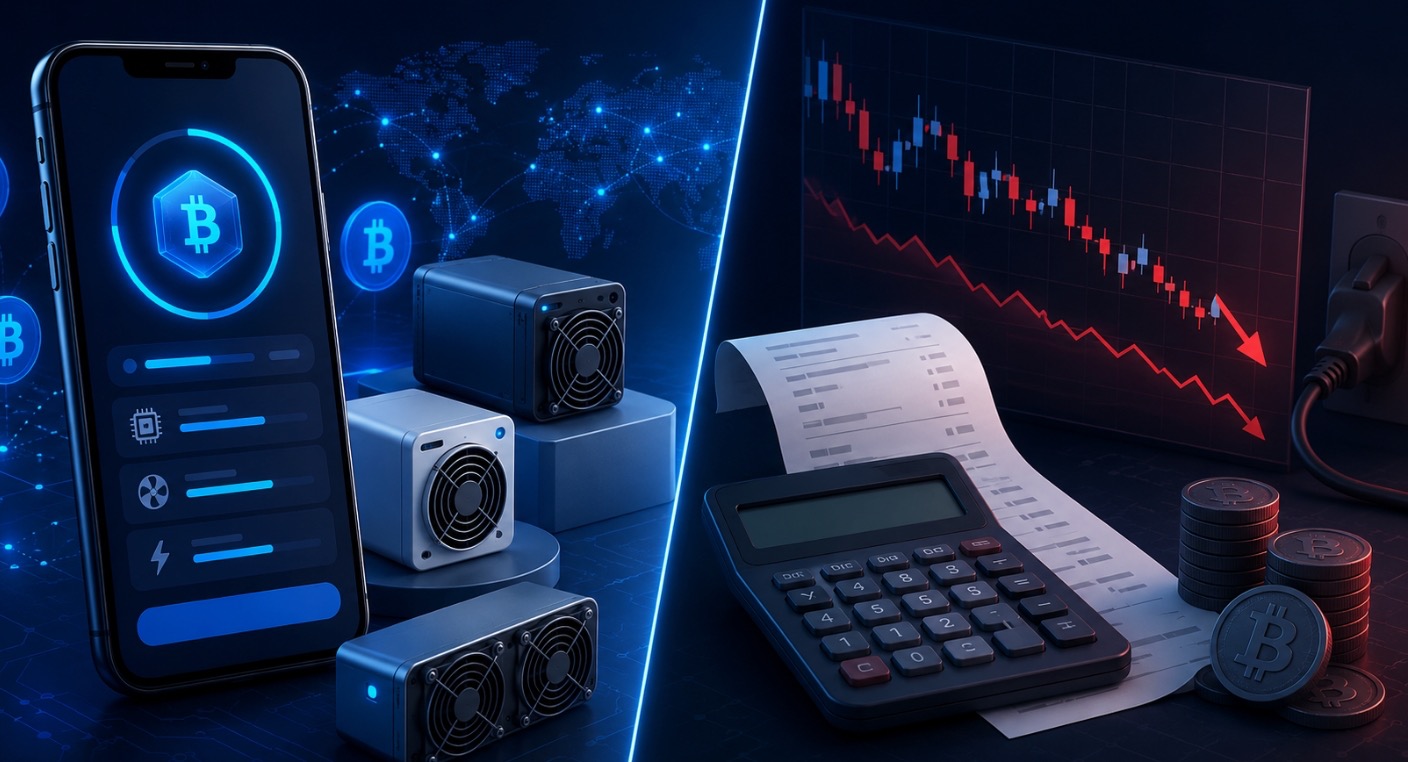
BlockDAG is a Layer 1 project that combines proof-of-work mining with a directed acyclic graph structure. The idea is that multiple blocks or transaction paths can be processed in parallel, rather than forcing all activity into a single linear chain.
For users, the technical design is less important than the practical result: BlockDAG wants to make mining easier to join.
That is why the project has promoted several mining options. The X1 app allows users to participate through mobile mining. The X10, X30 and X100 devices offer higher daily BDAG output for users willing to buy dedicated hardware.
This is a clear strength of the project’s positioning. It gives BlockDAG a broader retail mining story than many proof-of-work networks.
However, mining access and mining returns are two different things. A user may be able to mine BDAG easily, but that does not automatically mean the activity generates positive cash flow. The real answer depends on BDAG’s spot price, device cost, electricity rate, trading liquidity and future network conditions.
That is where the current debate becomes more serious.
Daily BDAG Rewards Need to Be Priced in Dollars
BlockDAG’s mining products are often discussed in terms of daily BDAG output. The X1 app can mine up to 20 BDAG per day. The X10 can mine up to 200 BDAG per day. The X30 can mine up to 600 BDAG per day. The X100 can mine up to 2,000 BDAG per day.
Those numbers may sound meaningful at first glance. But miners should not stop there.
The more important question is how much those rewards are worth at the current market price.
With BDAG trading around $0.000038 to $0.000039, daily mining rewards translate into relatively small dollar amounts. At that price range, 200 BDAG from an X10 would be worth less than one cent per day. Even 2,000 BDAG from an X100 would be worth only around eight cents per day before electricity and other costs.
That does not mean the mining model has no value. It means users need to be clear about what they are actually doing.
At current prices, BDAG mining looks less like immediate passive income and more like long-term token accumulation. A miner is not only asking whether the device can produce BDAG. They are also making a bet that BDAG may become more valuable later.
That is a very different risk profile.
The Real Profitability Question
A simple way to think about mining is this: Daily mining revenue equals daily BDAG rewards multiplied by the current BDAG price.
After that, miners still need to subtract power costs, hardware costs, possible fees, downtime and other operating expenses.
This is where live market prices become important. Before a token is actively traded, people often use expected listing prices or optimistic future assumptions. After the token has live price data, those assumptions should be replaced by real market numbers.
For BDAG miners, this means current spot price should be the starting point. If the value of daily BDAG output is lower than the cost of electricity, the miner is operating at a cash-flow loss. If hardware costs are high and daily net revenue is small, the payback period can become very long.
Some users may still accept that risk because they believe BDAG could rise in the future. That is a valid speculative view, but it should be understood as speculation, not guaranteed mining income.
The difference matters. Mining for current profit is one strategy. Mining to accumulate a token for possible future upside is another. BDAG miners need to know which one they are choosing.
Electricity and Hardware Costs Cannot Be Ignored
Electricity is one of the biggest variables in any proof-of-work mining model. For smaller devices or app-based participation, the cost may be limited. But for more powerful hardware, daily power usage can become a meaningful part of the calculation.
This is especially important when token prices are low. A mining device may produce more BDAG than a mobile app, but it may also require a larger upfront purchase and higher power consumption. That means a higher daily token output does not automatically mean better economics.
The miner’s location also matters. Someone with low-cost electricity is in a very different position from someone paying expensive residential rates. The same device can look more reasonable in one region and unattractive in another.
Hardware payback is another issue. If a device costs hundreds or thousands of dollars, miners need to ask how long it would take to recover that cost at current BDAG prices. If the answer depends almost entirely on BDAG rising significantly in the future, then the mining decision is really a leveraged belief in the token’s long-term upside.
That is not necessarily wrong. But it should be recognized for what it is.
Tokenomics Give Mining a Central Role
BlockDAG’s tokenomics make mining an important part of the project. The total BDAG supply is 150 billion tokens, and a large portion is allocated to miners. This supports the idea that mining is not just a marketing feature. It is part of the network’s distribution design.
That gives the mining narrative more weight. At the same time, it also raises a supply question.
When many tokens are distributed through mining, the market needs enough demand to absorb future supply. If miners regularly sell rewards into thin liquidity, BDAG price may face pressure. If users mine and hold, or if BDAG gains real utility across the ecosystem, the pressure may be easier to manage.
This is not unique to BlockDAG. Every mining-based network has to balance issuance, security, miner incentives and demand.
The challenge for BDAG is that its market is still relatively early. Liquidity, adoption and user demand are not yet as mature as larger proof-of-work assets.
That makes tokenomics an important area to watch.
Ecosystem Usage Is the Long-Term Test
Mining alone is not enough to support a token over the long run. For BDAG to become more sustainable, users need reasons to hold, spend, stake or use the token beyond mining rewards. That could come from transaction activity, ecosystem apps, staking, NFTs, DeFi tools, games, bridges, developer activity or consumer-facing products.
BlockDAG has promoted a broader ecosystem vision, not just mining hardware. That is important because the stronger the ecosystem becomes, the more potential demand there may be for BDAG.
But traders and miners should separate roadmap from adoption. A product plan is not the same as active usage. A mining community is not the same as long-term network demand.
For BDAG, the most important question over time is whether mining participation can turn into real ecosystem activity. If users only mine BDAG and wait for price appreciation, the model depends heavily on market sentiment. If users mine BDAG and then use it across a growing network, the case becomes stronger.
That is the difference between a mining story and a working token economy.
What Tapbit Users Should Know
For Tapbit users, BlockDAG is a useful case study in how mining narratives should be analyzed after a token starts trading. Before live market data is available, mining stories often rely on expected prices and optimistic assumptions. Once live prices exist, the analysis should become more disciplined.
Users should look at the current BDAG price, daily mining output, electricity rate, hardware cost, payback period, trading volume, token supply, miner allocation, ecosystem adoption and liquidity.
These factors matter more than headline mining rewards.
Users can visit Tapbit to explore supported crypto markets and educational resources. Existing users can log in, while new users can register here.
Frequently Asked Questions (FAQ)
What is BlockDAG mining?
BlockDAG mining is the process of earning BDAG rewards by helping support the BlockDAG network. Unlike traditional linear blockchains, BlockDAG uses a directed acyclic graph structure, which is designed to process multiple blocks or transaction paths in parallel.
How can users mine BDAG?
Users can mine BDAG through the X1 mobile app or through BlockDAG’s X-series mining devices, including X10, X30 and X100. The app offers a lower-barrier entry point, while hardware devices provide higher daily BDAG output.
Is BlockDAG mining still profitable?
It depends on the miner’s actual costs and expectations. At current BDAG spot prices, daily rewards may be small in dollar terms, especially after electricity and hardware costs. For many users, BDAG mining may look more like long-term token accumulation than immediate passive income.


