
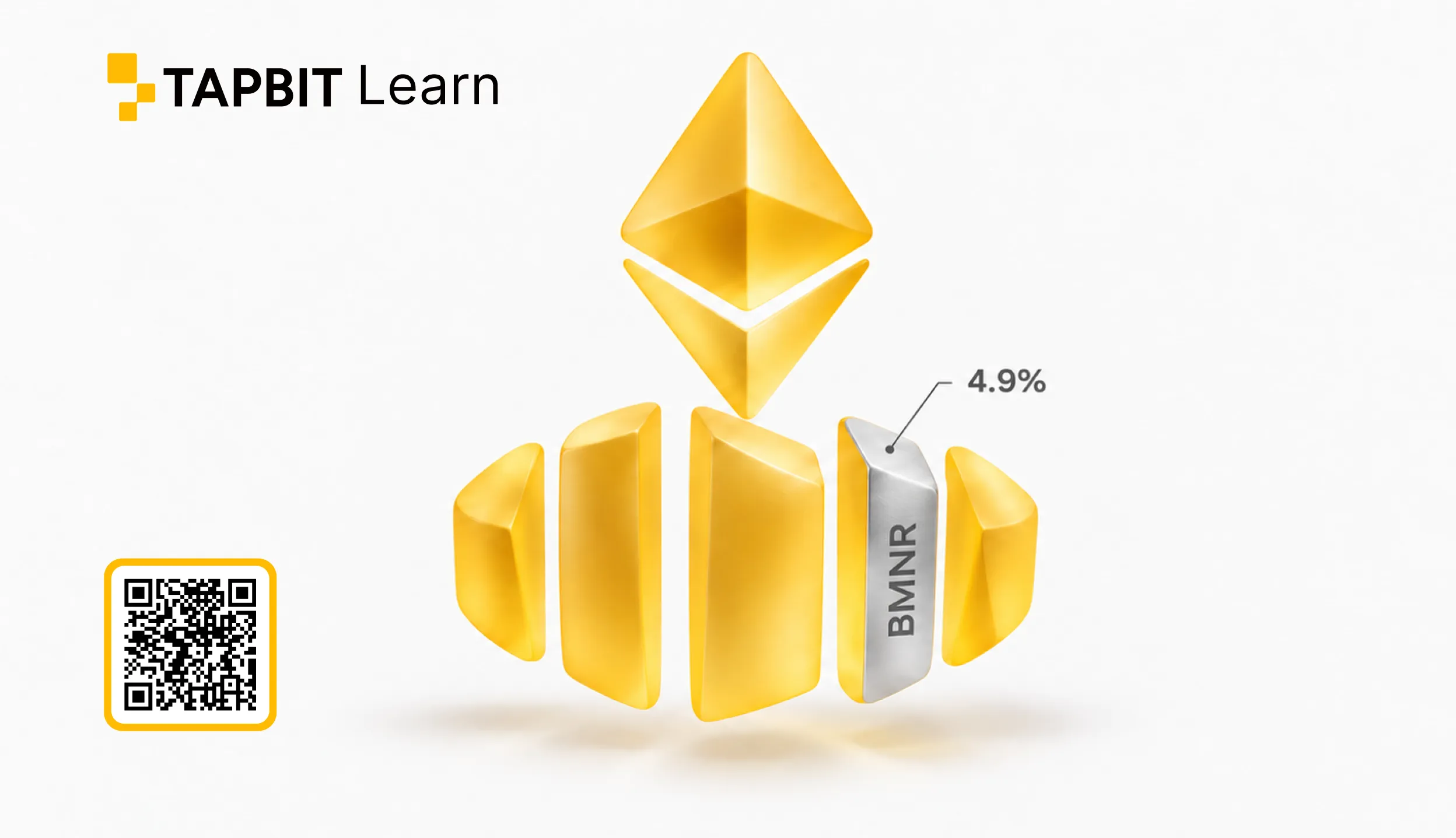
BitMine ETH holdings have reached approximately 6,028,946 ETH, equal to about 4.9% of Ethereum’s estimated 122.1 million supply. The company is now close to its 5% target. Approximately 5,067,309 ETH is staked, meaning most of the treasury is being used to earn validator yield rather than remaining fully liquid.
The scale can reduce ETH available for immediate sale and strengthen the corporate treasury narrative. It also increases concentration risk. The next phase depends on whether BitMine keeps buying, shifts toward yield management or pauses near the target.
How Large Is a 4.9% ETH Position?
A 4.9% share is close to one out of every 20 ETH in existence. That does not mean BitMine controls one out of every 20 transactions or validators. It means a single corporate treasury has accumulated a meaningful share of the asset’s total supply.
BitMine reported total assets near $16.2 billion and added 12,532 ETH during the latest period. The buying pace is small relative to its accumulated balance, but each addition moves the company closer to the stated 5% target.

Why the Staked Amount Matters More Than the Headline Balance
BitMine has staked approximately 5.067 million ETH, or about 84% of the treasury. Staking commits ETH to Ethereum’s validator system. In return, the holder can earn protocol rewards for helping secure the network.
The first effect is income. Validator yield can offset part of the company’s operating cost and increase the amount of ETH attributable to the treasury over time. The actual return depends on validator performance, staking participation and service fees.
The second effect is liquidity. Staked ETH is not as immediately available for sale as ETH held in a liquid wallet or on an exchange. Validators can exit, but large exits may pass through a queue. That reduces the speed at which the entire position could reach the market.
The third effect is operational risk. A treasury this large needs reliable validators, secure custody and diversified service providers. Concentrating too much activity with one operator can create technical and counterparty exposure.

Does BitMine Make ETH More Scarce?
The total ETH supply does not change when BitMine buys tokens from another holder. The distribution changes. When a large buyer moves ETH into long-term custody and staking, fewer tokens may remain available in active trading venues.
Lower liquid supply can amplify price moves when demand increases. It can also work in reverse if a large holder decides to sell. The concentration therefore creates both a scarcity effect and a potential future supply overhang.
Three Paths After the 5% Target
BitMine raises the target
If financing remains available and management believes ETH is undervalued, the company could keep accumulating beyond 5%. That would extend the treasury narrative and continue absorbing supply.
BitMine shifts toward yield
The company may slow purchases and focus on staking returns, validator operations and capital efficiency. Investors would then pay more attention to net yield per ETH and operating costs.
BitMine pauses near 5%
If BMNR loses its valuation premium or financing becomes expensive, the company may hold near the target. The market would lose an expected source of recurring demand, even if no ETH is sold.
BMNR Is Not the Same as ETH
Direct ETH tracks the asset. BMNR tracks a company whose largest asset is ETH. The stock adds management decisions, expenses, financing and possible share dilution.
A useful starting point is net asset value per share. Calculate the value of ETH and other assets, subtract liabilities, then divide by diluted shares. BMNR can trade above that value when investors expect accretive growth. It can trade below it when financing risk or market sentiment deteriorates.
What Investors Should Monitor
Track total ETH, staked ETH, validator yield and liquid reserves. Then compare BMNR’s market value with treasury NAV. Also watch new share issuance. Total ETH can rise while ETH per share falls if dilution is too large.
Related reading includes Tapbit Learn’s guides to Ethereum validators and staking risk and institutional ETH staking economics.
What Reaching 5% Would Signal
Crossing 5% would be a narrative milestone rather than a protocol threshold. Ethereum does not grant special control to a holder simply because its treasury reaches that percentage. The significance comes from market structure and investor perception.
The milestone would demonstrate that a listed company can accumulate and stake ETH at a scale previously associated with major exchanges or protocols. It could encourage competing treasury companies. It could also increase scrutiny of validator distribution, custody partners and the company’s ability to finance future growth without weakening ETH per share.
How to Trade ETH or BMNR on Tapbit
- Register or log in and prepare USDT.
- Open ETH-USDT or BMNR-USDT, then confirm margin mode and leverage.
- Choose direction, order type and size. Set take-profit and stop-loss based on the planned scenario.
- Review price, margin, fees and liquidation price before placing the order. Monitor BMNR’s NAV premium and BitMine treasury updates.
FAQ
Has BitMine reached 5% of ETH supply?
It is very close. The reported position is approximately 4.9%.
How much BitMine ETH is staked?
Approximately 5.067 million ETH, equal to about 84% of the treasury.
Does staking guarantee a higher ETH price?
No. It can reduce liquid supply and generate yield, but demand and broader market conditions still determine price.
How is BMNR different from ETH?
BMNR adds corporate operations, financing, governance and dilution to the underlying ETH exposure.


