
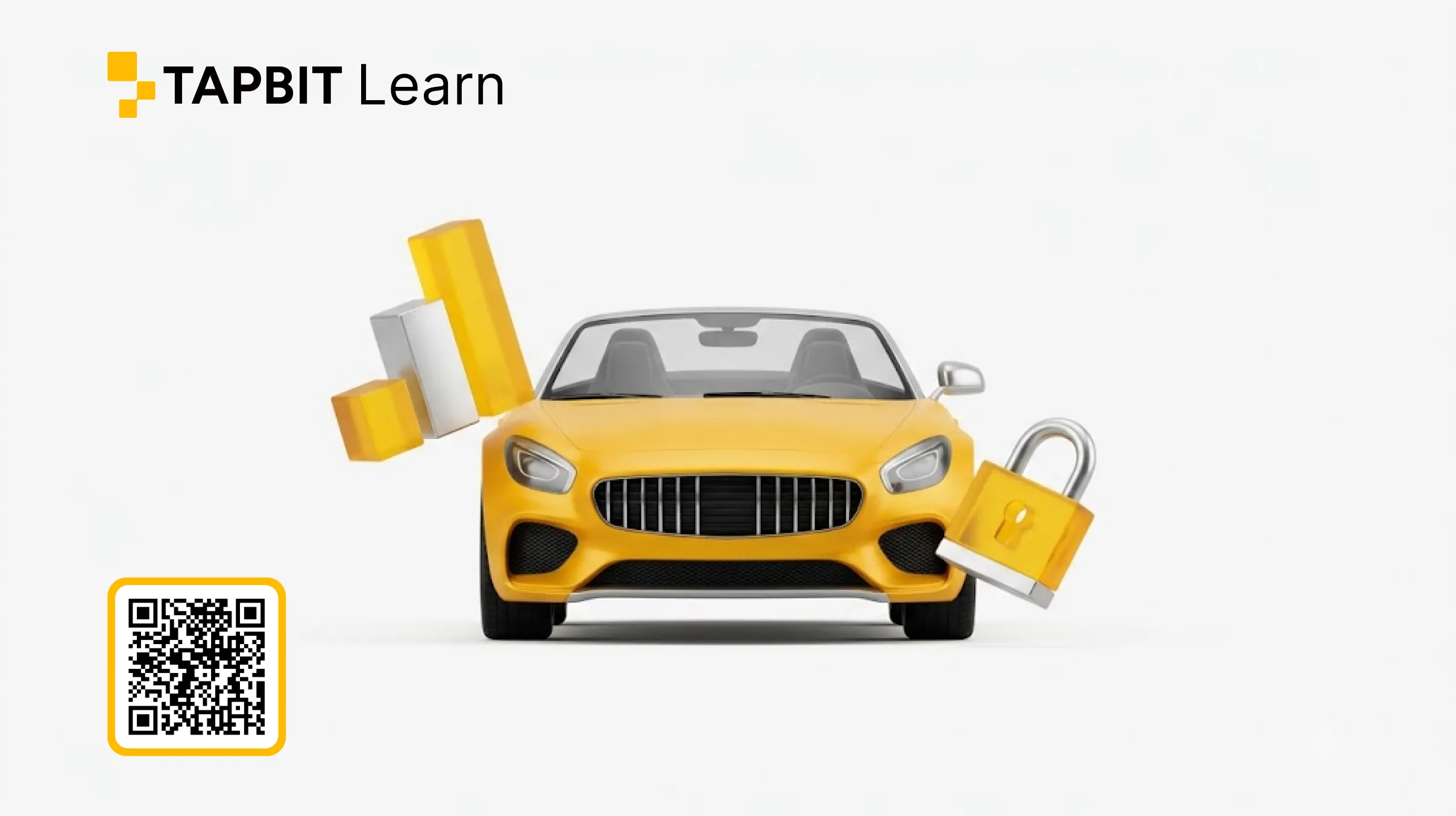
The Tesla Roadster has moved beyond a promise about flying cars. At its October 15, 2026 unveiling in Texas, a prototype performed brief airborne maneuvers using SpaceX-related thruster technology. That does not make it an aircraft for everyday journeys: a controlled demonstration and a practical flying car are different achievements. Coverage of the unveiling also reports that the flying version is not approved for public roads and that Musk is targeting production in 2028.
The short answer to “Can the Tesla Roadster really fly?” is therefore yes, in the limited sense of the prototype demonstration—not in the sense of an available car that can safely cruise above traffic.
For readers following Tesla-related price exposure, the TSLA/USDT perpetual market on Tapbit is a derivatives market, not a purchase of Tesla shares. Its price response should be assessed separately from the engineering claims.

User-provided Roadster image, included for illustration. A still image alone does not verify flight performance.
What Did the Roadster Demonstration Actually Show?
According to Car and Driver’s event report, the prototype climbed a curved structure, left it, rotated in the air and landed with thruster assistance. The report describes two distinct systems: underbody fans providing suction against the driving surface, and compressed-air thrusters providing additional force.
The distinction matters. Reaching the air after a ramp does not, by itself, demonstrate sustained powered flight. What makes this concept different from an ordinary jump is the ability to apply controlled forces while the wheels are no longer supporting or steering the vehicle.
A demonstration can establish that a maneuver is possible under prepared conditions. It does not establish how often it can be repeated, what happens after a component failure, or how the same vehicle performs with an occupant in less predictable surroundings.
How Do the SpaceX Cold-Gas Thrusters Work?
A cold-gas thruster releases pressurized gas through a nozzle. Gas accelerates outward, producing thrust in the opposite direction. Unlike a combustion rocket, the system does not need to burn fuel to create that gas flow. NASA’s overview of propulsion systems describes this principle and the limited total impulse associated with cold-gas designs.
Applied to a car, nozzle direction determines the job. A rearward jet can push the vehicle forward; a downward jet can provide upward force. Forces applied away from the center of mass can also rotate the vehicle. Coordinating those forces requires fast valves, sensors and control software.
“SpaceX thrusters” should not be read as miniature versions of a Falcon rocket’s main engines. The relevant idea is controlled reaction thrust. Nor is compressed air a free energy source: collecting and pressurizing it requires energy, and each burst consumes some of the stored gas.
Why Suction Fans and Thrusters Have Different Jobs
The fan system is intended to help keep the car attached to a surface. Lower pressure underneath creates a force toward that surface, increasing the load available at the tires. Thrusters instead create force by exhausting stored gas. One supports grip; the other can push or rotate the car independently of tire contact.
This explains why the ramp sequence should not be described as one continuous act of flying. While the wheels remain on the structure, contact forces and grip still matter. Once the car leaves it, the control problem changes: steering through the tires is no longer available.
From an engineering perspective, the transition is particularly demanding. A controller must account for orientation, speed and remaining gas while reserving enough control authority for landing. Showing that transition once is meaningful, but it is not a substitute for a documented operating envelope.
Why a Short Hop Is Easier Than Sustained Flight
A brief maneuver needs enough impulse to change speed or orientation for a short interval. Hovering requires continuous upward force to balance weight, with additional capacity to correct disturbances.
For scale, a hypothetical 2,000-kilogram vehicle weighs about 19,620 newtons near Earth’s surface: mass multiplied by gravitational acceleration. Holding that vehicle stationary in the air would require roughly that much upward thrust before allowing for control margins. This is an illustrative calculation, not a claim about the Roadster’s confirmed weight or hover performance.
The duration problem is separate from peak thrust. Large bursts can use stored gas quickly; adding tanks brings extra mass and packaging demands. Without verified storage capacity, nozzle performance and control requirements, assigning the car a precise flight time would be speculation.
A successful hop therefore does not establish useful flight range, repeatable hovering or an ability to recover from every airborne fault.
What Still Needs to Be Proven Before Customer Use?
The next questions are less theatrical than a midair rotation, but more important to an owner. They concern repeatability, maintenance, operating restrictions and the consequences of failures.
| Question | Evidence that would help answer it |
|---|---|
| How repeatable is the performance? | Independent tests under disclosed conditions, including repeated runs. |
| What happens when gas runs low? | Published limits, warning systems and demonstrated fallback procedures. |
| Where can it operate? | Version-specific approvals and clear geographic and site restrictions. |
| What will customers actually receive? | Final specifications, equipment differences and confirmed delivery terms. |
These are evaluation criteria, not allegations that a particular component is defective. High-pressure equipment, strong exhaust jets and unusual vehicle motion create safety questions that a promotional demonstration cannot resolve on its own. Approval should also be checked for the exact version and jurisdiction; a general Roadster announcement does not grant permission to use airborne features on a public street.
What Does the Roadster Mean for TSLA Traders?
The supplied Tapbit screenshot shows TSLA/USDT perpetuals at 379.74 USDT, up 4.66%, with a displayed 24-hour high of 382.92 and low of 356.01. These are point-in-time contract figures, not a live Nasdaq share quote.

User-provided Tapbit TSLA/USDT screenshot. Prices, funding and market conditions can change.
The screenshot alone cannot show that Roadster news caused the gain. A product demonstration may strengthen a brand narrative without immediately changing earnings. Assessing financial significance requires a bridge from attention to deliveries, pricing, costs and margins.
For derivatives users, the distinction has practical consequences. Perpetual contracts do not confer shareholder voting or dividend rights. Leverage, liquidation, funding payments, liquidity and tracking differences can affect returns even when a trader’s view of Tesla is broadly correct.
Frequently Asked Questions
Can every Tesla Roadster fly?
No. Do not assume the demonstrated equipment or airborne capability applies to every configuration. Check the final specification for the exact version.
Do cold-gas thrusters burn rocket fuel?
No. They generate thrust by releasing pressurized gas rather than by combustion. Storing and replenishing that pressure still requires energy.
Can it fly over traffic?
The prototype demonstration does not establish permission or safety for that use. Road access and airborne operation require separate, applicable approvals.
Does the demonstration guarantee a rise in Tesla’s value?
No. Engineering publicity and commercial value are different. Markets also respond to expectations, company results and broader financial conditions.
Conclusion
Can the Tesla Roadster really fly? The prototype has demonstrated brief airborne maneuvers, but that is a narrower achievement than delivering a practical flying car. Cold-gas thrust makes the idea physically understandable; storage, controls, repeatability and approvals determine its usable limits.
The next meaningful milestone is evidence that the performance can be delivered consistently in the version customers receive—not simply a more spectacular video.


