
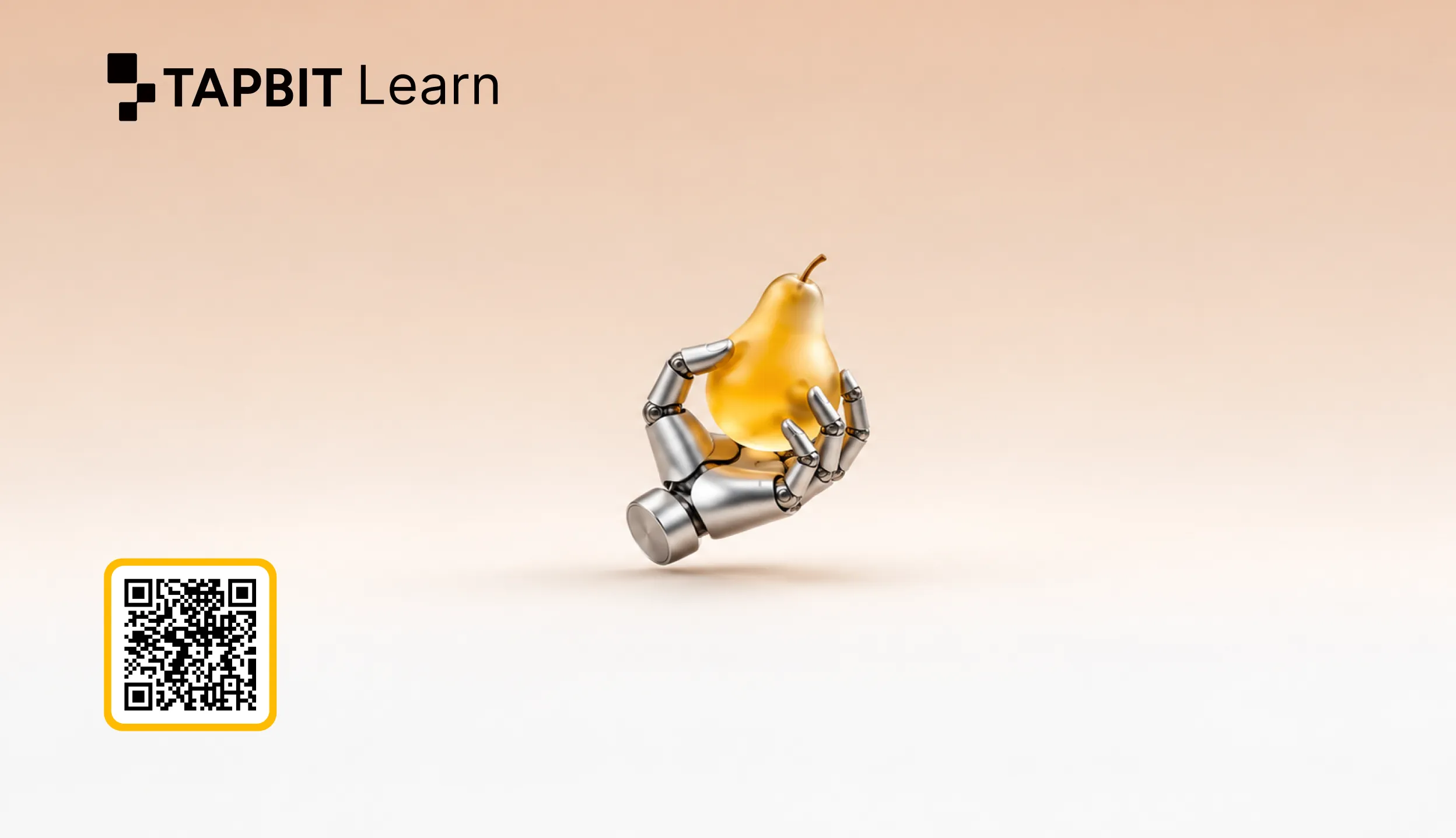
Physical AI is AI that helps robots and machines sense their surroundings, make decisions and act. A warehouse robot avoiding a person and a mechanical hand adjusting its grip both use information to control movement.
A chatbot tells you how to lift a cup. A Physical AI system helps a machine find the cup, grip it and move it. The machine must handle position, weight, contact and changes in the scene.
What Does Physical AI Mean in Plain English?
Physical AI means AI that turns observations into physical actions. NVIDIA's glossary describes machines that perceive, understand and act in the real world.
To put a pear in a bowl, a robot must locate both objects, plan its reach, apply enough grip, lift the fruit and release it above the bowl. Too little force lets the pear slip. Too much force damages it. Recognizing the fruit solves only the first part of the task.
Physical AI works in robotic arms, warehouse vehicles and autonomous cars. A human-shaped body is optional. Each machine needs sensors, software and moving parts suited to its job.
How Does Physical AI Work?
Physical AI works by sensing, choosing an action, moving and checking the result. The machine repeats this cycle to adjust as its surroundings change.

A camera locates the pear. Joint sensors report the hand's position, and force sensors can measure contact. Software uses these readings to estimate where the fruit is and how the hand is holding it.
A policy selects an action from the observations. It can choose where the gripper moves or how far a joint rotates. The controller converts that choice into motor commands. The hardware then performs the movement.
If the pear slips, the next sensor reading triggers a grip adjustment. If the bowl moves, the robot updates its destination. Feedback lets the machine correct its action before completing the task.
A model can identify the pear correctly and still crush it. Object recognition measures what the machine sees; task success measures whether it handles the object correctly.
Physical AI vs. Generative AI vs. Traditional Automation
Physical AI focuses on action in the real world; generative AI focuses on producing content; traditional automation executes predefined behavior within a designed process. An application can combine all three.

| Approach | Typical output | Everyday example |
|---|---|---|
| Generative AI | Text, images, audio or other generated information | Explaining how to pack fruit |
| Traditional automation | A programmed sequence | Repeating one fixed packaging motion |
| Physical AI | Actions adapted to observed conditions | Adjusting a grip for fruit in a new position |
One robot can use all three approaches. A language model interprets a spoken request, a vision model finds the object, and control software keeps the motors within their limits. The combined system completes the physical task.
Traditional automation works well when parts arrive in the same position every time. Physical AI helps when their positions or surroundings change. Developers test how far those conditions can vary before the machine needs help.
Where Is Physical AI Used?
Physical AI is used in warehouse transport, industrial picking and autonomous driving. In each case, the machine adjusts its movements to the scene instead of repeating exactly the same path.
In a warehouse, a robot detects an obstacle and chooses another route. It must reach its destination while leaving room for nearby people. Route completion, travel time and human interventions measure its performance.
In a factory, a gripper picks products placed at different angles. Tests measure completed picks, damaged products and requests for human help. A faster gripper is useful only if it still handles the products correctly.
An autonomous vehicle uses sensor readings to track other road users, plan its route and control steering and speed. It must respond to movement within the conditions for which its driving system was designed.
Why Do Robots Need Real-World and Simulated Data?
Real data teaches robots what actual objects and surfaces do. Simulation lets developers repeat tasks and change conditions cheaply. Both are needed because a model that works in a virtual scene can still fail on real hardware.

Human demonstrations show how to handle awkward shapes and recover after a slip. They capture contact, movement and variation that software can struggle to reproduce. Recordings must include the observations and actions needed to teach the task.
Simulation lets developers change position, friction and lighting, then run the same test repeatedly. This makes model comparisons easier and exposes failures before real deployment. Data produced in an artificial environment is called synthetic data.
The sim-to-real gap is the difference between virtual training and real operation. Real surfaces may have different friction; real cameras may capture unexpected reflections. Testing on the robot shows which learned actions transfer and which need correction.
Axis Robotics builds tools to collect and process robot training data. Its role is to supply useful demonstrations and corrections. The result that matters is better robot performance on the target task.
How Can You Tell Whether Physical AI Is Improving?
Physical AI improves when a machine completes more tasks, handles more varied scenes or needs less human help. Repeated tests show reliability. A selected demonstration shows only one attempt.
| Evaluation question | Why it matters |
|---|---|
| What counts as success? | Reaching an object differs from moving it intact |
| How many attempts were tested? | One success gives little information about consistency |
| Were scenes unfamiliar? | New conditions test generalization |
| How often did a person intervene? | Assistance changes the meaning of autonomy |
| What changed between tests? | Similar conditions make comparisons useful |
For example, place a cup in ten unfamiliar positions and record every attempt. Report how many pickups succeed, how many fail and how often a person intervenes. The failures show which actions need more training data.
Businesses also measure speed, supervision, maintenance and downtime. A reliable but slow machine may suit one job and cost too much for another. Task success and operating cost together determine whether deployment pays.
How Does Physical AI Connect to Crypto?
Crypto networks can record data contributions and reward participants. They support coordination around Physical AI; the robot still learns from data and acts through its models, sensors and controls.
A crowdsourced network can record who submitted an accepted demonstration and distribute rewards under program rules. Blockchain records help users inspect contributions. Data validation still has to establish whether the recording teaches a useful action.
Chip companies sell computing products. Data platforms supply training material. Tokens reward activity within a network. Our AI chip market analysis covers the hardware side. These businesses can grow at different rates because they sell different things.
Physical AI means machines can use what they sense to act. Better data and training make those actions more reliable; blockchain is one possible tool for organizing the people who supply that data.
How to Explore AI-Related Markets on Tapbit
The NVDA/USDT perpetual market provides a way to follow an AI-compute-related derivative. Its price reflects a different asset from a robotics data token.
- Register or log in to Tapbit and prepare USDT in the appropriate account.
- Open NVDA/USDT, inspect the contract information, and choose margin mode and leverage.
- Set direction, order type, quantity, take-profit and stop-loss levels.
- Check price, fees, margin and liquidation price before submitting. Monitor the position and close it through the position controls when exiting.
FAQ
Is Physical AI the same as robotics?
Robotics includes hardware, control and other engineering. Physical AI describes the intelligence used to interpret conditions and select physical actions within such systems.
Does Physical AI need blockchain?
No. Blockchain can support certain coordination or data-recording designs, while machines can learn and operate without it.
Can generative AI be part of Physical AI?
Yes. Generated instructions, simulated scenes or other model outputs can contribute to a larger system that ultimately performs physical actions.


