
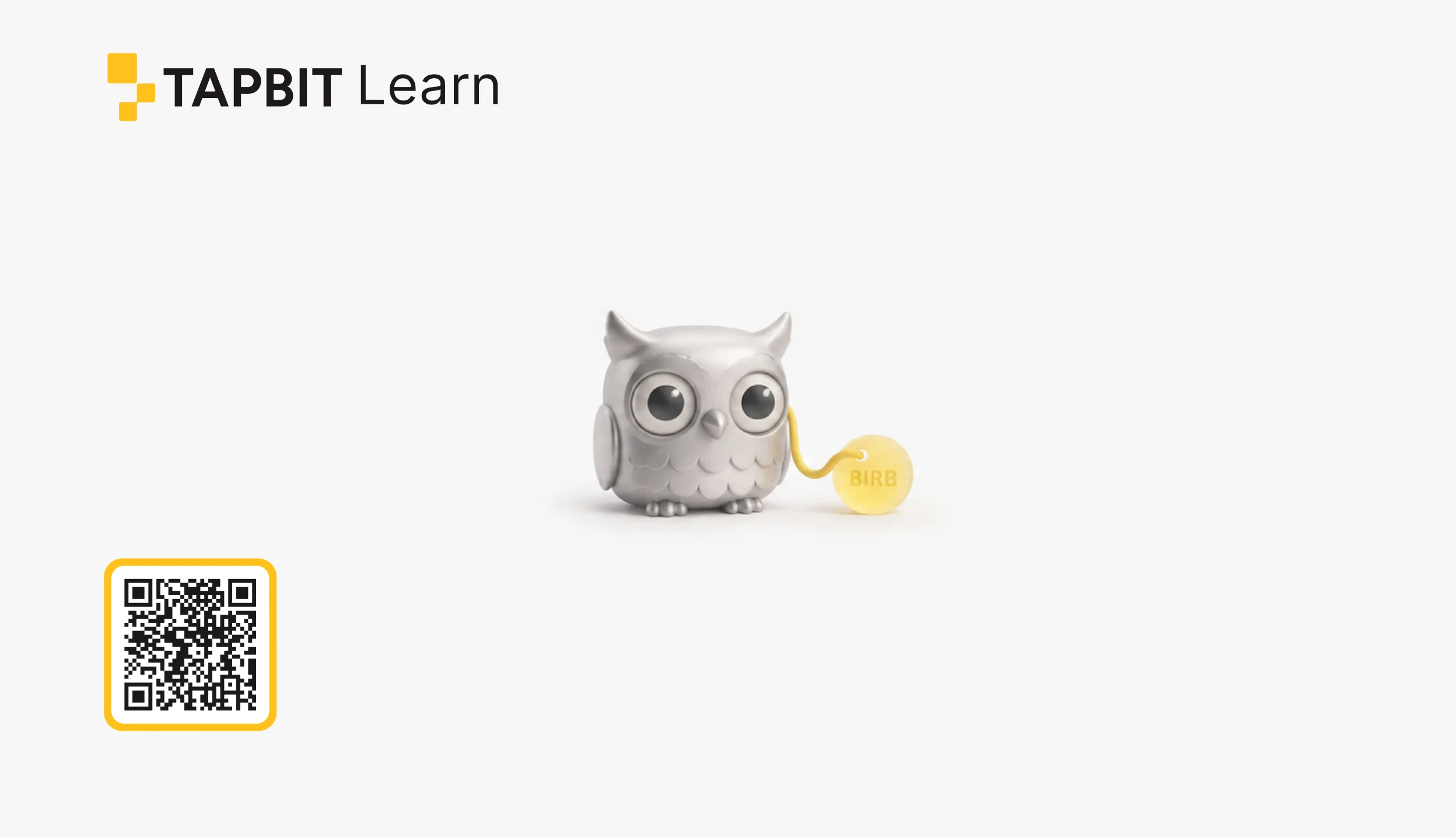
BIRB is a fungible token in the Moonbirds ecosystem; a Moonbirds NFT is a unique collectible. They share a brand and can interact in the project’s rewards programs, but they are not interchangeable. Owning one BIRB does not give you a fraction of a particular Moonbird or the rights of that NFT’s owner. Likewise, owning a Moonbird does not mean a fixed number of BIRB appears automatically in every wallet.
The direct connection is nesting. Moonbirds’ official collector pages describe ways to nest Moonbirds, Mythics, Oddities and BIRB, build rewards and access collectible drops. A user must follow the current program rules and check eligibility with the official interface. This distinction answers the question behind most “BIRB coin” searches: the token extends the Moonbirds brand, while the NFTs remain separate assets with their own ownership records.
What is BIRB?
BIRB is the Moonbirds ecosystem’s transferable, interchangeable crypto token. Each unit is the same kind of asset as another unit. Moonbirds’ project thesis describes the token as a way to connect its character-led brand, community and physical collectibles business. That is the project’s business thesis, not a promise that buying BIRB creates a claim on company revenue or an NFT.
BIRB is listed as a Solana token on its market pages and uses a Solana wallet for the official token claim flow. The official claim site first asks users to connect a Solana wallet as the receiving address. A reader who owns an NFT on Ethereum may therefore encounter more than one wallet or network in the broader collector experience. Check the steps shown by the current project interface before signing any transaction.
The project reports a total supply of one billion BIRB. CoinMarketCap’s October 23 snapshot counted 285 million as circulating, which is a dated market estimate rather than a permanent rule of the token. Circulating supply can change under vesting and distribution schedules. Price, volume and market capitalization also change throughout the day.
What is a Moonbirds NFT?
A Moonbirds NFT is an individually identifiable digital collectible from the Moonbirds collection. Unlike interchangeable BIRB units, one Moonbird has its own token ID and owner. The original collection is visible as Ethereum NFTs on marketplaces such as OpenSea. A character’s art and any associated collector features travel with the NFT’s ownership record under the collection’s rules.
An NFT is not simply an image file. The on-chain token identifies a particular asset and its current holder. The image helps people recognize it; project benefits, if any, come from the collection’s published terms and active programs. The original Moonbirds collection and the BIRB token sit under the same broader character brand, but a token balance does not substitute for an NFT token ID.
This is the same distinction between unique and fungible assets covered in Tapbit Learn’s NFT and fan-token comparison. A token can give a community a more divisible, liquid asset, while an NFT identifies a particular collectible. The two prices need not move together because their supply, demand and ownership rights differ.
How are BIRB and Moonbirds NFTs connected?
They connect through the Moonbirds collector program, especially nesting and reward eligibility. The official nesting page says participants can nest NFTs and BIRB to earn eggs that count toward upcoming physical collectible drops. The collector profile also groups NFT nesting, BIRB nesting, monthly rewards and collectibles in one place. These are program features; they do not turn BIRB into an NFT or make every reward unconditional.

| Question | Moonbirds NFT | BIRB token |
|---|---|---|
| Asset type | Non-fungible collectible with a distinct ID | Fungible token; units are interchangeable |
| Original asset location | Original collection on Ethereum | Solana token and claim flow |
| How ownership is shown | Specific NFT in a compatible wallet | Token balance in a compatible wallet |
| Collector program | Eligible NFTs can be nested | BIRB can also be nested under current rules |
| What buying it gives you | The purchased NFT | The purchased number of BIRB units |
The shared ecosystem creates a practical link. A collector might hold both types of asset, use the project profile and participate in current reward mechanics. The economic link is less direct: an NFT floor price is the lowest currently listed collectible; a BIRB spot price is the market price for one token. Neither price mechanically converts into the other.
Does owning a Moonbird automatically give you BIRB?
Ownership alone does not establish a fixed BIRB payout for every NFT and every date. Moonbirds provides a token eligibility page and a separate claim flow because distributions depend on the rules and wallet history for a given campaign. The current collector experience has also moved some game and nesting functions to the new profile. A person checking a past screenshot may see different steps from the live site.

Begin at the official Moonbirds domain. The eligibility page asks for a wallet connection to check status, while the claim page specifies a Solana receiving wallet. If a campaign requires nesting, merely holding an NFT outside the required program may not satisfy its rules. The project’s terms describe tokens being issued to a linked Solana address when an NFT is nested under the applicable protocol process. That is more precise than saying “every NFT earns BIRB.”
When reviewing any promotional claim, ask three direct questions: Which collection qualifies? What snapshot or activity window applies? Which wallet receives a token, egg or other reward? “Rewards” can refer to different things. A monthly collectible drop, a BIRB token allocation and an egg in a collector profile should not be presented as the same asset.
How is the BIRB supply allocated?
The official BIRB tokenomics sets total supply at one billion, with 27% under holder rewards. The project’s detailed “Birbillions Thesis” separates that umbrella into 17% for Birb and Friends holder rewards distributed through nesting and 10% for community-development holder rewards distributed through games. Together they make up 27%. The other published headline pools include 25% for investors and advisers, 12% for partner expansion, 10% for team, 10% for value-chain incentives, 8% for liquidity and 8% for innovation.
| Pool | Share | What to read carefully |
|---|---|---|
| Holder rewards: nesting + community | 27% | Program eligibility and distribution dates |
| Investors and advisers | 25% | Lockup and vesting |
| Ecosystem partners | 12% | Partner milestones and unlocks |
| Team | 10% | Lockup and vesting |
| Value-chain incentives | 10% | Contributor rules |
| Liquidity + innovation | 16% | Market depth and project funding |
Allocation is not the same as immediate circulation. A pool can be reserved, unlocked gradually or distributed through activities. This is why BIRB’s total supply and a market site’s circulating supply are different figures. For anyone comparing token prices, look at the dates attached to token unlocks as well as the headline one-billion number.
Why do Moonbirds connect a token with physical collectibles?
The project wants the bird character to work both as a digital asset and as a collectible brand. Its published thesis connects online attention, manufactured items, distributor reach and token-holder participation. The egg-drop mechanism is a specific example: a digital nesting action can affect eligibility for a future physical collectible drop under program rules.

That makes BIRB’s story different from a token whose only stated purpose is a blockchain gas fee. The value proposition rests partly on execution outside the chain: making products, reaching buyers and keeping collectors engaged. Those are measurable outcomes, not guarantees in the token contract. Readers can compare changes in the active collector base, completed drops and token distribution with the project’s stated plan.
For wallet basics, Tapbit Learn’s Phantom wallet guide describes how supported networks and NFT views appear in a non-custodial wallet. The Moonbirds site remains the source for its own eligibility rules.
How can readers follow BIRB without confusing the assets?
Track the token, the NFT collection and reward activity separately. A BIRB quote refers to units of a Solana token. An NFT floor quote refers to an individual Moonbird listing. A collector dashboard describes program status. None of these is a substitute for the others.
Use the official BIRB link from Moonbirds, compare its full Solana contract with a market listing, and check the NFT collection address separately. If you want to explore crypto markets more broadly, you can open a Tapbit account to review available markets. Verify any BIRB pair on the live platform before assuming it is listed; this article does not name a BIRB trading pair on Tapbit.
How do you inspect a crypto market on Tapbit?
Confirm the listed instrument first, then use the order form only for the market you actually choose. A BTC futures example is a broad crypto reference and does not replicate BIRB ownership or NFT rewards.
- Register or sign in and prepare USDT in the correct account.
- Open a verified market such as BTC-USDT futures; review its symbol, margin mode and leverage.
- Choose direction, order type and size, then set take-profit and stop-loss levels.
- Check price, margin, fees and liquidation price before submitting; monitor the open position afterward.
FAQ
Is BIRB itself a Moonbirds NFT?
No. BIRB is a fungible token. A Moonbirds NFT is an individually identifiable collectible.
Do I receive a Moonbird when I buy BIRB?
No. A BIRB purchase gives you token units. NFT ownership requires acquiring a specific NFT.
Does every Moonbird holder qualify for the same BIRB amount?
No fixed universal amount follows from the collection name. Check the active eligibility page, nesting requirements and campaign terms for the connected wallet.
Why do some Moonbirds pages ask for a Solana wallet?
The official BIRB claim flow uses a Solana receiving wallet, while the original Moonbirds NFT collection is on Ethereum. The collector experience connects assets across those contexts.


