

Nvidia’s stock split was easy to get excited about. A stock that once looked too expensive on a per-share basis suddenly felt more reachable. Instead of seeing a four-digit share price, investors saw a much smaller number on the screen. For newer traders, that can feel like a big deal.
And in one sense, it is. A lower share price can make a stock feel more accessible. It can bring in more retail attention. It can make smaller position sizing easier. It can make the stock look less intimidating.
But it does not make the company more valuable.
Nvidia’s 2024 10-for-1 stock split changed the share count and the price per share. It did not change the company’s revenue, profit, chip demand, AI leadership, or long-term earnings power. Investors who owned one share before the split owned ten shares after it, but the total value of their position did not magically increase because of the split.
The market did not reward Nvidia because the stock split. The market rewarded Nvidia because the business kept delivering.
The Split Made NVDA Easier to Own
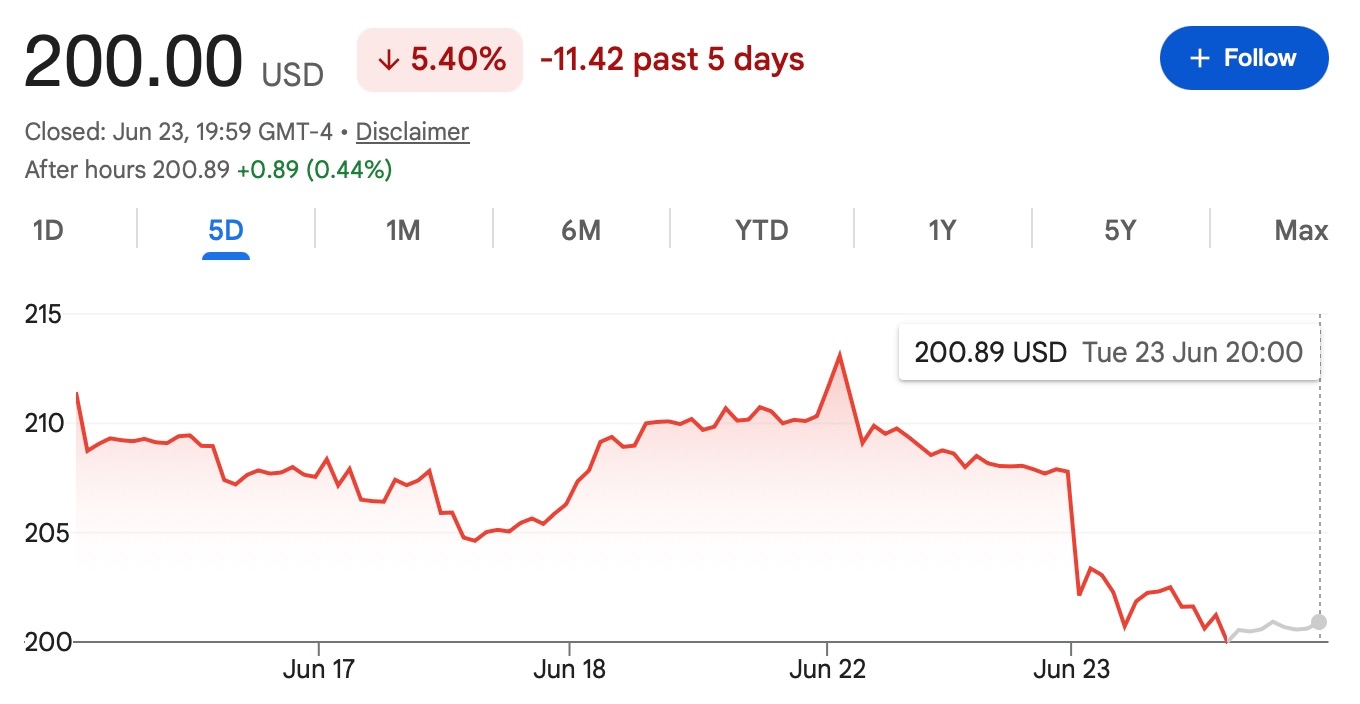
Before the split, Nvidia’s share price had climbed high enough that one share cost more than many casual investors wanted to commit at once.After the split, NVDA became easier to approach.
A trader could buy one share without putting up the same amount of capital. Options activity and retail participation became easier to understand. The stock looked cleaner on the screen.
That is one reason companies split their shares. They want to make ownership feel more accessible after a long rally.
But accessibility is not the same as value. A $200 post-split stock can still be expensive if the company’s market capitalization and earnings expectations are stretched. A $1,200 pre-split stock can be the same exact company at the same exact valuation.
The number changed. The business did not.
Why NVDA Kept Rising After the Split
The reason Nvidia kept rising after the split is much more straightforward than the split itself. AI demand stayed strong. Data center revenue kept climbing. Cloud companies kept buying chips. Nvidia’s GPUs remained central to the AI infrastructure buildout. The company continued to report the kind of numbers that told investors the AI story was not just hype.
That is why NVDA moved higher. The split happened during one of the strongest business periods in Nvidia’s history. That timing made it easy for some traders to confuse correlation with causation. The stock split, and then the stock rose. So the split must have caused the rally.
But that is not how it works.
If Nvidia’s earnings had disappointed, if data center demand had slowed, or if customers had pulled back on AI spending, the split would not have saved the stock.
A split can bring attention. It cannot replace growth.
Nvidia Is Still an AI Infrastructure Story

The real Nvidia trade is still about AI infrastructure.
Nvidia is not just selling chips into a normal semiconductor cycle. It is supplying the hardware that powers large AI models, cloud data centers, enterprise AI systems, and high-performance computing workloads.
That is why the company’s Data Center segment matters so much. When Data Center revenue keeps expanding, the market sees Nvidia as the backbone of the AI buildout. When major customers keep ordering Blackwell and GB-series systems, the market sees demand staying alive. When margins remain strong, investors see pricing power.
That is the real story behind NVDA. A split may have made the stock easier to buy, but AI infrastructure made it easier for bulls to justify owning it.
There is a big difference.
A Cheaper Share Price Does Not Mean a Cheaper Stock
This is probably the most important lesson for new traders. After a stock split, the price per share goes down. That can make the stock look cheaper.
But it is not cheaper in the valuation sense. If a company was worth nearly $5 trillion before a split, it is still worth nearly $5 trillion after the split, assuming the market price adjusts correctly. The pie is the same size. It is just cut into more slices.
That means traders still need to ask the same questions they would ask before the split.
-
Can Nvidia keep growing revenue?
-
Can Data Center demand stay strong?
-
Can margins hold?
-
Will cloud companies keep spending aggressively on AI infrastructure?
-
Can Nvidia stay ahead of competitors?
-
Does the valuation already price in too much good news?
Those questions matter far more than the split ratio. A stock split may change how the trade feels. It does not remove the need to judge the business.
What This Means for Tapbit Users
For Tapbit users watching NVDA-linked markets or broader AI-related trading themes, Nvidia’s split is a useful reminder.
Do not trade the packaging. Trade the story behind the packaging.
A stock split can make a famous company easier to access, but the real driver is still the business. In Nvidia’s case, that means AI chip demand, Data Center revenue, guidance, margins, export restrictions, supply constraints, and the capital expenditure cycle from major cloud companies.
Users can visit Tapbit to follow supported markets and monitor crypto, AI, and stock-linked trading narratives. Existing users can log in, while new users can register here.
Frequently Asked Questions (FAQ)
What happened in Nvidia’s stock split?
Nvidia completed a 10-for-1 stock split. That means every one share became ten shares, while the price per share adjusted lower by the same ratio. The total value of an investor’s position did not change because of the split itself.
Did Nvidia become more valuable because of the stock split?
No. A stock split does not make a company more valuable. It only changes the number of shares and the price per share. Nvidia’s value still depends on revenue, earnings, AI demand, margins, and investor expectations.
Why did Nvidia split its stock?
Nvidia split its stock to make shares easier to access after the price had climbed sharply. A lower per-share price can feel more approachable for retail investors and can make smaller position sizes easier to manage.


