
For the better part of fifteen years, holding Bitcoin meant accepting a harsh trade-off: unparalleled asset security at the cost of zero capital efficiency.
While Ethereum and Solana built multi-billion-dollar decentralized finance (DeFi) ecosystems that allowed capital to be continuously borrowed, lent, and deployed for yield, Bitcoin remained structurally dormant. If you wanted to earn a return on your BTC, you had to rely on centralized custodians or wrap it (like WBTC) and bridge it to Ethereum—exposing yourself to massive smart contract and bridge risks. Consequently, a trillion dollars in capital simply sat idle in cold storage.
But as we navigate the second quarter of 2026, the market structure is visibly shifting. Bitcoin is evolving from a passive "store of value" into a dynamic, productive asset.
The primary catalyst for this shift right now is MEZO, a Bitcoin economic layer developed by Thesis (the veteran engineering team previously known for tBTC). Following its high-profile Token Generation Event (TGE) across major centralized exchanges this April, MEZO is proving that you can build deep, native liquidity directly around Bitcoin.
Here is an unfiltered look at how MEZO is engineering this liquidity, the mechanics driving the yields, and the actual risks involved.
The Playbook: Buying a Liquidity Moat
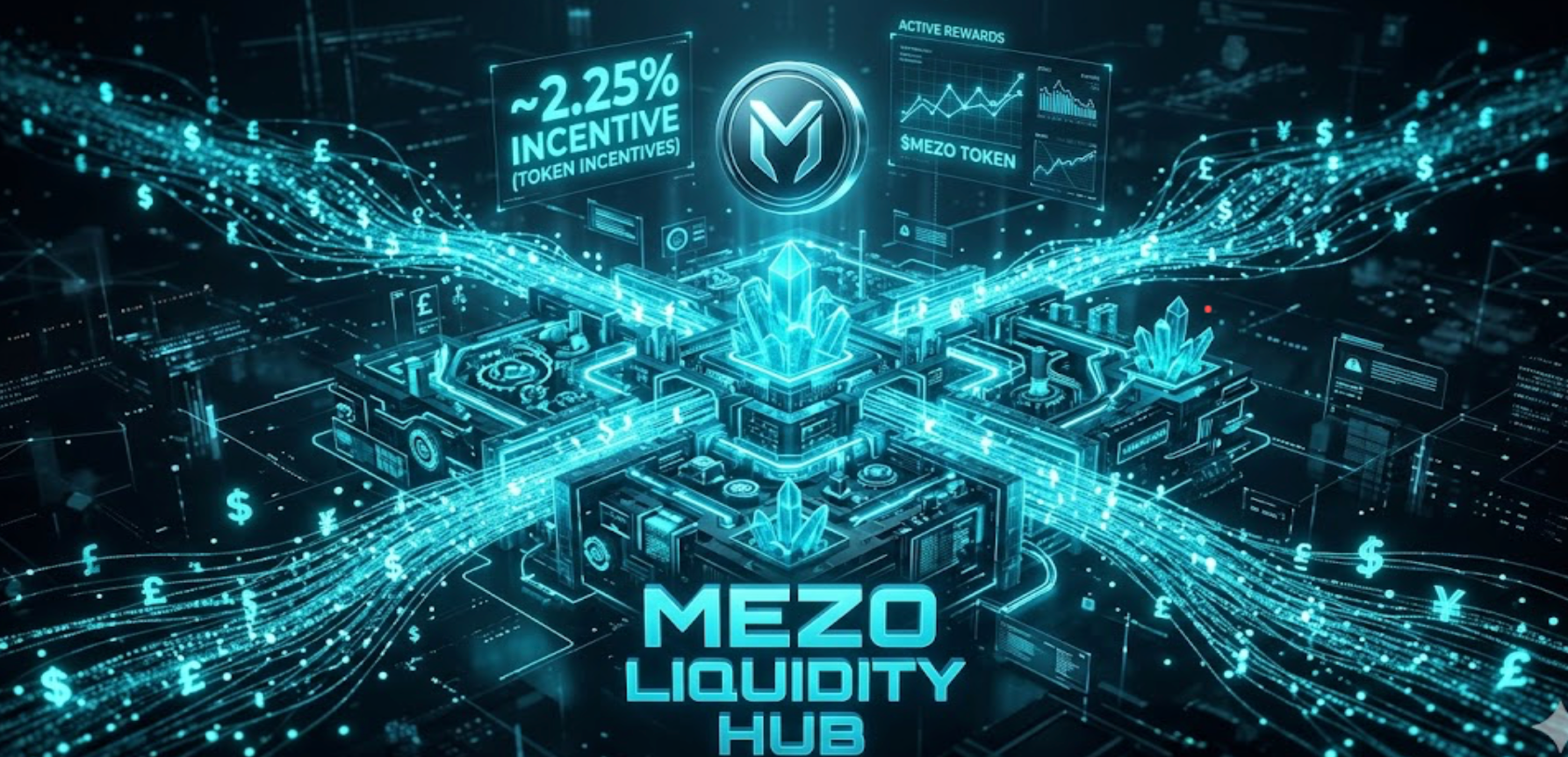
You cannot build a DeFi ecosystem on pure ideology; capital requires deep, frictionless liquidity. MEZO understands this, which is why their rollout strategy in early 2026 has been so aggressive. They aren't waiting for organic growth—they are buying a liquidity moat.
The most glaring example of this occurred in late March, when MEZO announced a strategic alliance with Aerodrome Finance, the dominant automated market maker (AMM) on the Base network. MEZO committed to routing 2.25% of its total token supply directly to Aerodrome’s veAERO voters. In the DeFi world, this is a classic "bribe" mechanism. By incentivizing the liquidity providers on an already massive exchange, MEZO ensures that anyone trading its ecosystem tokens or stablecoins experiences minimal slippage.
They made liquidity a designed variable, not an afterthought.
MUSD and the "Bring Bitcoin Home" Vampire Attack
The core engine of MEZO’s utilization model is MUSD, a stablecoin backed 1:1 by Bitcoin.
Historically, if a Bitcoin holder needed liquidity to buy real estate or trade other altcoins, they had to sell their BTC, triggering capital gains taxes and giving up future upside. MEZO’s infrastructure allows users to deposit their BTC as collateral to mint MUSD, currently offering fixed-rate loans starting at just 1%. It’s a collateralized debt position (CDP) model, but tailored strictly for native Bitcoin holders.
To bootstrap this system, MEZO initiated the "Bring Bitcoin Home" campaign. The target was simple: the billions of dollars worth of wrapped Bitcoin stuck in Ethereum DeFi protocols. By offering early, lucrative yield incentives for migrating assets to MEZO's native infrastructure, the protocol successfully siphoned over $23 million in Bitcoin liquidity back home in its early stages. It was effectively a vampire attack on Ethereum's BTC market share.
The Reality Check: Risk vs. Reward

The narrative that "Bitcoin is finally a yield-bearing asset" is incredibly bullish for long-term price action, but as traders, we have to evaluate the trade-offs.
Value capture is fundamentally changing. Before, your Bitcoin's value was purely determined by the spot price on an exchange. Now, if you are utilizing MEZO, your value capture includes the spot price plus the token incentives and yield you generate by providing liquidity or minting MUSD.
However, there is no such thing as a free lunch in crypto. High capital efficiency requires taking on structural risk:
-
Smart Contract Vulnerability: The moment your Bitcoin leaves your cold wallet and enters MEZO's deposit vaults, you are trusting Thesis's code.
-
Incentive Dependency: Right now, capital is flowing into MEZO because the token incentives (like the Aerodrome emissions) are highly lucrative. The real test of this paradigm will come when those token rewards taper off. Will the organic demand for 1% MUSD loans be strong enough to keep that Bitcoin locked in the system, or will the capital flee to the next shiny protocol?
The Bottom Line
The financialization of Bitcoin is no longer a theoretical whitepaper concept; it is happening right now, backed by heavy capital incentives and real-world lending protocols. MEZO has successfully built the initial infrastructure to transition Bitcoin from a static rock into a dynamic financial tool. The question now is whether the market will accept the associated smart contract risks in exchange for that yield over the long term.
As the Bitcoin DeFi landscape rapidly expands, maintaining access to deep liquidity and real-time market data is critical. Whether you are managing your core BTC holdings, trading the latest DeFi tokens, or executing complex derivatives strategies, explore the professional-grade tools on the Tapbit Homepage. You can register your account here to get started, or log in to manage your active spot and futures portfolios.
Frequently Asked Questions (FAQ)
How is MEZO different from just wrapping Bitcoin on Ethereum?
Wrapping Bitcoin (like WBTC) requires relying on a centralized custodian (like BitGo) to hold the actual BTC, while issuing an ERC-20 token on Ethereum. MEZO is designed as a Bitcoin-native economic layer built by the Thesis team, aiming to keep the collateral closer to Bitcoin's native infrastructure while providing DeFi functionalities like stablecoin minting.
What is MUSD and how does the 1% loan work?
MUSD is MEZO’s native stablecoin, backed 1:1 by Bitcoin collateral. Users can lock their BTC into the protocol and borrow MUSD against it. Currently, the protocol offers fixed-rate borrowing costs as low as 1%, allowing users to access fiat-pegged liquidity without selling their underlying Bitcoin.
Why did MEZO give 2.25% of its tokens to Aerodrome?
This is a liquidity acquisition strategy. Aerodrome is a massive decentralized exchange. By directing 2.25% of the MEZO supply to users who vote on Aerodrome, MEZO effectively incentivizes liquidity providers to pool millions of dollars into MEZO trading pairs, ensuring smooth, low-slippage trading for the ecosystem.


